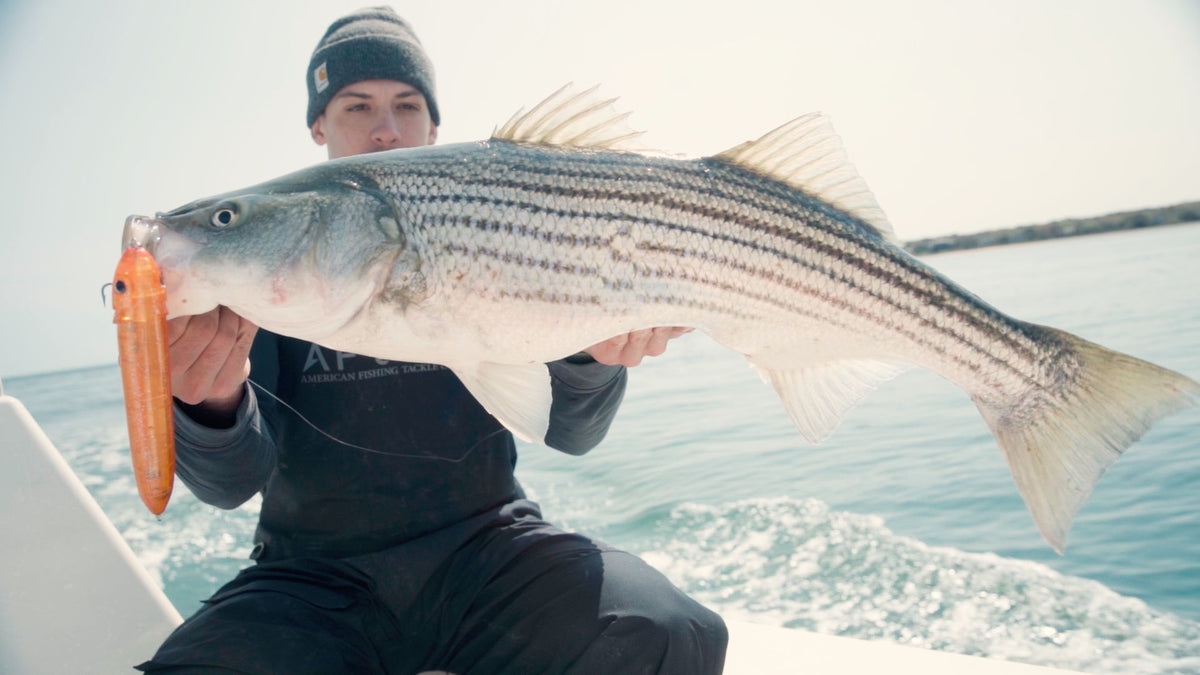










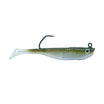
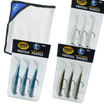
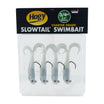
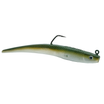



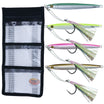
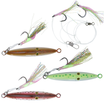
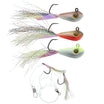

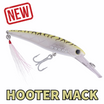
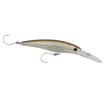
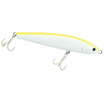
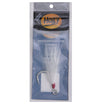
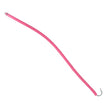
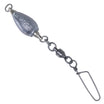
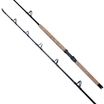
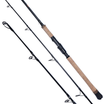
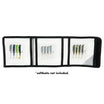
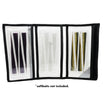

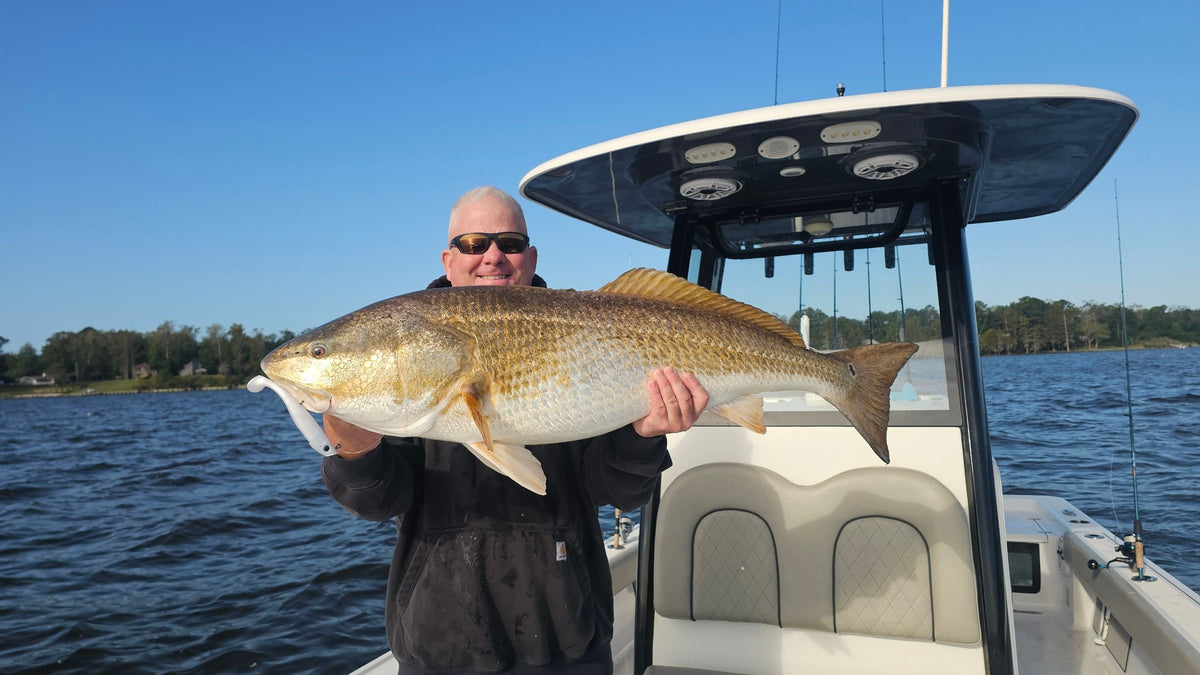

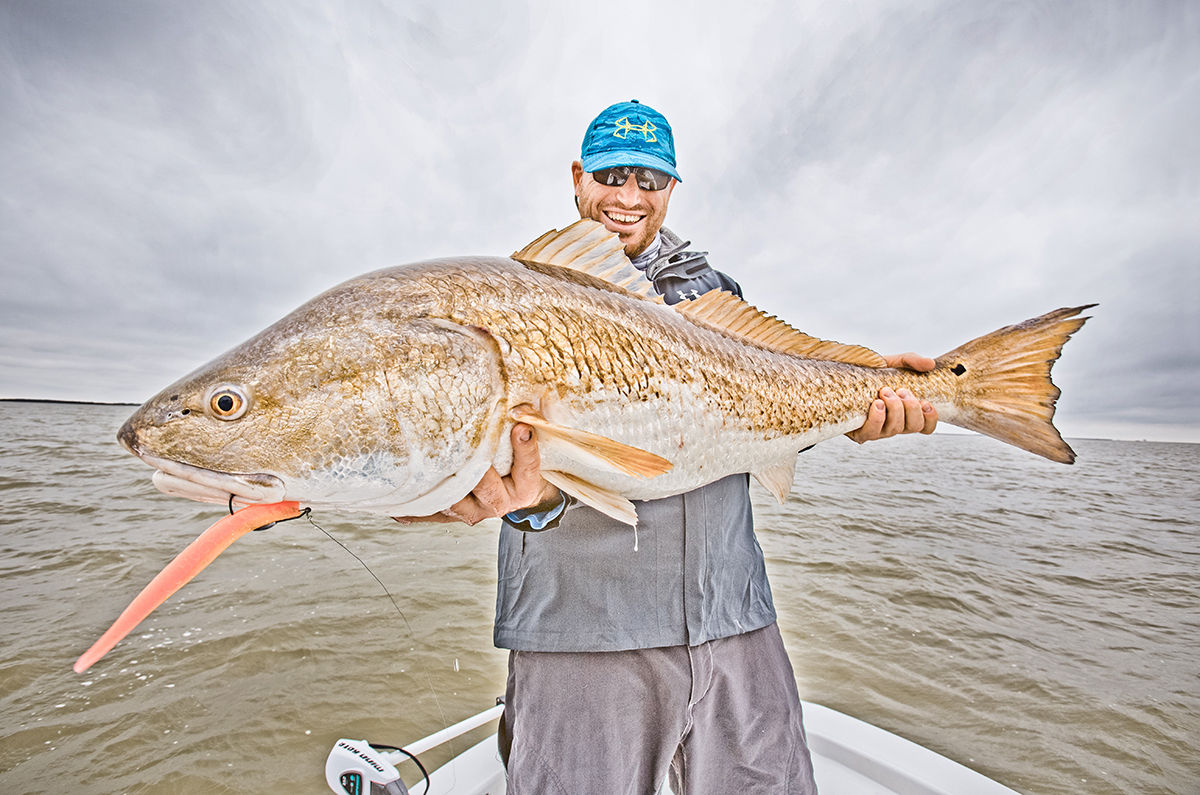
Redfish run from the Chesapeake to Texas, and the big ones, the bull reds, are the fish this angler lives for. Red drum reach the mouth of the Chesapeake in late April and early May, and by summer there are schools on top the size of a football field, never far from the pogies. The fall bull run works the inlets, jetties and bars: Cape Lookout, the Bay Bridge-Tunnel, the Charleston and St. Johns jetties, and the mouth of Mobile Bay into winter. Farther south it never shuts off. Mosquito Lagoon, the Everglades and the Lower Laguna Madre have reds on the flats all year.
The bull red angler fishes all of it on artificials, from a skiff, a bay boat, a center console or a jetty rock. Big reds pull hard and get over-fought, so everything here comes pre-rigged or rides a hook built for the job: simpler is more fishy. Six plays: topwater on the schools, under the schools, dirty water, deep current, sight casting the shallows, and the slow flats game down south. That's the box I'd hand one.
Light tackle angler who chases big redfish, the bull reds, on artificial lures from Virginia to Texas. In the fall they run inlets, jetties and bars in a skiff, a bay boat or a 20 to 24 foot center console, or walk a jetty or a beach with one rod. Farther south they pole and wade the flats for red drum all year. They look for pogy schools, mullet and dirty water where reds root the bottom, and want hooks and plastic that hold up to a big fish.
If they can tell you how many spots were on the tail of their biggest red, this is your angler.
The full set is $156.60 MSRP. One of each covers the year, from the spring push into the Chesapeake to the fall bull run and the flats down south.
Already has some? Buy more. Jetty rocks and oyster bars take their share of soft baits, and nobody fishing bull reds has too many 4 oz Protails.
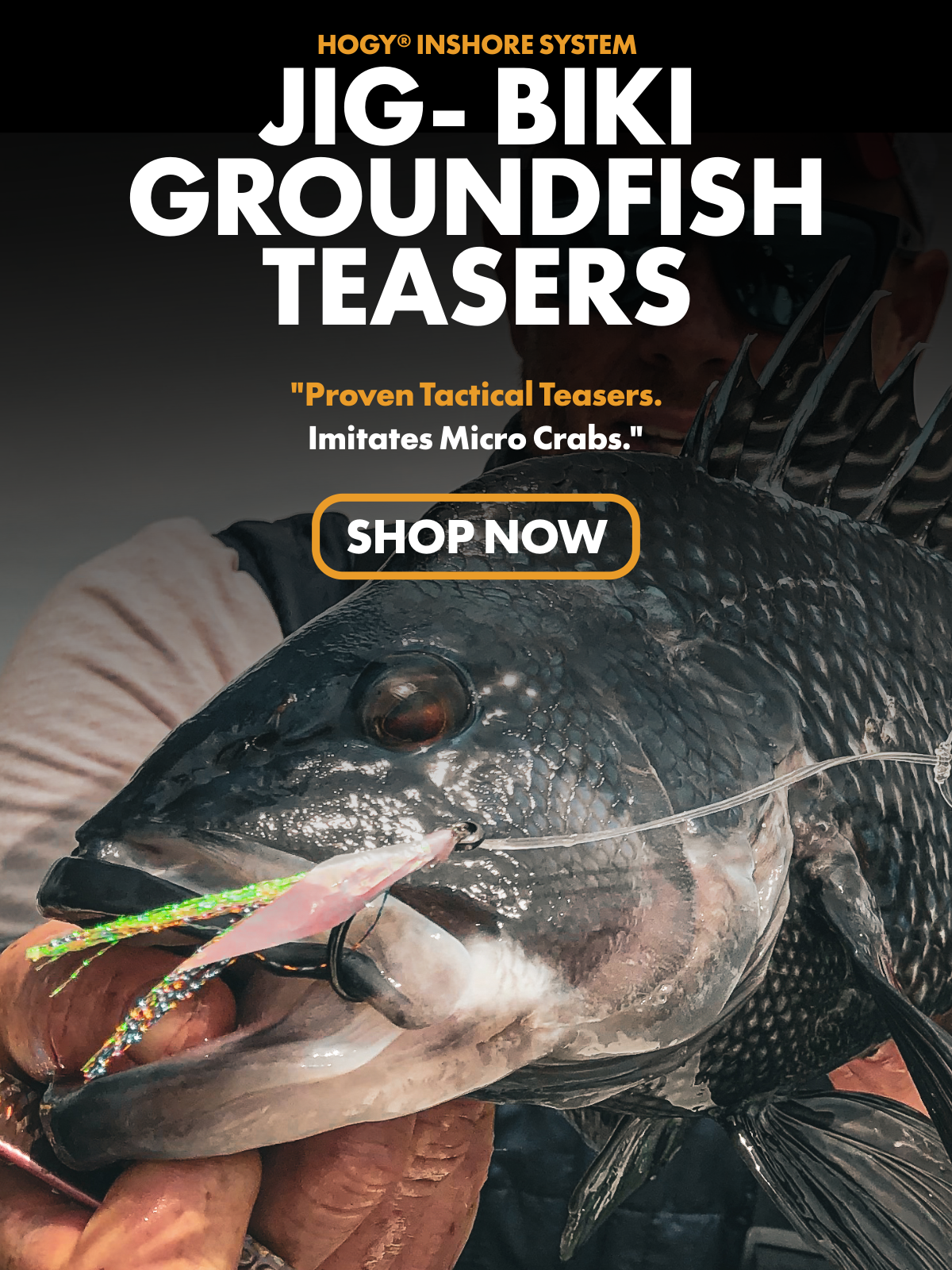
Want to keep it small? Pick by where they fish. On the schools: the Macro Chug, the Dog Walker and the 5.5 in Protail. Jetties and inlets: the two big Protails. Flats and marsh: the Original, the hook and the Slowtail pack.
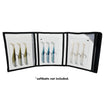
Giving the full set? Print the guide and tuck it in the box.
THE LINEUP

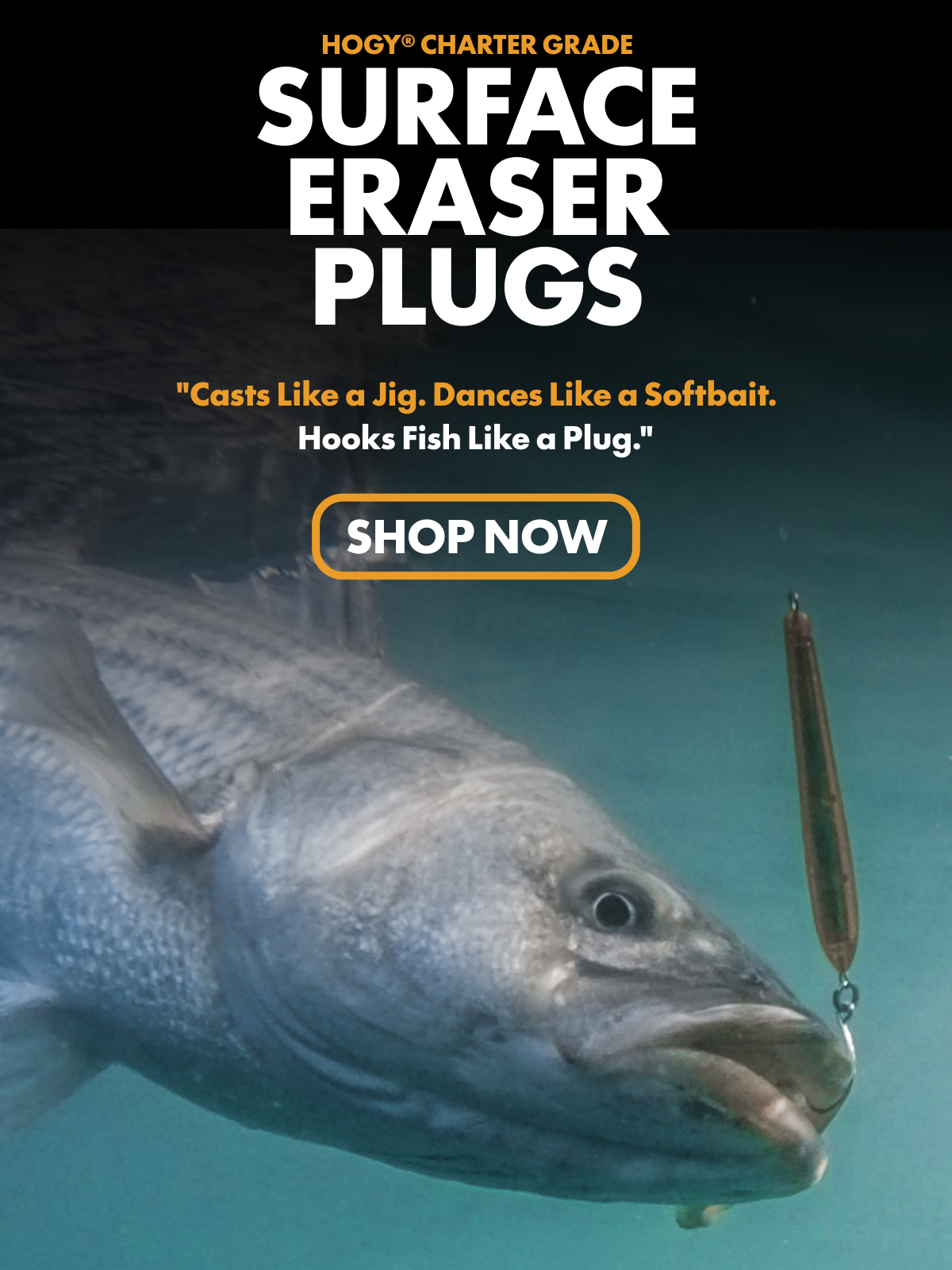
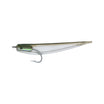
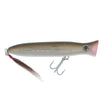
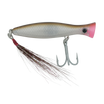
1 FRANKEN Macro Chug Popper “The Long-Range Caller”
WHEN Bull reds schooled on top over pogies and mullet: the summer schools in the lower Chesapeake, and bull reds busting bait in Winyah Bay. When they're up and you want them to come find the plug.
FISH IT Land it on the outside of the school and chug it: one hard pop, a pause, another pop. The splash pulls fish off the pod. Swirls but no eat? Quit popping and walk it; the same plug glides side to side.
WHY THEY'LL LOVE IT It's the first crowd-sourced lure in saltwater, shaped by 757 anglers, and the broomstick-thick body carries the presence of a big pogy. One plug gives them the loud splash and the quiet walk, so they don't retie when the school gets picky.
“...one of the 700+ anglers that participated in the creation of the FRANKEN POPPER” Dominic C.
Add to cart | MSRP $23.95See details ›
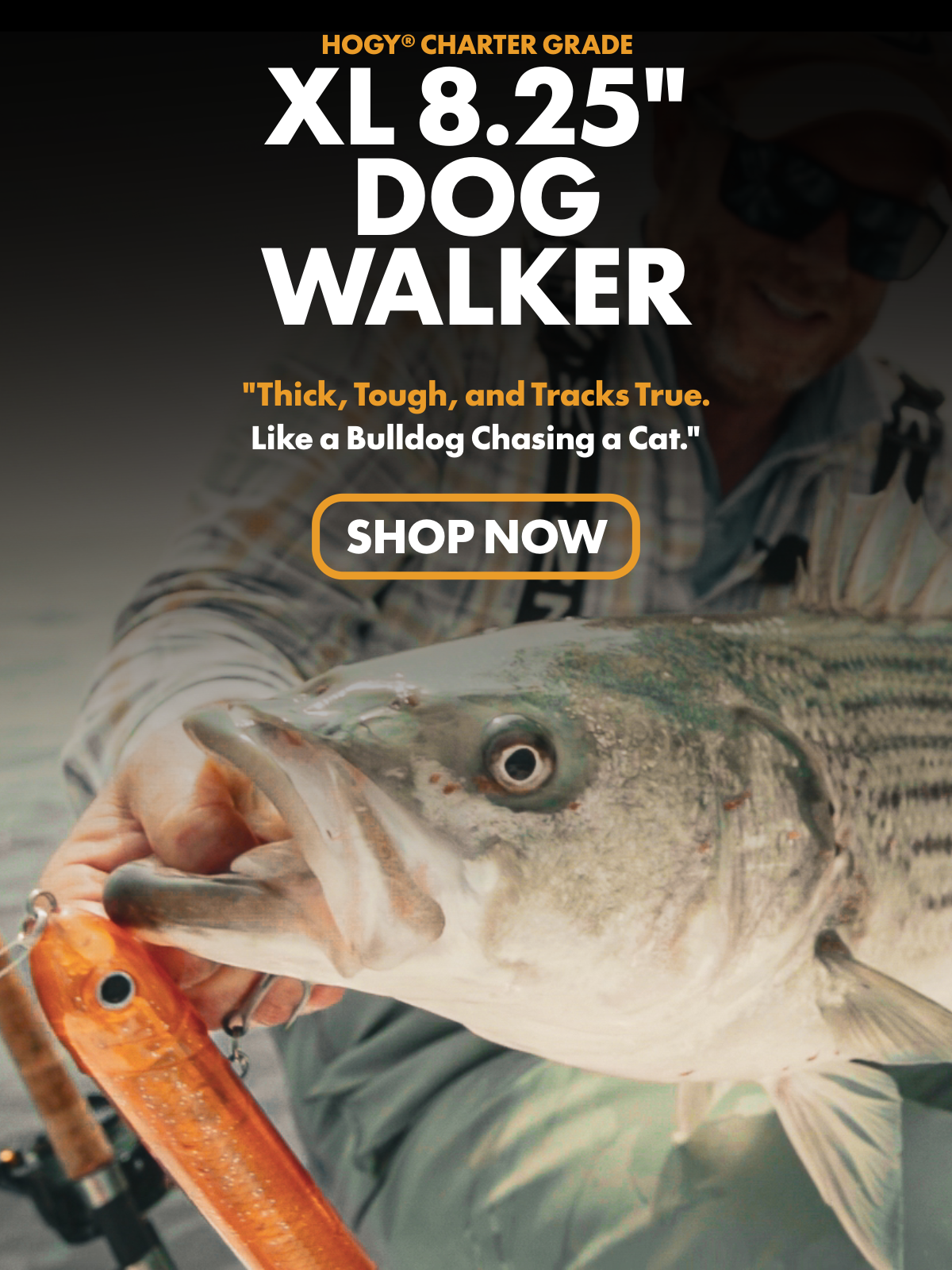
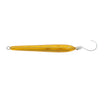
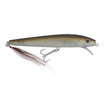
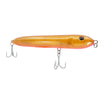
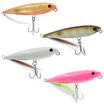
2 Charter Grade Dog Walker “The Quiet One”
WHEN Same schools, once they've seen the popper. Reds on top that swirl at a chug and turn away, or a slick calm morning when the splash is too much.
FISH IT Rod tip down, steady twitch with a little slack between, so it slides side to side without pulling under. Walk it past the edge of the school, not through it. Dawn and dusk are its best hours.
WHY THEY'LL LOVE IT When the chug gets refused, quiet motion closes the deal. It's built tuna grade, through-wired with 4X rigging, so a bull red that eats it can't pull it apart.
“The walking action this lure puts out is hard for big bass to resist” Chris
Add to cart | MSRP $19.95See details ›
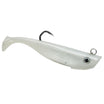
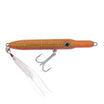
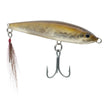
3 Protail Paddle 5.5 inch “The 7-Iron”
WHEN Under the schools, or when they sink out. From late April at the mouth of the Chesapeake through the fall run on the inlets and shoals, the reds stay near the pogy pods, often over hard bottom or an oyster bar.
FISH IT Drift through the bait with the engine off, fan cast around it, let it hit bottom and bounce it back; it swims on the way up and on the way down. Fish come up? Burn it so the paddle skips across the top, on the edge of the school, never the middle.
WHY THEY'LL LOVE IT Big reds get over-fought, and that's when a hook flattens. The 3X VMC Barbarian molded into this one holds its shape. Capt. Nick Lombardi on the Chesapeake fishes it both ways: whipped across the top or bounced off the bottom.
“Very durable can cast them a country mile and the redfish and trout are gobbling em up” Bill N.
Add to cart | MSRP $9.95See details ›
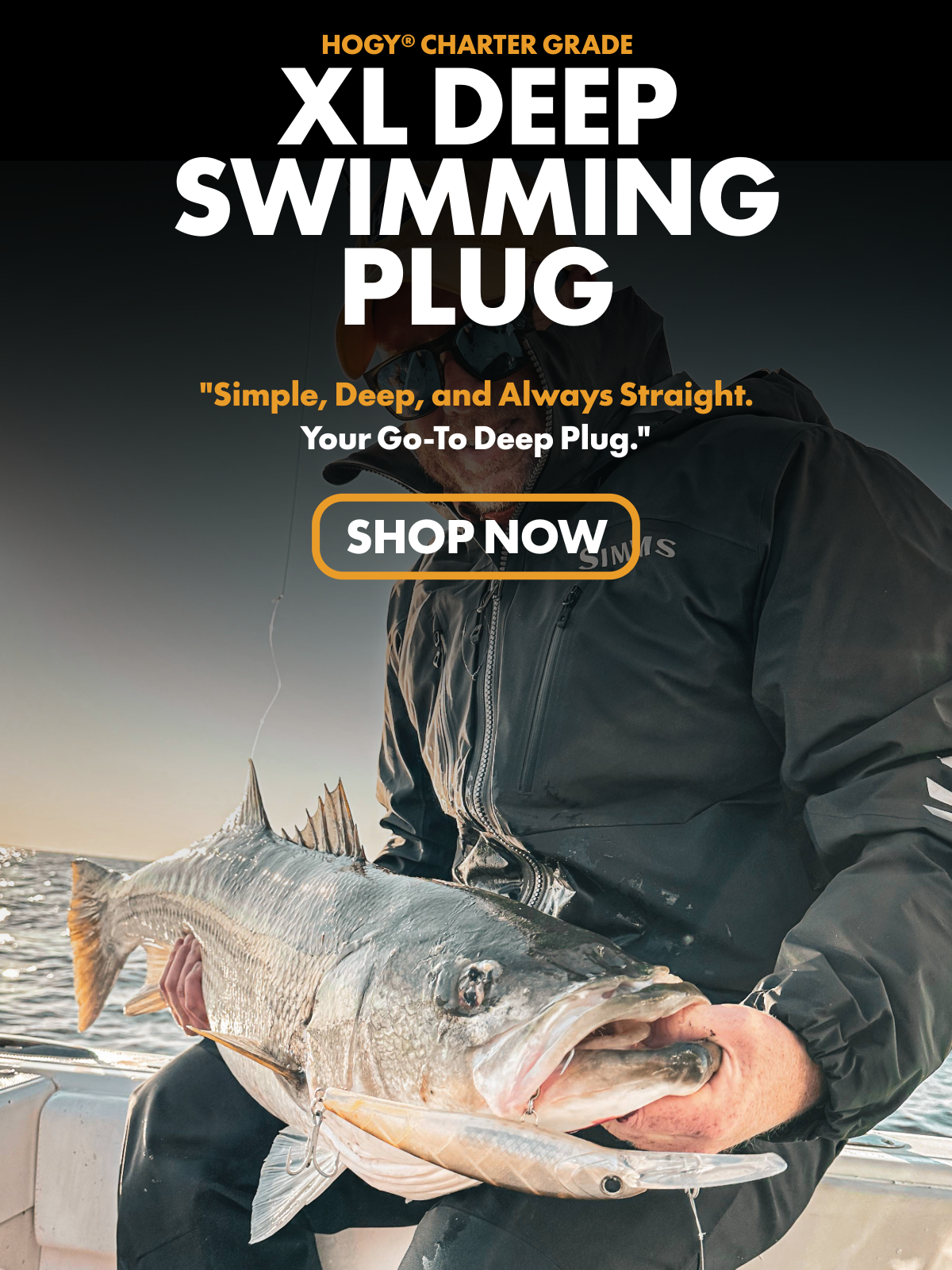
4 Protail Paddle 6.5 inch “The Loud One”
WHEN Dirty water. The outgoing tide out of a river-fed bay like Winyah Bay or the Santee Delta, where the bait is mullet and menhaden, or a patch of churned-up water off Cape Canaveral where bull reds are rooting the bottom in 20 to 30 feet.
FISH IT Let it hit bottom and bounce it a few times so the tail starts pushing water, then swim it back slow with short pauses that let it fall. Most bites come on the drop. Fish rooting the bottom want it right there: quick, erratic hops that never leave the bottom.
WHY THEY'LL LOVE IT When a red can't see it, it has to feel it. The big paddle puts out a heavy pulse in stained water, and it's the toughest softbait you can buy, so oyster shell and a long fight don't finish it. Black is the dirty-water color.
“Great swimming action. Much tougher plastic...” Daniel P.
Add to cart | MSRP $11.95See details ›
5 Protail Paddle Guide Pack 6.5 inch “The Deep End”
WHEN Deep, fast water: the Charleston and St. Johns jetties, Perdido Pass, the Galveston jetties, and the mouth of Mobile Bay, where bull reds stay into winter. They hold low beside the current and let the bait come to them. Under the Three Mile Bridge lights in Pensacola, Marty Mood found them 20 to 28 feet down with the wind against the tide.
FISH IT Cast far enough up-current that it has time to sink, then let it swing down with the flow, ticking bottom. Lift it a few feet, let it drop back with no slack, and stay in touch through the whole drift. Swinging over them before it gets down? That's what the fourth ounce is for.
WHY THEY'LL LOVE IT Rocks eat lures, and three in the pack means a snag doesn't end the tide. The bigger Protails are built with a reinforced battle hook pocket, so the body stays seated when a bull red digs for the rocks.
“I love how easy it is since it comes prerigged.” William S.
Add to cart | MSRP $39.95See details ›
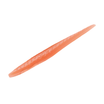
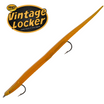
6 Original 7 inch “The Assassin”
WHEN Sight casting big reds in shallow water. On the Eastern Shore of Maryland and Virginia in May, bull reds push into the marsh on the flood after shedder crabs and pogies. Mosquito Lagoon has the same game on its shallow flats all year.
FISH IT Land it soft ahead of the fish and let it dead drift with small twitches. Rod tip pointed at the water, a little pull, slow reel. A fluorocarbon leader sinks and takes the weightless bait down just a little, and that's the whole rig. Think a red is sitting in a five-foot hole waiting on the tide? Fish the hole.
WHY THEY'LL LOVE IT Spooky reds in skinny water want a quiet landing, and this one comes down soft. Hand-poured from softer plastic, with a fall injection molds can't match. Bubblegum is Capt. Steve Mason's red drum color: shedder crabs molt soft and pink, and the reds key on them.
“I ordered these in several colors but the bubble gum works best.” John A.
Add to cart | MSRP $11.95See details ›
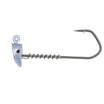
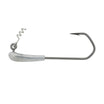
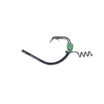
7 Keeper Soft Circle Hook “The Clean Release”
WHEN This is what the Original rides. Unweighted is the sight-casting rig in skinny water. In the Charleston surf, Capt. Tucker Blythe goes unweighted when the wind is down and the water is clear, working the troughs on the low incoming tide.
FISH IT Screw the bait onto the keeper nose-first and seat the hook so the Original rides straight. In the surf, slow down and walk it side to side across the trough. When a red takes it, no hookset: wind tight and let the drag do the work. Rough surf? Step up to the Weighted Keeper 4/0 1/3 oz so it holds in the wash.
WHY THEY'LL LOVE IT A circle hook pins the corner of the jaw, so the big breeders go back clean. The twist-on screw keeper holds the bait with almost no hardware inside, which leaves the Original free to move.
Add to cart | MSRP $8.95See details ›
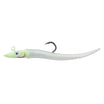
8 Slowtail Twin Tail Guide Pack “The First Cast”
WHEN All year down south: the potholes of Mosquito Lagoon and the Lower Laguna Madre, the mangrove edges from the Everglades to Ten Thousand Islands, and the Chandeleur flats spring through fall. In winter around Charleston, Capt. Tucker Blythe finds the reds schooled on the shallow oyster mud flats at low tide. Shallow water, slow fish.
FISH IT Cast parallel to the mangroves or the grass edge and crawl it, just fast enough to keep both tails working. On a deeper shoreline let it fall and hop it along the bottom with short twitches. Cold water means slower still. Loop knot, always.
WHY THEY'LL LOVE IT Twin tails that swim with almost no forward speed, which is what a red on a skinny flat wants. It's built trophy-inshore strong on a 3X VMC 8/0, so a big bull that wanders up on the flat doesn't win. Bone is the clean-water color.
“Good strong hook and durable tail.” Steve S.
Add to cart | MSRP $29.95See details ›WHICH ONE, WHEN
| WHEN YOU SEE THIS | TIE ON |
|---|---|
| Reds schooled on top over pogies or mullet | 1 Macro Chug |
| Reds on top but refusing the popper, or a slick calm morning | 2 Dog Walker |
| School sank out, or reds holding under the bait over hard bottom | 3 Protail 5.5 in |
| Dirty water, an outgoing river tide, reds rooting the bottom | 4 Protail 6.5 in 2 oz |
| Jetty, pass or channel edge in hard current | 5 Protail 6.5 in 4 oz |
| Big reds cruising a shallow flat or marsh edge | 6 Original 7 in |
| Rigging the Original: unweighted for the flats or a calm surf trough | 7 Circle Hook |
| Skinny flats, mangroves, cold water, fish that won't chase | 8 Slowtail |
Bull reds from the boat: a 7 to 8 foot medium-heavy spinning rod, a 5000 to 6000 reel, 30 lb braid and a 40 to 60 lb fluorocarbon leader. Around jetty rock and deep river channels, go to 50 lb braid and 60 to 80 lb leader. Flats and surf reds: a 7 to 7.5 foot rod, 15 to 20 lb braid and 20 to 25 lb fluorocarbon. Loop knot to the Slowtail.
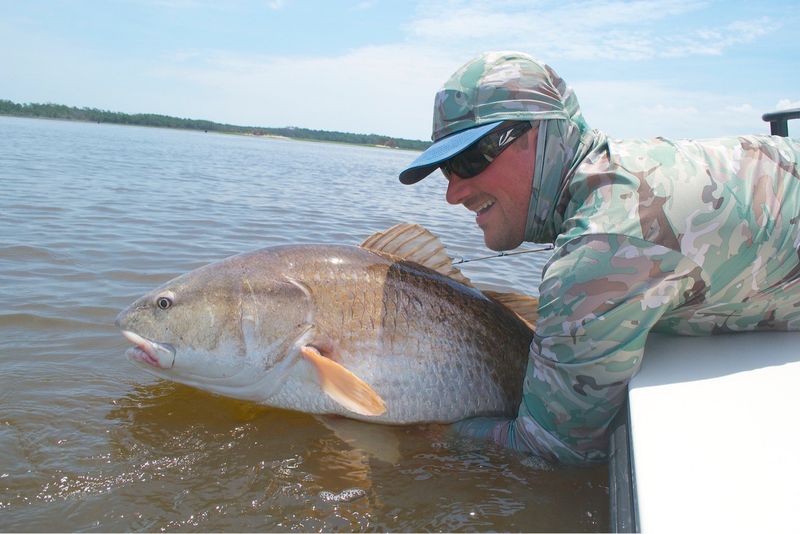
The big reds are the breeders. Unhook it in the water, hold it upright with its head into the current, and let it kick off on its own. Photo? One quick lift, then straight back.
More from Hogy: Slowtail vs. Protail Paddle, my rundown on when each one earns the cast, flats reds to bull reds in deep water.
QUESTIONS ANGLERS ASK
What are the best lures for bull redfish?
Topwater plugs, pre-rigged soft baits and strong hooks. When reds school on top over pogies I throw the FRANKEN Macro Chug, then the Dog Walker if they refuse it. Under the schools it's a 5.5 inch Protail Paddle, in dirty water the 6.5 inch Black, and at the jetties the 4 oz pack. On the flats, a 7 inch Original or a Slowtail.
When do bull reds run on the East Coast and Gulf?
Spring through winter, depending on where you fish. Big red drum reach the mouth of the Chesapeake in late April and early May and school on top through the summer. The fall run works Cape Lookout, the Charleston and St. Johns jetties and the mouth of Mobile Bay into winter. Mosquito Lagoon and the Lower Laguna Madre hold redfish all year.
What color lure is best for redfish?
Bone in clean water, Black or Bubblegum when it's stained. Bone is the first pick for most of the redfish guides we've talked to. On the outgoing tide out of a river-fed bay the water turns murky and a dark profile shows up better, and on the Eastern Shore Capt. Steve Mason throws Bubblegum on murky days. This lineup covers all three.