








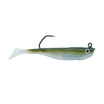
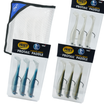
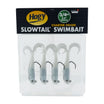
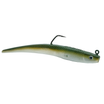
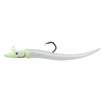
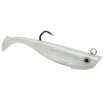
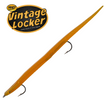
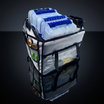
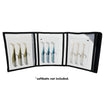
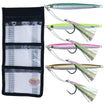
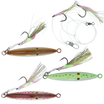
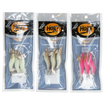
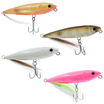
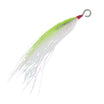
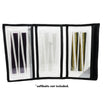
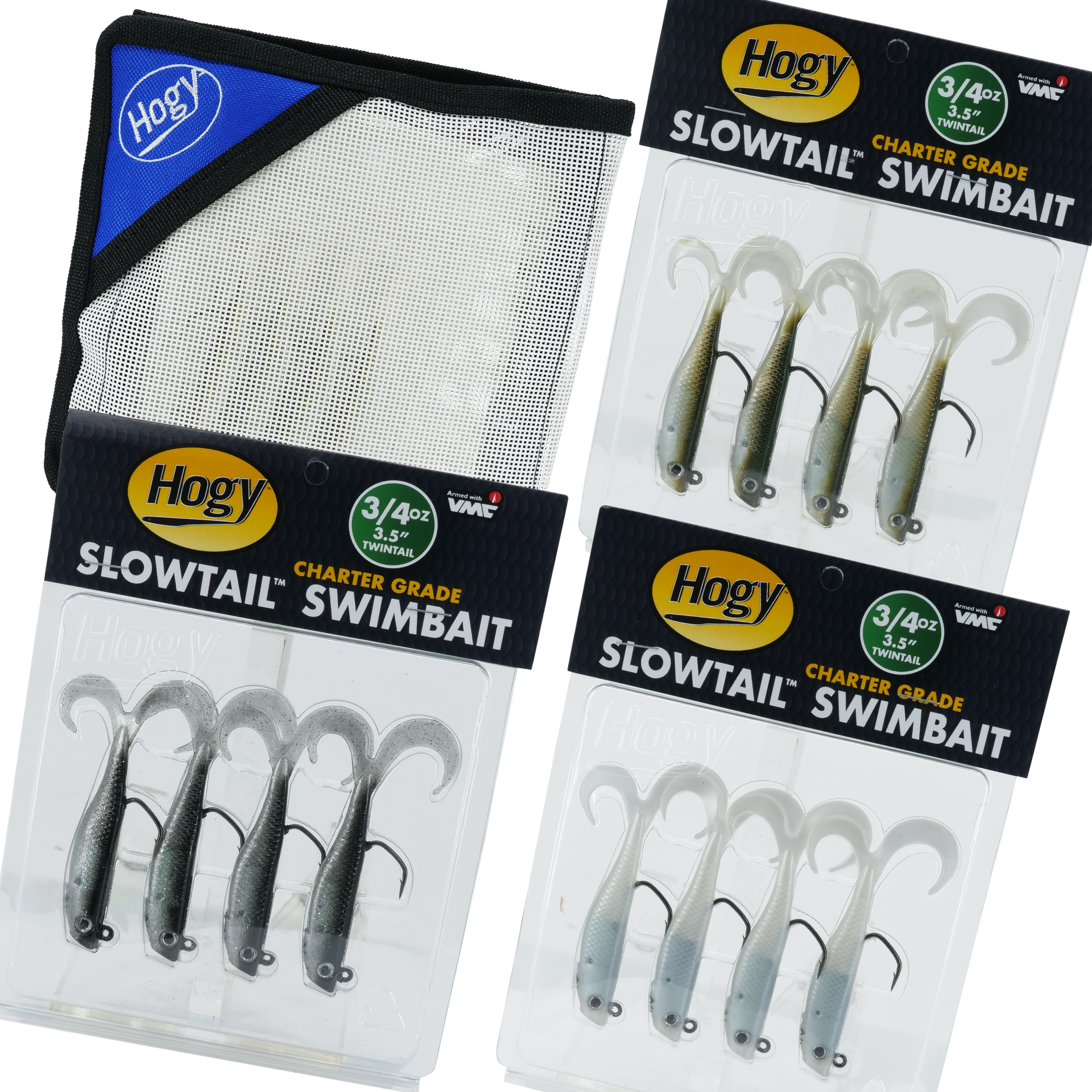
Slowtail Twin Tail Guide Pack: 3.5" 3/4oz Bundle (13pc)
Grade
Last
Shipping
Checkout
Product Specifications

"The Code Breaker. Small bait. Big fish."

Description
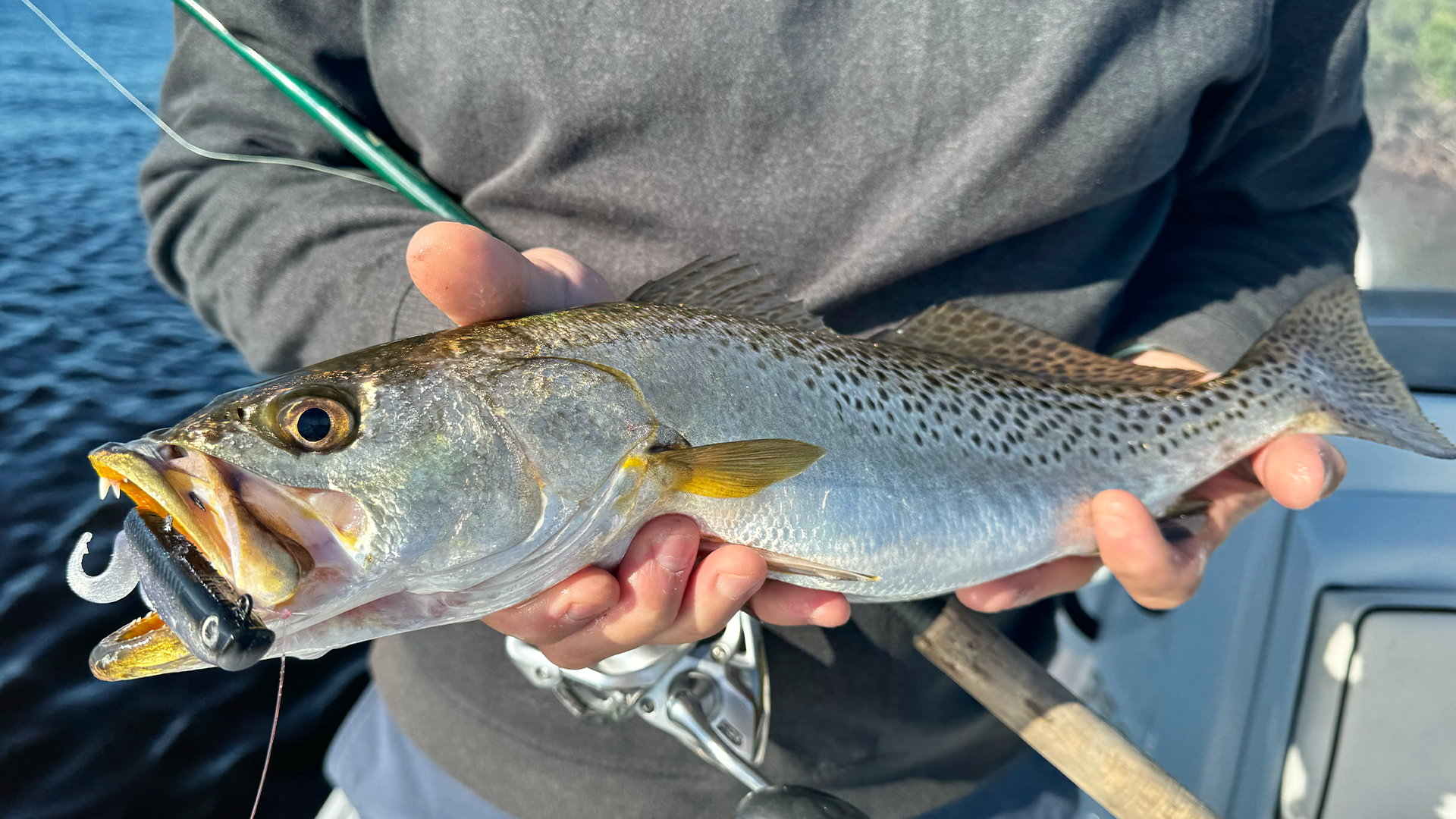
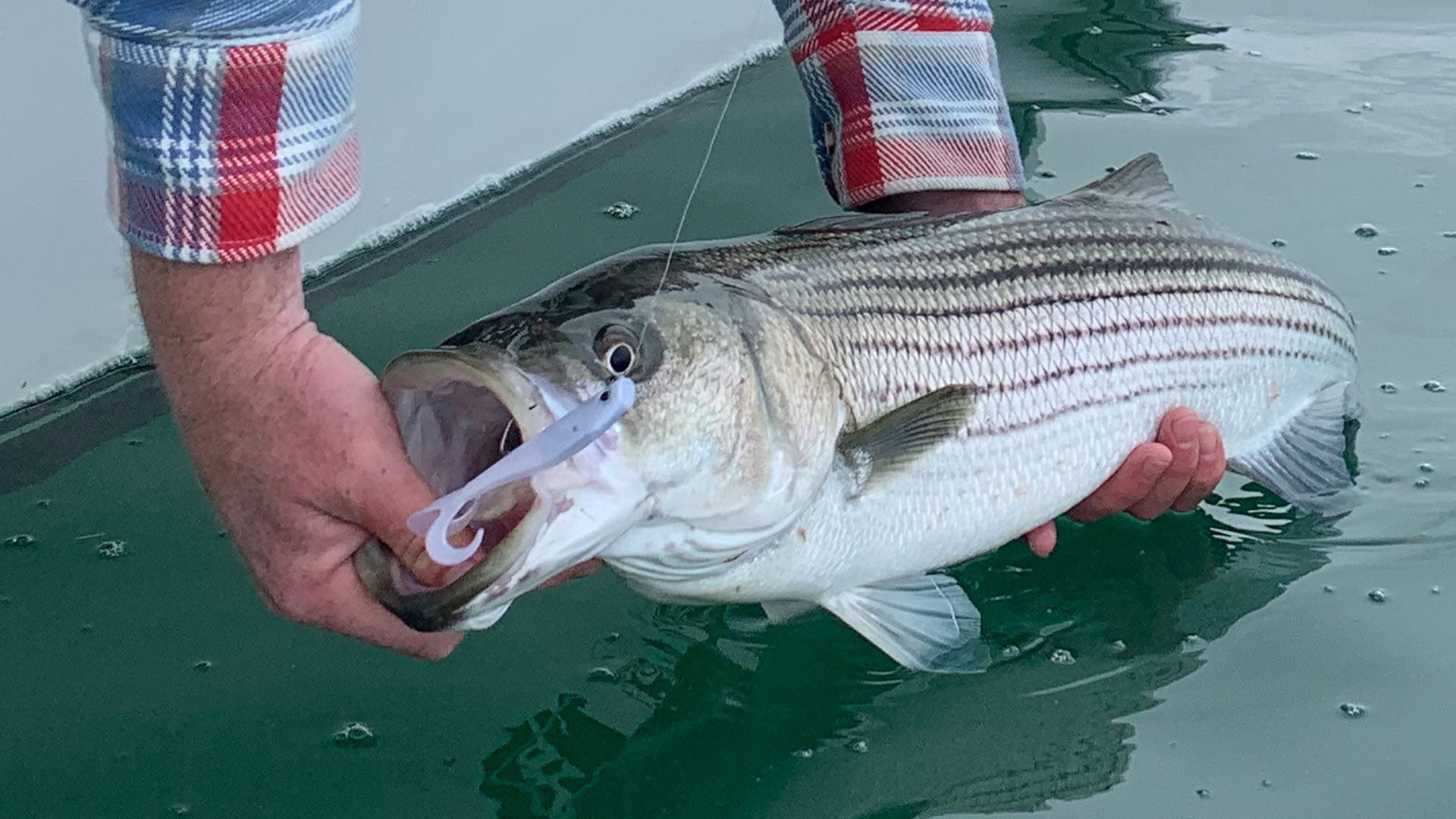
Designed for ultra-slow presentations in shallow water or near the surface, the Slow Tail Swimbait features Hogy's trusted trophy-grade rigging ready to target tackle-busting tarpon, tuna, snook, striped bass, cobia, and more.
Featuring twin action-packed ribbon tails for a lifelike swimming action at very slow speeds, these baits are ideal for targeting lethargic, pressured, or generally finicky gamefish by offering a slower, more natural presentation. Ideally fished with slow
steady swimming action, or a slightly stop-and-go retrieve, these baits effectively imitate unassuming mullet, herring, menhaden, shad, and more.
Key Features
Twin-Tail Flutter — Action at Zero Speed: The defining feature. Two soft tails produce a delicate, low-frequency flutter that stays alive with almost no forward speed — on the fall, on a dead drift, on the slowest possible crawl. Where a paddle tail needs forward motion to kick, the Slowtail’s twin fins pulse and shimmer with nothing more than gravity or current. This is what makes it lethal for dock snook (they eat it dropping past pilings), bridge tarpon (they inhale it drifting through the shadow line), and pressured stripers (they commit because it doesn’t overdrive the zone).
Pre-Rigged with Labeled Chin Weight: Weight and hook are molded right into the bait, so it tracks perfectly every time. Each model has a labeled chin weight — ¾ oz, 1 oz, or 1¼ oz — so you can grab the exact one you want without guessing. No spinning, no tail roll, no slop. Pre-rigged Slowtails cast farther, swim straighter, and hold up better under pressure than any rig-your-own twin tail.
The Fall Is the Presentation: Most softbaits are designed to be retrieved. The Slowtail is designed to fall. The twin tails continue fluttering as the bait descends, keeping fish engaged throughout the entire drop. This is critical around vertical structure — seawalls, dock pilings, bridge abutments, rock fingers — where snook, tarpon, and stripers stage at specific depths and eat whatever drifts past at the right level. Cast tight, let it fall, and the twin tails do the selling on the way down.
Micro-Forage Profile: The Slowtail fills the finesse and micro-forage niche that traditional paddles and stickbaits cannot reach. Its compact profile across three sizes — 3.5”, 4.5”, and 5.5” — matches the smallest prey layers that big predators feed on when they’re not chasing baitfish: shrimp, krill, crabs, glass minnows, juvenile pilchards. In the tropics, this is the bread-and-butter forage year-round. In the Northeast, it’s the early-season and tough-bite answer.
Fly-Like Drift: Because the lure swims naturally on a dead drift, it excels when swung through current ahead of structure — similar to a trout fly. Cast uptide, let it swing, and the twin tails pulse through the arc without any angler input. Tarpon guides who fish passes and bridges use this exact presentation with live shrimp. The Slowtail replicates it on artificial.
Retrieve & Techniques
- Glide and Pause:
- When: Clear water, shallow structure, sight-casting to cruising snook or stripers on flats. Fish that inspect before committing.
- How: Rod horizontal to slightly down. Short, slow reel turns punctuated with frequent pauses. Let the twin tails flutter on the stop. Each pause extends hang time in the strike zone.
- Why: Creates a long glide with a soft flutter that mimics a dying anchovy, drifting shrimp, or stunned glass minnow. Fish that won’t eat a moving bait will eat this on the pause. The Slowtail’s signature retrieve.
- Slow and Low:
- When: Fish holding close to bottom or contour edges. Snook stacked on dock shadows, stripers rooting along tide edges, seatrout over grass.
- How: Rod tip pointed down toward structure. Crawl the lure along bottom with minimal input — just enough to keep it moving. The twin tails flutter even at crawling speed.
- Why: Subtle profile and twin-tail flutter imitate small crabs, shrimp, or sand eels nosing along bottom. Deadly in pressured situations where louder presentations get refused.
- Twitch and Quiver:
- When: Clear water, pressured fish, or suspended predators that are inspecting but not committing. Works great at night or in calm estuaries. Snook on lit docks, tarpon under bridge lights, stripers in calm backwaters.
- How: Rod neutral at 9–10 o’clock. Short, gentle twitches with small pauses in between. Each twitch makes the tails kick and quiver, then they pulse and shimmer on the pause.
- Why: Mimics a nervous or wounded baitfish trembling in place. The micro-movement is barely visible to the angler but broadcasts through the water column to predators hunting by lateral line. This is the night-fishing retrieve.
- Kerplunk and Pulse:
- When: Post-blitz albies or bonito that have pushed down, tarpon rolling in a pass, or fish hanging mid-column after a surface feed.
- How: Cast long. Let the bait land with a deliberate splash (the “kerplunk”). Allow it to sink naturally for a few seconds. Give a firm twitch or two to pulse the twin tails, then repeat the sink–pulse rhythm.
- Why: The splash mimics a baitfish falling into the melee. The pulsing sink keeps the lure in the zone. Great for picking off fish that slid deeper but are still keyed on stragglers. Tarpon guides use this exact cadence with live shrimp — the Slowtail replicates it.
- Dead Drift:
- When: Current seams, tidal rivers, bridge passes, inlet mouths, or any ambush zone where fish expect easy meals swept by current. The signature Salty Cape technique applied to a twin tail.
- How: Rod slightly elevated to maintain slack control. No active retrieve. Let current carry the bait, with occasional twitches to animate the twin tails. Collect line to stay connected.
- Why: The bait acts like stunned forage swept by tide — supernatural in rivers, estuaries, and passes. Tarpon in passes eat shrimp exactly this way. Snook on outgoing tides eat crabs exactly this way. Stripers in rip seams eat sand eels exactly this way. Same presentation, same physics, different coastlines.
Salty Cape System® Filters
- Environmental Factors (E):
- Flat calm + clear water: Natural flutter creates presence without flash or noise. The defining Slowtail scenario — glass-calm flats, gin-clear docks, still backwaters.
- Light wind or slack current: Tail kicks with almost no water pressure. Stays alive when everything else goes dead. Slack-tide dock fishing is prime time.
- Ultra-shallow water (< 1 ft): Keeps swimming even when crawling over sand, mud, eelgrass, or turtle grass. Doesn’t bottom out like heavier swimbaits.
- Night / lit structure: Twin tails pulse and shimmer under dock lights and bridge lights. The subtle movement registers against the light column without overdoing it.
- Observational Factors — BASE:
- Micro bait visible (glass minnows, small pilchards, juvenile shrimp): The 3.5” matches the forage size that paddles and plugs overshoot.
- Shrimp popping on the surface: Slowtail on a dead drift or glide-and-pause mimics a shrimp falling back down. Snook and seatrout key on this.
- No visible bait but fish are present: Subtle search tool for flats, backwaters, and structure edges where fish are feeding on micro-forage you can’t see.
- Bait hugging structure (pilings, mangrove roots, seawalls): Cast tight, let the Slowtail fall past the shadow line. The flutter on the drop triggers ambush predators.
- A — Activity / Feeding Style:
- Following but not eating: The Slowtail’s subtle twin-tail swim gives fish time to inspect and still commit. The pause is the trigger.
- Nose-down feeding behavior: Fish rooting along bottom, nosing through sand or grass. Slow-and-Low crawl matches their mood.
- Post-blitz shutdown: Fish pushed down after a surface feed. Kerplunk-and-Pulse drops into their zone with a natural entry.
- Refusing everything: The nuclear finesse option. If they won’t eat the paddle, the eel, or the stickbait, they’ll eat this.
- Rolling/cruising (tarpon): Dead drift through the roll zone. Don’t retrieve. Let the current deliver.
- S — Structure (Relation):
- Pinned to structure (dock pilings, seawalls, bridge abutments, rock fingers): Cast tight, let it fall. The twin tails flutter on the drop. This is the snook presentation.
- Suspended mid-column: Count down to their depth, then glide-and-pause at their level. The Slowtail hangs in the zone longer than any other softbait.
- Bottom-hugging: Crawl it across sand, grass, or mud. Still looks alive at zero speed over eelgrass, turtle grass, and oyster beds.
- Holding in current (passes, bridge shadows, rip seams, inlet mouths): Dead drift through. Fish the swing. Let the bait act like stunned forage swept by tide.
- E — Echo / Sonar:
- Marks at specific depth around structure: Count the Slowtail down to match. The labeled chin weight makes depth control predictable.
- Marks mid-column, not on bottom: Suspended fish. Glide-and-Pause at their depth, or dead drift through.
- Fish following the lure on screen: Stop. Let it hang. The twin tails keep pulsing at zero speed while the fish decides.
- Structure + Approach (S+A):
- Docks, seawalls, pilings: Cast tight, let it fall parallel to the structure. Count it down past shadow lines and ambush zones. Snook, tarpon, and stripers all stage here.
- Mangrove edges / marsh drains: Swim it slow along root lines and outflow seams. The ultra-subtle presentation won’t blow out fish staging in inches of water.
- Bridge shadows and passes: Dead drift through the shadow line on current. Tarpon eat shrimp exactly this way. The Slowtail replicates it on artificial.
- Ultra-skinny flats: Crawl it across inches of water over mud, sand, eelgrass, or turtle grass. Still looks alive at speeds that would kill a paddle tail.
- Estuaries + backwaters: Swim it slow along drains, creeks, and grass edges. Fan-cast to cover water with the ¾ oz or reach structure with the 1¼ oz.
- Eddies + tidal pockets: Drop and hover in soft seams where subtle presentation is key. The Slowtail suspends in micro-current zones that flush other baits through too fast.
Bundle Contents
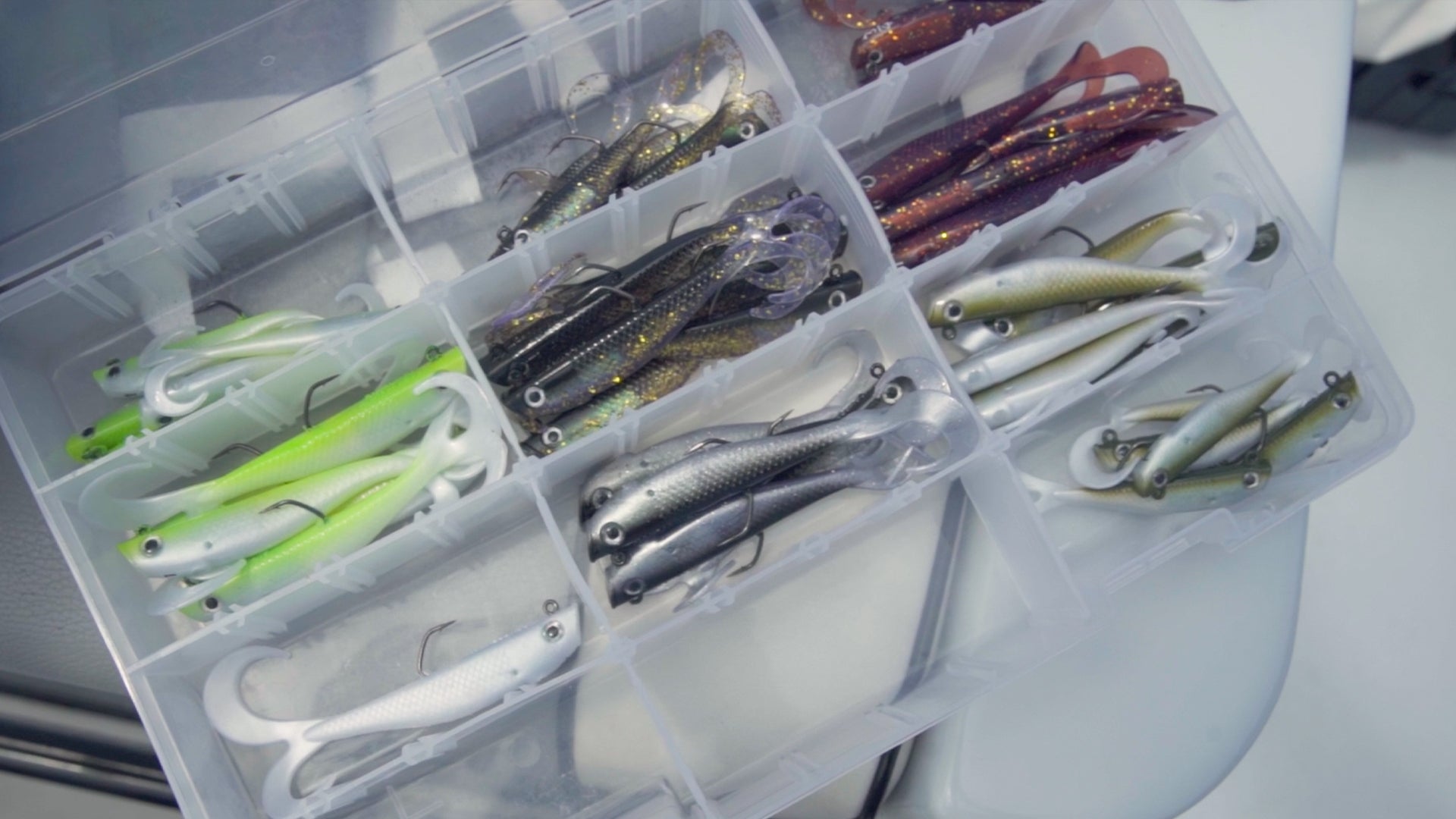
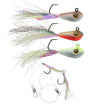
- (1) Slowtail Twin Tail Guide Pack: 3.5" 3/4oz (4pc) Bone
- (1) Slowtail Twin Tail Guide Pack: 3.5" 3/4oz (4pc) Olive
- (1) Slowtail Twin Tail Guide Pack: 3.5" 3/4oz (4pc) Black Silver
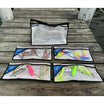
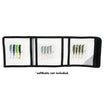
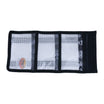
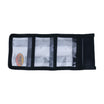
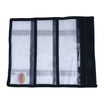
- (1) Mesh Softbait Wallet Small
Reviews
- CCraigVerified Buyer1 year agoReviewingSlowtail: 5.5" 1.25oz Twin TailRated 5 out of 5 starsSlowtail for shore night time stripers in a bay
As has been mentioned by others the slowtail is a good early season striper bait in shallow, slightly discolored water. This spring I pulled it out of the bag to try at night. Since slow retrieve is commonly used for night striper fishing seemed like a good fit. Enjoyed a fun 2h hours of constant action on the outgoing tide. Fish hits were strong and hook up ratio was good compared to other swim shads I have used. Other nearby fisherman were throwing metal-lipped surface swimmers which is the go to lure when bunker are around. This spring there has been a lack of bunker. The smaller profile of the slow tail may have matched the smaller bait like spearing. I was pleasantly surprised how well the lure held up after many hits and fish. Lost only one eye on the lure. For 1.25 oz weight the lure threw well on my moderate action surf rod. I used the chartreuse and white color version. If it’s not chartreuse, it’s no use; doesn’t hold since it seems not to be available anymore.
Was this helpful? - JCJoel C.Verified Reviewer1 year agoReviewingSlowtail: 5.5" 1.25oz Twin TailRated 5 out of 5 starsHogy slow tail killing it
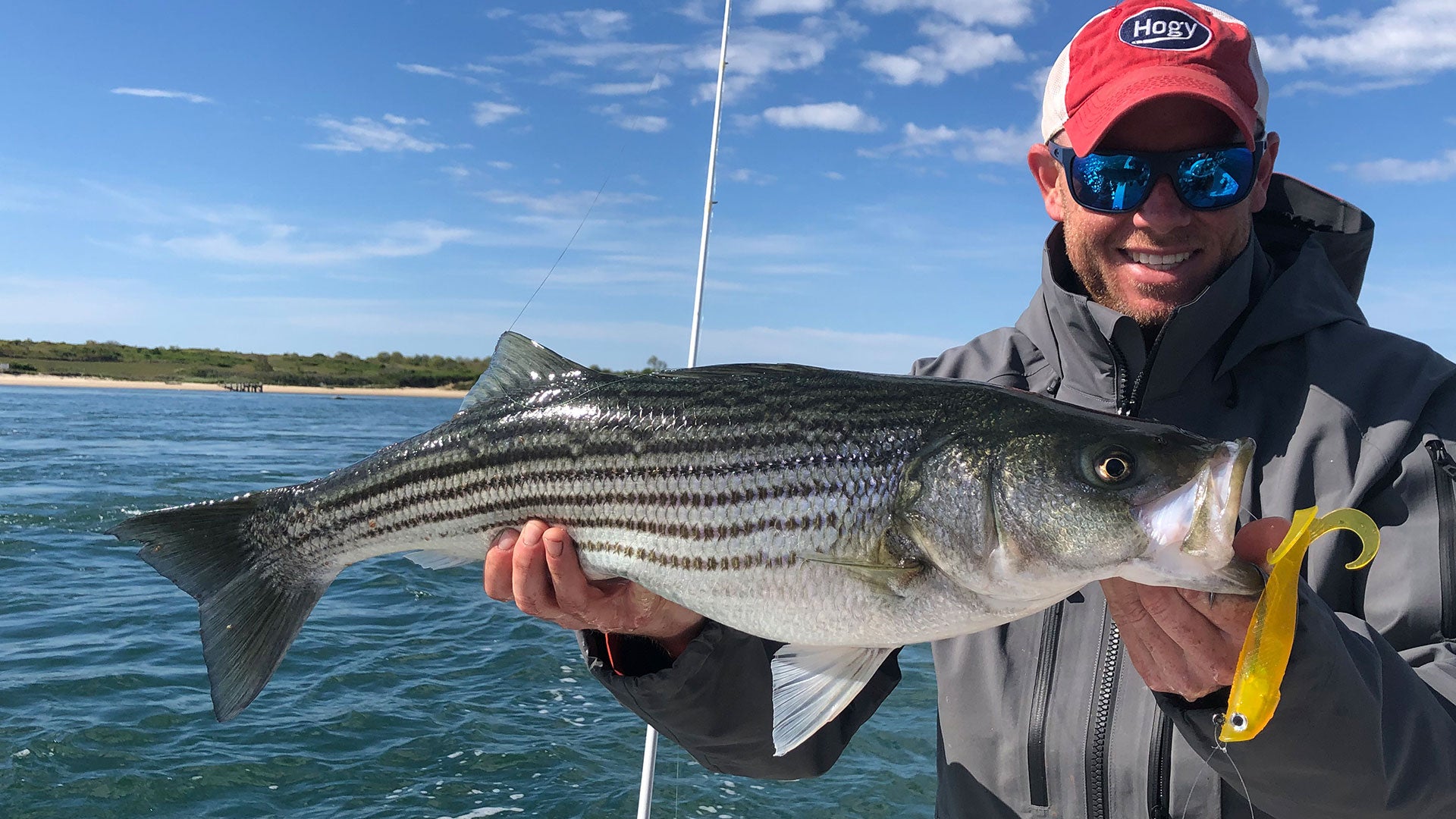
April 16th, 14 stripers, all on the slowtail 1.25 oz. white. My first striper of the year back in March on the slowtail. If you look closely you'll see its little face peeking out. April 17th my first weakfish of the year (3 weeks earlier than last year). My grandsons first striper of the year(yeah, slowtail) who now steals my clothes including my Hogy hat
Was this helpful? - JGJames g l.Verified Buyer1 year agoReviewingSlowtail Twin Tail: 4.5" 1ozRated 5 out of 5 starsAlmost foolproof!
And I might be THE authority on that !
Drifts with gossamer lines and the slow tail are our early season warm up for anything and everything that swims ….
A generation ago stout rods and chum pots , spreader rigs and black sided winches were the spring thing to do .
Today we search for skinny waters on a late afternoon. A light tackle spinning rod with fine braid and HOGY SLOWTAIL keeps us hopping and dropping fish in the box
It’s dynamic and interactive and it’s what fishing is when fishing is fun!
Less deep hookups mean easier release - for the kids and for the fish … you can convert any operational bass or trout setup and like my daughter told her dad a lifetime ago :
“ dad - it’s not what we kill … it’s what we lesrn !”
Love ya Hogy
Thanx ‘m
Capt Jimbo
Was this helpful? - SNShawn N.Verified Buyer1 year agoReviewingSlowtail Twin Tail: 3.5" 3/4ozRated 5 out of 5 starsGood Eatin.....
Love this lure, attracts a multitude of fish. I use it to "prospect" for tarpon in the keys with some success....
Was this helpful? - SNShawn N.Verified Buyer1 year agoReviewingSlowtail: 5.5" 1.25oz Twin TailRated 5 out of 5 starsGets the job done !!!!
Oustanding lure.... I have used it for Tarpon many times and triggers bites more than anything else I have ever used.... highly recommend...
Was this helpful?
DOCK TALK
FAQ about fishing applications & techniques for this product.
Why is the Slowtail so underrated?
Because it doesn’t look impressive on the shelf or in your hand. It’s small, it’s subtle, and it doesn’t have the visual wow of a big paddle tail or a charter-grade plug. But guides know. The Slowtail has a strong insider following among advanced anglers who rely on it during the toughest feeding conditions. It’s the lure that works when nothing else does — and that’s the definition of a code breaker.
How is it different from the Protail Paddle?
The Protail Paddle has a single paddle tail that produces a strong, steady thump on a straight retrieve — it’s always working. The Slowtail has twin tails that produce a softer, lower-frequency flutter that comes alive on pauses, falls, and dead drifts. The Paddle is your workhorse. The Slowtail is your finesse closer. If the Paddle is a drumbeat, the Slowtail is a whisper.
Can I really catch tarpon on a 4.5” softbait?
Yes. Tarpon eat shrimp. Shrimp are small. When tarpon are in a shrimp pattern — especially juveniles in creeks and backwaters, or adults drifting through passes on moderate current — the 4.5” Slowtail dead-drifted on current is exactly the profile and action they’re looking for. The 1 oz weight gets it down in current without overpowering the presentation. Upgrade your leader (60–80 lb fluorocarbon for adults), not your lure size. Small bait, big fish.
When should I NOT use the Slowtail?
When fish are aggressive, blitzing, and you need to cover water fast. The Slowtail is not a search tool. It’s a finesse closer. It doesn’t draw fish from distance, and the soft flutter action means it won’t compete with big vibration in dirty water or heavy chop. If you need distance, noise, or speed, reach for a Protail Paddle, casting jig, or plug. Then switch to the Slowtail when you’re on top of them and they need convincing.
In The Field
Related Videos

Winter Sea Trout | Slowtail Swimbaits
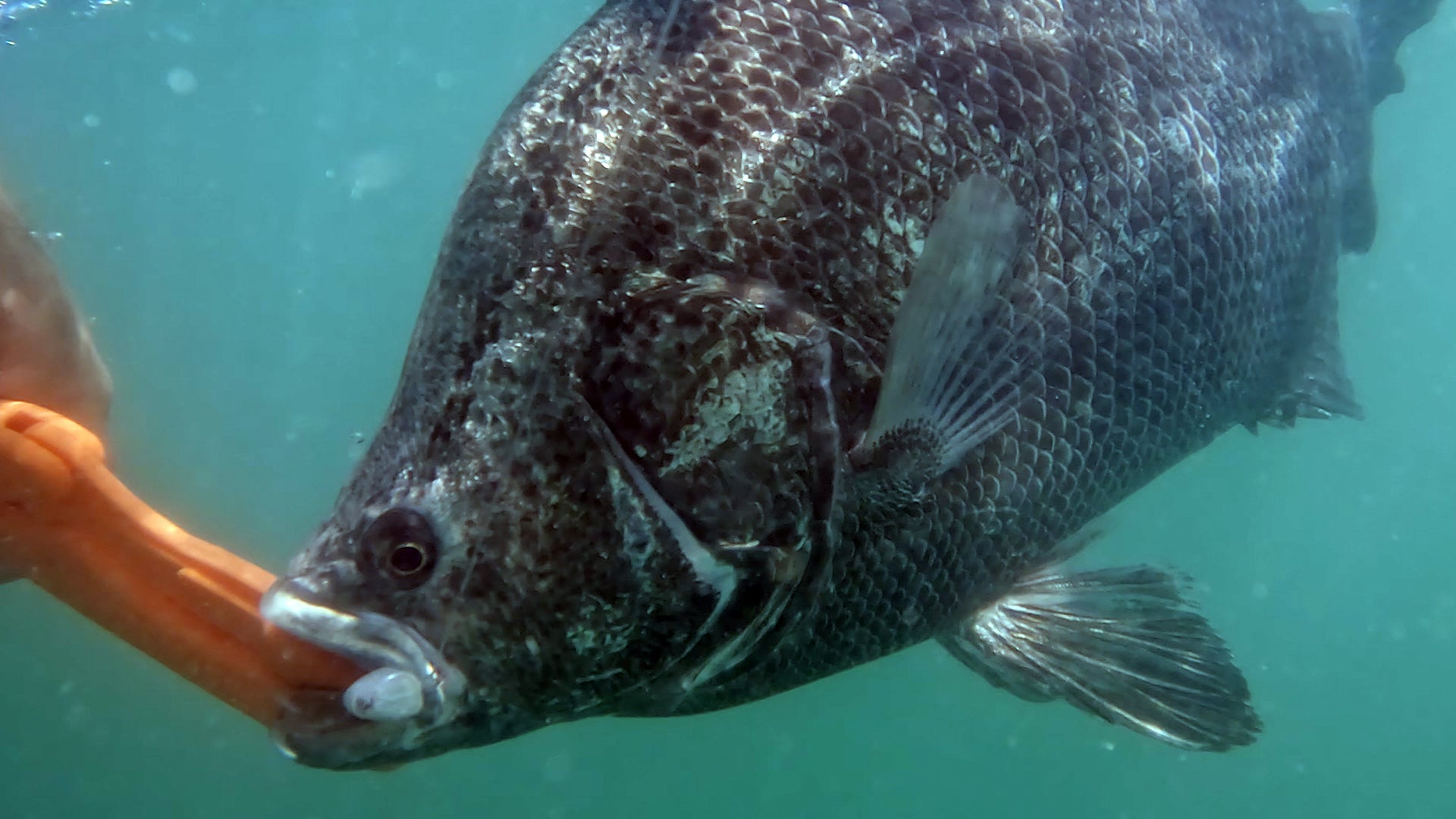
In this video, we join Capt. Ross Gallagher is down in Southern Florida for a trip targeting winter Sea Trout on Hogy Slowtail Swimbaits. The name of the game was locating grass flats and implementing a "Twitch Jigging" style retrieve to entice these Sea Trout to bite!

Sight Casting Tripletail with Slowtail Swimbaits
Capt. Ross Gallagher walks through his ideal setup for casting to triple tail down in Southern Florida. The Hogy Slowtail Swimbait is a perfect presentation for targeting these structure-dwelling tripletail. The life-like action of the twin tails allows for maximum action throughout the entirety of the water column.

How To: Slowtails For Finicky Surface Sipping Stripers
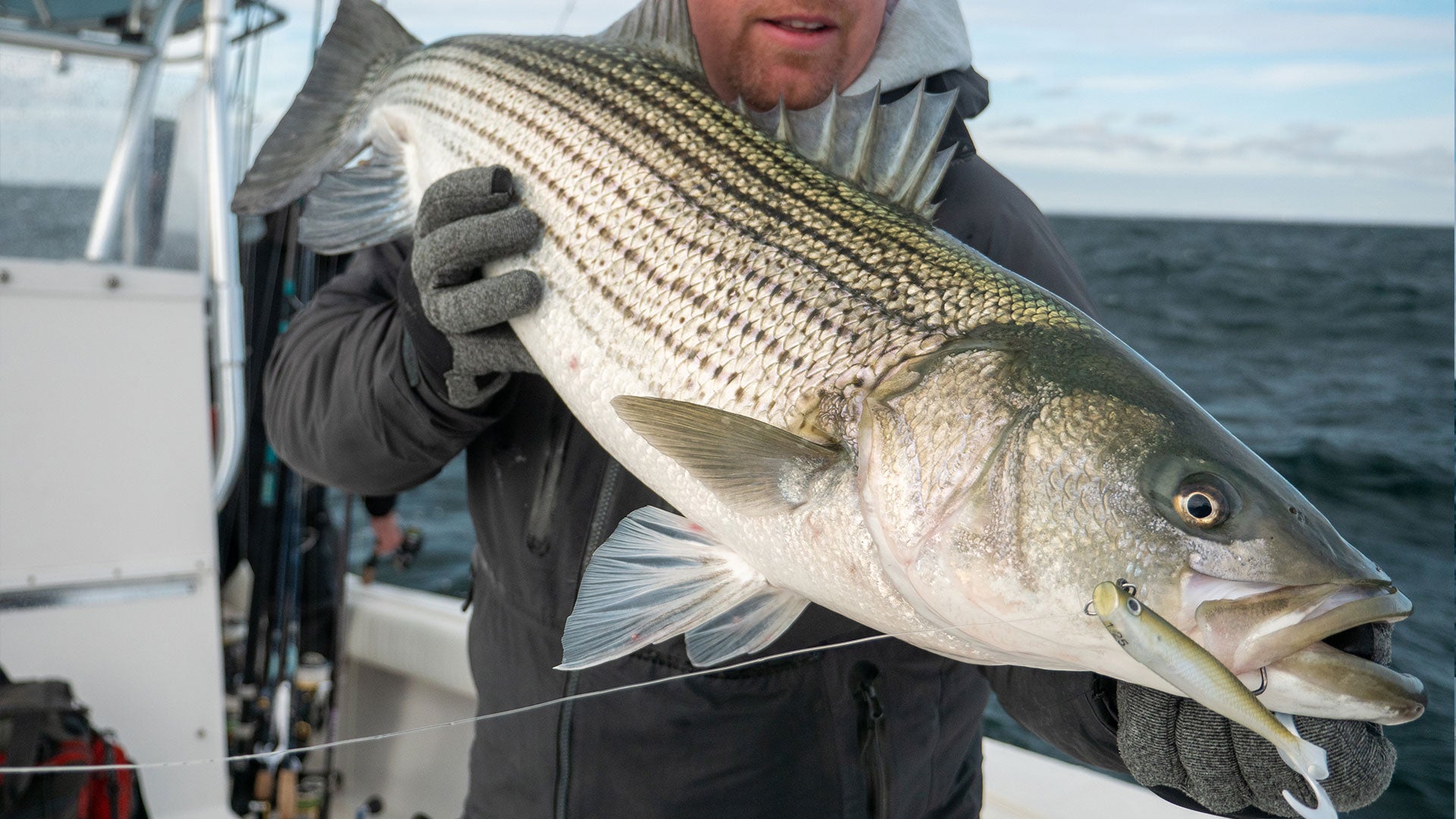
We crack the code on super finicky stripers sipping tiny hake and sand eels on the surface utilizing a slow-twitch retrieve with the new Hogy Slowtail Swimbait. Fishing out of Barnegat Inlet along coastal New Jersey with Capt. Rob Radlof of Waterman Charters, we push through some sloppy seas to find pretty epic surface feeds of southbound Striped Bass.

Dead Drifting Slowtails For Stripers
Capt. Mike Hogan joins Capt. Dave Peros targeting stripers staging in fast current along boulder fields. Fish are holding in slicks and back eddies, the perfect time to deploy a "dead drift" retrieve for maneuvering Slowtail Swimbaits through the feeding zones, and finding some quality stripers.

Spring Stripers | Hogy Slow Tails | Cast + Drop
The striped bass migration has hit Cape Cod waters! Capt. Mike Hogan heads out on Buzzards Bay aboard his 28' Contender in search of schoolie striped bass. Capt. Mike demonstrates how to catch finicky striped bass on light tackle using the Hogy Slowtails with a cast and drop retrieve!
In The Field
Deep Dives

Comparing the Hogy Slowtail vs. Hogy Protail Paddle: When and Why to Use Each
When selecting the right lure, choosing between a slow and subtle presentation or a more aggressive one can make all the difference. Two of Hogy’s most popular lures—the Hogy Slowtail and Hogy Protail Paddle—each have specific strengths and ideal conditions for use. This guide will walk through the differences,