










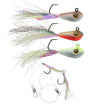

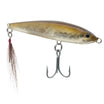
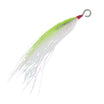
Productive Early Season Albie Recons

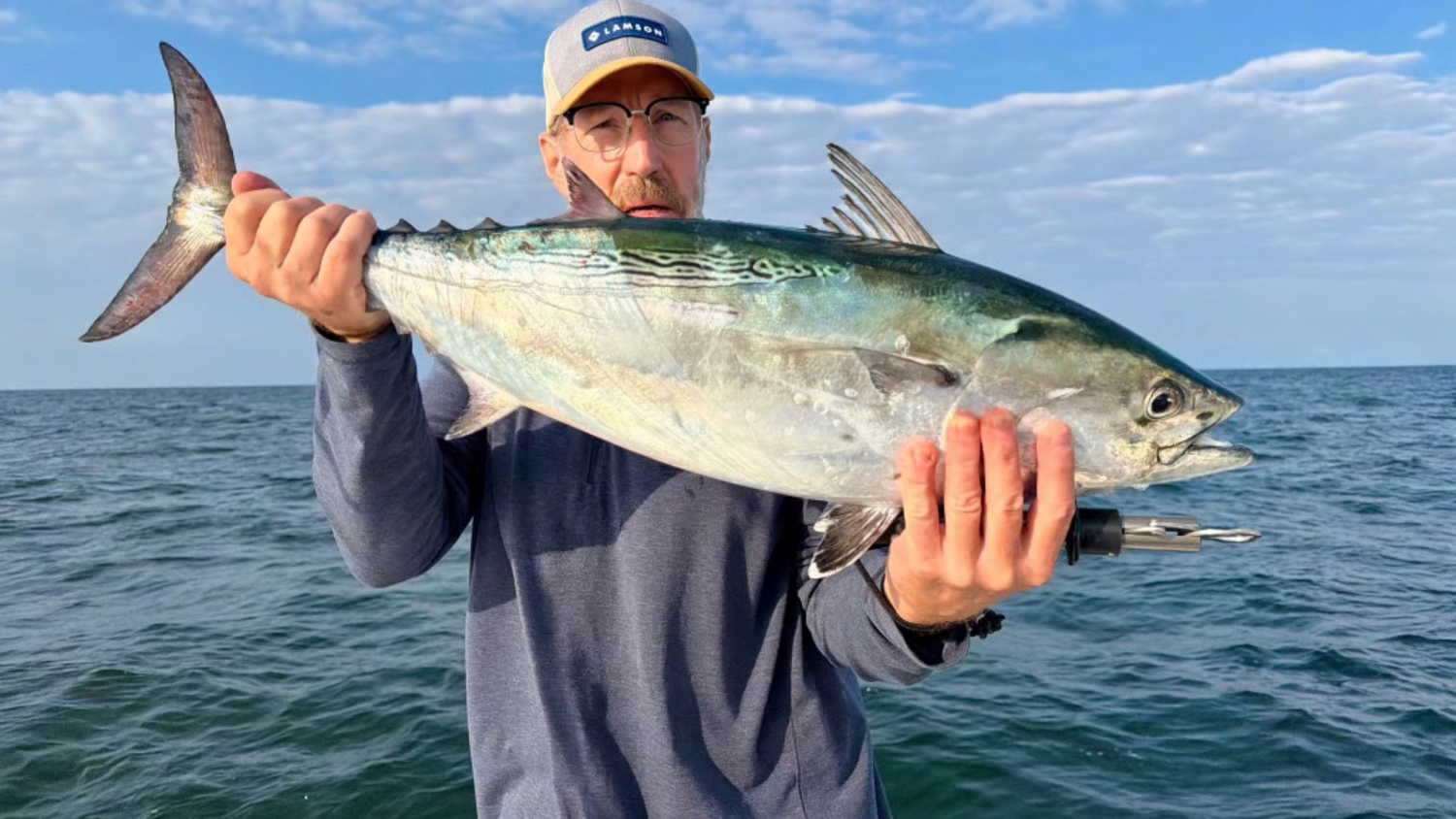
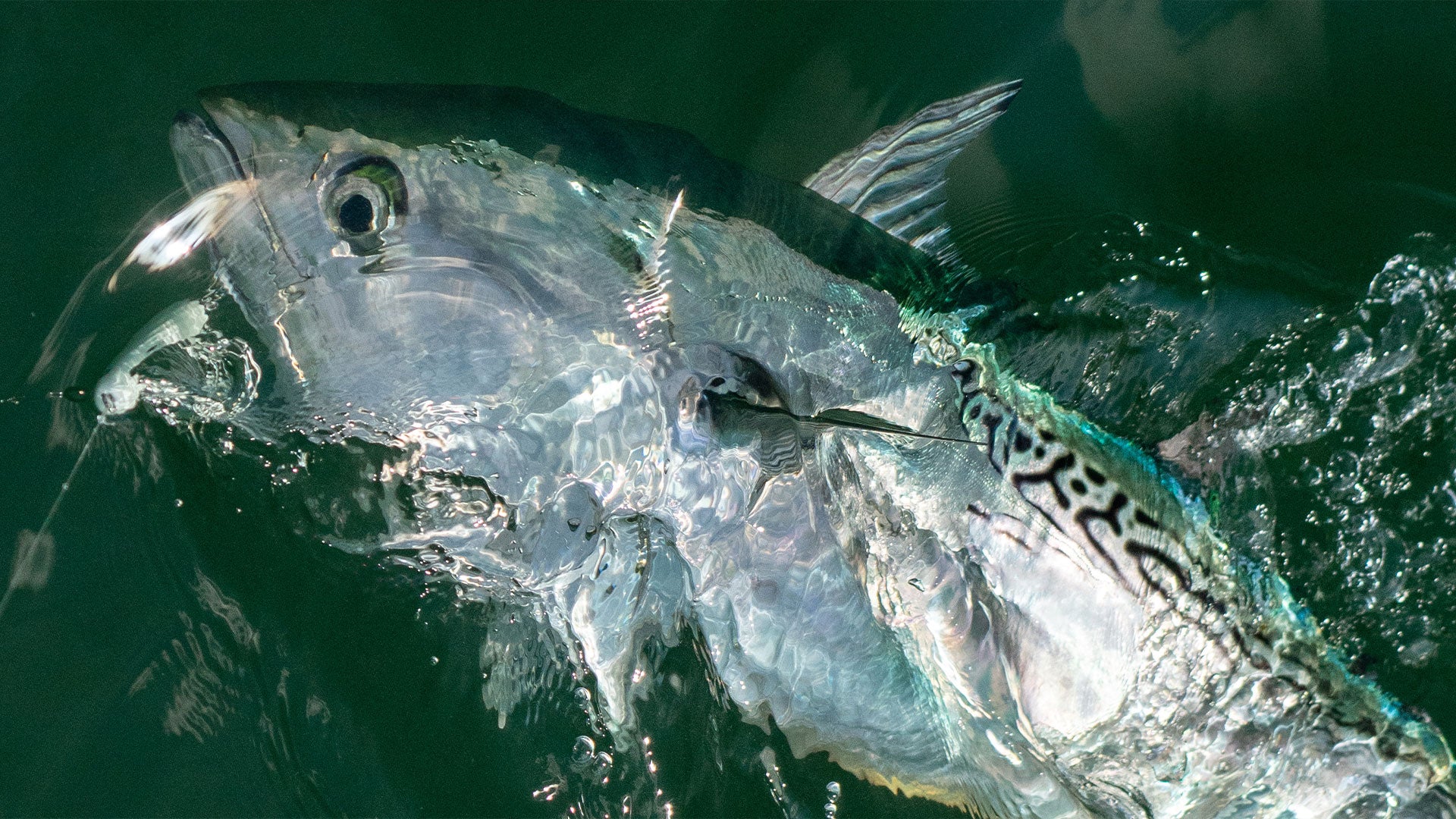
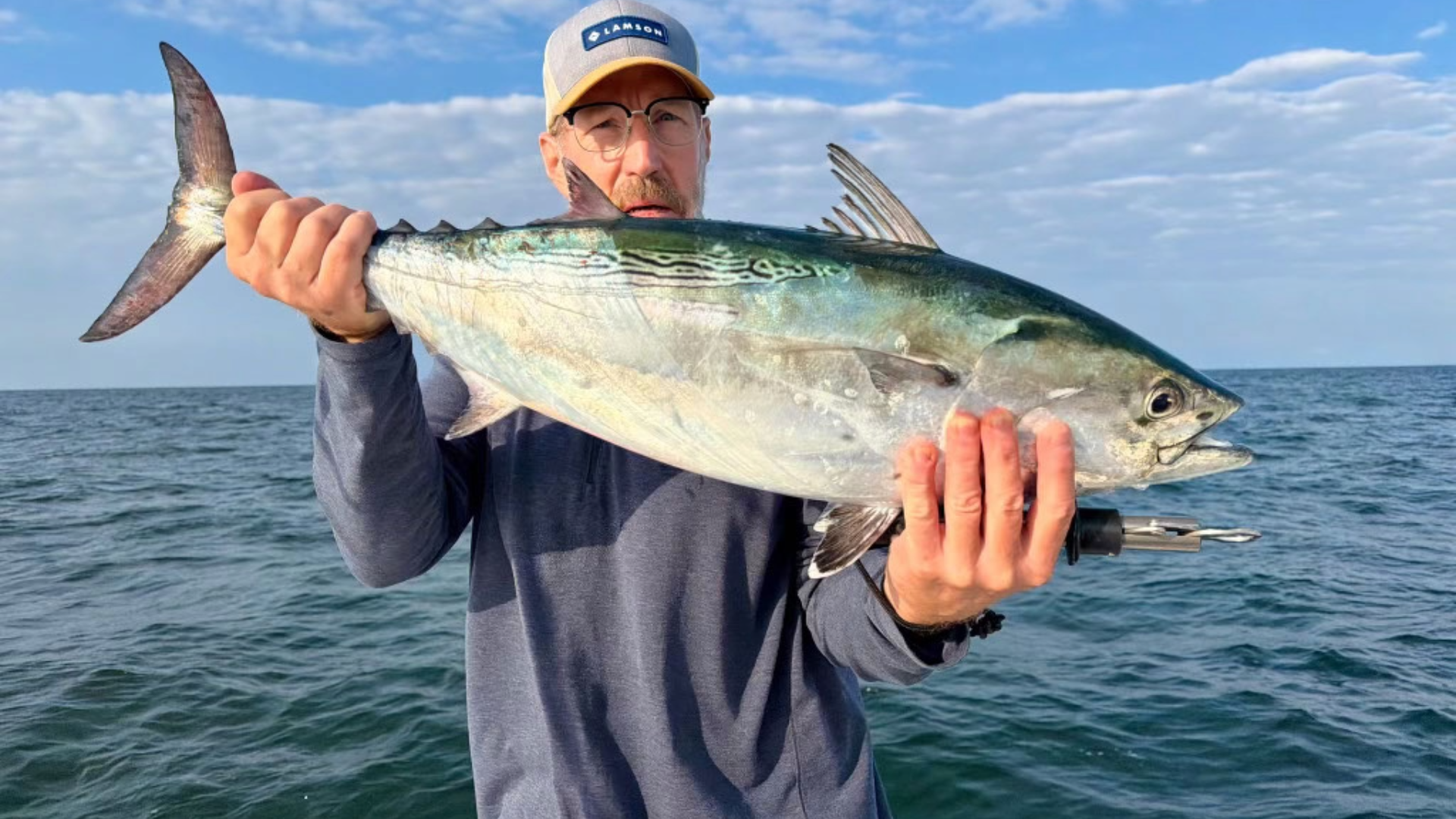
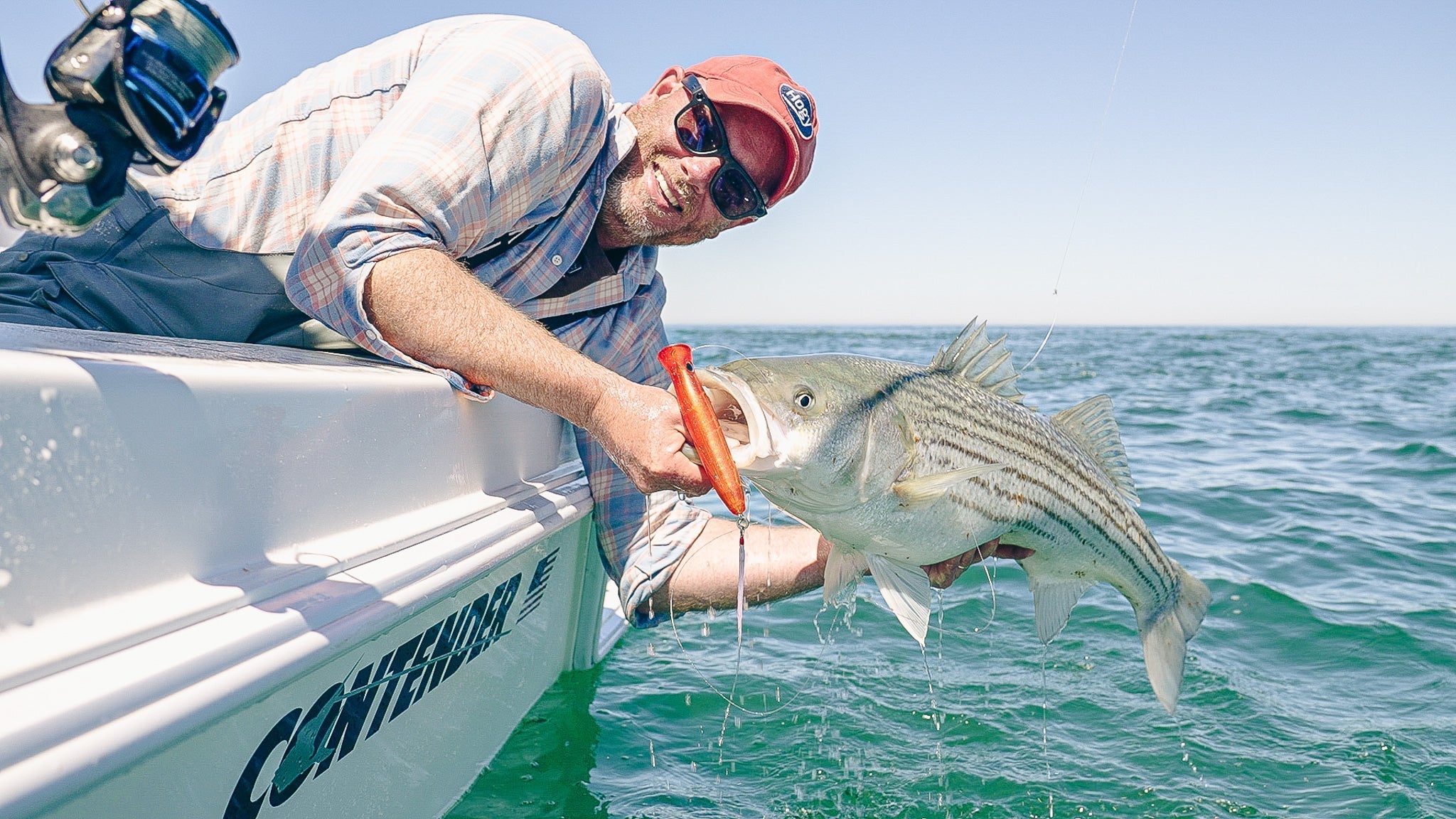
First albie of the season — Chris Gill’s 16.5 lb fish, Aug. 19.
Early Season Albies
The Premise
Every year I get the same email in the third week of August. Same three words: are they here?
Here on Cape Cod, we just logged our first albie — posted on Insta yesterday, August 19th, by local sharpie Chris Gill. 16.5 lb. A total monster, which seems to be common for early season albies: a few big "scouts" before the masses.
Those few days between the scouts and the masses are what this manual is for.
Every regional guide tells you which wind works on its own shoreline, which is useless the moment you launch somewhere else. This one is built the other way around — the relationships, not the bearings — so it runs the same in Falmouth, Point Judith, Montauk or Barnegat.
The Rotation
False albacore enter the Northeast inshore system from the southwest and work northeast through the fall. That single fact organizes the whole early season, and it means something a little different depending on where you stand.
Running north to south:
- The Cape and Islands fill west to east. Late August is Nobska and the western Vineyard Sound door. Monomoy and Nantucket are a September and October conversation.
- Rhode Island and Buzzards Bay get the first consistent shots at the southwest corner. Newport and the ocean edge load before anything northeast of them does.
- Long Island and New York fire at the eastern points first — Montauk, the Race, Plum Gut — then the run works west along the south shore beaches and inlets as fall builds.
- New Jersey sees fish earliest and typically furthest out first: ridges, lumps and offshore structure before the beachfront and the inlets. The progression runs outside-in, then south along the beach.
Figure out which end of your water is the front door and weight these first days there. Working the back half of your range in late August is how you burn a tank of fuel learning nothing.
Layer 1 · The night beforeThe Forecast Read

The most portable section in the manual, because a forecast is a forecast whether you're reading it for Buzzards Bay or Barnegat. What follows is how to turn a weather app into a fishing plan.
1.1 — Wind
The bearing changes. The relationship doesn't.
Every regional guide you'll ever read says something like "W and NW are the workhorses, E and NE shut it down." Mine says that too. And it's completely useless to you if your coastline faces a different direction than mine. So throw out the bearings and ask three questions instead.
Question 1 — is it blowing off the land, or onto it?
| Relationship | What it does | Read |
|---|---|---|
| Offshore | Flattens the surface, holds water clean, gives drift control and visibility | The workhorse. Most of your best days. |
| Alongshore | Sets up lateral bait movement along the contour | Often very good. The classic travel lane. |
| Onshore | Chop, stirred bottom, dirty shoreline, no visibility | The gate. Two-plus days shuts a shoreline down. |
On the Cape that math makes W and NW the workhorses. On the Jersey beachfront, which faces east, the same math makes W and NW the workhorses too. In a north-facing bay it's the opposite bearing doing the same job. The bearing changes. The relationship doesn't.
Question 2 — which nearby water does this wind favor?
A wind that blows out your home water is, by definition, blowing off the land somewhere else. Before you write off the day, find that somewhere. Three places to look, in order:
- The opposite-facing shoreline. A south-facing beach and a north-facing bay shore are mirror images — whatever blows onto one blows off the other. On a hard onshore day, the far side of the same body of water is often flat and clean.
- Inside water. When the ocean front is unfishable, the bays, sounds, harbors and the backs of the inlets are still in play. In Jersey, an east wind that ruins the beachfront leaves the back bays alone.
- The lee of an island or a headland. Anything that blocks fetch builds a pocket of clean water behind it, and bait stacks on those edges.
This costs you something — fuel, time, and a set of unknowns you don't have dialed. Worth it when your home water is genuinely blown out for two or more days. Not worth it for a marginal morning.
Question 3 — how long has it held?
This is the one people skip, and it matters more than direction. A wind that just arrived and a wind that's held four days have done completely different things to the water.
| Wind history | System effect | What to do |
|---|---|---|
| Same direction and speed | Lane intact, geometry unchanged | Highest confidence. Fish it as reported. |
| Same direction, stronger | Lane holds but compresses harder | Lean into structure that compresses bait |
| Same direction, lighter | Expression softens — less texture hiding you | Downsize and lengthen leader |
| Rotated 45–90° in 24 hrs | Lane angle shifts; receiving shoreline may change | Same zone, fish the new wind-receiving structure |
| Rotated 90–180° in 24 hrs | Lane geometry broken or rebuilding | Prioritize tide-driven structure. Pivot if nothing in 30 min. |
| Reversed, held 2+ days | System likely reorganized | Treat as a pivot, not an adjustment |
| 3–5 day sustained blow | Corridors rebuild along wind-receiving structure | Start on structure facing the new wind |
| 4+ day heavy blow | Open lanes collapse; fish consolidate | Skip open water. Start on rips, choke points, channel edges. |
| Repeated mini-blows | No stable wind corridor at all | De-emphasize wind. Plan on tide stage and velocity. |
The row people miss. After a real 4+ day blow, open water is dead and everything reassembles on hard structure. Most guys go looking in the open first, because that's where it was good last week.
1.2 — Wind × Tide
Aligned extends the lane. Opposing hides it.
Wind and current interact, and the interaction defines the character of the lane. This is the read that separates guys who catch on hard days from guys who don't.
| Interaction | Lane character | What to do |
|---|---|---|
| Aligned | Maximum directional clarity. Lanes extend and stabilize. Clean repeating lateral feeds. | Plan longer drifts. Expect readable reappearance. |
| Opposing | Split-layer movement. Surface may not reflect what's underneath. Short confused cycles. | Trust subsurface cues. Sonar and bird pacing become primary. |
| Crossing | Bait pushed at an angle to current. Lane runs diagonally. | Set drifts at the compound angle. Watch bird pacing for true direction. |
Comfort call. Wind against a hard-running tide is the rough combination. That's a sea-state read as much as a fishing read.
1.3 — Fronts & Pressure
Falling pressure rewards readiness, not relocation.
Pressure doesn't move the system. It changes how the system behaves.
| Pressure state | Feeding personality | Your plan |
|---|---|---|
| Pre-front, falling | Opportunistic aggression. Short explosive windows. Fish may break lanes and feed with urgency. | Be positioned early and stay put. Falling pressure rewards readiness, not relocation. If you're going to burn a hall pass, this is the day. |
| Post-front, rising | Disciplined. Feeds shorten, lanes tighten, fish inspect longer. | Precision over aggression. Start where they were last seen; if the lane doesn't reform, follow the front's wind. Downsize. |
| Transition, front passing | Windows compress into a narrow pre-frontal burst; post-passage can shut off. | Time the pre-frontal window. After passage, give it 12–24 hrs to reorganize. |
| Stable multi-day | Most predictable. Rhythmic feeds, established lanes. | Highest confidence in reports. System should behave as described. |
The size of the front matters. A mild front creates a pause. A hard, cold, turbulent front genuinely reorganizes fish.
A front is what fires your triggers, not a trigger itself. It reorganizes fish by way of a wind shift and a temperature drop — both already counted below. Watch the barometer to anticipate those, not to add a third strike.
1.4 — Cold Snaps
Gradual cooling is a green light. Sharp cooling is a pivot.
The most misunderstood trigger in the fishery, because cooling does two opposite things depending on how fast it happens.
Gradual cooling is a green light. A slow cool-down in early fall — the first crisp nights, water easing a degree over a week — often shifts albies into high gear. Cooling tightens bait organization, and tighter bait means better lanes and better feeding. Nighttime cooling arriving early is one reason some seasons start hot in mid-August instead of mid-September. When somebody says "the nights are getting cool," that's a fishing report.
Sharp cooling is a pivot. A 2°+ in 48 hrs drop — usually behind a strong frontal passage or a sustained north wind — does the opposite. Fish consolidate into thermally stable water, shallow roaming drops off, and the whole system contracts.
| Cooling event | System effect | Routing |
|---|---|---|
| Gradual cool, early fall | Bait organizes tighter; feeding improves | Not a pivot. Fish it — often the best of it. |
| Sharp: 2°+ in 48 hrs | Fish consolidate into thermally stable zones | Deeper contour edges, rips, stable moving water. De-emphasize broad shallow lanes. |
| Sharp cooling + frontal passage | Possible system reset | Start where fish were last seen. Nothing in 30 min, follow the new post-front wind. |
| Cooling + wind regime + spring tide | Corridor restructuring accelerates; seasonal advancement likely | Compound pivot. Check the next zone down the seasonal arc first. |
| Short-term warming | Enhances expression; may re-expand roaming | Not a pivot. Fish normally. |
Species note worth carrying. Bonito are more sensitive to sudden cooling and off-color water than albies. They exit first. Albies tolerate moderate shifts and often come back once clarity stabilizes. If both were around and the temp fell off a cliff, expect the bonito gone and the albies still findable.
1.5 — Sky, Light & Rain
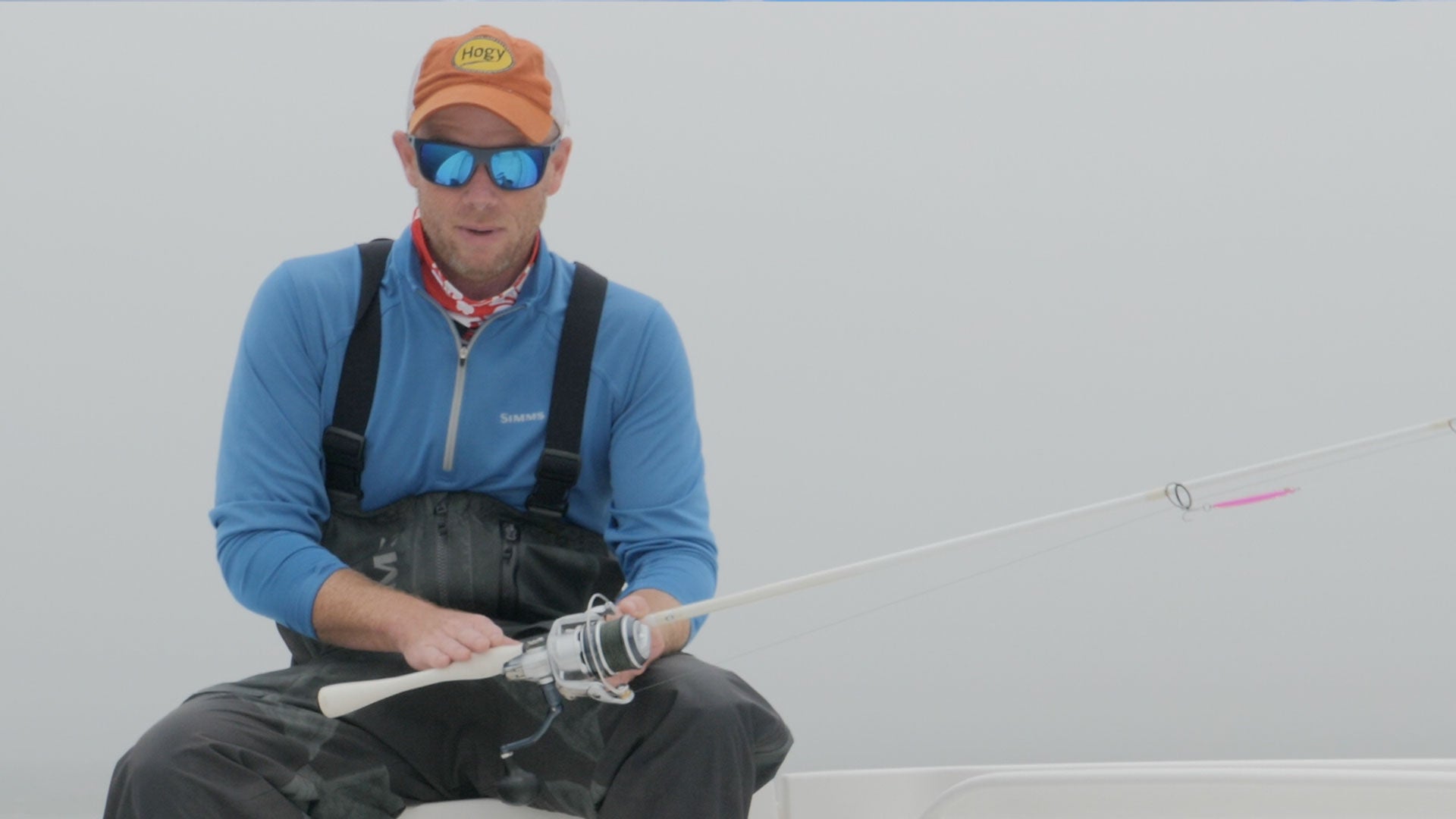
Fog days can be exceptional and almost nobody goes.
Light doesn't move fish either. It sets how long they'll stay up and how closely they'll inspect you.
| Condition | Effect on fish | Approach | Gear |
|---|---|---|---|
| Bright sun | Pressure-sensitive. Surface windows shorten. Track subsurface. | Wider buffers, throttle discipline | Downsize leader. Subsurface rod ready. |
| Cloud cover | Extended surface time. Less spooky. | A multiplier on every approach | Standard |
| Fog | Feeding high, bait holds tighter, low boat pressure | Trust bird pacing over your eyes | Standard — less leader-shy |
| Light rain | Stay higher, commit more confidently | Tighter positioning, intercept earlier | No major changes |
| Heavy rain + wind | Clarity drops. Anchovies scatter, peanuts deeper. | Birds and sonar over eyes | Step up profile slightly |
| Low light, dawn/dusk | Peak surface commitment | Be there for it | Standard |
Fog days can be exceptional and almost nobody goes. Light rain is a green light. Bright flat midday is when you should be looking at the screen instead of the horizon.
1.6 — Moon & Tidal Energy
An adjustment, not a pivot — it changes which structure works.
Spring and neap are on the calendar. They don't empty a zone — they change which structure inside it works.
| Shift | System effect | What to do |
|---|---|---|
| Neap → spring | Increased compression. Faster lateral movement. Defined structure dominates. | Prioritize rips, choke points, contour edges. Marginal zones lose fish. |
| Spring → neap | Compression relaxes. Broader roaming. | Expand the search. Broad contour lanes may out-produce tight rip structure. |
1.7 — Is the Bait Still Cooperating?
Early season runs on anchovies — the most fragile bait there is.
The final forecast cross-check. Different baits have different breaking points, and if today's weather hits the active forage's specific vulnerability, the bite won't reproduce even when everything else looks right.
| Bait phase | Wind | Temp | Tide | Stability need |
|---|---|---|---|---|
| Bay anchovies | High — scatter in shifting wind | Moderate | Low — suspend loosely | High. Need calm organized lanes. |
| Silversides | Moderate — build lanes in steady wind | Moderate — move with cooling | Moderate — align with current | Moderate. Flexible, prefer direction. |
| Sand eels | Low subsurface, high once up | Low — bottom-oriented | High — current pushes them up | Low. Quiet to violent fast. |
| Peanut bunker | Moderate — hold shape but drift | High — move with cooling | Moderate — pin to structure | Low-moderate |
Why this matters right now. Early season runs on anchovies — the most fragile bait on the list. A shifting wind scatters them, and a scattered anchovy school is not a fishable system no matter how many fish are around.
1.8 — The Pivot Count
Under 2, adjust. 2 or more, re-enter somewhere else.
Run these three triggers against whatever happened since the last report you have.
- Wind regime change — a new direction has held 3+ days at moderate-to-strong velocity
- Water temperature inflection — 2°+ drop in 48 hours
- Bait phase shift — dominant forage changed
0–1 triggers: adjustment · 2+ triggers: pivot. The system held — calibrate the report and go. Two or more and the pattern likely broke: don't optimize a plan for water that emptied overnight. On the fence — one fired hard, or two fired softly? Go, but with heightened skepticism and a firm backup. Give the zone 30 minutes on arrival. If nothing confirms, leave.
Not triggers: tide phase, spring vs neap, and pressure. Those change how you fish, never whether the pattern held. Keeping those two lanes clean is what makes a pre-trip read usable instead of mush.
Step 2 · At the rampThe Ramp Read

Five factors, in this order. Each answers a specific question, and the sequence matters — temperature says whether they are here at all, and there is no point reading anything else until that clears.
2.1 — Water & the Thermal Seam
You are not hunting warm water. You are hunting the seam.
Two questions. The first — are they even here yet — is the on/off switch, and by the time a few fish have been caught it is already answered. So the one that earns your morning is the second: where is the cool water, and where does it meet the warm?
Late August is the hottest the shallow back water gets all year. Bays, harbors and estuaries are at peak heat, and albies want the cooler, cleaner, better-oxygenated side. You are not hunting warm water. You are hunting the seam.
A degree or two over a short distance corrals bait and functions as structure in open water. But there is a difference between a break you have to find and one that is there every day — weather-made edges drift, structure-made edges sit in the same place every tide. Four kinds worth knowing:
- Convergence. Two water masses meeting at a point or elbow. Monomoy is the textbook version — cold Atlantic pressed against warmer Nantucket Sound.
- The tidal pump. A narrow passage moving volume from a cool body into a warm one. The west end of the Canal is the extreme case, and it runs on a schedule you can look up.
- Estuary exchange — and this early it runs the direction people do not expect. The bay is hotter than the ocean right now, so the outgoing dumps warm water and the seam sets up outside the mouth. That flips later in the fall.
- Upwelling over structure. Current across a rip or shoal lifts cooler water from below. A rip is a thermal feature as much as a current one.
Bait pins at the interface and fish work the cool, clean side. Sit on the cool side and let the seam do the work. Run a transect across the suspected edge and watch the number — where it moves fast over a short distance, that is your line. Clarity usually comes free: the cool side is generally the clean side.
2.2 — Current & The Two Faces
The tide picks the face. You sit down-current of it.
These fish run with the current, so tide sets the direction you scout, not just the timing. The practical version: position down-current and let it come to you. Both bonito and albies circle the same bait far more often than they abandon it.
Most people have an outgoing spot and an incoming spot. That is backwards — you have one spot with two faces, and the tide picks which one you fish. The structure does not move. What moves is which side of it holds bait, and therefore where you sit.
| Outgoing | Incoming | |
|---|---|---|
| What the water is doing | Draining. Estuaries, harbors and marshes dump bait into open water. | Filling. Clean ocean water pushes in over the shallow stuff. |
| Where the bait comes from | Flushed out of the back — an injection point feeding a lane | Lifted and carried in — pushed over shoals and onto flats |
| Your starting point | Outside the mouth of the cut, inlet or creek, sitting on the lane it fuels | The up-current shoulder of the same point or rip, plus the shoal tops and inside seams |
| The structure that works | Outflow mouths, current seams, the down-tide side of points | Shoal crowns, flats edges, harbor bowls, the reverse shoulder |
| The money window | The back half, when it dumps hardest | Peak flood, when clean water is actually moving over the structure |
| Character | Sharper, more concentrated, shorter windows | Softer, more spread out, often longer and quieter |
A point that fished its east face on the outgoing will fish its west face on the incoming. Same rock, same fish, opposite side.
If a spot "stopped producing" at the turn, most of the time it didn't — you just stayed on the wrong shoulder. And on the beach, the contour lane simply reverses direction: bait tracking east on the outgoing tracks west on the incoming. Set your drift to match and lead it the other way.
2.3 — Outflow
Outside the mouth, never in it. The outflow feeds a lane.
Find where your water drains. Pond cuts, harbor mouths, marsh creeks, inlets. On the outgoing these become bait highways — in Jersey, Shark River, Manasquan and Barnegat all push bait out the mouth, and fish stack outside and cycle in and back.
The mistake almost everybody makes is fishing the mouth itself. The outflow is an injection point, not the structure. It is brief. The lane it fuels extends down-current, and that is where the fish are working. Position outside the mouth, not in it.
High-percentage window: the back half of the outgoing, when the system dumps hardest. Be sitting there before it fires, not still running.
2.4 — Slack
Slack is a transition, not a dead zone. Do not leave on it.
Everybody leaves on the slack. Don't — or at least don't do it automatically. Slack is a transition, not a dead zone. The system is between cycles, and the first push often organizes right there: scattered bait starts to align the moment directional force returns.
If the birds are sitting tight and feel anchored and tense rather than indifferent and scattered, stay and watch for directional drift to begin. Some zones fire specifically in the 30-minute window around the turn.
Some zones fire specifically in the 30-minute window around the turn. And slack is the single best hour for trolling recon — it is when you find the system, so you are already on it when the current comes back and switches it on.
2.5 — Conditions → Structure
Five functions. The conditions pick one.
Everything above tells you what the weather means. This tells you where it sends you. There are only five functions worth knowing, and the conditions decide which one you are fishing today.
| The function | What sends you there | Where to look |
|---|---|---|
| Drains bait | Back half of the outgoing. Light to moderate wind. The default when the tide is dumping and nothing else has declared itself. | Pond cuts, harbor mouths, inlets, marsh creeks |
| Compresses bait on hard structure | Spring tide. Wind against tide. Sharp cooling. And after a 4+ day blow, when clean water reforms here first. | Rips, shoals, ridges, lumps, choke points |
| Carries bait laterally | Alongshore wind. Neap tide. Stable multi-day pattern. | The 10–20 ft contour, beachfront troughs, outer bars |
| Corrals bait in open water | Light wind and flat water. No structure bite. Slack, when you are trolling to find the system. | Temperature breaks and clean-water edges |
| Shelters bait from wind | Onshore wind. Two-plus days of dirty water out front. Heavy rain. | Harbors, sounds, back bays, the lee of a headland |
The cascade, in the order the reads happen. Wind decides inside or outside. Tide decides drain or compression. Tidal energy decides tight or broad. Temperature decides how deep. And when nothing is declared, the thermal edge is the default.
Same read, different addresses. Structure does not have to match to fish the same way — it has to function the same way.
| What it does | Cape Cod version | Jersey / mid-Atlantic |
|---|---|---|
| Drains bait on the outgoing | Pond cuts, harbor mouths, the Holes | Shark River, Manasquan, Barnegat inlets |
| Compresses bait over hard structure | Rips and shoals — Hedge Fence, Bearses, Stonehorse | Ridges and lumps — Manasquan Ridge, offshore rock piles |
| Lateral movement along a slope | The 10–20 ft contour, Menauhant to Craigville | The beachfront trough and outer bar |
| Open-water corral, no bottom structure | Temperature breaks and clean-water edges | Temperature breaks and clean-water edges |
| Shelters from wind | Inside Vineyard Sound, the harbors, the lee of the Elizabeths | Barnegat Bay, Raritan Bay, back bays behind the inlets |
Then name yours. Fill in your own column. Most people can name their drain and their rip in four seconds; the two that take real thought are the lateral lane and the shelter spot, and those are exactly the two that save days.
Step 5 · Gear & TechniqueGear

Borrow it from a kitchen: everything in its place before service starts. An albie feed is a ticket coming in — 3–10 seconds, and early in the season it may be your only one of the day. You are not retying. Whatever you were going to do, you had to have done it at the dock.
3.1 — The Leaning Post
Two ways to work the top, one to match the bait, one to solve the day.
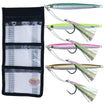
Rods go in the leaning post and the T-top holders like clubs in a golf bag, and that is exactly how to think about them. Each rod is a different club, pre-rigged for a different situation. You don't retie for the shot — you pick the club and swing.
| Slot | What's tied on | The job it solves |
|---|---|---|
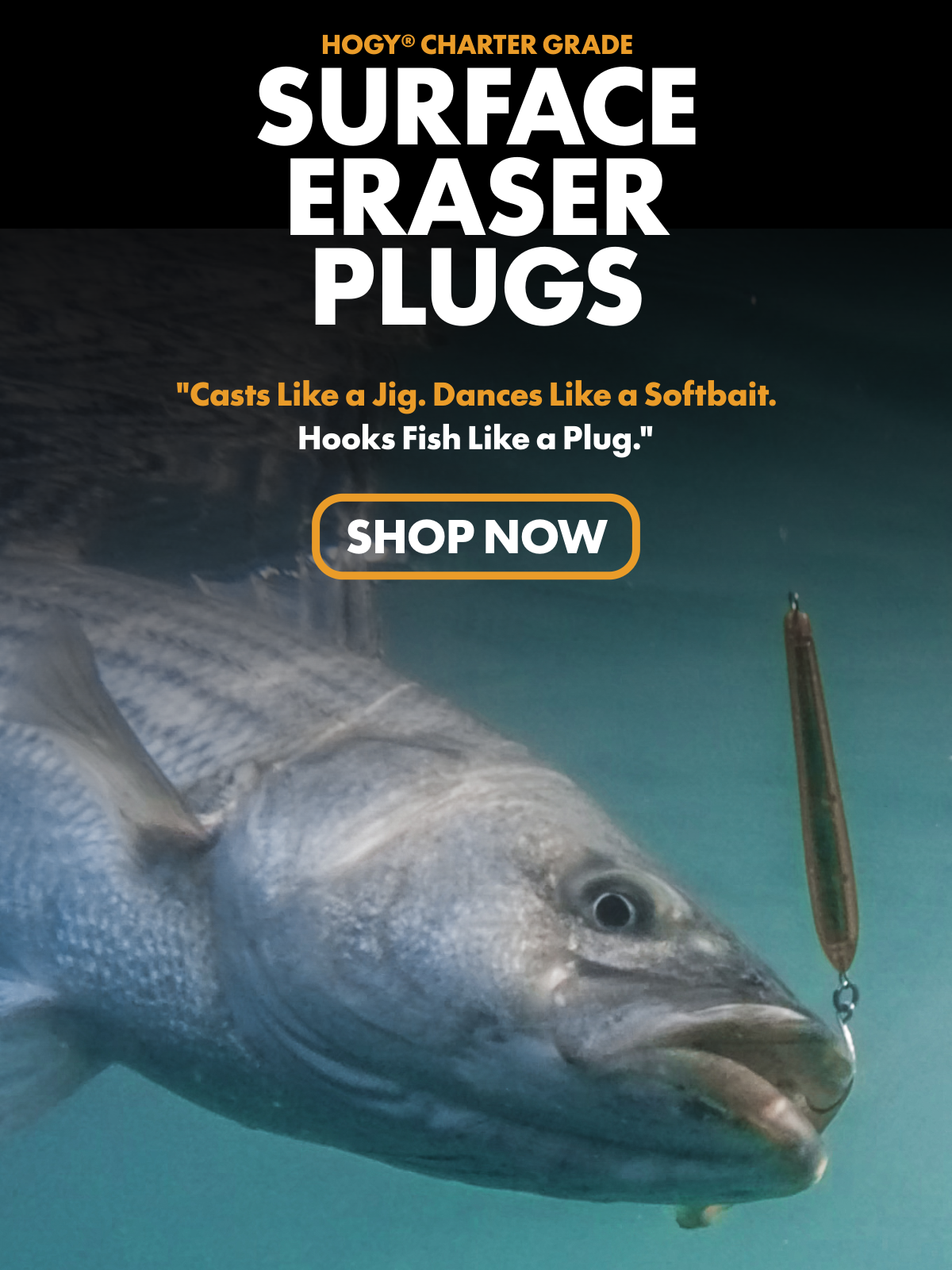
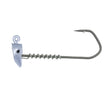
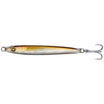
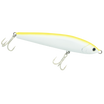
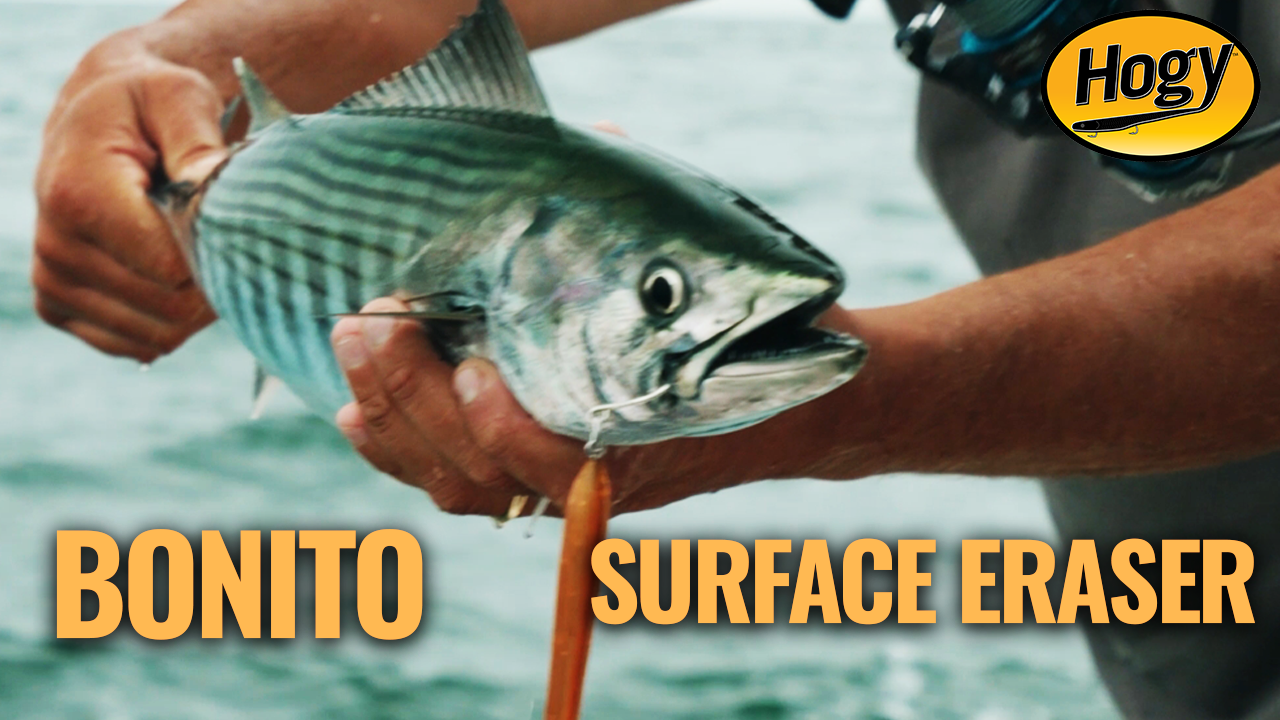
| 1 |  Surface Eraser Surface Eraser |
Long-range topwater and the shape-shifter. Walk, glide, needle or dead-drift — four presentations without re-rigging. |
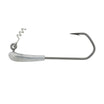
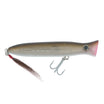
| 2 |  Micro Chug Micro Chug |
The other way to work the top. When they refuse the Eraser because the bait is tiny, a clean controlled pop gets the boil. |
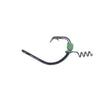
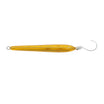
| 3 |  EPO, sized to the wind EPO, sized to the wind |
The bait-matcher and the diagnostic. The rod in my hand most of the day. |
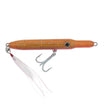
| 4 |   Heavy Minnow or Peanut Jig Heavy Minnow or Peanut Jig |
The problem-solver. Wind and distance → Heavy Minnow. Slow, picky, locked on small bait → Peanut Jig. |
Two ways to work the top, one to match the bait, one to solve whatever the day throws.
Slot 2 exists because slot 1's failure mode is "too big." Slot 4 exists because slot 3's failure mode is either "can't reach" or "too fast." And slots 3 and 4 are decisions made at the dock, not fixed picks — that is your forecast read turning into something physical.
What's not on the post: the closer. The Pop-N-Fly gets rigged when the day tells me I need it — when they have refused everything and I need the popper for distance and commotion while a 3″ fly trailing 18 inches behind gives them the profile they are actually eating.
3.2 — Rods, Leader & Knots
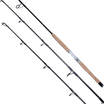
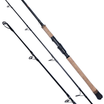
A true fast rod pops 12 lb fluoro on the third run.
Same rods that fish bass and blues all summer. When the albies show, nothing changes but what is tied on.
| Rod | Reel | Braid | Leader | Lure range | Role |
|---|---|---|---|---|---|
| 7′ M (×2) | 3000–4000 | 15–20 lb | 12 lb fluoro | 3/8–1 oz | Finesse, topwater, mid-column. 80% of casts. |
| 7′ MH (×2) | 4000–5000 | 20–30 lb | 15 lb fluoro | 3/4–2 oz | Distance, wind, depth. The insurance rod. |
On the four-slot post that shakes out as three 7Ms — Eraser, Micro Chug and the EPO — with the 7MH holding slot 4 whenever it is the Heavy Minnow. If slot 4 is the Peanut Jig instead, that is a 7M too, and the MH sits rigged in a T-top holder as pure insurance.
Why moderate-fast matters more here than anywhere. Albies make 80- to 100-yard runs on 12 lb fluoro, multiple times a fight, and the rod's midsection is the only shock absorber between the fish and a break-off. A true fast rod pops that leader on the third run.
Leader. 12 lb is the default and covers 80% of albie fishing. 15 lb when blues are in the mix, in heavy current, or on the Heavy Minnow. 20 lb is the ceiling. Three to four feet minimum on all of them — a braid-to-leader knot inside an albie's sight window costs you fish.
Knots — tie direct, always. No snaps, no swivels, no clips. Non-slip mono loop for anything that needs swing freedom: Surface Eraser, Micro Chug, Pop-N-Fly popper, Original 7″, Slowtail. Improved clinch or Palomar for jigs that track straighter snugged tight: EPO, Heavy Minnow, Peanut Jig, Sand Eel Peanut.
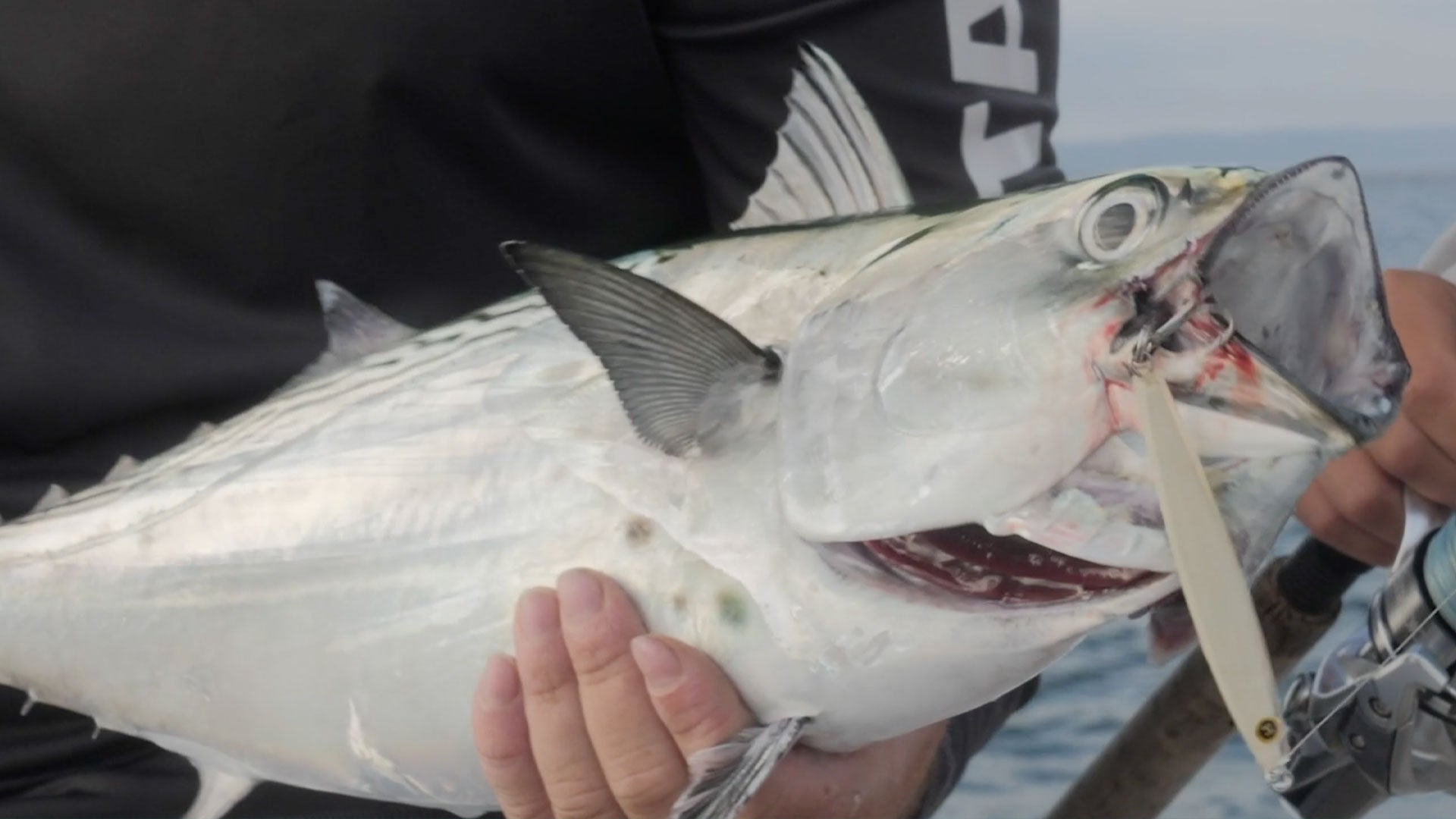
Re-tie often. Albies have sandpaper mouths and hard gill plates. Check the knot after every fish, and if the fluoro feels rough, cut it back. Losing a fish to an abraded leader is the most avoidable mistake in this fishery.
3.3 — The Dash & The Crate
Go-to lures live out. Inventory lives away.
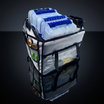
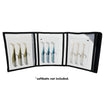
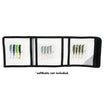
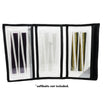
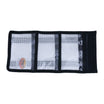
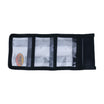
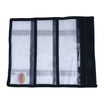
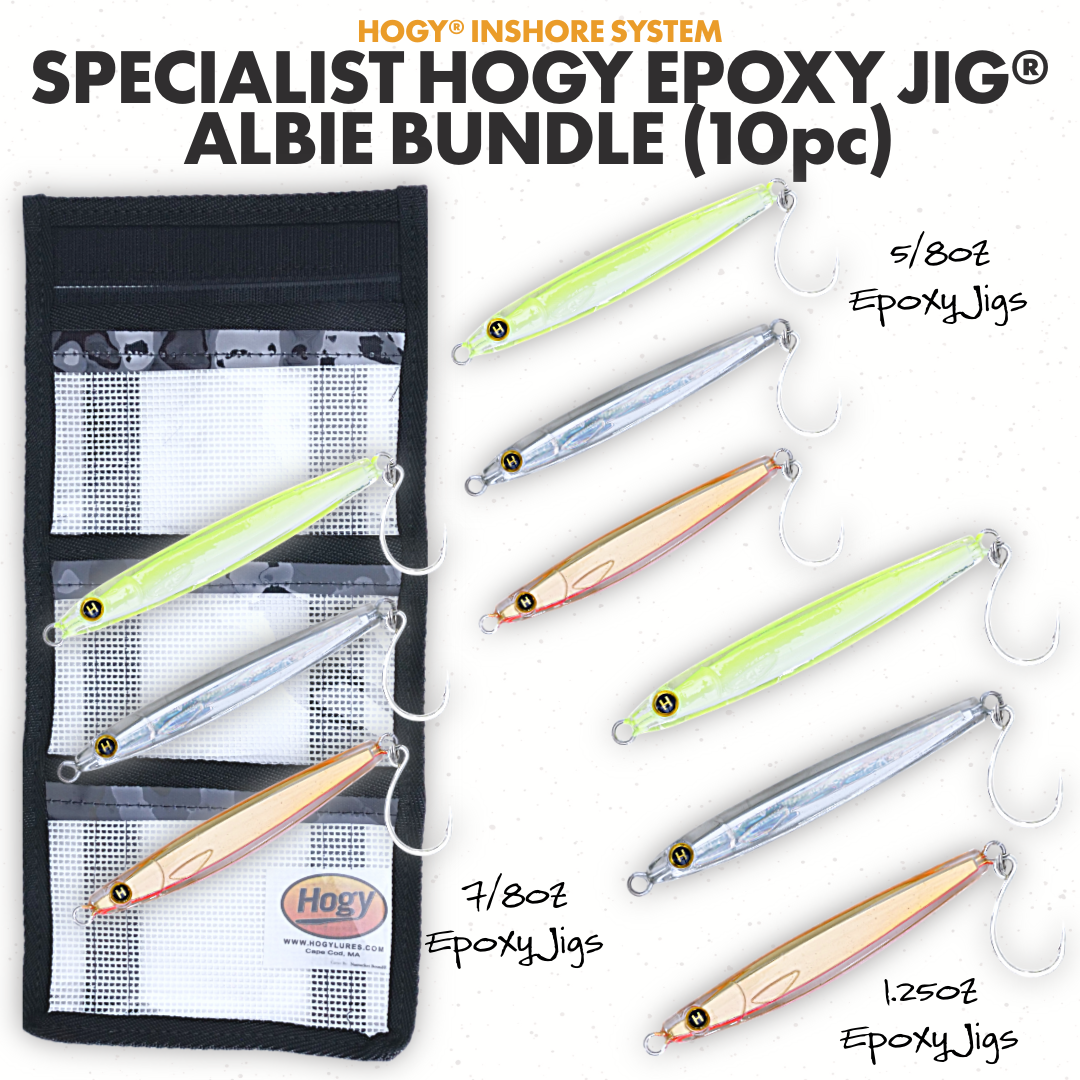
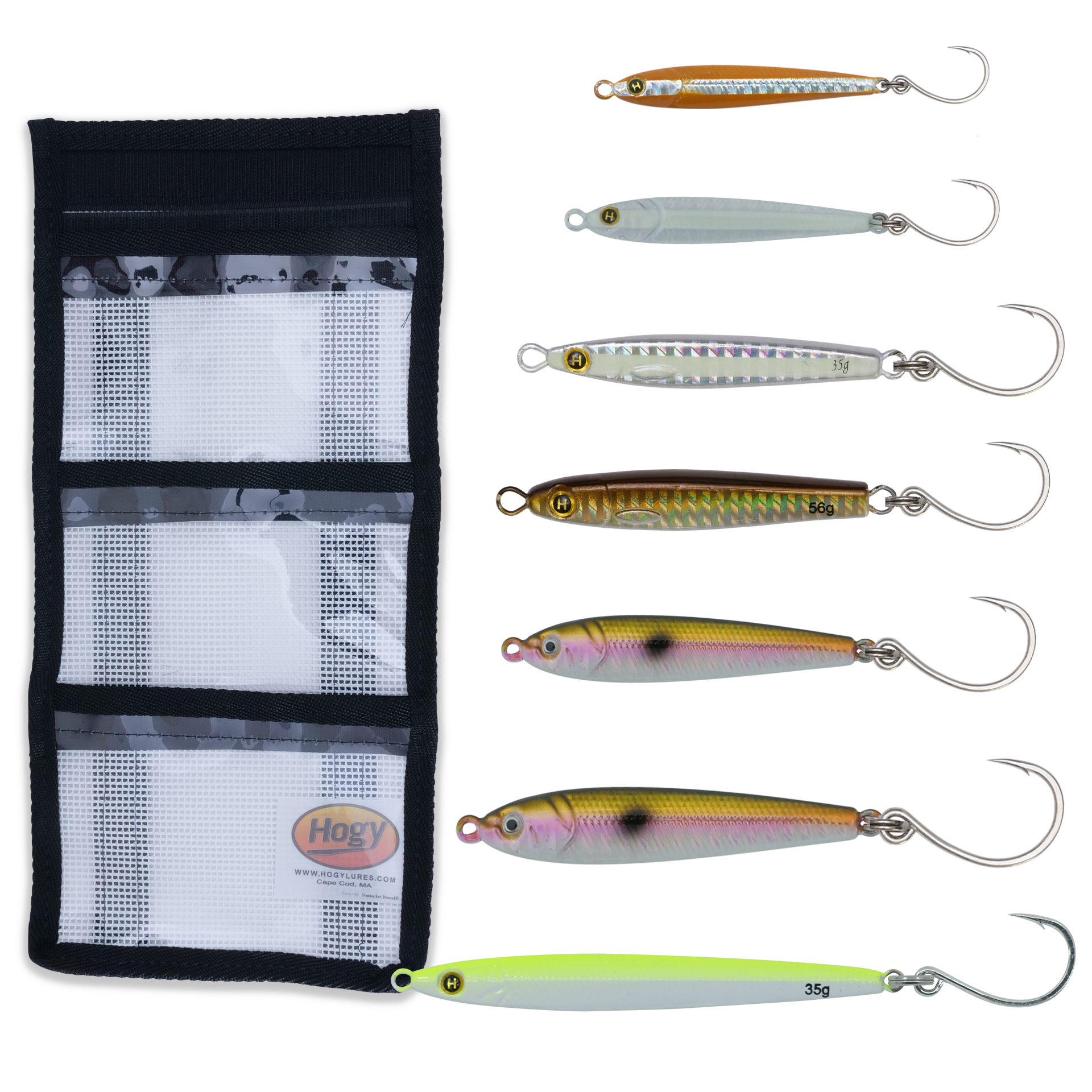
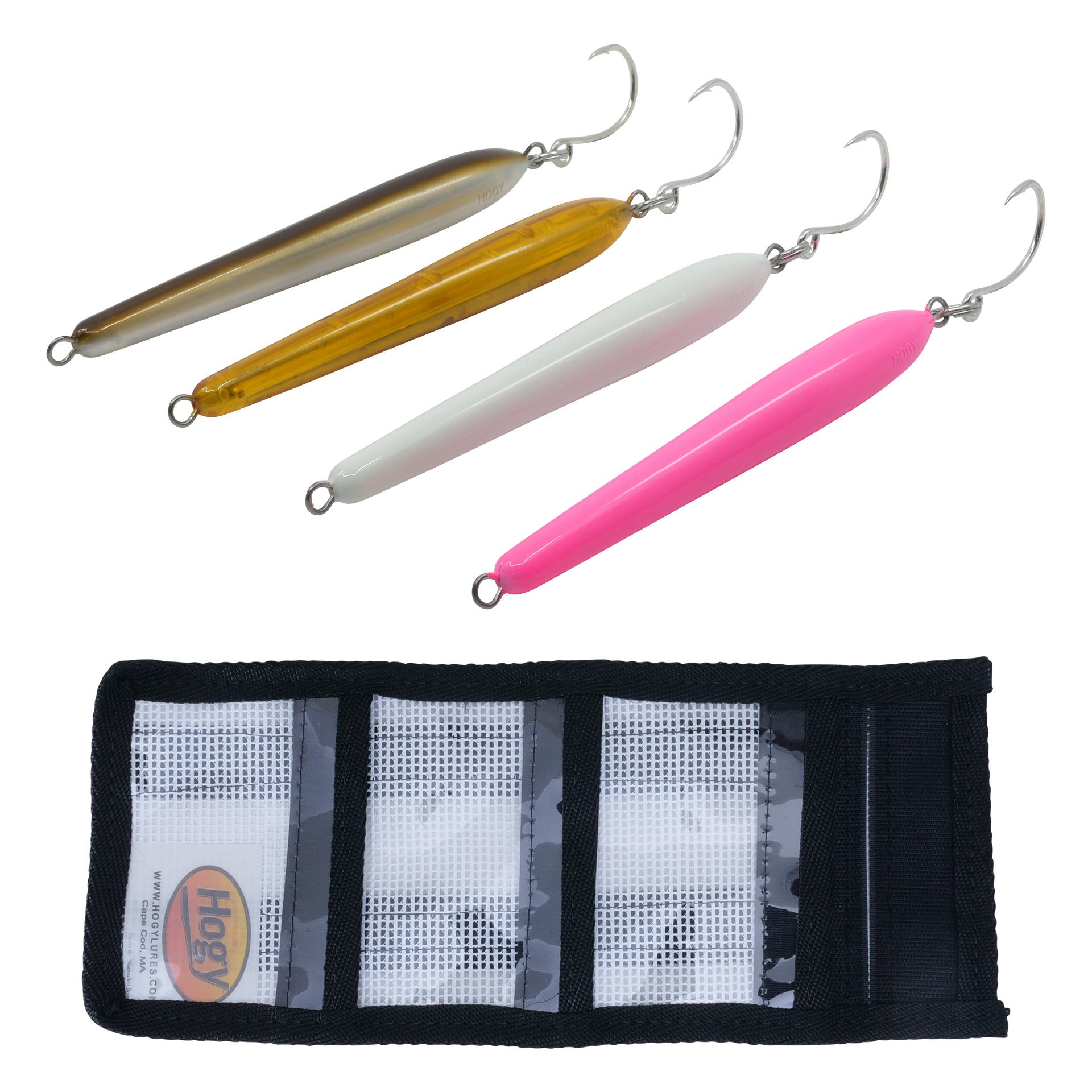
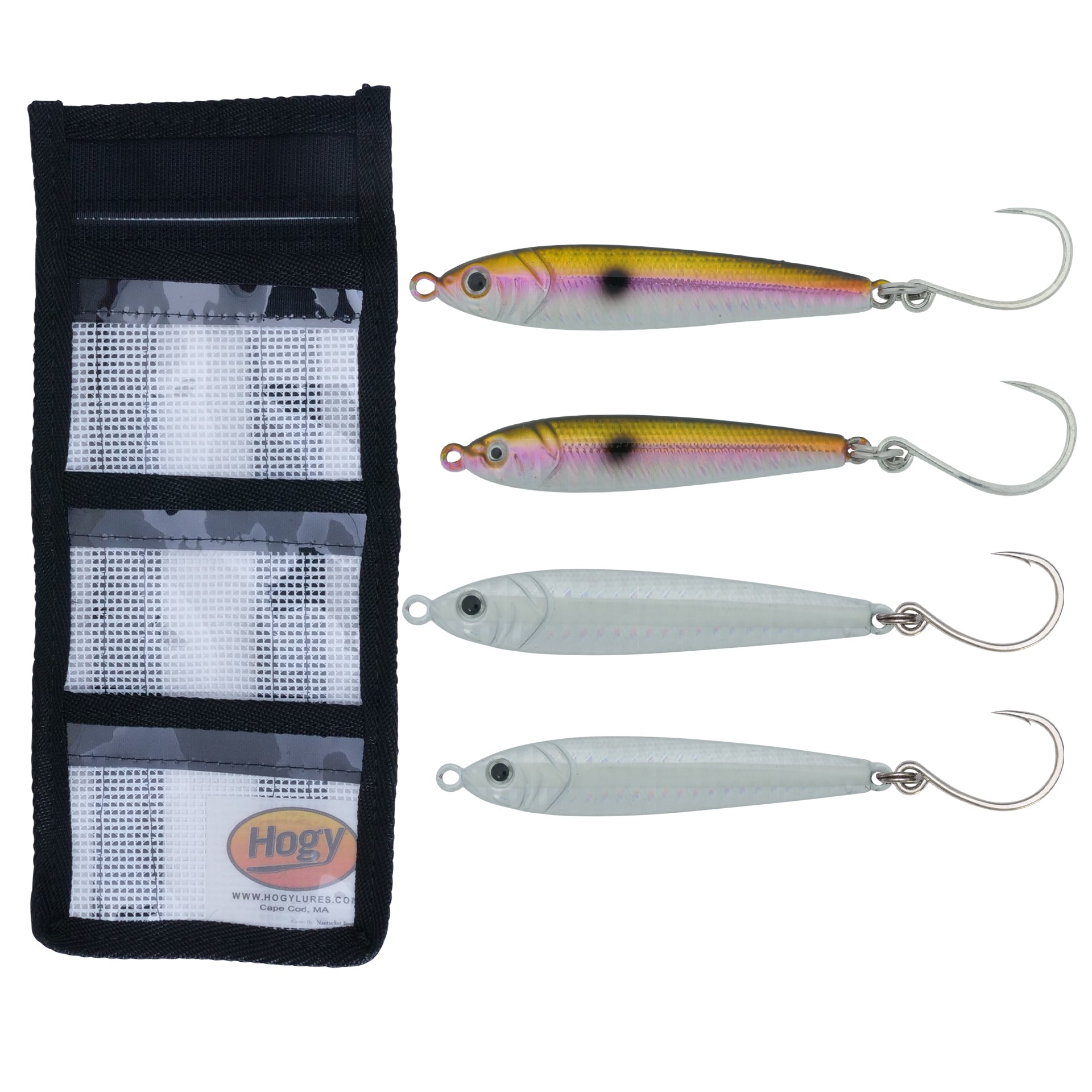
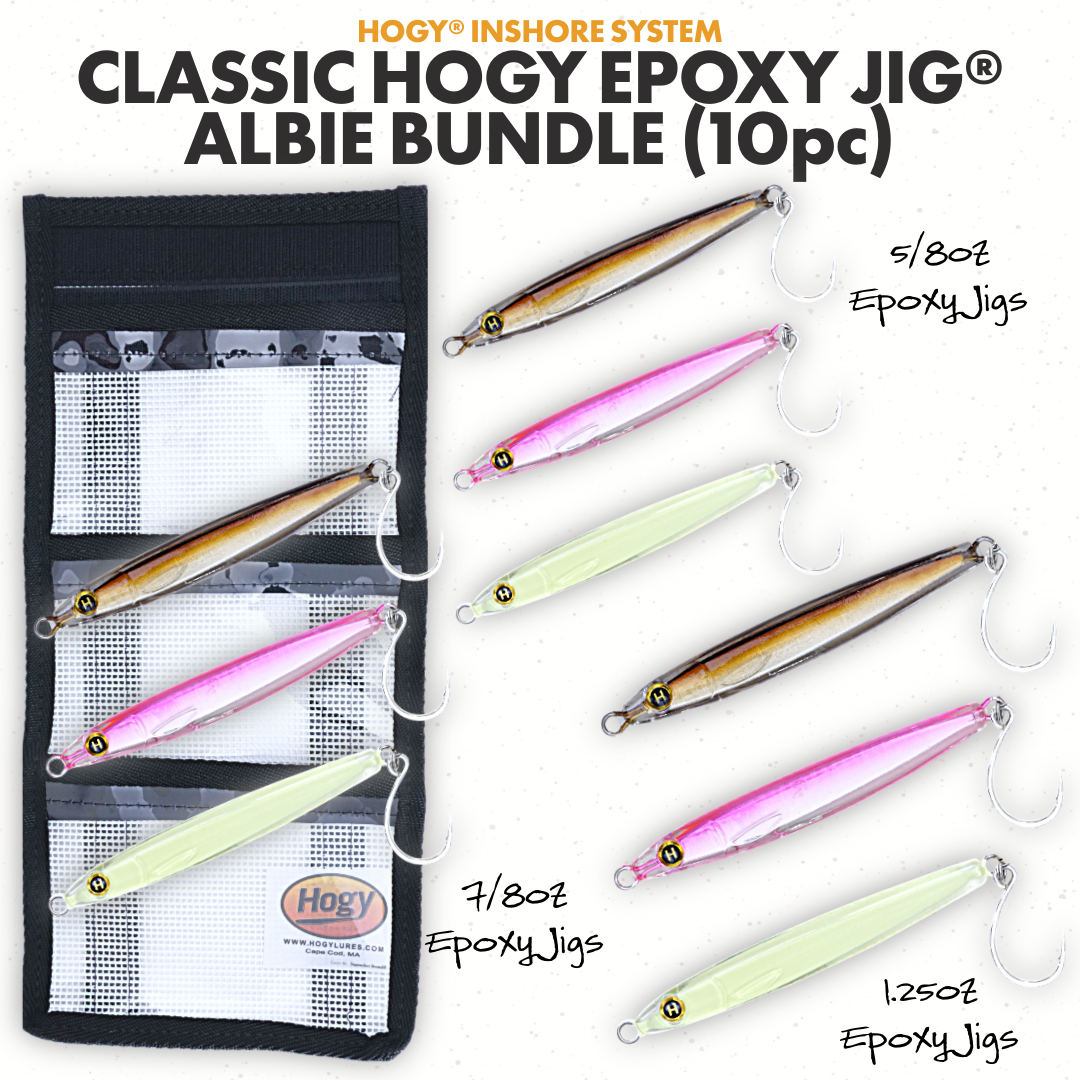
Working lures live on the dash. Not in a bag, not in a crate under the leaning post. On the dash, in front of you, in a mesh roll-up or low tray, arranged so you can grab without looking. The roll-up is what makes it practical — jigs stay organized and untangled, it rinses clean, dries fast, rolls up and drops in a hatch for the run.
Four rods on the post. Ten lures in the crate. The ranking is how often each comes out — not how good it is. A #7 is not worse than a #2, it is more specialized.
| # | Lure | Moniker | Role | Rod |
|---|---|---|---|---|
| 1 | Epoxy Jig (EPO) |
The Every Day | Finesse specialist. First out of the bag. | 7M · MH in wind |
| 2 | Surface Eraser |
The Shape-Shifter | Hybrid topwater. Four personalities, one lure. | 7M |
| 3 | Heavy Minnow |
The Wind Beater | Distance puncher. Chop warrior. | 7MH |
| 4 | Peanut Jig |
The Fixer | Imitative swimmer. Slow-bite specialist. | 7M |
| 5 | Sand Eel Peanut | The Glide Stick | Long-range sand eel match. | 7M / 7MH |
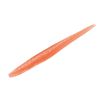
| 6 |  Hogy Original 7″ Hogy Original 7″ |
The Whisperer | Silent finesse. Last-resort converter. | 7M |
| 7 | Slowtail | The Slow Roller | Passive swimmer. Dead-drift specialist. | 7M |
| 8 | Micro Chug |
The Sniper | Micro-bait surface disruptor. | 7M |
| 8 |  Pop-N-Fly Pop-N-Fly |
The Closer | Sound plus finesse. The micro-bait closer. | 7M |
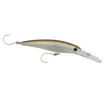
| 10 | Swimming Plugs | The Scanners | Trolling search and subsurface coverage. | 7M shallow · 7MH diver |
| Trolling option | Depth | Ideal use |
|---|---|---|
| Shallow swimming plug | 1–3 ft | Grass lines, marsh edges, channel edges, outflows in skinny water |
| Deep diving swimmer | 10–15 ft | Drop-offs, contour lines, offshore rips, mid-column bait over structure |
Two trolling options worth carrying for the slack-water recon pass. Both give passive coverage with plug-style thump and control — go-to when casting is not producing or you need to cover water fast.
Note where the four post slots sit in that ranking: #1, #2, #8, and either #3 or #4. Not an accident — the post holds the high-frequency tools plus one specialist that today's forecast argued for.
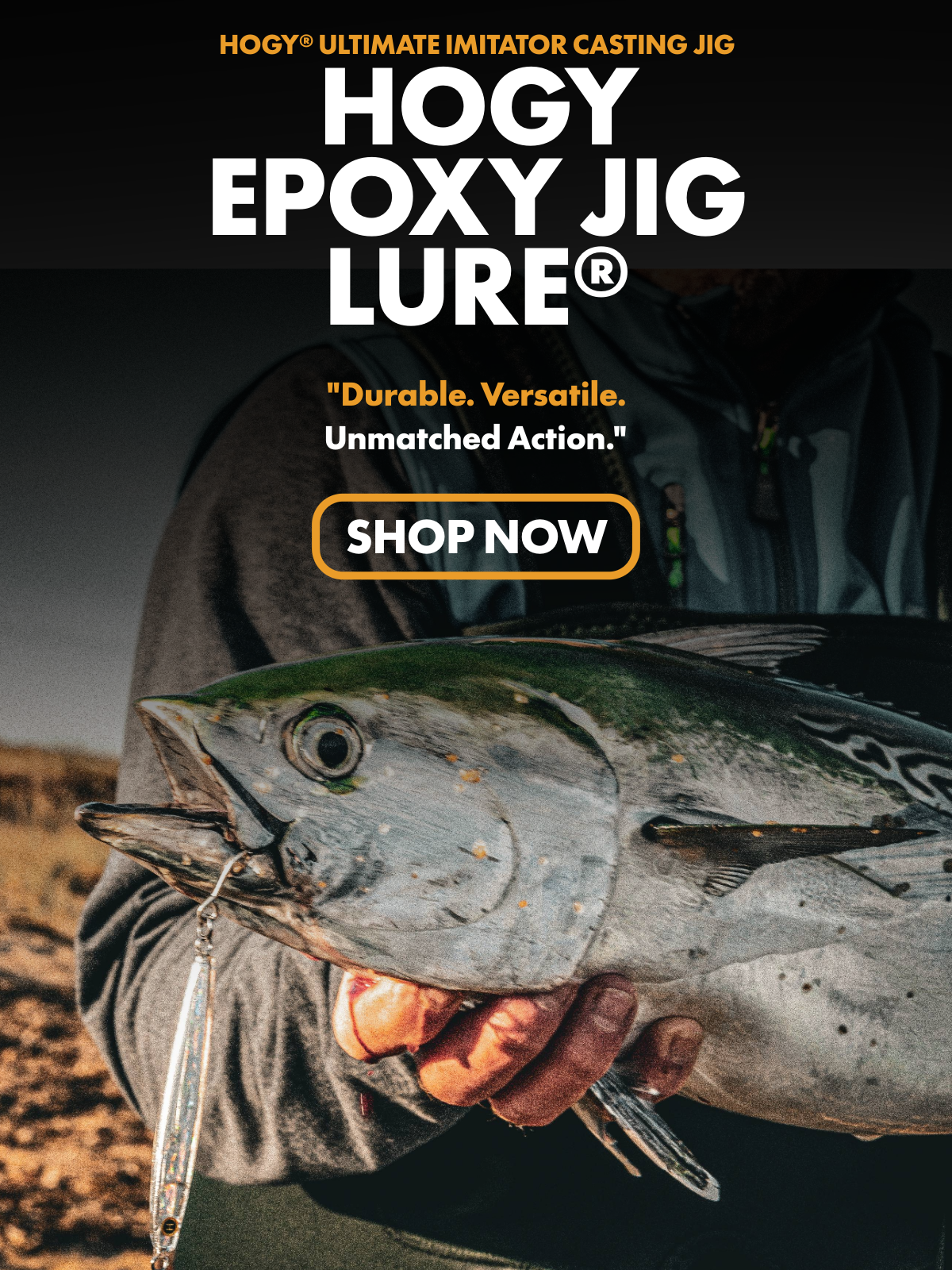
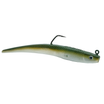
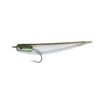
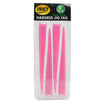
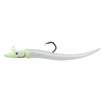
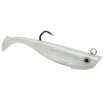
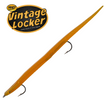
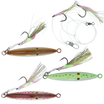
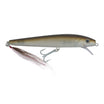
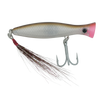
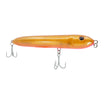
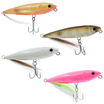
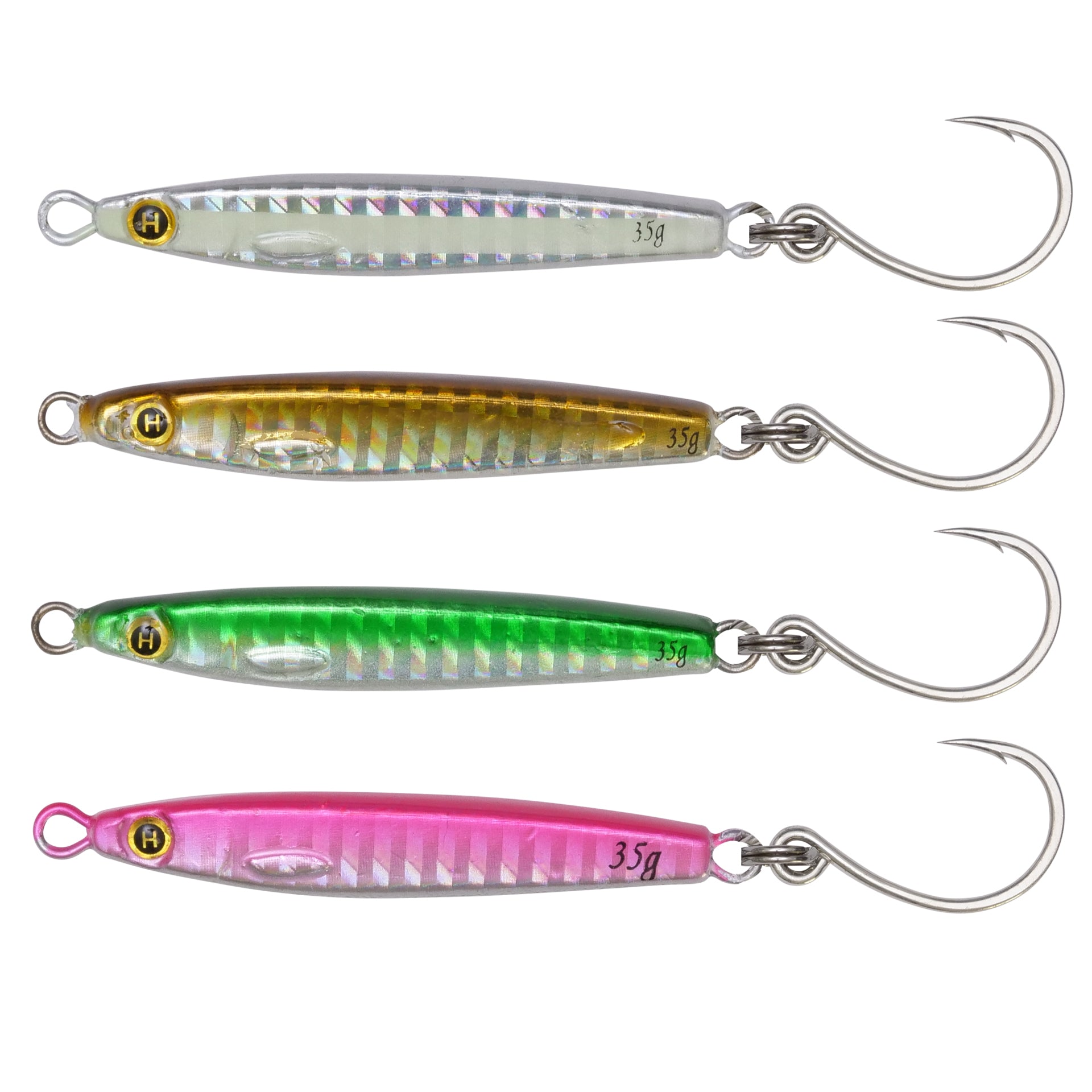
Epoxy JigThe Every DaySurface EraserThe Shape-ShifterHeavy MinnowThe Wind BeaterPeanut JigThe FixerMicro ChugThe SniperHogy Original 7″The WhispererPop-N-FlyThe Closer
Every lure named in this post links to its product page, and the tables carry thumbnails. Slowtail and Pocket Squid are not yet in the catalog export — editor to wire.
Conservation note, because it is this fishery: inline single hooks, not trebles. Fewer points means less damage, faster releases, and a lot less deck chaos when a green albie comes over the rail. In a fishery where nearly everything gets released, that adds up across a season.
3.4 — Bait → Lure → Color
Profile matches the bait. Weight matches the conditions.
In October you carry depth — a stack of the color that is working, because you know what is working. These first weeks you carry breadth. One of each, spread across the range, because the whole point of the trip is to find out. Every year the albies shift their hot color, and carrying six of last year's winner is a great way to be wrong all day with excellent consistency.
| Bait | Hogy lures | Colors | If they refuse |
|---|---|---|---|
| Bay anchovies 1–2″ Fine dimples, quiet water |
EPO 3/8 · Peanut Jig 3/8 · Micro Chug | Chovey, Amber, Olive, Bone | Match the warmth before you go bright. The most color-sensitive bait there is. |
| Silversides 2–4″ Nervous water sliding sideways |
EPO 5/8 · Surface Eraser · Peanut Jig 5/8 | Silverside, Bone, Glow Bone, Silver | Cool metallics. Step slightly darker, add contrast. |
| Sand eels 3–5″ Surface looks cut, not sprinkled |
Peanut–Sand Eel 5/8 · Surface Eraser | Olive Glow, Amber, Albie Crack | Darker olive or root beer. Stay in earth tones — sand eels blend, they don't flash. |
| Peanut bunker 2–4″ Spray and scatter |
Peanut Jig 5/8–1 · Slowtail | Peanut Bunker, Amber, Olive | Step up in profile. Peanuts are thick-bodied and albies commit harder on them. |
| Glass minnows <1″ Faint dimpling over "empty" water |
EPO 3/8 · Peanut Jig 3/8 · Pop-N-Fly | Chovey, Bone, Translucent | Downsize before you change color. This is a size problem, not a color problem. |
| Micro squid 2–3″ Erratic, won't hold a lane |
Micro Chug · Pocket Squid · EPO 5/8 | Pink, Amber, Glow Bone | Go wider, not slimmer, then speed up. Widest color latitude on the chart. |
| Can't tell | EPO 5/8, neutral — the diagnostic | Olive, Bone, Amber | Let the first cast answer it. Follow, swirl, eat or ignore is all information. |
The Peanut Jig is worth calling out. Look how many rows it turns up in — it is not one lure, it is a color-driven bait-matching system. Same tall body and horizontal fall in every one; the color does the matching. That is the "one of each across colors" idea inside a single lure family.
Sizes are a starting reference, not a prescription. Two separate decisions happen every time you tie on: profile matches the bait, weight matches the conditions. Slick calm and close, drop a step. Wind up and feeds pushed out, step up — the fish forgive the bigger profile because they cannot inspect it in textured water. When you are at the top of the range and still cannot get there, that is no longer a sizing problem. That is the switch to the Heavy Minnow.
Step 3 · Observational FactorsThe Water Read

You picked a spot. Now the water tells you whether the system is functioning. Give it ten minutes before you commit.
4.1 — Birds
Gulls give density. Terns give direction.
Species matters. Behavior matters more. Terns are your primary inshore signal, locked to the same small bait that drives albie feeding. Gulls are context-dependent — volume tells you bait size, relocation tells you structure. Gannets mean deeper bait stacking in stronger velocity.
| What they're doing | What it means | Your move |
|---|---|---|
| Fast, low, lateral pacing down a narrow band | Functioning carry lane, fish traveling beneath | Green light. Slide ahead of the direction — don't chase the last splash. |
| Tight hovering, vortexing over calm water, no diving | Pre-feed. Bait corralled below, hasn't broken open. | Don't wait for the blow-up. Fish mid-column now. You are fishing the build. |
| Wide lazy circling, random pecking | Post-feed, or bait with no organization | Don't force a cast. Expand. |
| Sitting tight, clustered, anchored and tense | Between cycles, often slack-to-first-push | Stay nearby. Watch for directional drift. |
| Gulls crashing vertically, heavy mixed flocks, loud | Confirms bait size, not a lane | Look for lateral relocation within the flock. Gulls give density, terns give direction. |
| Nothing. Empty sky. | No bait, bait too deep, or fish haven't pushed it up | Sonar carries the read. Don't leave solely because birds are absent. |
Stay or go, on birds alone. Stay when they pace with direction, when vortexing suggests bait building below, when reappearance spacing is consistent, or when sitting birds feel anchored and tense. Go when direction disappears, when pecking replaces pacing, when they scatter off the band, or when there has been no behavioral change through a full tide phase.
Specific to these fish: birds are often late. Albies slash first and the birds catch up. If they always seem a beat behind, expect short high-speed windows. When in doubt, give it one more cycle — birds that look like they are waiting for something usually are.
4.2 — Bait
Fine dimples means anchovies. A cut surface means sand eels.
The highest-leverage observational skill in this fishery. Each bait leaves a different signature on the surface.
- Fine dimples, tight nervous balls, quiet water → bay anchovies. Rain bait. Everything tightens: smaller profile, lighter leader, longer approach.
- Nervous water sliding sideways → silversides
- Spray and scatter → peanuts
- The surface looks cut rather than sprinkled → sand eels lifting
- Tight hovering over "nothing" → subsurface tracking. Count it down.
On the screen, when surface signs are thin, side scan finds density. Anchovies read as grainy speckled patches, silversides as elongated denser streaks, peanuts thicker and more solid. When one side of the screen consistently lights up and the other stays clean, you are on the edge of a bait band. That is your lane.
4.3 — Activity & The Full Cycle
One full cycle tells you direction, duration and spacing.
Albies are quick sharp slashes, tiny surface flicks, high-speed directional bursts, rarely repeating in exactly the same place. Feeds run 3–10 sec and reappear 40–100 yds down-current. Bass boil and push heavy. Bluefish are chaotic whitewater. Bonito are cleaner, more organized, and will often repeat in a lane.
If you get a feed while you are still reading the scene, watch the whole thing before you react. One complete cycle tells you three things:
- Direction of travel — where do feeds reappear relative to the last one? If reappearance tracks the wind it is wind-built; if it tracks current, tide is the engine. This settles which force is running the show.
- Feed duration — long feeds mean stable compression and well-pinned bait. Short feeds mean fragile structure or heavy pressure. Early on, expect short.
- Reappearance spacing — tight spacing around 30 yards means small bait and slow pacing; 150 yards means bigger bait and faster velocity. It also tells you how far ahead to position.
No surface feed in ten minutes is data too. If bait is present, current is building and birds show tension — stay, the system is loading. If none of those are true, go to your backup.
4.4 — Search, Then Stop Searching
Trolling is searching. Casting is fishing.
The most common early-season mistake is not picking the wrong spot. It is failing to make the transition.
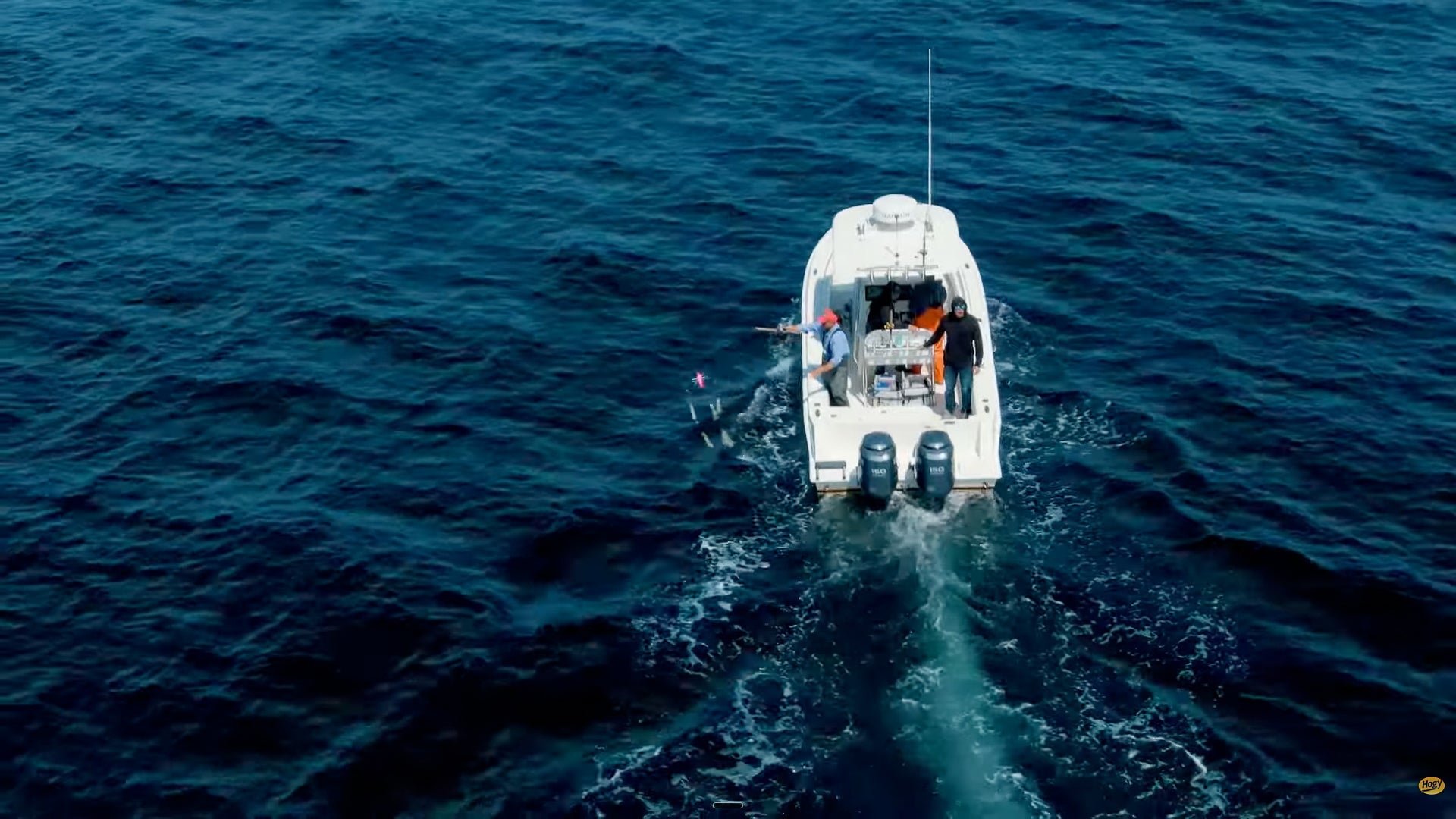
Recon is a means to an end. Troll broad directional passes — long S-curves, extended zig-zags. Test into the wind, downwind, into the tide, cross-tide, because wind and current do not always align and you are figuring out which force is organizing the bait. Watch for repeat sonar marks: one bait cloud means nothing, two or three along the same lateral band is a developing carry lane.
The instinct is to keep trolling because you are covering ground and it feels productive. Resist it. The moment the system declares itself — repeat marks, bait tightening along an edge, a bird shifting from circling to pacing — put the trolling rod away and pick up a casting rod.
Quick referenceThe Short Version

| Read | Question it answers | The one-liner |
|---|---|---|
| Forecast | Is the pattern intact? | Under 2 on the pivot count, adjust. 2 or more, re-enter somewhere else. |
| Ramp | Which structure today? | Wind decides inside or outside. Tide decides drain or compression. |
| Gear | Can I act in four seconds? | Four rods pre-rigged. Profile matches bait, weight matches conditions. |
| Water | Is this zone alive? | Birds give direction, bait gives size. Ten minutes, then commit or go. |
One line on etiquette, because it is this fishery. The smaller the school, the higher the courtesy standard. Stripers stay; albies leave. Charge a pod of three to fifteen and it does not sink and reset the way a September mob does — it leaves, and it may take the leading edge past your water with it. Approach from the side, kill the motor early, first boat on a drift owns it.

Bottom Line
Log it. Date, water temp, tide stage, wind for the last 48 hours, what bait was there, which color and size got bit. Recon has terrible odds on any single morning and outstanding odds over three seasons, because the arrival sequence on your water repeats — not the dates, the sequence. Three years of notes and you stop guessing where the leading edge is. The first rule of this fishery is that there are no rules: treat all of it as a framework, not a script, and get the boat prepped before you leave, because the ticket comes in fast.

Leave a comment
All comments are moderated before being published.
This site is protected by hCaptcha and the hCaptcha Privacy Policy and Terms of Service apply.