








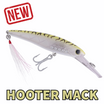
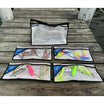
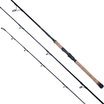
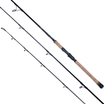
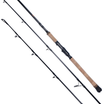
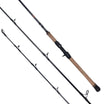
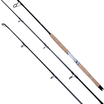
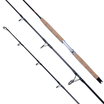
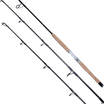
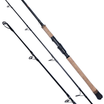
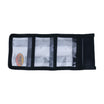
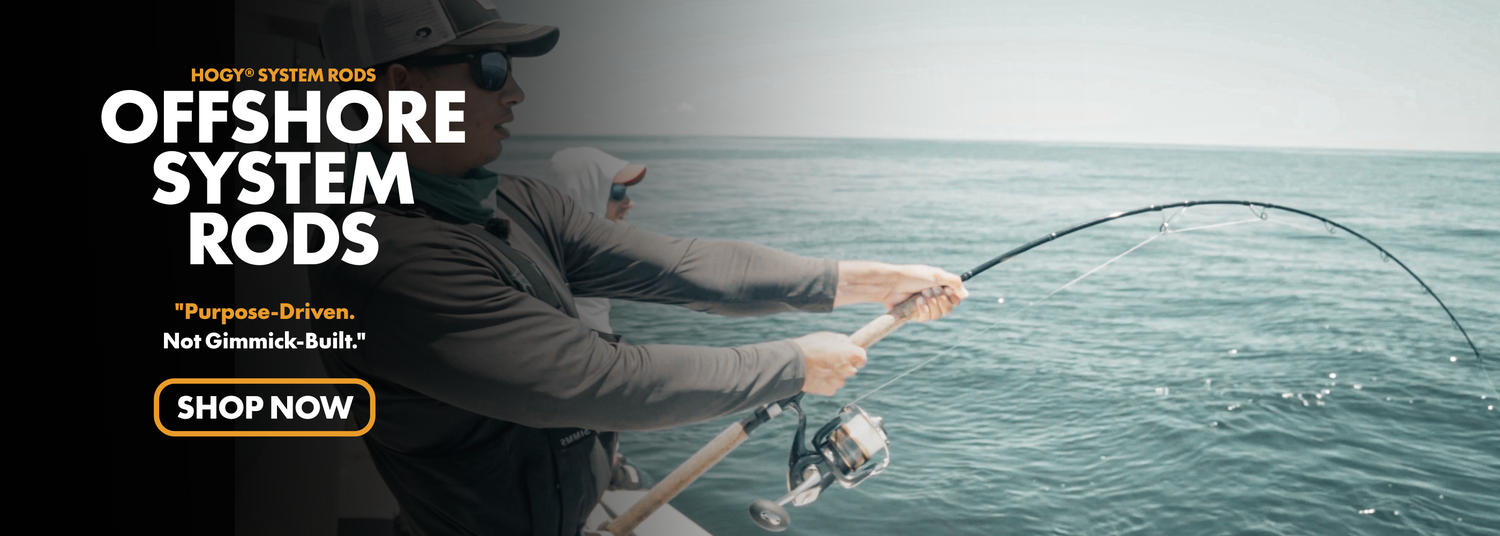
CAPT. MIKE'S TUNA ROD SYSTEM
Four rods. Every method. No wasted deck space.
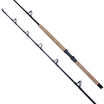
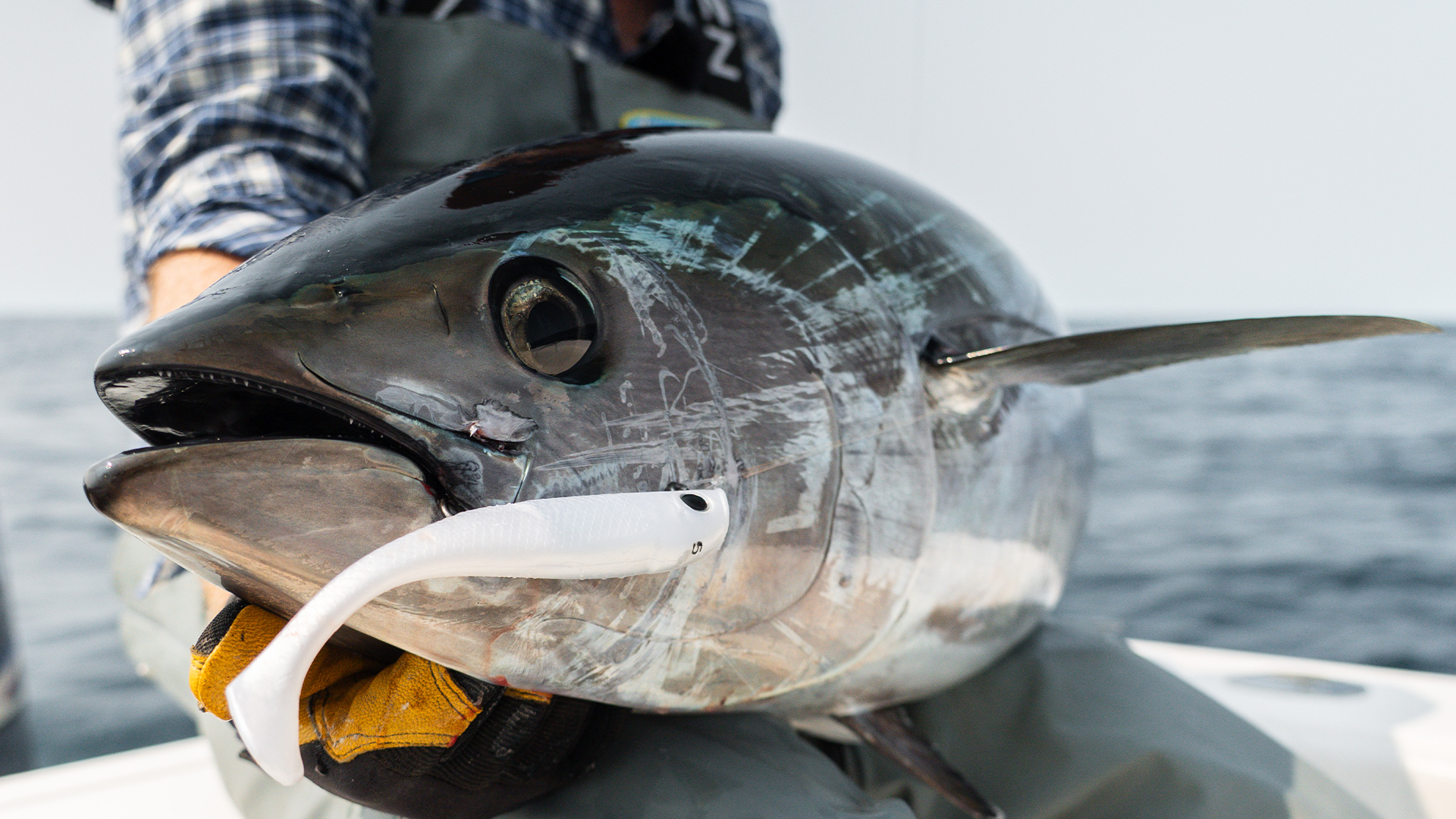
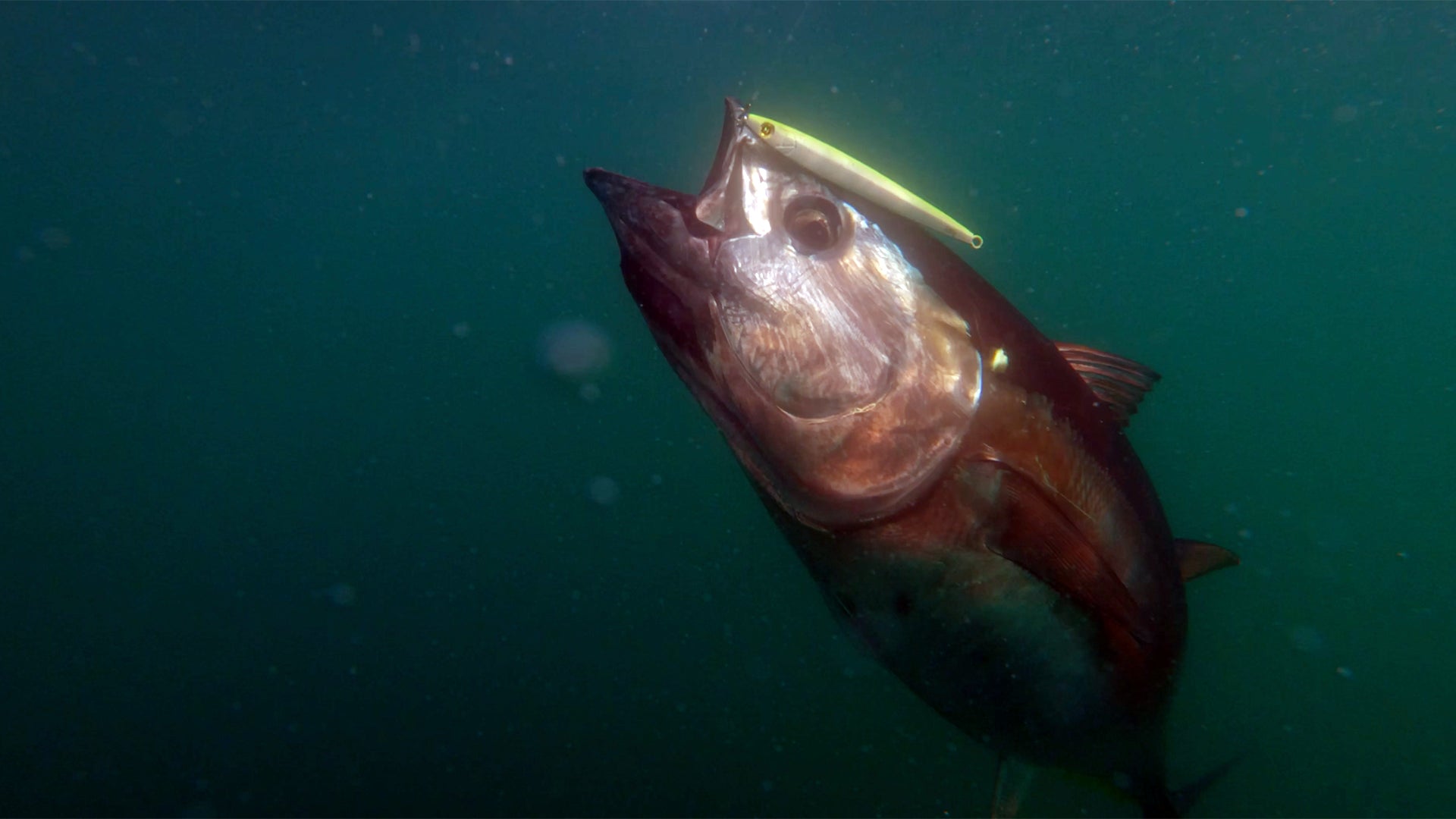
Tuna fishing offshore breaks cleanly into three methods: casting, jigging, and trolling. The rod you pick determines how well you can execute each one — and how your body feels at the end of the day. The Hogy Tuna Rod System uses four rods, each purpose-matched to a specific role. No overlap. No gaps. No guessing which rod to grab.
The decision logic is simple:
Rod Selection — Decision Logic
|
Situation |
Reach For |
Why |
|
Casting — any lure 4 oz+, any tuna size |
"HTCR7" 7' Tuna Casting |
The default rod. Loads heavy lures, casts distance, fights all tuna sizes. Start here for sliders, poppers, heavy paddles, and anything over 4 oz. |
|
Casting — 4 oz or under, fish under 120 lbs |
"7HHB" 7' Heavy Hybrid Spinning |
Light-tackle casting for school fish or sand eel patterns where the full tuna rod is overkill. Same length, more finesse, equally capable for fish to 120 lbs. |
|
Jigging — any depth, any weight |
"HTJR" 5'9" Tuna Jigging |
The only rod for serious vertical jigging. Short blank eliminates leverage against you. Parabolic action fights the fish — not your back. |
|
Trolling — lite standup bars |
"HHBR" 5'6" Hybrid Conventional |
Belt-ready for lite standup bar trolling and tube rigs. Light tackle conventional for school tuna to 120 lbs. The go-to when the spread goes out. |
|
NOTE |
The 6'6" Hybrid Tuna Rod (cast + jig in one) is available as a one-rod travel option or minimalist setup. It's not part of the core four — but if you can only bring one rod, it's the one. |
|
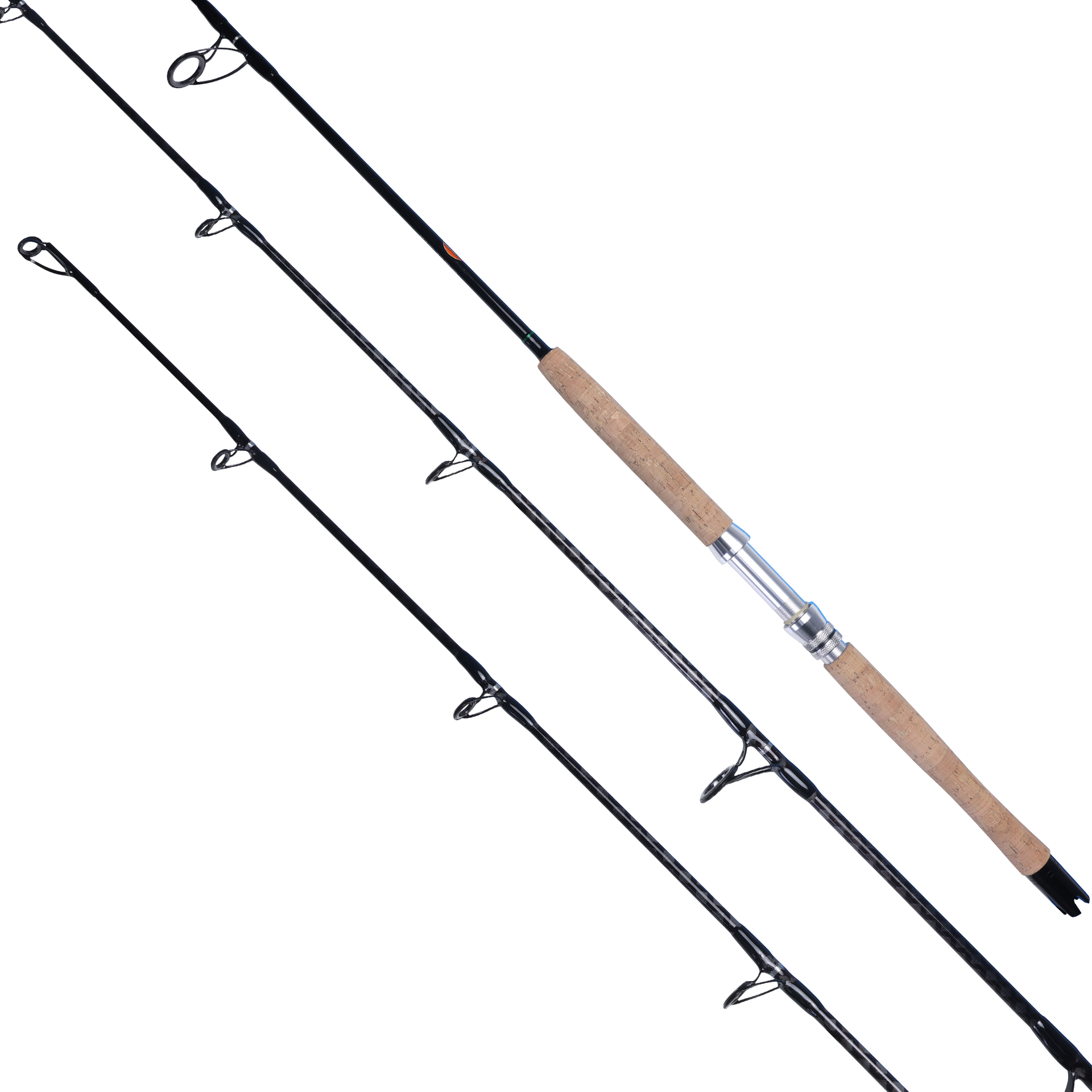
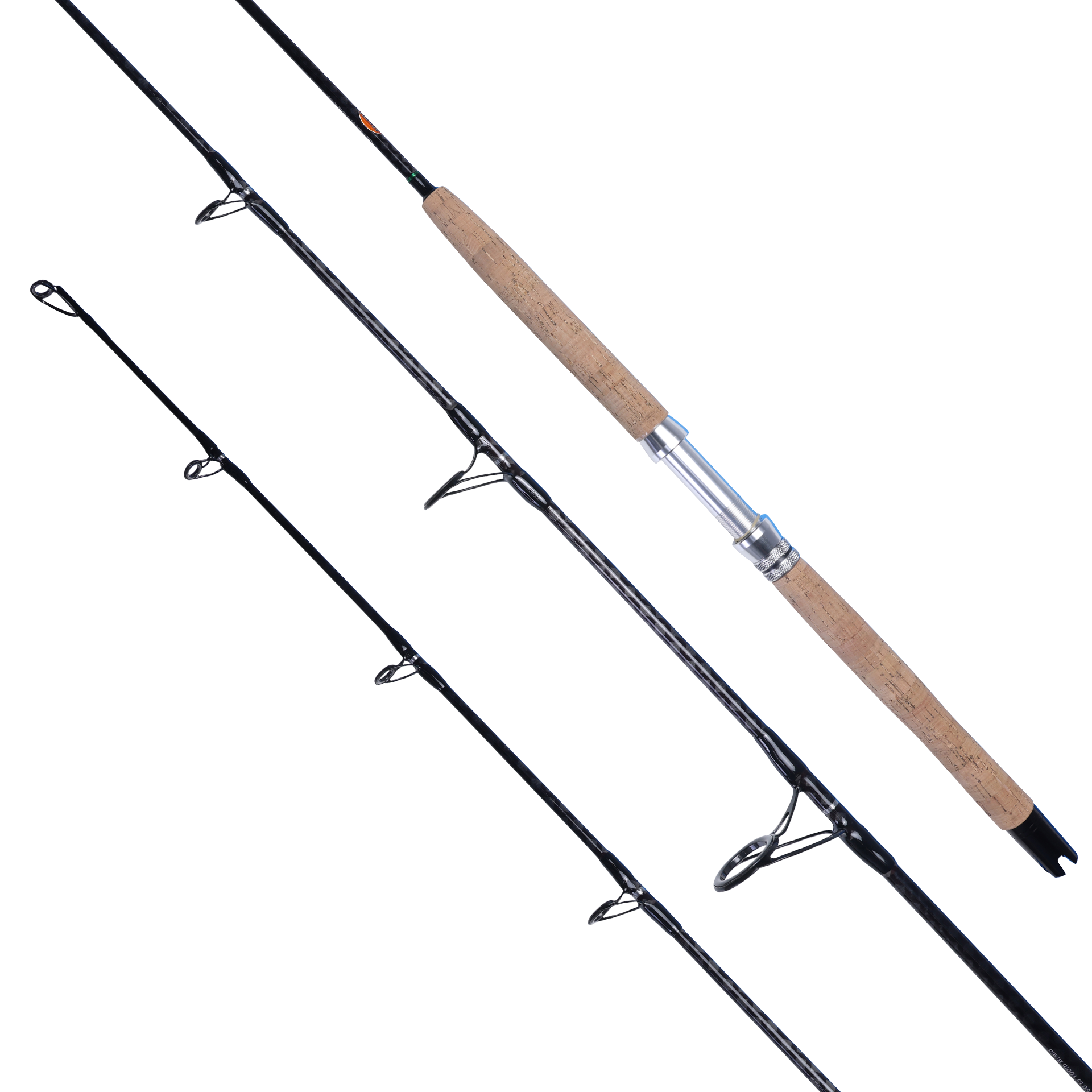
HTCR7 |
7' Hogy Tuna Casting Rod Tuna casting — all lures, all tuna sizes. Default rod. |
The Role
This is the rod you reach for first, every time. It's built from the ground up to deliver long-range casting with heavy tuna plugs, manage extended fights without grinding the angler down, and handle everything from school fish to medium-class bruisers up to 200 lbs. The moderate-fast action is not accidental — it cushions braid shock, protects single hooks, and gives just enough flex during head shakes and long runs that you can fish all day without feeling it the next morning.
When in doubt: grab the HTCR7.
Specs at a Glance
|
Action |
Moderate-Fast |
|
Power |
Medium-Heavy (Tuna-rated) |
|
Length |
7' |
|
Reel Match |
14,000–20,000 class spinning (Stella, Saragosa, Saltiga class) |
|
Mainline |
60–80 lb braided line |
|
Leader |
60–100 lb fluorocarbon |
|
Drag Range |
12–22 lb |
|
Lure Range |
3 oz – 8 oz (sweet spot: 4–5 oz on 80 lb braid / 18000-class reel) |
|
Species |
Bluefin 30–200 lbs, Yellowfin, Bigeye, Bull Mahi |
Why Moderate-Fast?
Fast-action tuna rods are too stiff — they rip hooks and transfer all the fight pressure directly into your arms and back. Moderate-action rods can't load heavy offshore plugs or cast with wind. Moderate-fast is the sweet spot: long-range casting accuracy, smooth hooksets, shock absorption during surges, and enough backbone to turn big fish without grinding you down over a full day.
Lure Compatibility
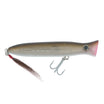
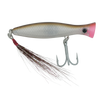
• Charter Grade Chug Popper (4 oz) — Primary topwater. Loud pops, long casts, all-day comfort.
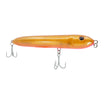
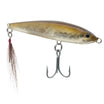
• Charter Grade Slider (4 oz, 6 oz) — Primary subsurface. Large-profile blind casts and foam feeds.
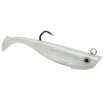
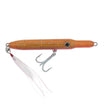
• Pro Tail Paddle (3–6 oz) — Cast, kerplunk, and hybrid jigging applications.
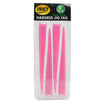
• Harness Pro Tail Paddle (6 oz) — Giant-class casting where the reinforced harness is required.
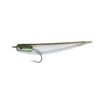
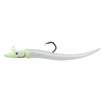
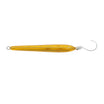
• Tuna Epoxy Jig (4 oz) — Long-distance search casting, sand eel and halfbeak imitation.
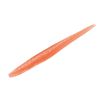
• Harness Jig Eel Tail (4–8 oz) — Kerplunk specialist. Drop it straight into a feed.
Design Details That Matter
• Gimbal Butt — Locks securely in rod belts and holders during long fights and rod-holder trolling.
• Balanced Blank — No hinge points; smooth parabolic bend loads cleanly throughout the fight.
• Short Rear Grip — Keeps the rod compact and ergonomic during casting and fighting.
|
CAPT. MIKE |
If I had to pick one rod to cast at tuna from a center console all season long, this is it. Balanced. Battle-tested. Kind to your back. Mean to the fish. |
|
7HHB |
7' Heavy Hybrid Spinning Rod Tuna casting — 4 oz and under, fish under 120 lbs. |
The Role
This is the 7C's lighter sibling — same length, same casting reach, but tuned for finesse presentations with lures 4 oz and under, and fish under 120 lbs. When tuna are keyed on sand eels and you need to throw a 4 oz Epoxy Jig or a lighter Pro Tail Paddle, the full tuna rod is overkill. 7HHB gives you the casting range without the brute-force action. It also doubles as your inshore-to-offshore crossover rod — fish stripers on the way out, pitch to school tuna when you get there, without switching gear.
|
RULE |
4 oz and under, fish under 120 lbs: reach for 7HHB. Over 4 oz or targeting larger fish: switch to the 7C. |
Specs at a Glance
|
Action |
Moderate-Fast (Parabolic) |
|
Power |
Heavy |
|
Length |
7' |
|
Reel Match |
6,000–14,000 class spinning (8000 is the sweet spot) |
|
Mainline |
30–80 lb braid (40–65 lb typical for tuna duty) |
|
Leader |
40–80 lb fluorocarbon |
|
Lure Range |
1.25 oz – 4 oz (up to 5 oz with lob cast) |
|
Sweet Spot (Tuna) |
3–4 oz — Pro Tail Paddle, Epoxy Jig, light Slider |
|
Species |
School Bluefin and Yellowfin to ~120 lbs, Striped Bass, Mahi, Bonito, Albies |
Lure Compatibility
• Tuna Epoxy Jig (4 oz) — This rod's primary tuna lure. Light action loads the jig cleanly, delivers maximum distance on sand eel and halfbeak patterns.
• Pro Tail Paddle (3–4 oz) — Pitching to school fish or surface feeds on smaller bait. Parabolic action cushions violent strikes and protects single hooks.
• Charter Grade Slider (4 oz) — Works, but the HTCR7 is preferred for the 4 oz Slider. Use this rod when targeting smaller fish or when the extra finesse matters.
• Heavy Minnow / Sand Eel Metals (2–3 oz) — Distance casting in sand eel feeds where small profile and maximum range are the priority.
Crossover Use
This is also the rod you take inshore and stay rigged for tuna. Stripers on the way out, school bluefin when you arrive. No re-rigging, no rod swap. The 7' Hybrid Spinning is the system's crossover rod — it won't outperform the dedicated tuna rods at their specialty, but it performs across all of them confidently.
|
CAPT. MIKE |
This is my backup and my crossover. I've landed ~100 lb tuna on it with Capt. Rob Lowell and I'm confident it handles fish to 120 lbs. It's also a fantastic tarpon rod. Don't underestimate it. |
|
HTJR |
5'9" Hogy Tuna Jigging Rod System Role: Vertical jigging specialist — all depths, all jig weights |
The Role
When fish are below the surface — holding mid-column, bottom-hugging, or sonar-marked but not showing — this is your rod. The 5'9" is short by design. Every extra inch of rod length is extra leverage working against you when you're fighting vertically. The short blank keeps you in control, reduces fatigue during long jig cadences, and fights the fish rather than fighting your arms and back. The parabolic action loads smoothly through the jig's drop and lift, stays tight under high drag, and cushions the surges that would pull hooks on a stiffer blank.
|
RULE |
Any jigging scenario: this is the rod. Don't use the casting rods for deep jigging if you can avoid it — the extra length works against you under vertical load. |
Specs at a Glance
|
Action |
Moderate-Parabolic |
|
Power |
Medium-Heavy (Tuna-rated) |
|
Length |
5'9" |
|
Reel Match |
18,000–20,000 class spinning reel |
|
Mainline |
60–80 lb braided line (100 lb hollow core optional for giants) |
|
Leader |
60–130 lb fluorocarbon |
|
Drag Setting |
15–22 lb (scale to jig weight and target) |
|
Jig Range |
4 oz – 16 oz (sweet spot: 6–12 oz) |
|
Species |
All bluefin and yellowfin sizes, amberjack, pollock — anything requiring vertical work |
Why Short?
Leverage and fatigue. A longer rod gives the fish more mechanical advantage against you. Short blank = more direct control, less torque transferred to your body. With the 5'9", you can lift vertically, lean into the fight, and absorb pressure through the rod — not your lower back. It's the ideal length for jigging deep and fighting hard for hours.
Lure Compatibility
• Pro Tail Paddle (3–6 oz) — Mid-column vertical jigging. Tight thumping tail on lift and fall.
• Harness Pro Tail Paddle (6 oz) — Deep water and big fish applications. Built-in harness handles the pressure.
• Harness Jig Eel Tail (4 oz) — Spiral drop, seductive flutter. Deadly kerplunk weapon under birds.
• Sand Eel Jig (6.5–16 oz) — Ultra-fast sink rate for deep water or fast current. Speed jig or slow pitch.
• Harness Pro Tail Eel — Full vertical entry for pressured zones and slow-pitch presentations.
Design Details That Matter
• Gimbal Butt — Sits snug in belt; won't twist under load.
• Short Rear Grip — Keeps elbows in and rod position balanced during extended jigging cadences.
• True Parabolic Action — Loads deep, stays tight, protects gear. More landing power, less brute force.
|
CAPT. MIKE |
This is the rod I trust for deep water. Powerfully parabolic — it fights the fish, not your back. The moderate-fast action gives you control over heavy jig cadence without jackhammering or going mushy. It does one thing and does it extremely well. |
|
HHBR |
5'6" Hybrid Conventional Rod System Role: Light tackle conventional — trolling lite standup bars, school tuna to 120 lbs |
The Role
The conventional rod in the system. Short, belt-ready, and purpose-built for trolling bird bars, pulling tube-and-worm, and running heavy jigs in deep water. On the tuna grounds, HHBR lives in the rod holder until the trolling spread needs to be deployed — then it takes over. It also handles heavy jigging beyond the range of the spinning jigging rod, and provides a conventional-platform backup for fish up to 120 lbs when the situation calls for the extra leverage of a belt setup.
|
RULE |
Trolling bars and tube rigs: this is the rod. Heavy jigging 8–16 oz in deep water: this rod. Conventional platform needed for fish to 120 lbs: this rod. |
Specs at a Glance
|
Action |
Parabolic |
|
Power |
Heavy |
|
Length |
5'6" |
|
Reel Match |
12–20 class conventional or 300–400 round-reel baitcaster |
|
Mainline |
30–80 lb braid |
|
Leader |
30–80 lb fluorocarbon or mono |
|
Lure / Jig Range |
4 oz – 16 oz |
|
Sweet Spot |
6–16 oz jigs, tube rigs, bird bars, swimming plugs |
|
Tuna Target Range |
School-class bluefin to ~120 lbs on trolling plugs or bird bars |
Lure / Method Compatibility
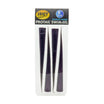
• Bird Bars (Classic and Directional) — Primary tuna trolling tool. HHBR holds the spread clean and tracks the bar through turns.
• Deep Dive Swimming Plug (7") — Trolling depth-probing swimmer for subsurface or suspended fish.
• Tube and Worm — Inshore and offshore trolling for stripers and school bluefin in channel edges and rip lines.
• Sand Eel Jig (8–16 oz) — Heavy jigging in deep water (150–300 ft). Fast-drop metal for current and depth that exceeds the spinning jig rod's range.
• Harness Jig (8–16 oz) — Deep vertical jigging. Slow-pitch or speed-jig applications in the 200+ ft zone.
Design Details That Matter
• Soft Gimbal Butt — Locks comfortably in belt or rod holders for long battles and rod-holder trolling.
• Compact Blank — Short lever arm for vertical control and tight cone angle in the spread.
• Parabolic Action — Distributes load across the blank, protecting braid and leader connections under trolling pressure and sudden strikes.
|
CAPT. MIKE |
When the spread goes out, this is the rod. Lite standup bar trolling, tube rigs, deep divers. Light tackle conventional for school tuna to 120 lbs. |
Optional: 6'6" Hybrid Tuna Rod — The One-Rod Quiver
Not part of the core four, but worth knowing. The 6'6" Hybrid bridges casting and jigging — long enough to throw a 5 oz Slider with distance, compact enough to drop a 10 oz jig 150 feet. It's the right call for captains or travelers who need a single-rod tuna setup, or for situations where deck space is tight and method switching needs to happen fast.
|
|
Casting |
Jigging |
|
Lure Range |
4–10 oz sweet spot |
6–16 oz sweet spot |
|
vs. 7C |
Slightly shorter, slightly less distance |
More versatile than the 7C |
|
vs. 5.9 |
More casting capability |
Less dedicated than the HTJR |
|
Best Use |
Travel / minimalist / one-rod trips |
Situations needing fast method switches |
Lure → Rod Quick Reference
Use this table at a glance to confirm the right rod for every lure in the tuna system.
|
Lure |
Default Rod |
Notes |
|
|
— CASTING LURES — |
|
|
|
|
|
|
|
|
|
|
|
|
|
|
|
|
|
|
|
|
|
|
|
|
|
|
|
|
|
|
|
|
|
|
|
|
|
|
|
— JIGGING LURES — |
|
|
|
|
|
|
|
|
|
|
|
|
|
|
|
|
|
|
|
|
|
|
|
|
|
|
|
|
|
— TROLLING LURES — |
|
|
|
|
|
|
|
|
|
|
|
|
|
|
Lure |
Default Rod |
Notes |
|
|
— CASTING LURES — |
|||
|
Charter Grade Chug Popper (4 oz) |
HTCR7 |
Primary topwater rod. Start here every time. |
|
|
Charter Grade Slider (4 oz) |
HTCR7 |
Use Hammer if fish are under 120 lbs and finesse matters. |
|
|
Charter Grade Slider (6 oz) |
HTCR7 |
6 oz needs the MH casting rod to load properly. |
|
|
Pro Tail Paddle (3–4 oz) |
7HHB → HTCR7 |
4 oz and under + school fish: 7HHB. Larger fish or heavier: 7C. |
|
|
Pro Tail Paddle (5–6 oz) |
HTCR7 |
Over 4 oz defaults to the 7C. |
|
|
Harness Pro Tail Paddle (6 oz) |
HTCR7 |
Giants and heavy applications. 7C handles the load. |
|
|
Tuna Epoxy Jig (4 oz) |
7HHB → HTCR7 |
7HHB preferred for sand eel patterns with school fish. 7C in wind. |
|
|
— JIGGING LURES — |
|||
|
Pro Tail Paddle (4–6 oz, jigging) |
HTJR |
All vertical jigging: short rod only. Don't use casting rods for deep jig work. |
|
|
Harness Pro Tail Paddle (jigging) |
HTJR |
Heavy fish, deep water. The 5'9" handles the drag. |
|
|
Harness Pro Tail Eel (jigging) |
HTJR |
Slow-pitch and vertical. HTJR or HHBR in deep water. |
|
|
Harness Jig Eel Tail (4–8 oz) |
HTJR |
5.9 primary. HHBR for deep conventional jigging (8+ oz, 150+ ft). |
|
|
Sand Eel Jig (6.5–16 oz) |
5.9 → HHBR |
5.9 for 6.5–10 oz. HHBR for 10–16 oz in deep water on conventional. |
|
|
— TROLLING LURES — |
|||
|
Bird Bars (Classic & Directional) |
HHBR |
Conventional platform. HHBR holds the spread. |
|
|
Deep Dive Swimming Plug (7") |
HHBR |
Trolling primary. HHBR or 7HHB in rod holder during troll scan mode. |
|
|
THE SYSTEM RULE |
HTCR7: default casting rod. 7HHB: 4 oz and under, fish under 120 lbs. HTJR: any jigging. HHBR: any trolling or lite standup bar. |
||


Leave a comment
All comments are moderated before being published.
This site is protected by hCaptcha and the hCaptcha Privacy Policy and Terms of Service apply.