









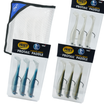
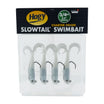
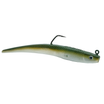
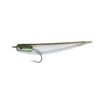
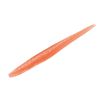

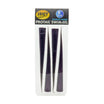
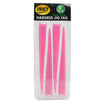
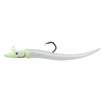
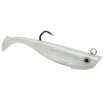
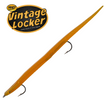
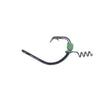


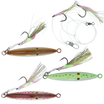
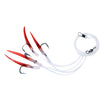
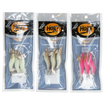
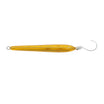
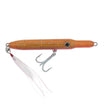

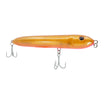
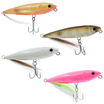
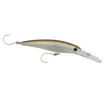
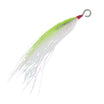
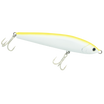
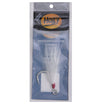
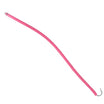
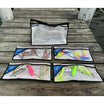
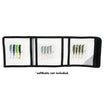
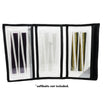
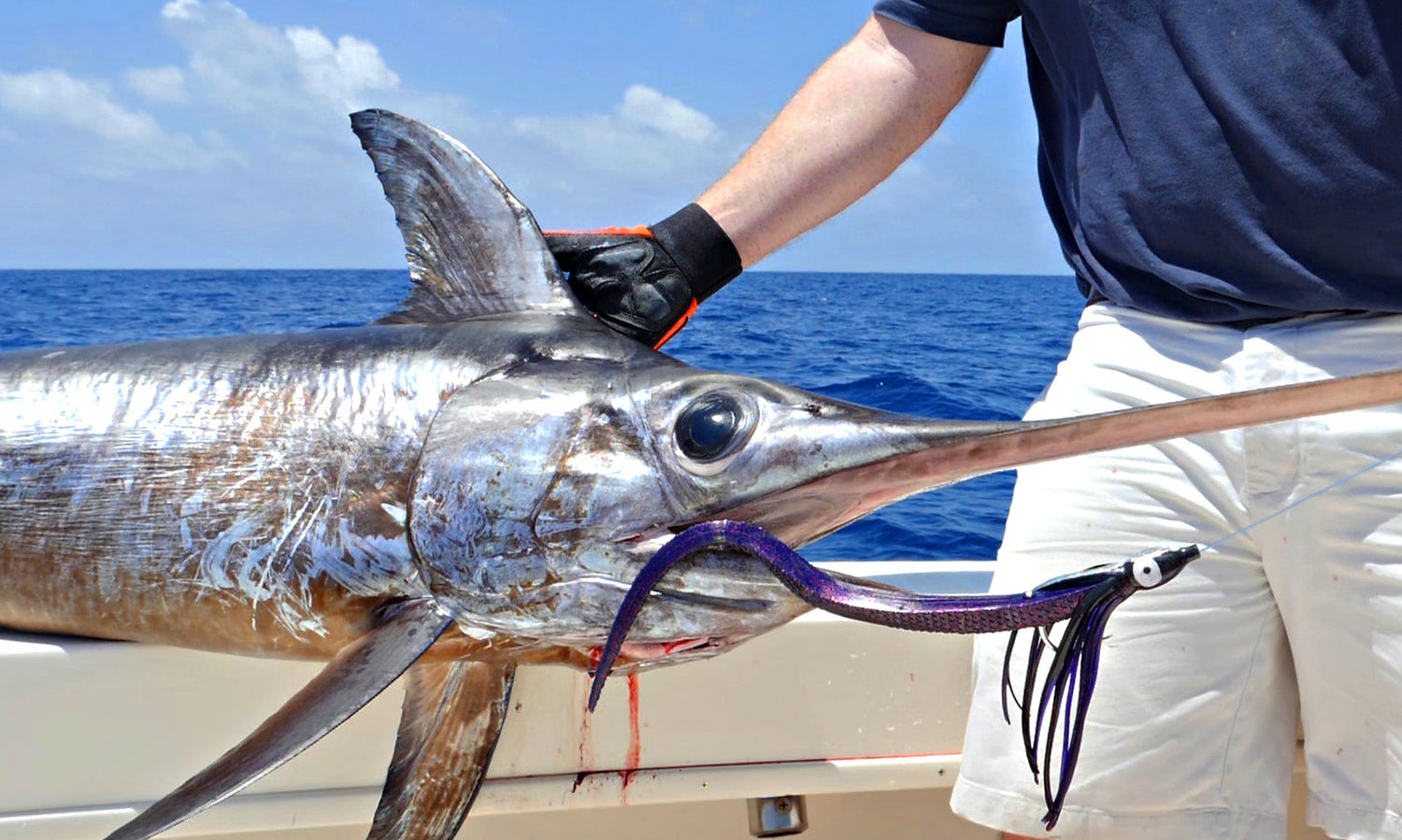

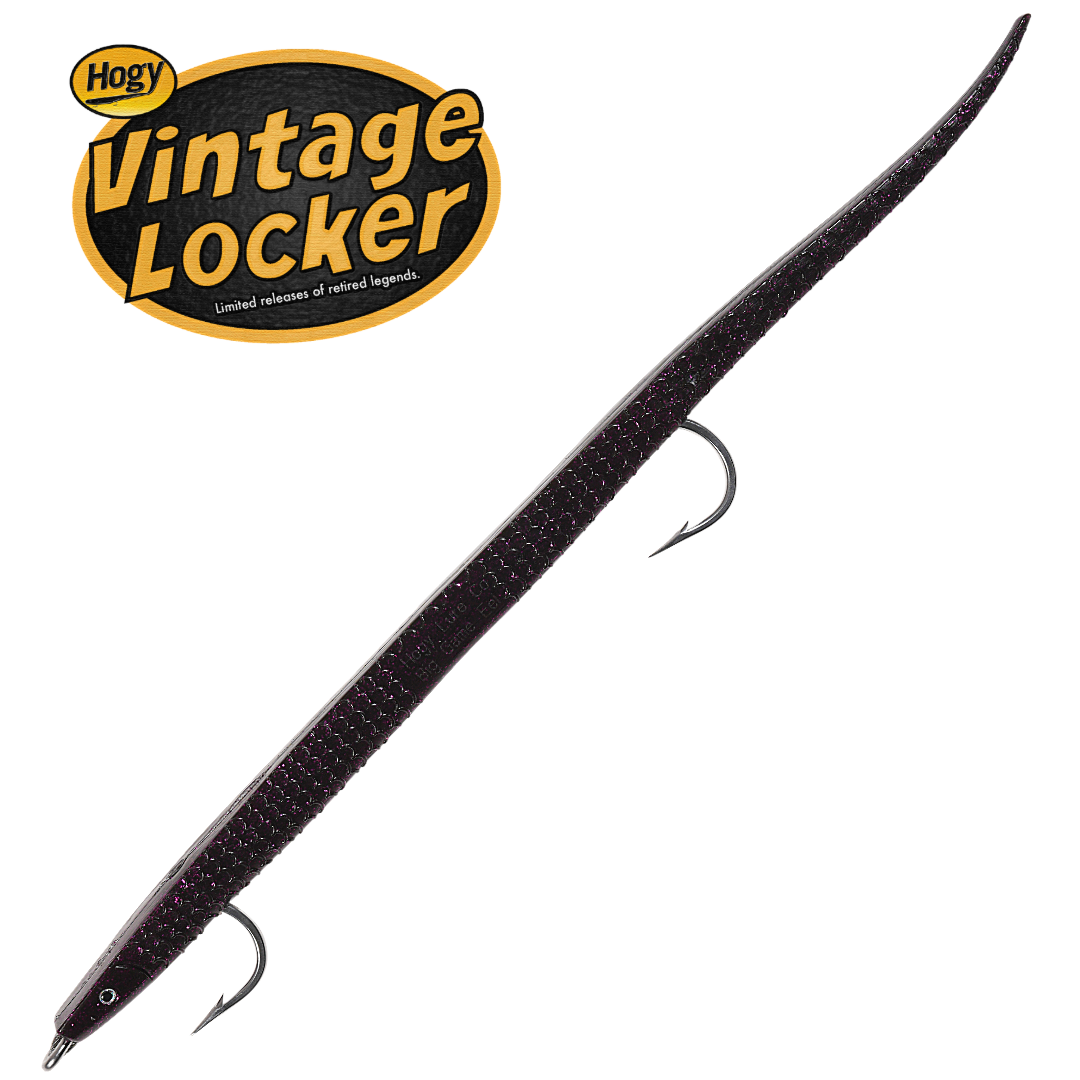
The Hogy Perfect Sword Eel — 18″ deep-profile soft body, inline-molded tandem 9/0 rigging, UV-infused material with iridescent glitter. Back by popular demand after the fleet used up every unit in the wild.
“The magazines wrote it up. The tournament fleet adopted it. The forums would not let it die. Now it is back as the Hogy Perfect Sword Eel, in a limited run. Get yours before the fleet does.”

To understand the eel, you have to understand the fishery it was built for.
Daytime deep dropping for swordfish started in South Florida and spread up the coast fast. One Virginia captain brought a 270-pound broadbill up from 1,350 feet in broad daylight, shared the technique freely, and within a decade the method was pulling swords off the bottom from Massachusetts through Texas. The newest frontier, as the offshore press documented it at the time, was canyon country from Virginia to New England. Our backyard.
The technique transformed swordfishing from a night operation into a daytime fishery. Boats that once fished all night for one or two bites were now finding fish in the 1,200 to 2,000-foot range in daylight, on sonar-targeted drops, with multiple chances per day. The fishery grew fast — and so did the demand for gear that could survive the quarter-mile trip to the bottom.
“We built this eel specifically for the daytime deep-drop fishery. We worked with the crews who were pioneering it in Florida to dial in the specs — the body profile, the rigging, the hook configuration. It took four years. When it launched in 2016, it went straight into the tournament kit.”
The quarter-mile drop runs a gauntlet. Most baits don’t survive it.
The dirty secret of deep dropping: the trip down is the hardest part. Squid, bait thieves, and short-striking swords tear natural baits apart. Every shredded belly strip means a 20-minute retrieve, a re-rig, and another 20-minute drop — an hour of fishing time gone per ruined bait on a trip where prime depth windows can be shorter than that. Marlin magazine identified the fix directly: a skirted soft-plastic that survives attacks by bait thieves and is more durable than the real thing. When a billfish publication calls out your soft bait next to stitched belly strips and rigged squid, that is the whole pitch in one sentence.
The Hogy eel solved both problems simultaneously — it survived the gauntlet, and because it is a fully artificial bait, it kept the J-hook in play.

Everything the fleet loved. Better rigged than the original.
The Perfect Sword Eel keeps everything that worked about the original Swordfish Eel and upgrades the rigging from hand-assembled to inline-molded — more consistent, more durable, and deployment-ready out of the package. No prep. No freezing, thawing, sewing, or rigging. It lives in your offshore kit until the swords are chewing.
- 18-inch deep-profile soft body with a long, flexible taper that produces a fluid, serpentine action on lifts and drops
- Inline-molded rig replacing the original hand-rigged construction for consistency, durability, and clean deployment
- Tandem 9/0 Mustad 7691S Knife Point hooks on bluewater-grade braided cable rig — the second hook keels the long body for a controlled serpentine track at depth
- UV-infused material under heavy iridescent glitter coating — deep-water shimmer visible where natural-color baits go dark
- Integrated skirt that keeps the eel centered, covers and protects the crimp connection, and holds menhaden oil or preferred scent
- Zero bait prep — nothing to freeze, thaw, sew, or rig
The “Perfect” Name — Why It Matters
| Quick Spec Reference | |
|---|---|
| Body Length | 18 inches |
| Body Profile | Deep-profile soft body, long flexible taper |
| Material | UV-infused soft plastic with iridescent glitter coating |
| Rigging | Inline-molded — bluewater-grade braided cable rig |
| Hooks | Tandem 9/0 Mustad 7691S Knife Point |
| J-Hook Legal | Yes — fully artificial bait, no natural component |
| Skirt | Integrated — centers eel, protects crimp, holds scent |
| Bait Prep | None — deployment-ready out of the package |
| Target Species | Swordfish — Daytime Deep Drop |
| Depth Range | 1,200–2,000+ feet |
| Availability | Limited relaunch run only |
Why tournament anglers reach for the Hogy eel first.
Swordfish have notoriously soft mouths. J-hooks convert bites at depth in a way circle hooks struggle to match — the hook set geometry works differently when you are fighting a fish that may be 2,000 feet below the boat. Federal billfish tournament rules require non-offset circle hooks on natural baits and natural-artificial combinations. J-hooks are legal only on pure artificials. The Hogy eel, as a fully artificial bait with no natural component, keeps the J-hook in play.
“Tournament anglers like it because they can fish a J-hook.” — That is the line that launched a thousand tournament rigs. A durable bait that survives bait thieves AND lets you run a J-hook is not a convenience. In a tournament, it is an edge.”
The single biggest fish we can put next to this lure.
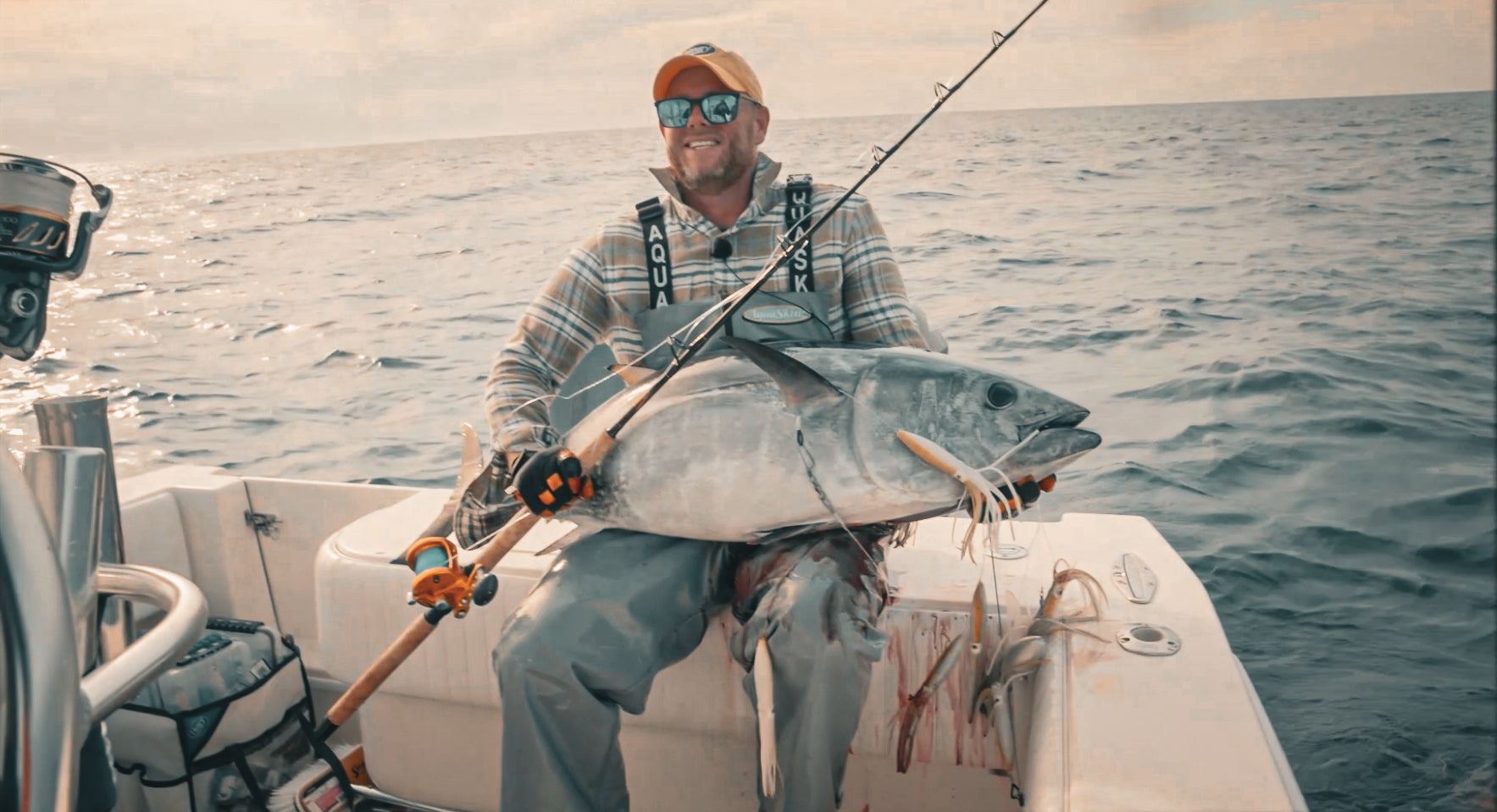
One tap and the rod doubled over. Two hours and thirty-five minutes of work to the harpoon. Five hundred pounds of broadbill does not care that the eel came out of a mold. The crew described it as a suicide bite: absolutely committed from the first touch. That is what happens when the profile, the depth, and the action all line up against a fish that has been hunting in 1,500 feet of dark water all morning.

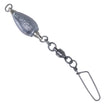
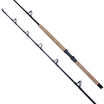
One appropriate outfit, a handful of baits, a deep drop weight, and assorted terminal gear. That’s the whole system.
“What I love most about day dropping is the simplicity. One appropriate outfit, a handful of baits, a deep drop weight, and an assortment of terminal gear, and you are in business. We hooked our sword twelve minutes after the bait hit the zone.”

OA500 Search and Drop — position up-current of the structure, deploy the rig with controlled free-spool, slow-troll against the current at 1.4–1.6 knots at 100 feet off bottom.
- Run 5–7 feet of 250lb leader off the rigged eel, per your preference
- Crimp the leader to a stout swivel — 600lb is standard, 300–400lb works equally well
- Above the swivel, run your wind-on leader section
- Finish with a top shot of 250lb test approximately 160 feet long
- Tie or wrap a pre-formed loop where the lead will attach — your longline clip and drop weight clip-on point
- Place first light 45–50 feet up the leader from the bait
- Place a second light an arm’s length above the first. Two to three lights total.
- Attach each light with the cheapest rubber bands you can find — wrap tight, one loop back through the other, slip over the top of the light
- When you wind a fish up, the bands break at the rod tip and the lights slide down to the swivel, out of the gaff zone
- Get ahead of your spot and up-current — give the rig time to settle onto the structure by the time you are over it
- Deploy with the current. Let out 500–600 revolutions, stopping the spool every 100 feet for a beat so everything fetches up straight
- At your pre-formed loop, clip on the lead with the longline clip and ease it into the water
- Free-spool the rest of the way to bottom. Know your number on the line counter.
- When the weight touches down, the tip goes slack. Engage and bring the rig up about 100 feet.
- Slow-troll against the current at 1.4–1.6 knots — bait swims well while covering ground at a controlled pace
- Confirms depth. Current, wind, and changing line scope all move your true depth. The only way to know is to re-find bottom.
- Puts action in the bait. The soft eel follows the sinker down with a natural rise-and-fall undulation. That motion often triggers the strike.
- Keeps you engaged with the tip. Many sword bites at depth are extremely subtle. You will only read them if you are in tune with the tip’s rhythm from working the rod.
- On a subtle tap: bring the weight up another 10 feet, then drop it back. The falling bait frequently teases the sword into committing.
- On a pronounced bump: drop immediately to bottom, then reset to the 100-foot mark.
- Watch for slack line on the wind — it can mean a fish swimming up with the bait, not a miss
- Once tight: ease the drag slightly so you do not pull the hook. Gain line steadily.
- Expect fireworks near the surface. Swords are light-sensitive and often fight hardest at the top. What feels like a small fish can be a 600-pounder.
- Near endgame: unclip the lead at the loop so it is out of the way. Fight the fish on the leader to the gaff or harpoon.
The original 18-inch Swordfish Eel had a funny business problem: it lasted. A soft bait that survives squid attacks, missed bites, and full seasons in the offshore kit does not generate a lot of reorders, and over time sales tapered off while the eels already out there just kept fishing. We retired it in 2022.
The market did not accept the decision. Anglers who lost their last one. Anglers ordering five and ten at a time the moment we hinted at a comeback. Tackle shops from Nags Head to Miami getting calls for leftover stock. Forum threads documenting the scavenger hunt — TackleDirect, Charkbait, Oceans East checked and found empty. Four years of inbox telling the same story.
“Short version: you kept calling, so here we are. The supply floating around out there has finally dwindled. When you retire something and the calls do not stop for four years, that is a pretty clear signal that you got the retirement wrong.”
| Approach | Use Case | Switch Signal |
|---|---|---|
| Hogy Perfect Sword Eel (solo) | Heavy bait-thief pressure, tournament with J-hook rules, any time you want zero prep | Default. Start here. |
| Eel + squid tube | Low bait pressure, want added scent and visual in the column | Fish marking sonar but not committing on the eel alone |
| Natural bait + Hogy backup position | Calm conditions, no bait thieves, crew has natural bait rigged | Switch fully to Hogy when the first natural bait comes up shredded |
One appropriate outfit. That is the beauty of the system.
| Component | Spec | Notes |
|---|---|---|
| Leader (eel to swivel) | 5–7 ft of 250lb mono | Adjust length per captain preference. Shorter in heavy current. |
| Swivel | 600lb rated (300–400lb acceptable) | Strength is the only spec that matters here. Crimp, not tie. |
| Wind-on leader | 250lb mono, pre-rigged | Above the swivel. The section you walk the fish on at endgame. |
| Top shot | 250lb mono, approximately 160 feet | The shock absorber between braid and the leader system. |
| Main line | Heavy braid on LP-class reel | Know your line counter number for the target depth. Mark it. |
| Drop weight attachment | Pre-formed loop on leader — longline clip | Clips on for the drop, unclips cleanly near the surface. Keep it out of the gaff zone. |
| Lights | 2–3 deep-water UV lights on rubber-band breakaways | 45–50 ft up from bait, arm’s length apart. Cheapest rubber bands available. |
| Slow-troll speed | 1.4–1.6 knots against the current | Bait swims correctly, covers ground without running past the fish. |
The Hogy Perfect Sword Eel is an 18-inch deep-drop soft bait built specifically for daytime swordfishing. It solves the bait-thief problem (it survives the quarter-mile trip to the bottom), the natural bait durability problem (it comes back looking fishable), and the tournament hook problem (it is a fully artificial bait that keeps the J-hook legal). Tandem 9/0 Mustad 7691S hooks on a bluewater cable rig. UV-infused material with iridescent glitter. Integrated skirt for tracking and scent. Zero bait prep. Deployment-ready out of the package. The fleet fished the original 2016 version until the last one was gone. The Perfect is the same bait with better rigging. Limited run — when it is gone, it is gone. Get yours before the fleet does.
- Salt Water Sportsman — “Daytime Swordfishing” by Ric Burnley, June 19, 2019
- Marlin Magazine — “Daytime Swordfishing on the East Coast,” updated May 2023
- Sport Fishing Magazine — “Northeast Daytime Swordfishing” by Capt. Vincent Daniello, May 18, 2016
- WAVY News 10 (Virginia Beach) — “To Catch the Big One, You Have to Think Like a Fish,” November 1, 2024
- Oceans East Fishing Tournaments — Swordfish Tournament Rules
- The Hull Truth — “Hogy Lure, 18-Inch Soft Eel Bait for Swordfish,” March 26, 2025
- The Hull Truth — “Fishing for Swords in a Tournament,” July 2023
- HogyLures.com — 528lb Swordfish, Daytime Deep Dropping, Oregon Inlet


Leave a comment
All comments are moderated before being published.
This site is protected by hCaptcha and the hCaptcha Privacy Policy and Terms of Service apply.