The Foundation of the Hogy Trolling Spread — and the Only Bar That Works Everywhere.
Bar Length
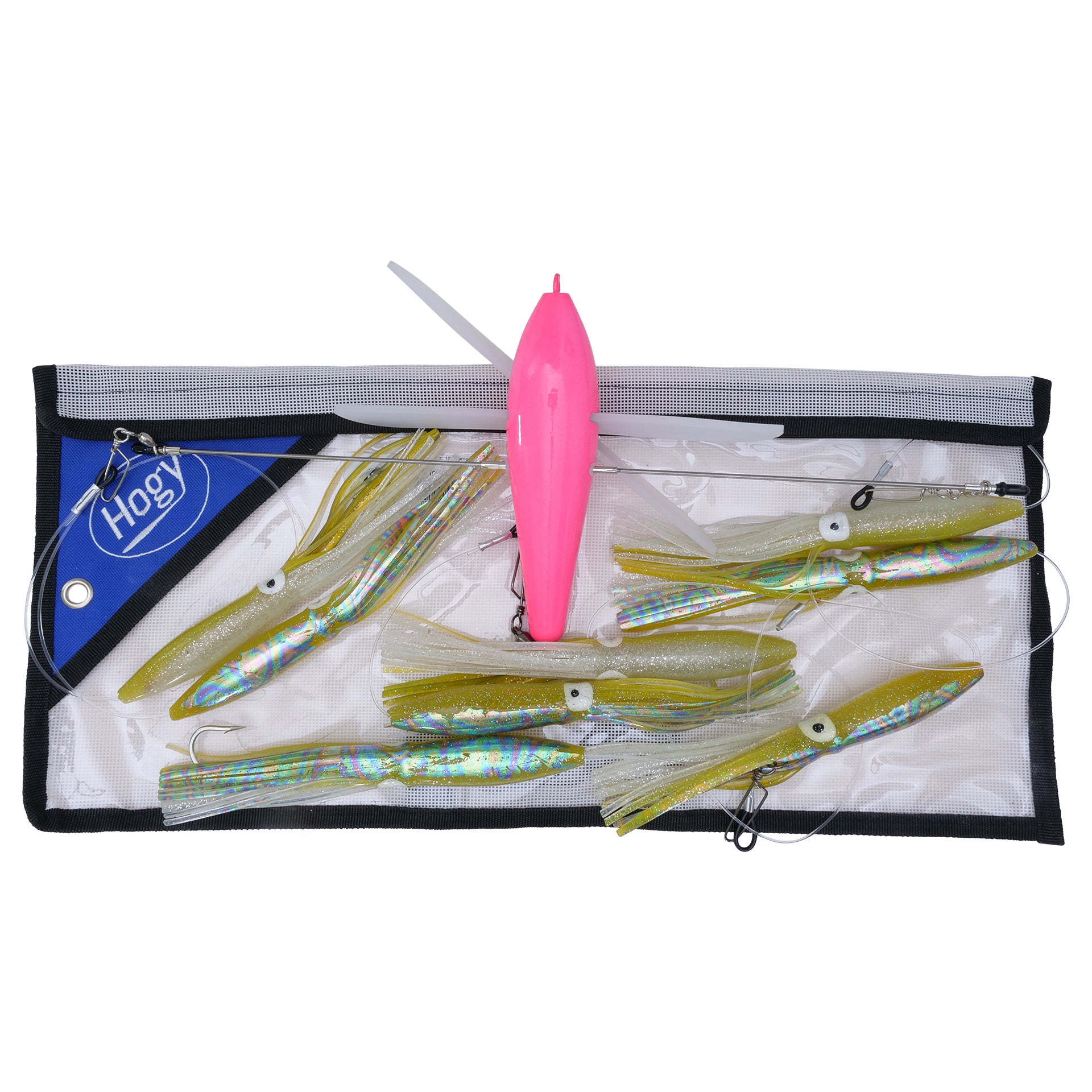
18 inches │ Titanium
Squid Count
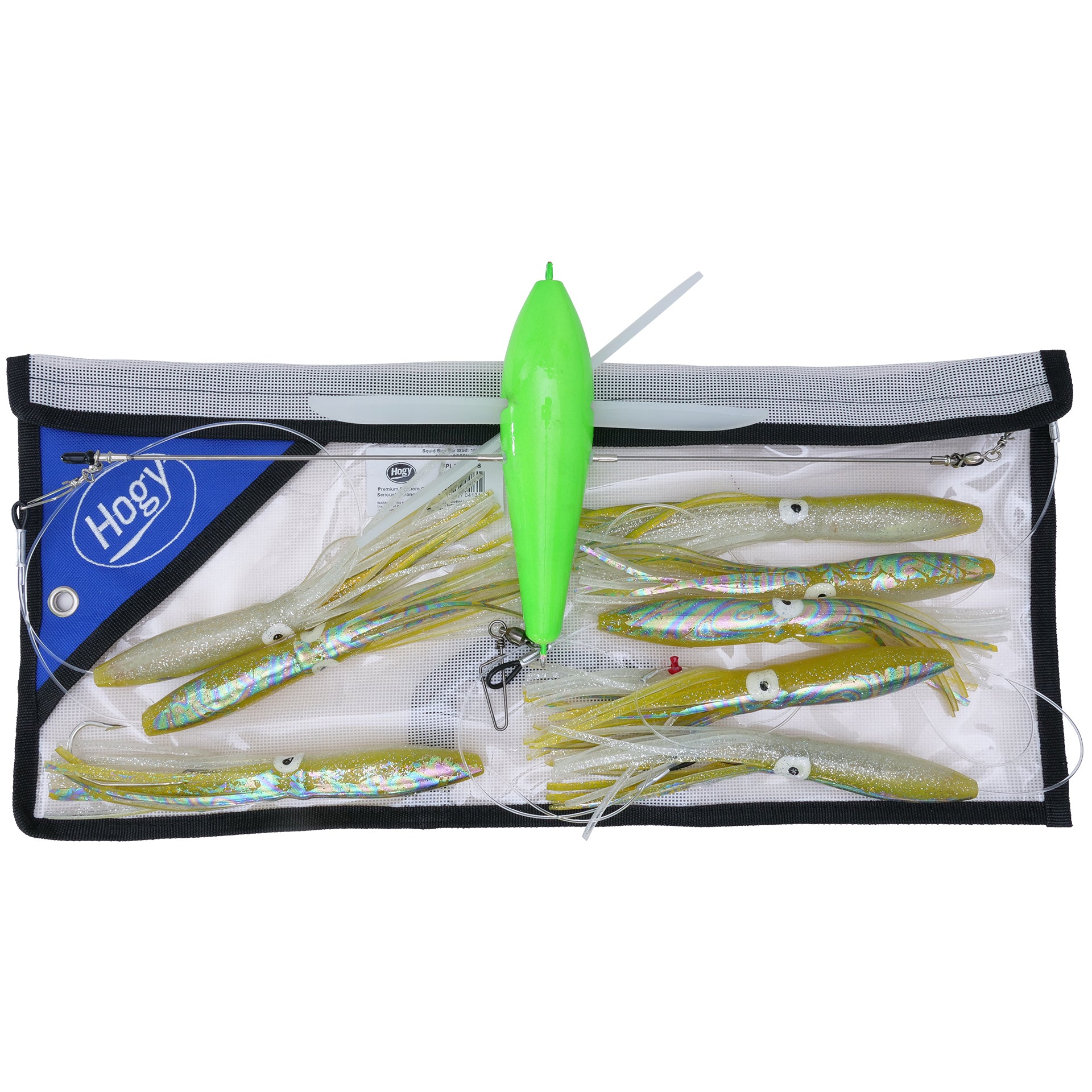
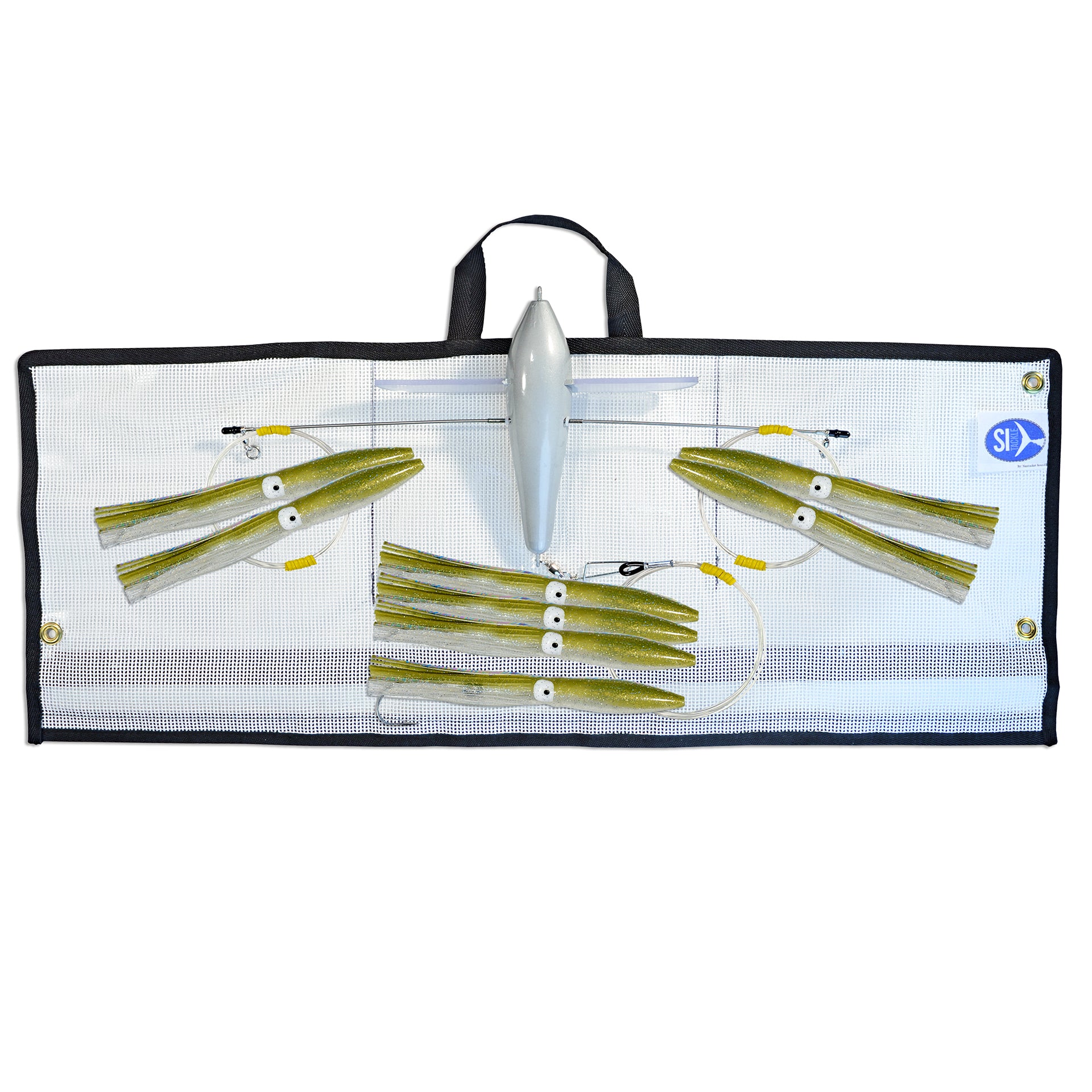
Nine 9″ UV-infused squid bodies
Speed Range
4–12 knots
Target Species
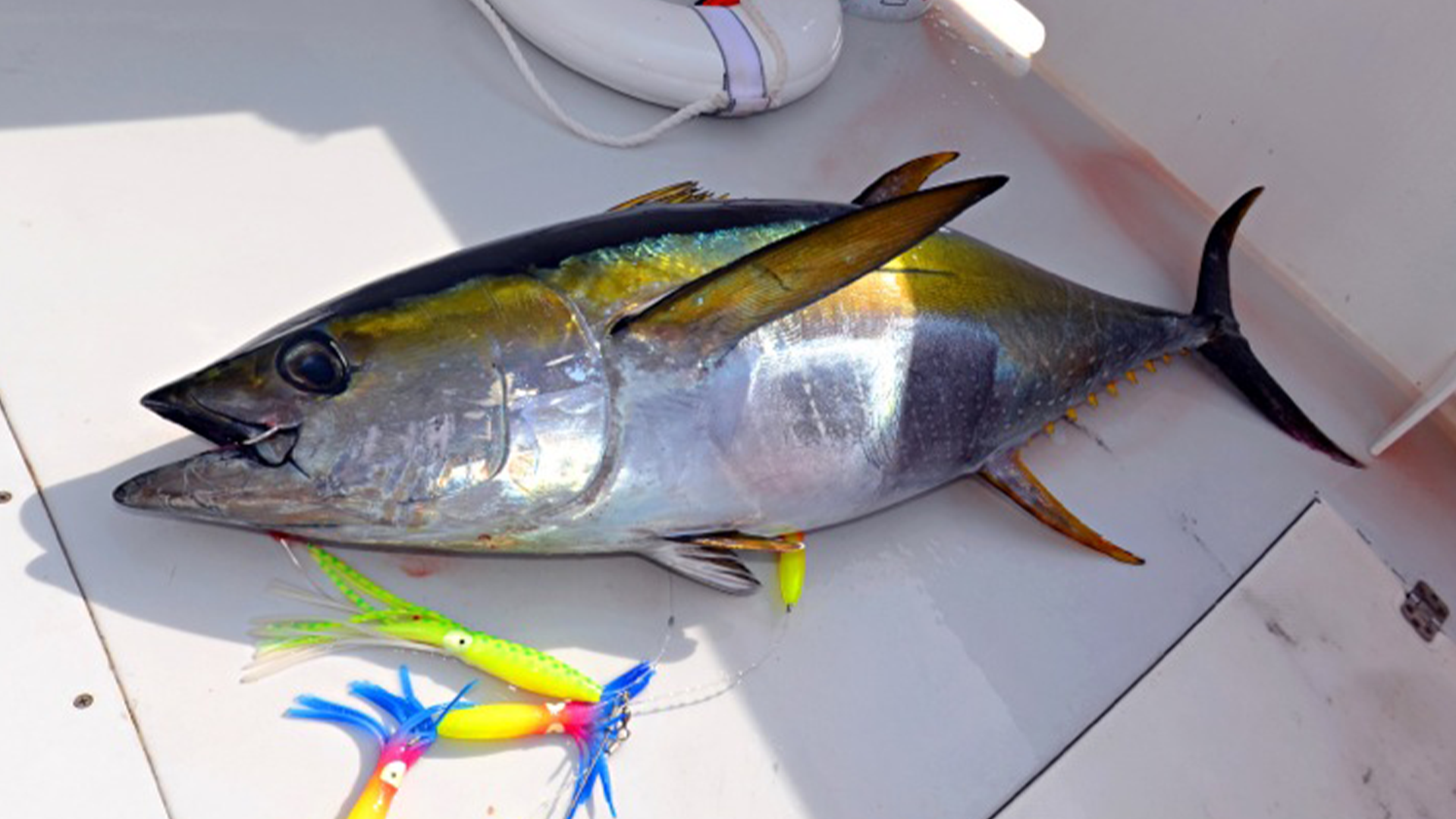
School BFT · Yellowfin · Albacore
Variants
Classic · Directional Port · Directional Starboard
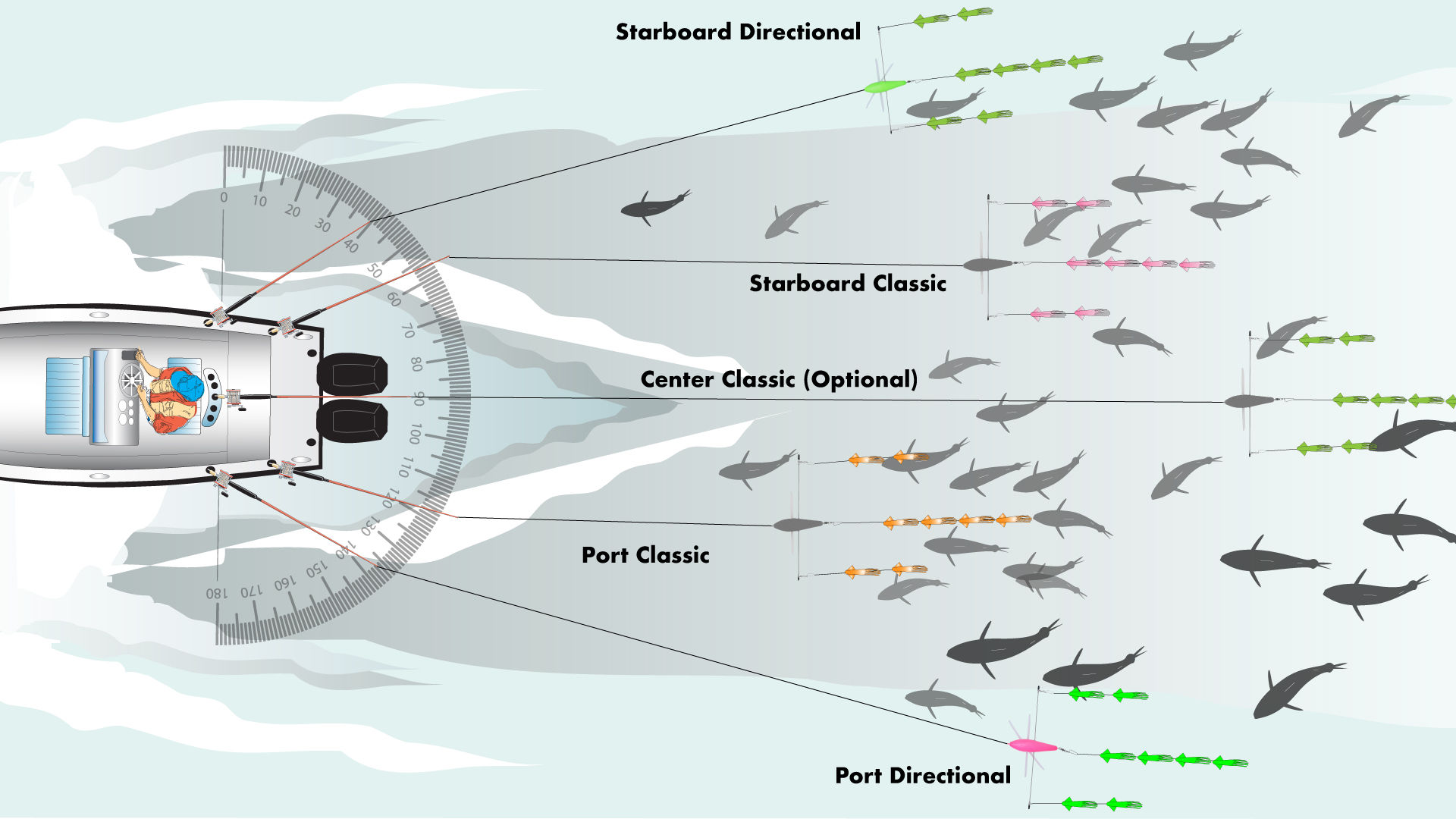
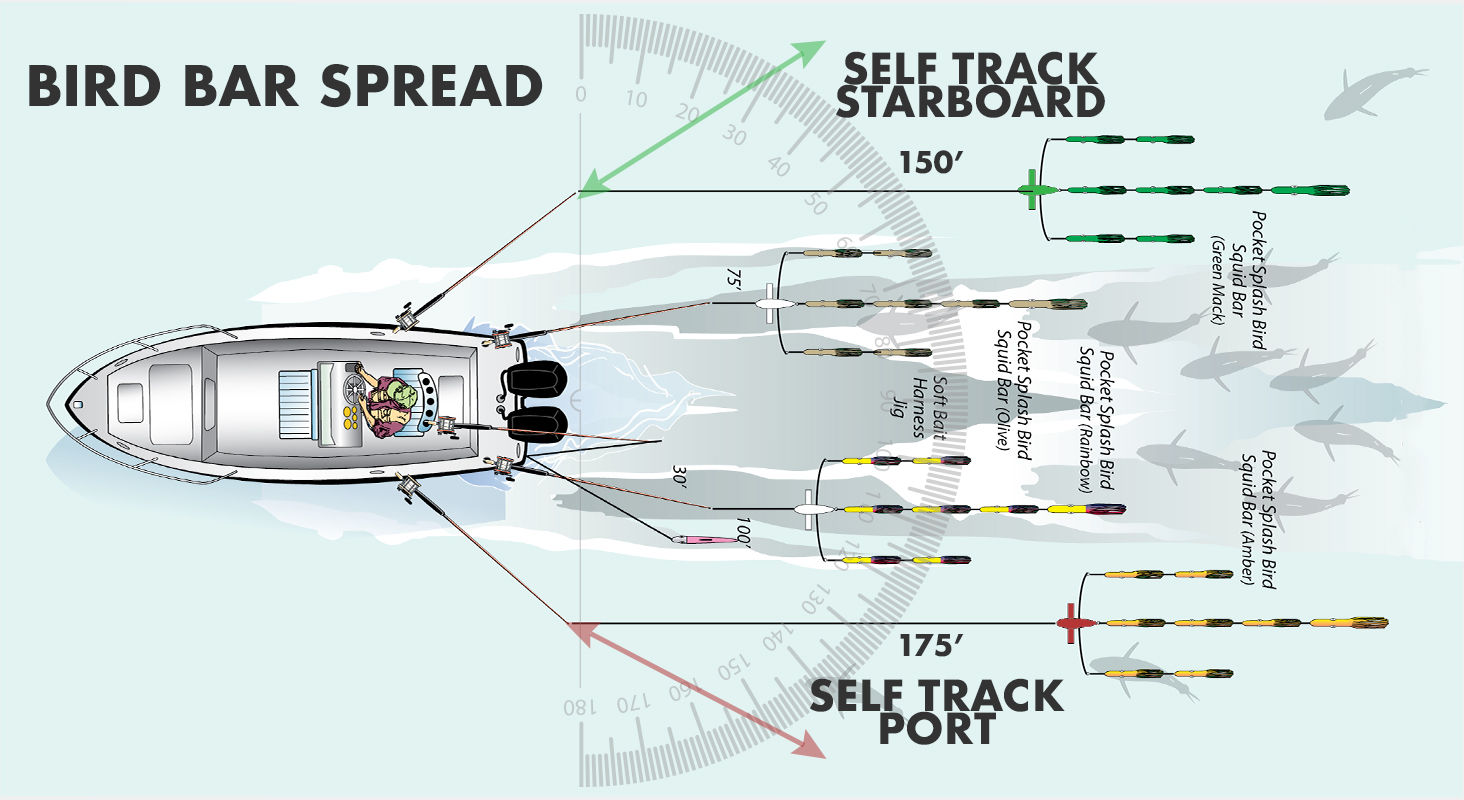
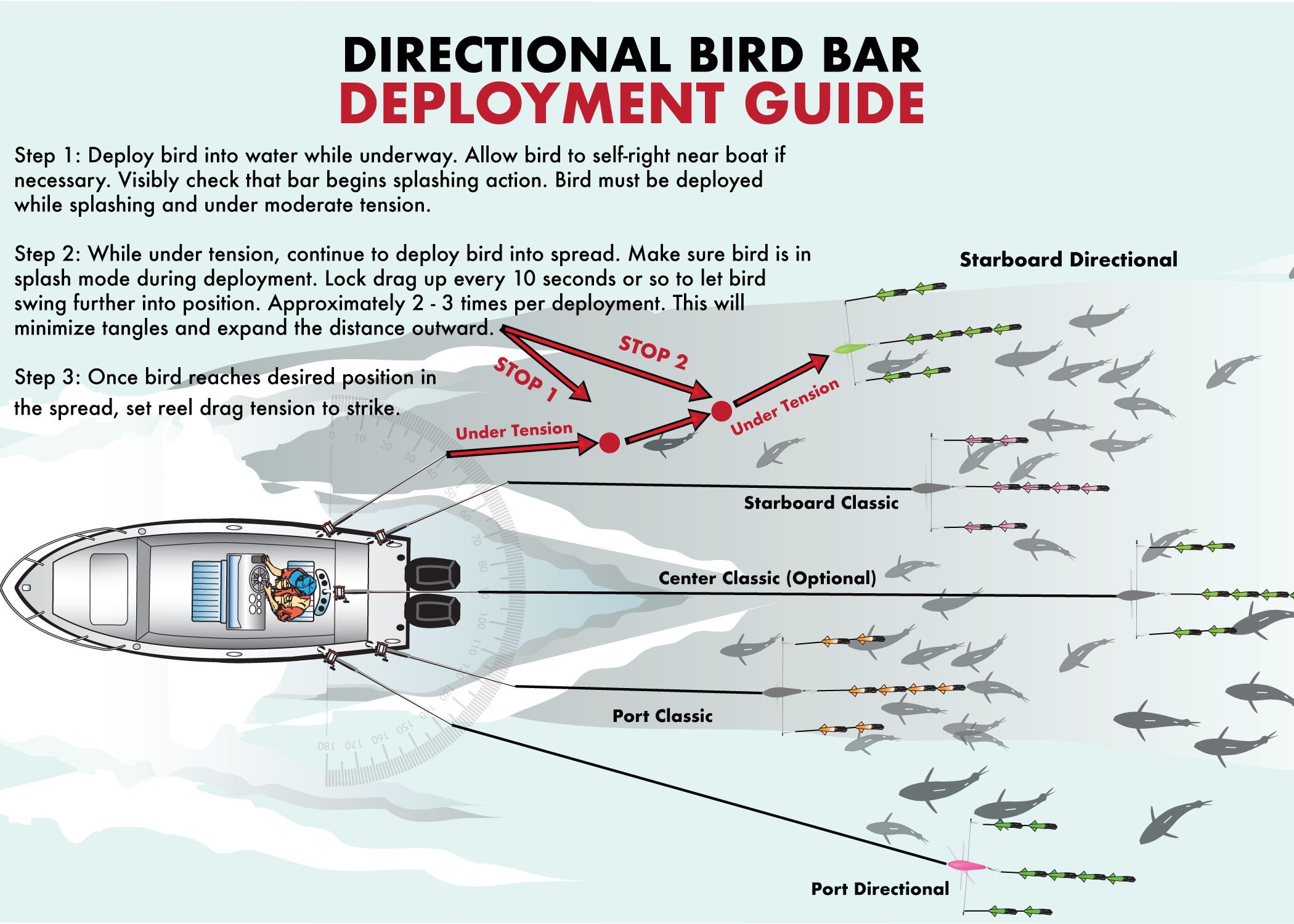
The Hogy Pocket Splash Bar spread — directional bars on the outside swimming wide, classic bars in the wash, W formation from above. The complete no-outrigger system on a center console.
System Role
“The backbone of the Hogy offshore trolling system — compact enough for a 22-foot center console without outriggers, effective enough to anchor the inner position on a full spread with riggers.”
Featured Video — Salty Cape TV
Product Photo — Last Mile
Spread Hero Shot
1
The Two-Bar System
Classic and Directional. The version you reach for depends on where in the spread it’s going.
The Pocket Splash Bar comes in two versions — Classic and Directional — designed to work together as a complete trolling spread. Inside lines and center line are always Classic. Outer positions are Directional when you need the spread to swim wide.
Classic
Directional
Position
Any — inside port, inside starboard, or center line
Fixed — color-coded to port or starboard outer position
Outriggers Required
No — deploys cleanly with or without riggers
No — swims wide on its own, creates spread width without outriggers
Swimming Behavior
Tracks straight behind deployment point
Swims outward to its assigned side
Color Coding
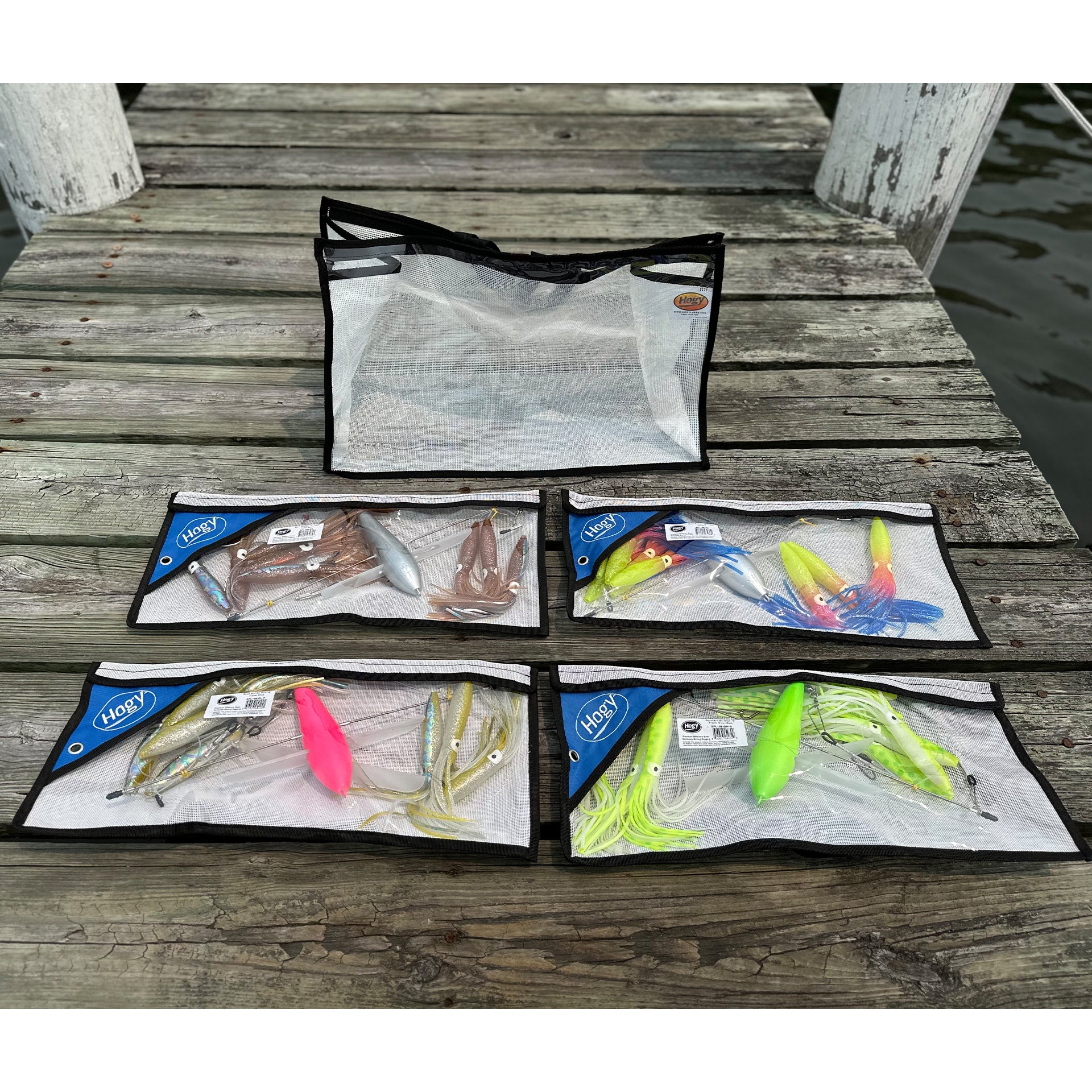
Classic NE colors — Bone, Amber, Pink, Olive, Chartreuse
Port: Red/Pink (“port wine”) · Starboard: Hi-Vis Green
Typical Distance
40–60 ft (inside) · 150–200+ ft (center line)
80–120 ft (outer position)
Can Run Solo
Yes — fully functional as a standalone bar
Best as part of the spread system with a Classic inside it
Product Photo — Last Mile
— Capt. Mike Hogan
“Port wine is red — so we’re color coded for a pinkish red. This bar is going to track way far out to port. The green bar goes starboard, just like your running lights. Never mix them up.”
Nine 9″ UV-infused squid bodies on a compact 18″ bar create a dense, believable bait ball at a fraction of the weight and width of traditional spreader bars. At trolling speeds of 4–12 knots, the bar doesn’t just look like a bait cluster — it moves like one. For school bluefin and yellowfin keyed on sand eels, squid, and small baitfish, this is the profile that triggers inspection and commitment.
Fishing outcome: The bait-ball simulation works at any speed in the legal range. Fish key on the cluster profile before they close in on individual squid bodies.
UV-Infused Squid Bodies
The 9″ squid bodies carry UV-reactive material throughout — visible to tuna at depth where ambient light drops off and standard colors flatten out. In offshore blue water where fish are looking up through 40–80 feet of water column, UV presence keeps the bar visible and vivid when a standard bar would disappear.
Fishing outcome: Maintains visual presence in the water column at the depths tuna actually approach the spread from below.
Compact Width — Maximum Speed Range
The 18″ compact bar is why the Pocket Splash Bar runs clean at 12 knots when wider bars would tumble. It also works without outriggers and makes deployment manageable on a small boat. The speed ceiling matters when you’re covering ground between marks — you don’t have to slow down to keep the bars fishing.
Fishing outcome: Same bar from 4 kts slow-working a productive zone to 12 kts covering ground in chop. No rig change needed.
Floats and Self-Rights — The Bird
The foam bird body floats. When a fish is on and inside bars are being cleared, bars that aren’t immediately retrieved don’t drag down or torque toward the boat. The center line Classic way-way-back can stay out there floating during a full fight — it’s not creating a problem and it’s still fishing. Self-righting is a bird characteristic: drop the bird in the water and it orients upright on its own. Key deployment check: confirm the bird is splashing actively before feeding line. That visual tells you the bird is upright and the rig is running correctly.
Fishing outcome: Short crew can fight one fish while other bars continue to fish. Floating bars are the difference between a missed double and a landed one.
Directional Swimming — Spread Width Without Outriggers
Directional variants are rigged to swim outward — port bar to port, starboard to starboard — creating lateral spread coverage without physical outriggers. On a 22-foot center console, this creates a spread footprint that previously required riggers. Color-coding (Red/Pink for port, Hi-Vis Green for starboard) eliminates confusion during deployment and retrieval, including when clearing lines quickly during a fight.
Fishing outcome: Full spread width on any boat. No outrigger installation required. Two directionals replace the spread-width function of rigger clips.
3
Deployment
Order matters. Getting it wrong means tangles before you’re even up to speed.
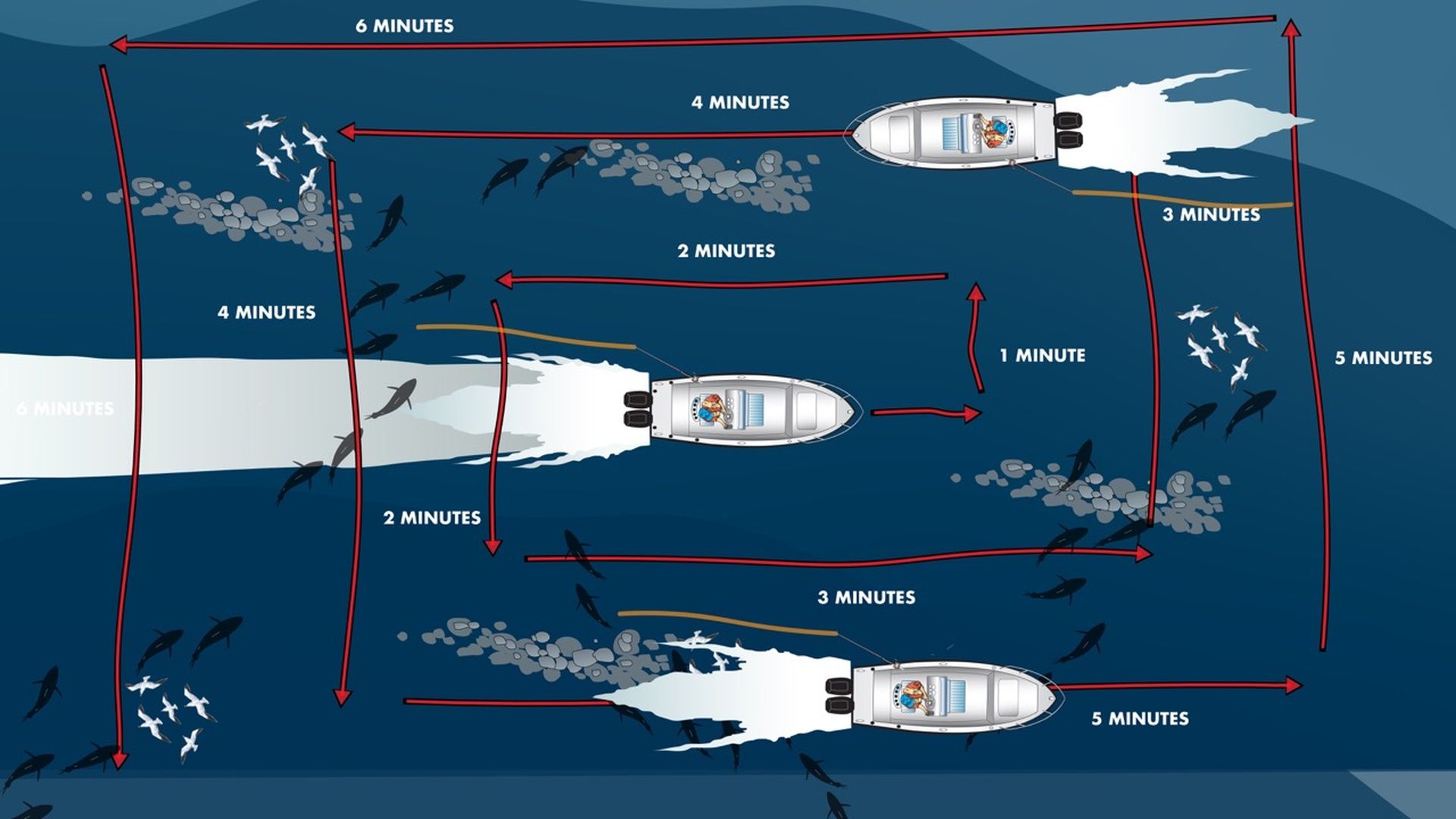
Approach Diagram — OA800 Tactical Troll Series
OA800 Tactical Troll Series — the approach pattern for running the Pocket Splash Bar spread. Grid pattern or contour troll depending on structure. Center line deploys first, then outer bars, then inside lines, then flat lines.
1
Center line first. Deploy the Classic center bar to 150–200+ feet (Way Way Back). It runs straight down the centerline and stays clear as you deploy everything else around it. This is the lone-wolf bar — targets tuna that slide back from the main spread.
2
Outer before inside, one side at a time. Pick a side. Deploy the outer Directional bar first — it swims outward away from the boat as you set up the inner bar. Never deploy inside before outer on the same side.
3
Confirm the bird is splashing before feeding line. Drop the bird in the water while underway. Allow it to self-right near the boat. A bird that isn’t splashing is not upright and the rig is not fishing correctly. Fix it before feeding line.
4
Feed line with stops. Under moderate tension, feed line steadily. Lock the drag every 10 seconds or so — approximately two to three stops per deployment. This minimizes tangles and expands the bar outward toward its spread position.
5
Inside Classic on the same side. Once the outer bar is swimming clear, deploy the inside Classic at 40–60 feet. Repeat for the other side.
6
Flat lines last. Deploy Harness Jig flat lines on flat-line clips at 25–40 feet back, approximately 10 feet ahead of each inside bar.
7
Check at speed. Confirm all bars are tracking cleanly and splashing before settling in. A fouled squid arm or non-splashing bird kills the spread’s effectiveness. Fix it immediately after deployment when it’s easiest.
MH
Two Directionals Max — Capt. Mike Hogan
“I only like trolling with two directional bars. If you have four directionals, it’s hard to check for weed because they want to swim away from each other as you reel them in. Two directionals — that way it’s easy to check the outside lines, and the classics will come straight in.”
4
Spread Configuration — The W Formation
Each position in the spread has a specific job. The bars are each at different intervals out — creating a W-shaped formation from above.
The W Formation — 5-Bar Spread (Overhead View, Boat at Front)
Port Outer (Directional)Red/Pink · 80–120 ft
Port Inside (Classic)Any color · 40–60 ft
Boat ↑
Center Line (Classic)Way Way Back · 150–200+ ft
Starboard Outer (Directional)Hi-Vis Green · 80–120 ft
Starboard Inside (Classic)Any color · 40–60 ft
Position
Bar Type
Distance
Role
Center line
Classic
150–200+ ft
Targets lone-wolf tuna that slide back from the main spread. Deploy first. Floats safely during a fight.
Port outer
Directional Port (Red/Pink)
80–120 ft
Swims wide to port. Deploy outer before inner on same side. Creates spread width without outriggers.
Starboard outer
Directional Starboard (Hi-Vis Green)
80–120 ft
Mirror of port outer. Same deployment logic — outer before inner.
Port inside
Classic
40–60 ft
Near prop wash. Easiest to clear in a fight. Run a different color from outer bar during dial-in.
Starboard inside
Classic
40–60 ft
Mirror of port inside. Always Classic — controllable, predictable, fast to clear under pressure.
R1802 Troll Scan — the W formation from above. Directional bar tips way out on each side, classic bars staggered in the middle. Multiple entry points for tuna approaching from any angle. The boat at center acts as the attractor.
5-rod spread variant — same W formation principle with an additional position. Inside and center line always Classic; outer positions Directional for width.
Deployment sequence — confirm the bird is splashing before feeding line. Feed with drag stops every 10 seconds to let the bar swing into position without tangling.
5
Complete the Spread
The bars simulate the bait ball. Two elements complete the system: flat lines and a stop-and-drop plan. Neither is optional.
Harness Jig Flat Lines — Default When Sand Eels Are Around
Flat lines run on clips 25–40 feet back, positioned about 10 feet ahead of each inside bar. They swim in and out of the prop wash with the profile of a straggler separated from the bait ball — exactly what a tuna holding below the spread is waiting for. Up to 50% of troll bites come on flat lines. Run one on each side, every trip. Secondary advantage: when a fish is on and the bars are floating during the fight, an extra angler can drop the flat-line Harness Jig vertically on sonar marks below the boat. The spread is paused; the Jig is now a jigging tool. No re-rigging required.
This is the Stop-and-Drop move with gear already in the water.
Deep Dive Swimming Plug — When Fish Are Scattered or Not Responding
The Deep Dive Plug runs 20–25 feet down — the depth window where tuna that inspect the bars and slide back tend to reposition. When fish are keyed on a larger bait profile and the Harness Jig’s sand eel silhouette isn’t matching what’s in the water, replace one or both flat-line Jigs with the Deep Dive Plug. It’s not a full spread change — it’s a sub-surface adjustment that covers the depth the bars can’t reach.
Stop and Drop — When Fish Show Behind the Spread or on Sonar
The moment tuna show behind the bars or the finder marks fish below the boat, the stop-and-drop window opens. GPS the location immediately. Pull the spread and get a lure in the water within 15 seconds. The Pocket Splash Bar spread is built to be cleared fast — inside Classics come in first because they’re close and controllable. Pre-rig a casting or jigging rod before arriving at any known mark and decide which lure you’re dropping before you need to drop it. The difference between a hookup and a missed opportunity is often those 15 seconds.
6
Platform Perspectives
The spread scales to any offshore platform. Rod count and boat size determine the configuration. The core rules don’t change.
Small Center Console — 4-Rod Spread (3 Bars + 2 Flat Lines)
The entry-level Hogy spread and a fully functional one. Three Classics plus two flat lines, all managed from rod holders and gunwale clips without outriggers. Center line (Way Way Back), port inside (40–60 ft), starboard inside (40–60 ft). Run all three Classics in different colors — Bone, Olive, Pink — to run Mixed Bag from the start. The Directionals are not needed here; the three-Classic spread covers the water a small boat can manage. Deploy center line first, then work each side.
Medium Center Console — 5-Rod Spread (5 Bars + 2 Flat Lines)
Adds the two outer Directional bars for width coverage. This is the step up that turns a three-bar Classic spread into a full bait-ball footprint without outriggers. Center line (Way Way Back), port and starboard outer Directionals (80–120 ft), port and starboard inside Classics (40–60 ft), flat lines last. Deploy center line first, then outer Directionals (outer before inner on each side), then inside Classics, then flat lines.
Larger Boat with Outriggers — 7-Rod Full Spread
Adds two rigger-deployed bars to the 5-Rod spread. Port and starboard rigger positions run Directionals further outboard than the 5-Rod spread achieves from rod holders alone. This creates a spread footprint that covers a wider path and presents more entry points to tuna approaching from any angle. The same deployment order applies: center line first, then outermost to innermost on each side, flat lines last.
7
Color System — Attractor vs. Imitator
Two types of color. The forage key determines which category to lead with.
MH
Color Logic — Capt. Mike Hogan
“There’s two types of colors: attractors and imitators. Attractors are your bright colors — your pinks, your fluorescent greens. Imitators are specifically imitating something. Today the fish were keyed in on sand eels. We started half attractors, half imitators — and by the end of the morning it was all olive colored spreader bars, and that was the ticket. When they’re keyed in and there’s a lot of bait, the natural colors did the trick.”
Color Type
Colors
When to Run
The Dial-In Signal
Imitator
Olive, Bone, Amber
Fish keyed on specific forage (sand eels, squid, mackerel). Clear water with heavy bait. Fish that are looking closely.
Both hookups on the olive/natural bar = go all imitator. The fish voted.
Attractor
Pink, Chartreuse, Hi-Vis
General bait day with no specific forage key. Stained water. Early session before the dial-in.
Attractor bars producing as many fish as naturals = keep the mixed bag and cover multiple profiles.
Mixed Bag (default)
Two to three colors in the spread simultaneously
Start here on any session. Run one inside bar in each category and let the tuna tell you which profile they’re on.
Clear winner emerging by the third fish = carpet bomb with the winning color.
8
The Surge Tease — Classic Bars Only
One of the advantages of the no-outrigger setup: you can tease freely without worrying about popping a clip.
Classic bars can be teased — crank the bar in toward the boat, then let it back out. Surge-and-drop, surge-and-drop. The bar appears to flee, triggering a FOMO reaction in fish following behind. It creates the sensation that the bait ball is escaping — which is exactly the trigger tuna respond to on a greasy calm day when no surface feeds are showing.
MH
Surge Tease — Capt. Mike Hogan
“What I like to do with these bird bars is tease them — crank it in, let it back out, crank it in, let it back out. That surge and drop, surge and drop can really create that FOMO sensation where the fish feel like they’re going to miss it. That’s one thing you can’t do as easily with outriggers because you’ll pop the clip. In these no-outrigger directional bars, you can drop, don’t have to worry about popping a rigger.”
The surge also applies to the whole boat on a Fu Factor bird group. When you run through sitting birds that won’t move — they’re focused on something directly below — surge the throttle. All four bars surge simultaneously. The FOMO trigger fires across the entire spread at once. This is the move that produced four strikes in one pass at The Dump.
9
System Context
The Pocket Splash Bar is the bait-ball layer of the spread. Two other elements complete it.
When to Adjust or Switch
Bars → Harness Jig (flat)Always onSand eel profile at 25–40 ft ahead of inside bars. The straggler presentation. Up to 50% of bites come here. Run every trip.
Harness Jig → Deep Dive PlugFish scatteredFish not responding to sand eel profile or sitting 20–25 ft below the bars. Plug covers the subsurface depth the bars can’t reach.
Trolling → Stop & DropFish showTuna behind the spread or marks on sonar. GPS, pull spread, get a lure in the water within 15 seconds. Pre-rig before you need to.
Classic bars → Carpet bomb oliveImitator winningBoth hookups on natural color. Sand eel key confirmed. Remove attractor bars and replace with the winning color across all positions.
10
Outfit Pairings
The Pocket Splash Bar’s lightweight foam construction keeps the overall drag load manageable — no heavy conventional gear required. Any light tackle offshore bar rod in the 20–40 lb class handles the bar without strain.
Component
Spec
Notes
Rod
Hogy Hybrid Conventional — 20–40 lb class
Jigging and trolling on the same outfit. Parabolic action absorbs the shock of a tuna strike at trolling speed.
Reel
Avid LX6 Two-Speed
High gear (6:1) for fast cranks as fish approach the boat. Low gear (3:1) for heavy loads. Two-speed makes school bluefin on light tackle manageable for any angler.
Main Line
80lb braid
Heavy enough to land large fish, light enough for sensitivity. The braid dials work done quickly on school-size fish.
Top Shot / Leader
30ft of 65lb mono
Mono is the shock absorber. At trolling speed when a tuna hits and takes off in the other direction, mono stretches where braid doesn’t. Cushions the initial burst without snapping tackle.
Connection
Wind-on leader — direct bar clip
Clip the bar directly to the wind-on leader. No additional hardware. Set and forget.
11
FAQs
Do I need outriggers to run the Pocket Splash Bar spread?
No. The Directional bars create the spread width that outriggers normally provide. A 22-foot center console with four rod holders and two gunwale clips can run a full five-bar spread with two Directionals on the outside and two Classics on the inside. The Directional bars swim outboard on their own — that’s the whole design. Outriggers let you add more bars and more positions, but they’re not required for the core spread.
How do I know which bar goes on which side?
Port wine is red — the pinkish-red directional bar is port side. The green bar is starboard, same as running lights. Classic bars have no side restriction — they track straight and can go in any rod holder. The directional bars self-correct even if you put them on the wrong side — they’ll right themselves and swim outboard — but color-coding eliminates the guesswork when a rod fires and you need to know instantly which position it came from.
Why only two directional bars and not four?
When you reel a directional bar in to check for weed, it wants to swim away from the boat — outboard. With four directionals, two on each side, they swim away from each other as you reel and become nearly impossible to check simultaneously. Two directionals plus two classics keeps every line manageable. The boats hooking up most on a calm weedy day are the ones checking their lines most frequently. You can’t do that with four directionals in the water.
What color do I start with when I don’t know what the fish are on?
Run a Mixed Bag: one imitator (olive or bone) and one attractor (pink or chartreuse) on your inside lines, and let the fish vote. If sand eels are the known forage, start with olive. If the water is stained or you have no forage information, start with attractor colors. By the third or fourth fish, you’ll have a clear answer. At that point, carpet bomb with the winning color across all Classic positions.
What do I do when a fish shows on the side scan while trolling?
GPS the mark immediately. That’s the most important first step — you’ll need to return to that exact position. Pull the spread in order: inside Classics first (they’re closest and easiest to clear), then outer Directionals, center line last. Get a jigging or casting rod in the water within 15 seconds of seeing the mark. The Harness Jig already on the flat line can be dropped vertically right from where it is — no re-rigging required. Pre-decide which lure you’re dropping before you get to a known mark.
TL;DR
The Hogy 18″ Pocket Splash Bar is the backbone of the Hogy trolling system — nine UV-infused squid bodies on a compact titanium bar that runs clean from 4 to 12 knots and requires no outriggers. Two versions: the Classic, which goes anywhere in the spread, and the Directional, which swims outboard to create spread width. Port wine is red (port directional), Hi-Vis Green is starboard. Center line first on deployment, outer before inner on each side, flat lines last. Two directional bars maximum — four makes weed-checking impossible. Mix attractor and imitator colors on the inside lines, let the tuna vote, then carpet bomb with the winner. The foam bird floats and self-rights, which means a fish on one rod doesn’t kill the rest of the spread. Stop-and-drop is the exit from trolling — GPS the mark, pull the spread fast, jigging rod in the water in 15 seconds. The surge tease on the Classic bars and the Fu Factor boat surge through sitting birds are the two active techniques. Everything else is set-and-forget.
Hogy Pocket Splash BarBird BarSpreader BarBluefin TunaTrollingW FormationNo-Outrigger SpreadDirectional BarOffshoreGear Deep Dive
No Outrigger Bluefin Tuna Trolling + Hogy Directional Bird Bar
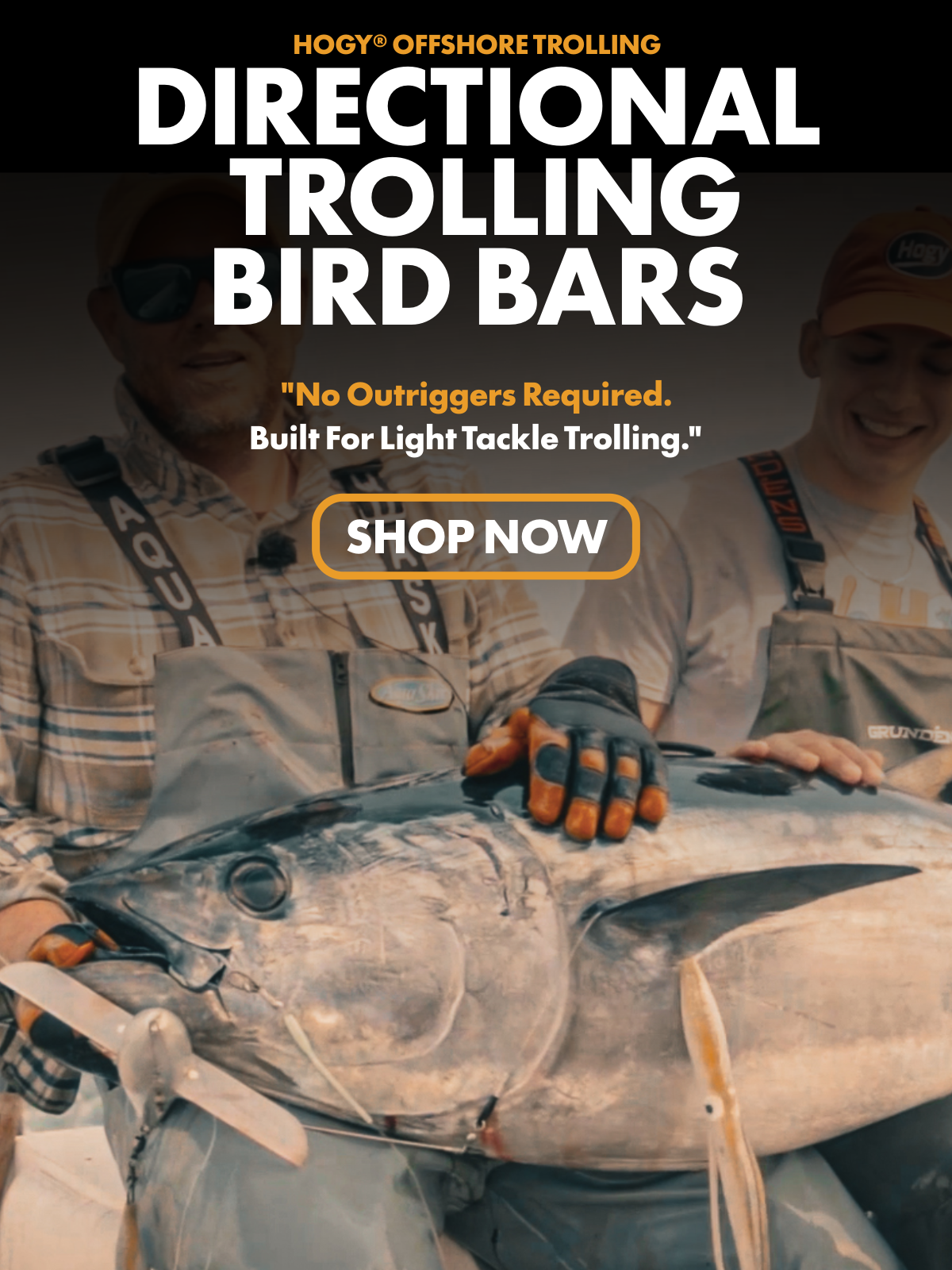
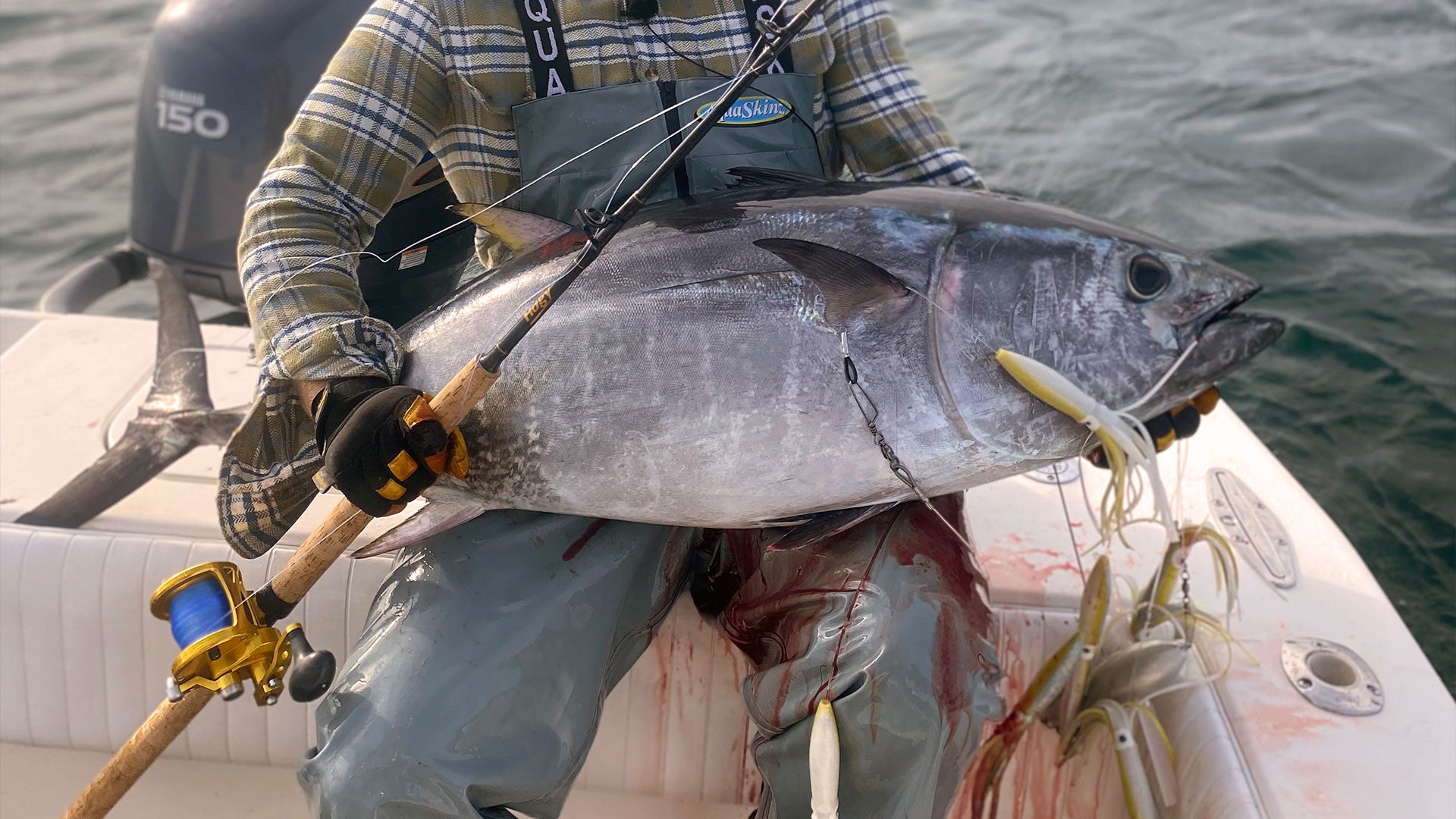
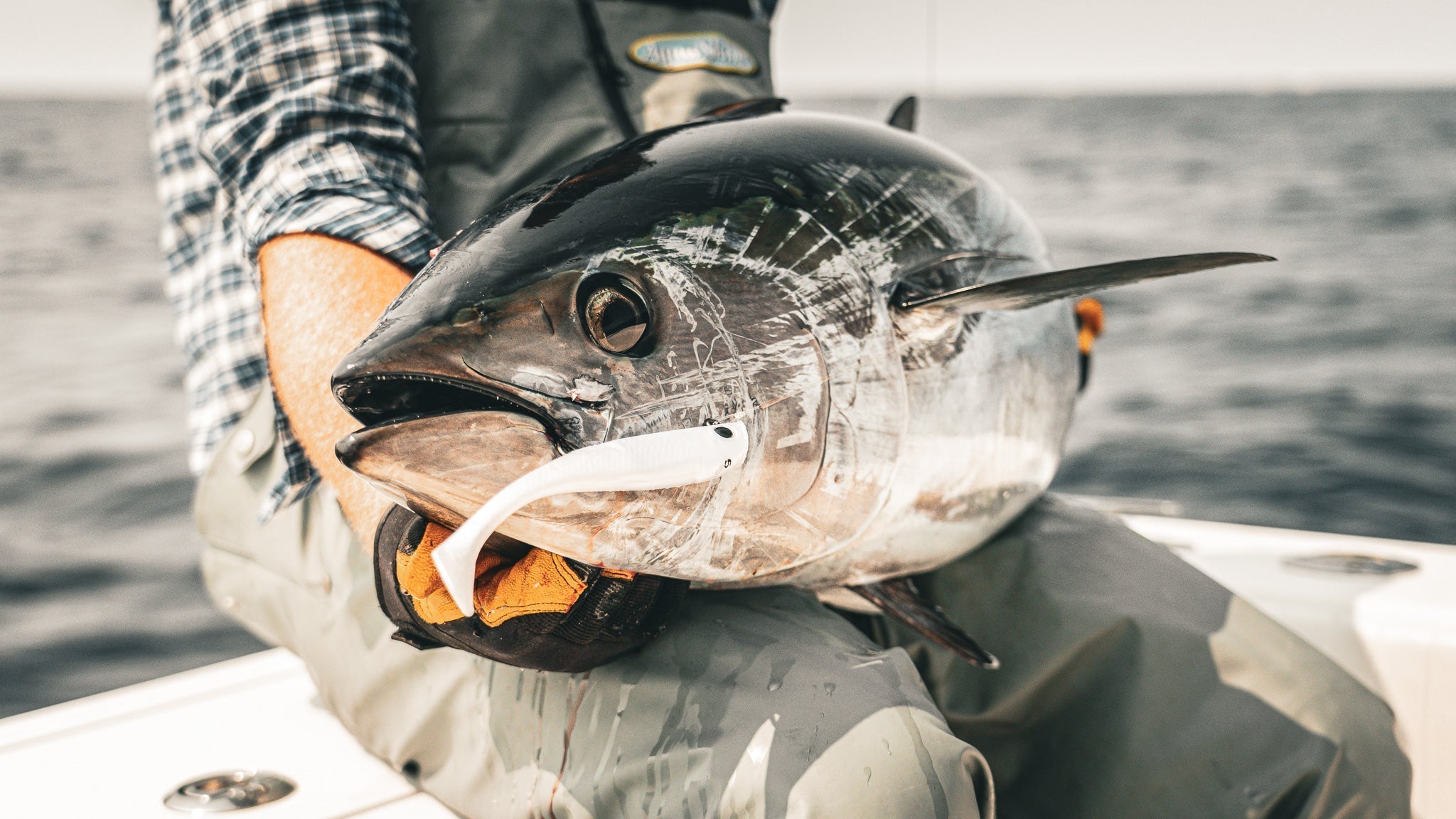
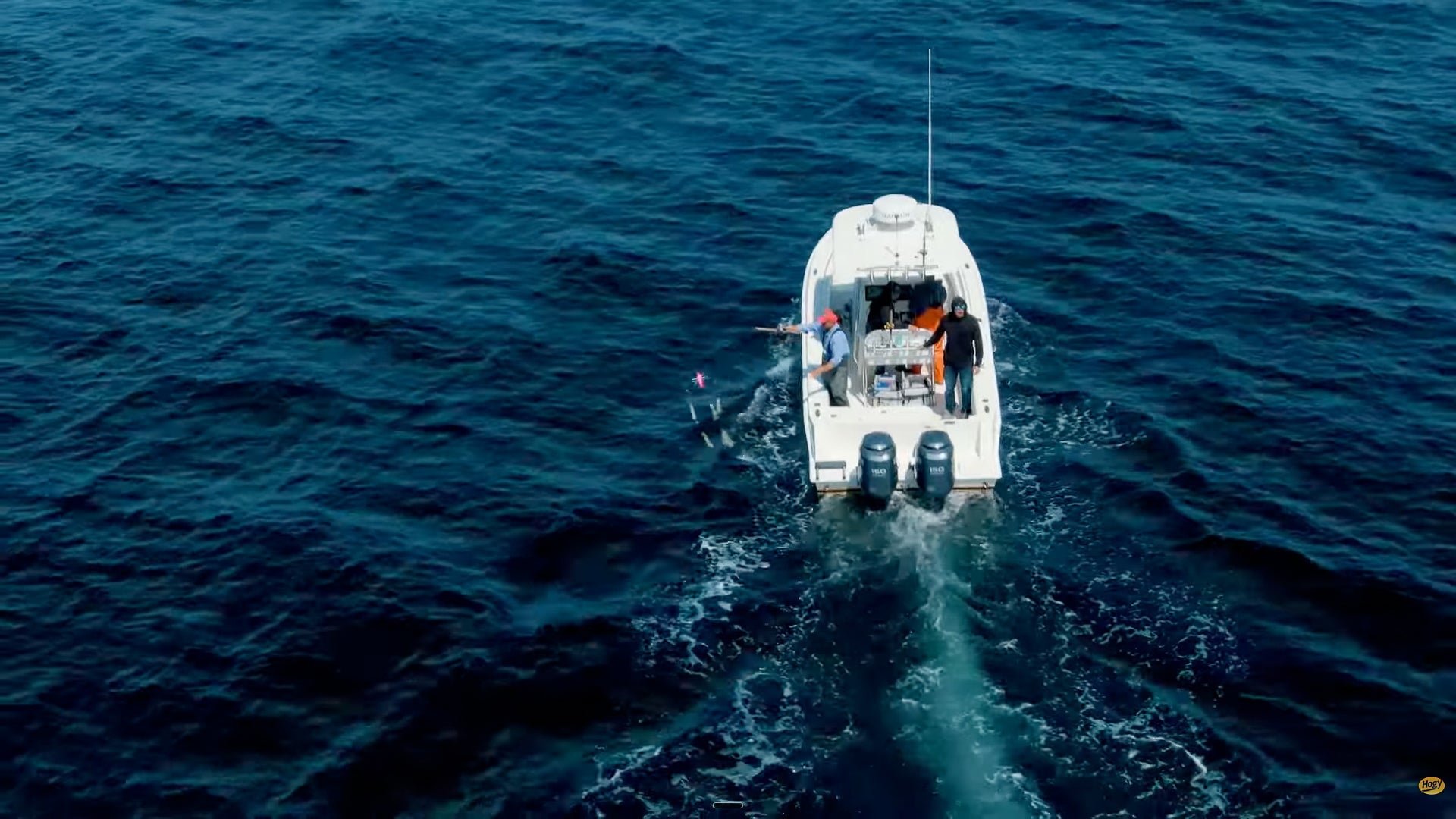
Capt. Mike Hogan shows us how to deploy a 5-rod no-outrigger tuna spread using the Hogy Directional Tuna Splash Bird Bars for trolling scattered tuna in Cape Cod Bay. The Hogy 18" Pocket Splash Bar has a place in every spread. Its small size makes it easy to manage on light tackle and traditional gear. The bird is made out of super lightweight foam that is impossibly strong. The oversized wings spray water up to 24" and are made of a semi-rigid plastic that reduces breakage when the bar hits the deck.
School Bluefin Tuna Trolling | Simple 4 Rod Spread | South of MV
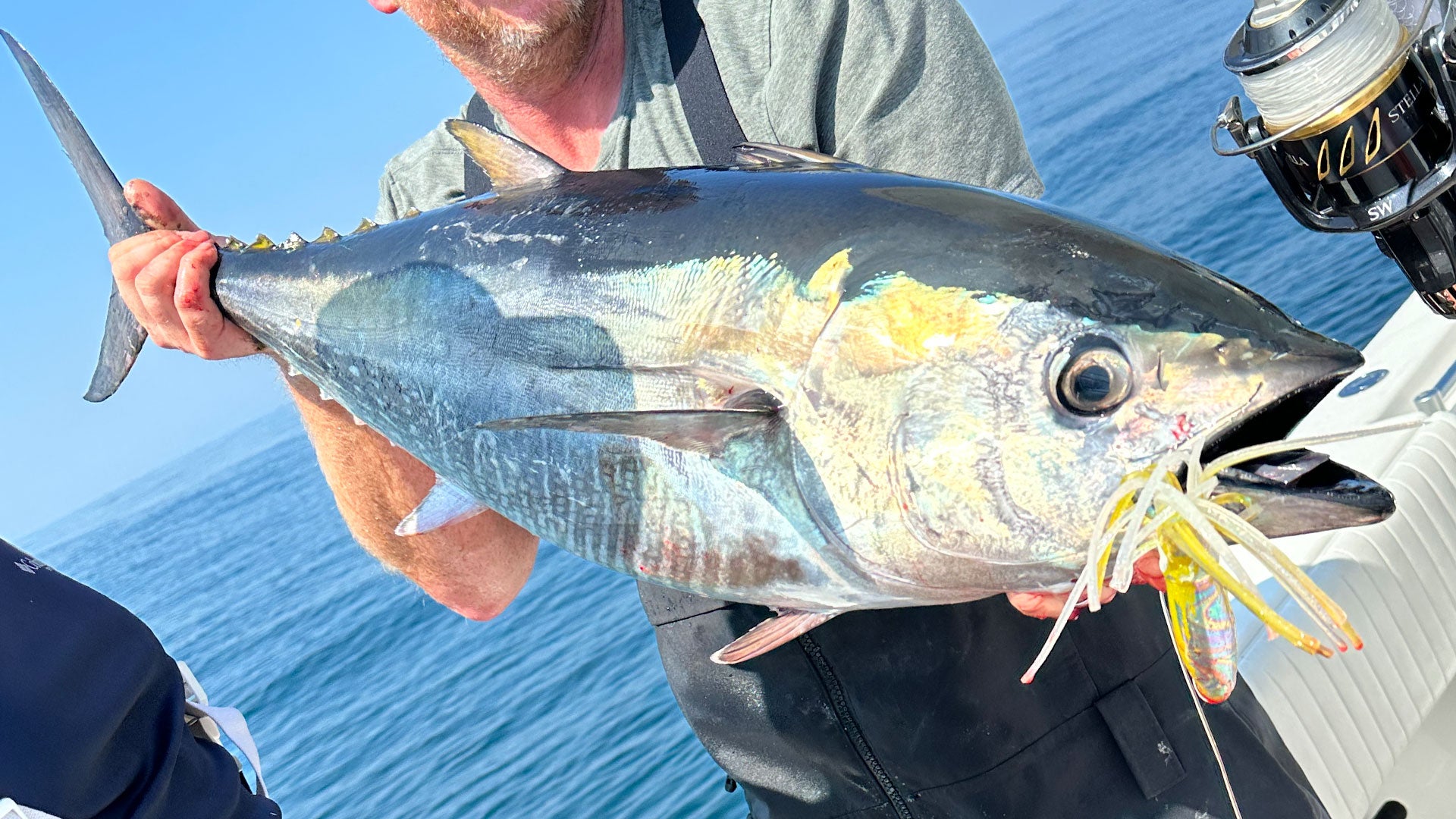
Capt. Mike from Salty Cape and Hogy Lures loads up his 28' Contender and steams South of MV in anticipation of cashing in on a hot school Bluefin Tuna bite. With the fish being scattered, he name of the game was deploying a simple 4-rod spread of the Hogy Directional Bird Bars. These bars are ideal for any angler who doesn't have or doesn't want to deal with outriggers on their boat.
Capt. Mike’s Guide to Productive Early Season Albie Recons
Salty Cape · Early Season · Recon
Capt. Mike’s Guide toProductive Early Season Albie Recons
A tactical protocol for f...
Bluefin Tuna · Offshore — Outer Cape Backside · Late Fall
Cracking the Code
Capt. Mike Hogan & John Burns · Salty Cape TV powered by Hogy
Location
Outer Cape Backside (Peaked Hil...
Bluefin Tuna · Offshore — The Star · Late Summer
Cracking the Code
Capt. Mike Hogan, Willy Goldsmith & Capt. Shaun Ruge · Salty Cape TV powered by Hogy
Location
The Star (South o...
Cracking the Code: The Franken Popper at Handkerchief Shoal
Striped Bass · Handkerchief Shoal · Early Summer
Cracking the Code
Capt. Mike Hogan · Salty Cape TV powered by H...
Cracking the Code: Four Retrieves on One Cast — Surface Eraser vs. Finicky Monomoy Stripers
Striped Bass · Monomoy Rips · Mid-June
Cracking the Code
Capt. Mike Hogan &...







Leave a comment
All comments are moderated before being published.
This site is protected by hCaptcha and the hCaptcha Privacy Policy and Terms of Service apply.