

















Cut Release Mortality by 75% — Five Rigging and Handling Decisions That Do It
Five rigging and handling decisions that cut release mortality by 75% — backed by Mass DMF acoustic telemetry data on over 8,300 striped bass.
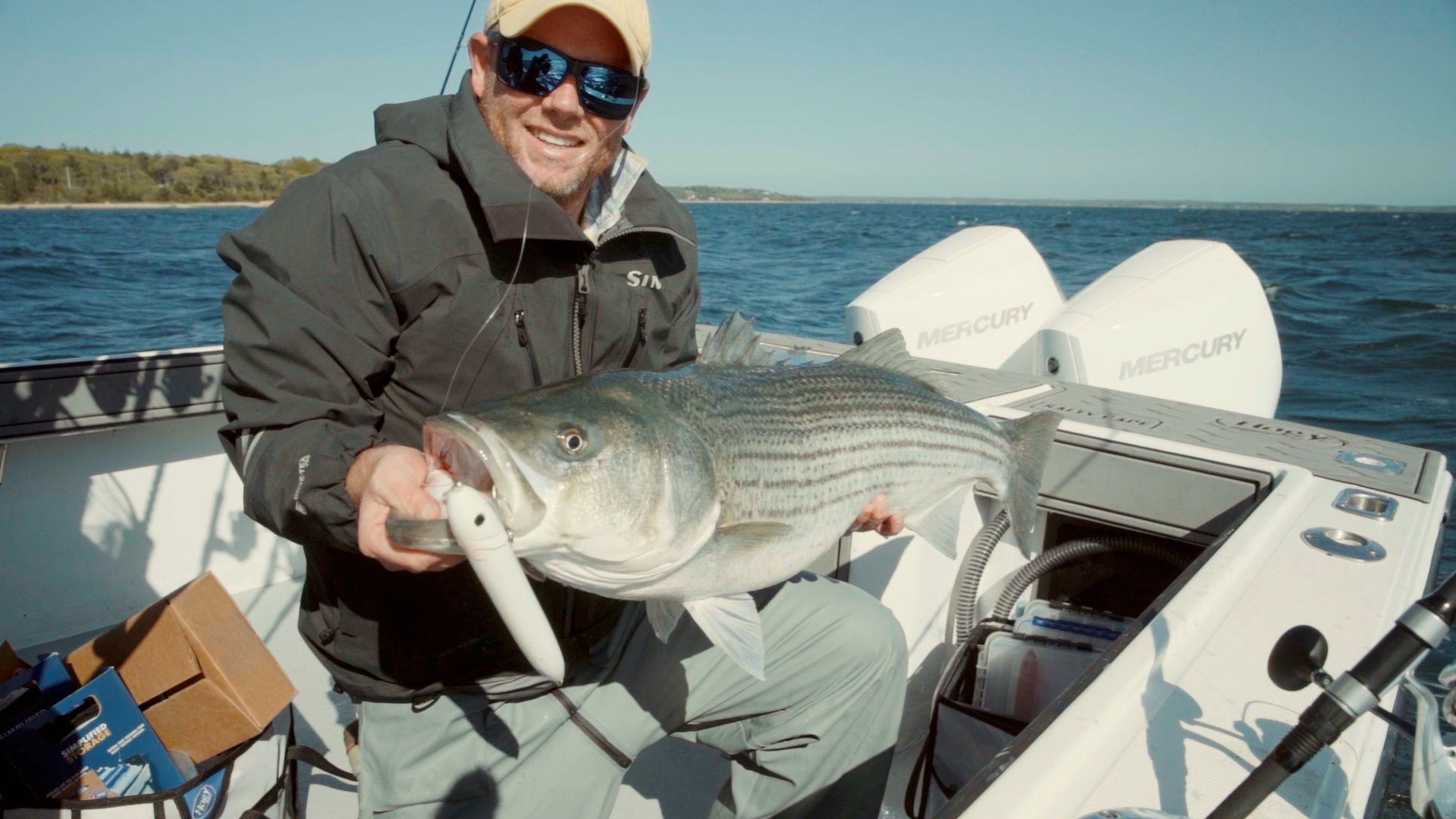
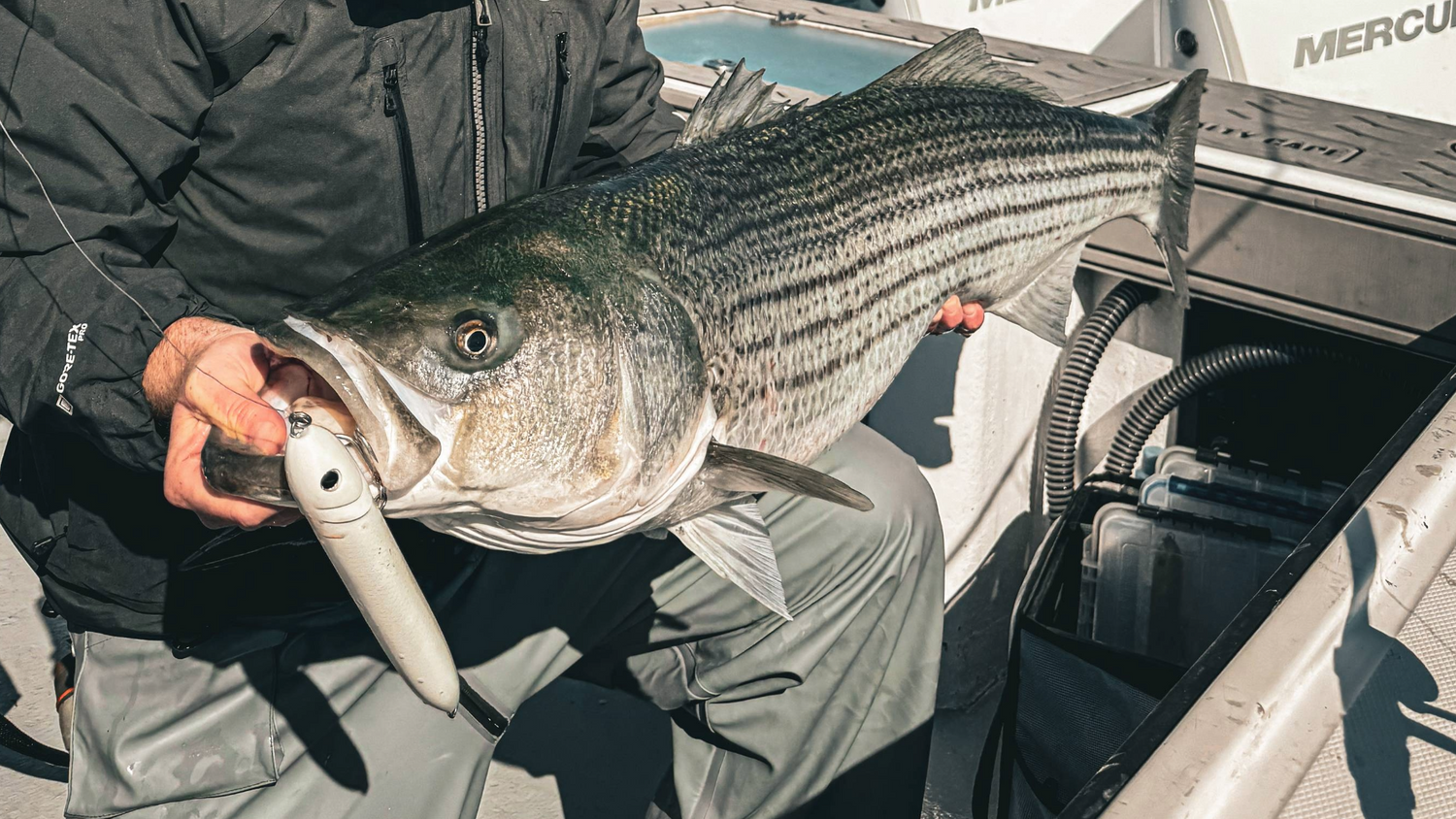
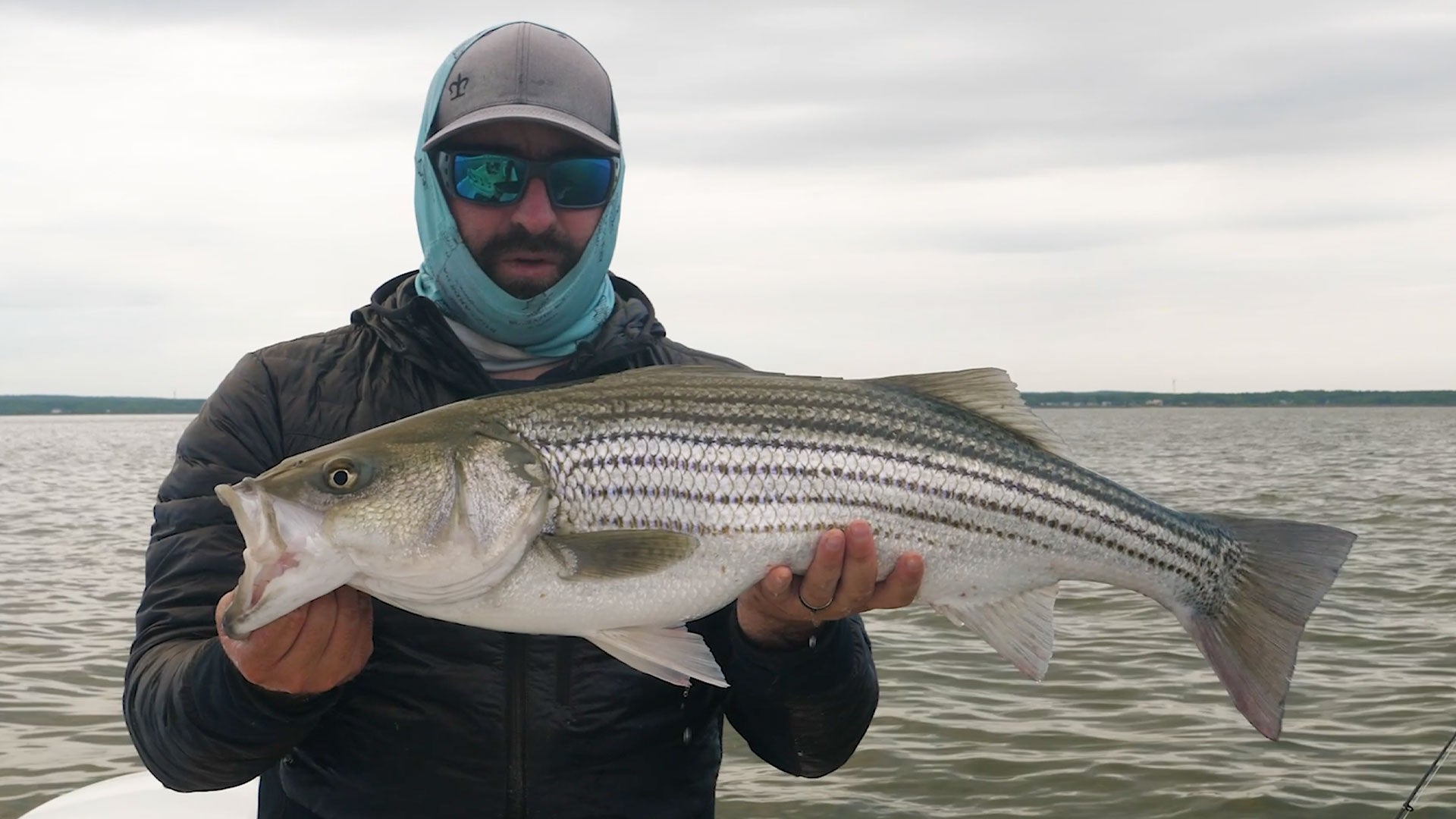
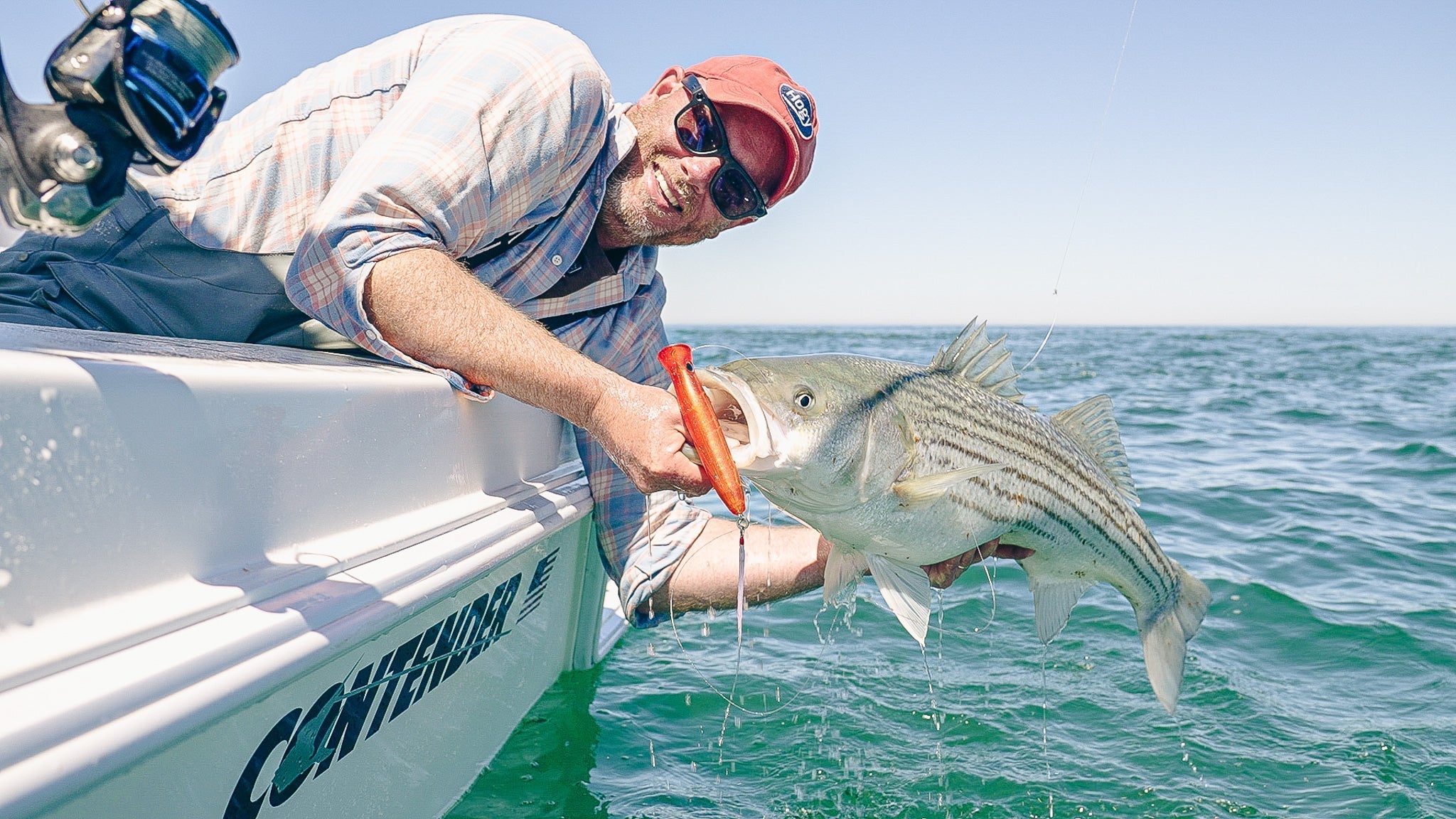
West End area, early summer. Belly supported, fish in the water, single hook — the right way to handle an over-slot striper.
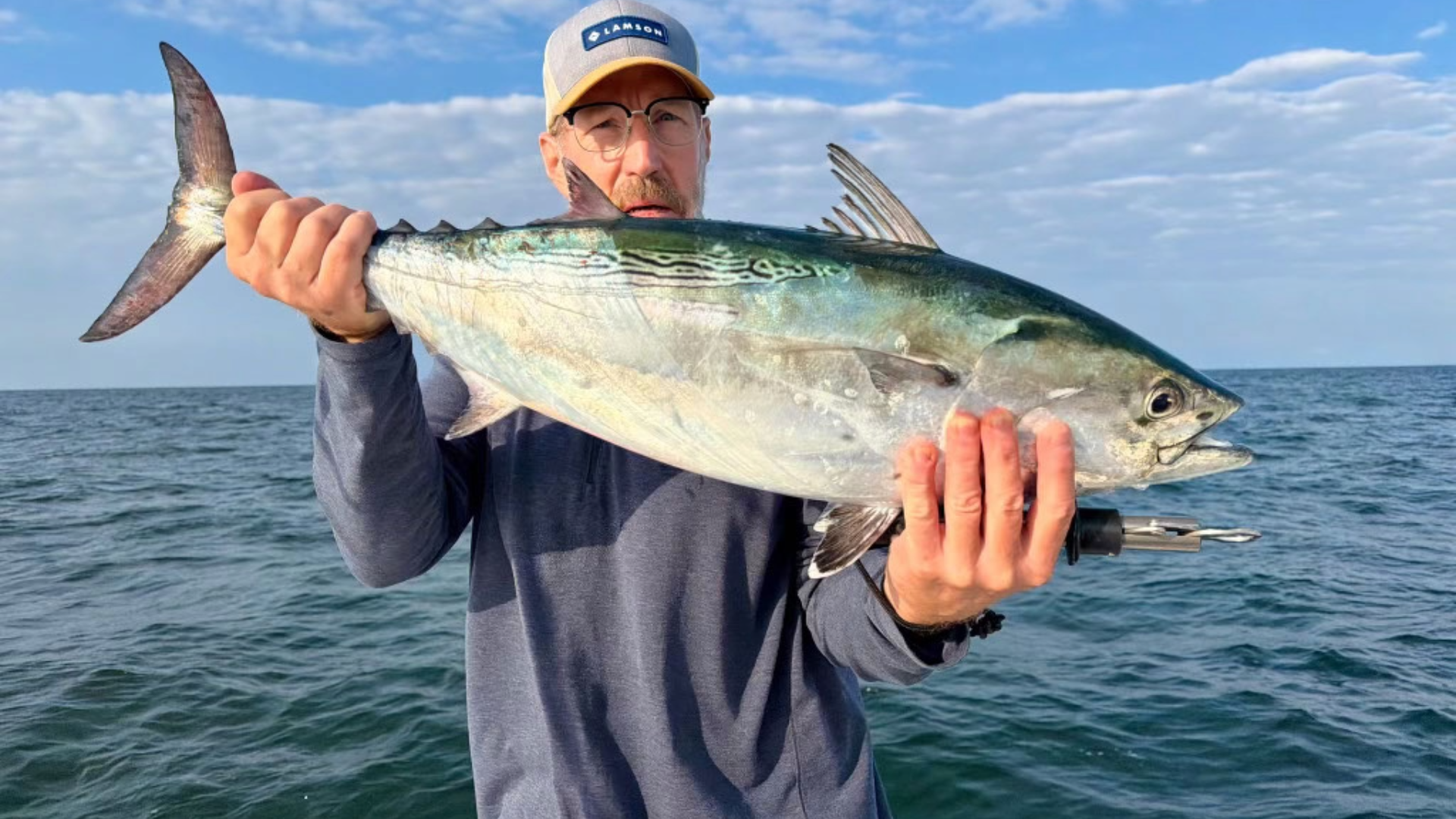
The striped bass slot limit means most of the fish you’ll catch in a season are fish you’re going to release — especially if you’re targeting the big ones. That’s a good thing. But a released fish is only as healthy as the angler who handled it. The gear you choose, the way you rig the lure, how you land the fish, how long it’s out of the water, and whether you wait for the right signal before letting go — all of it matters.
Here are five things Mike Hogan and Rob Lowell do on every big-striper trip to maximize survival rate, built into their routine before the lines even go in the water.
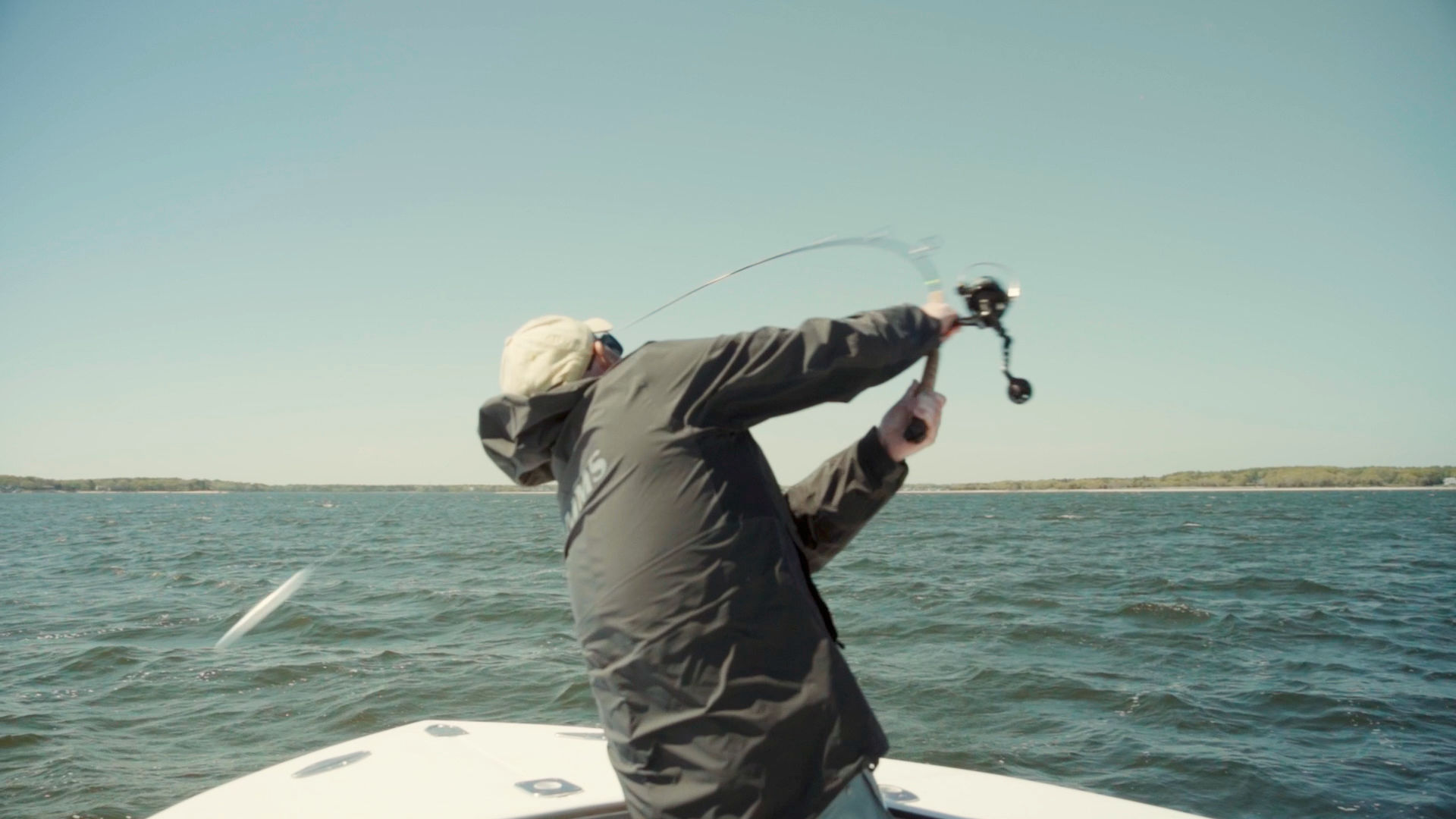
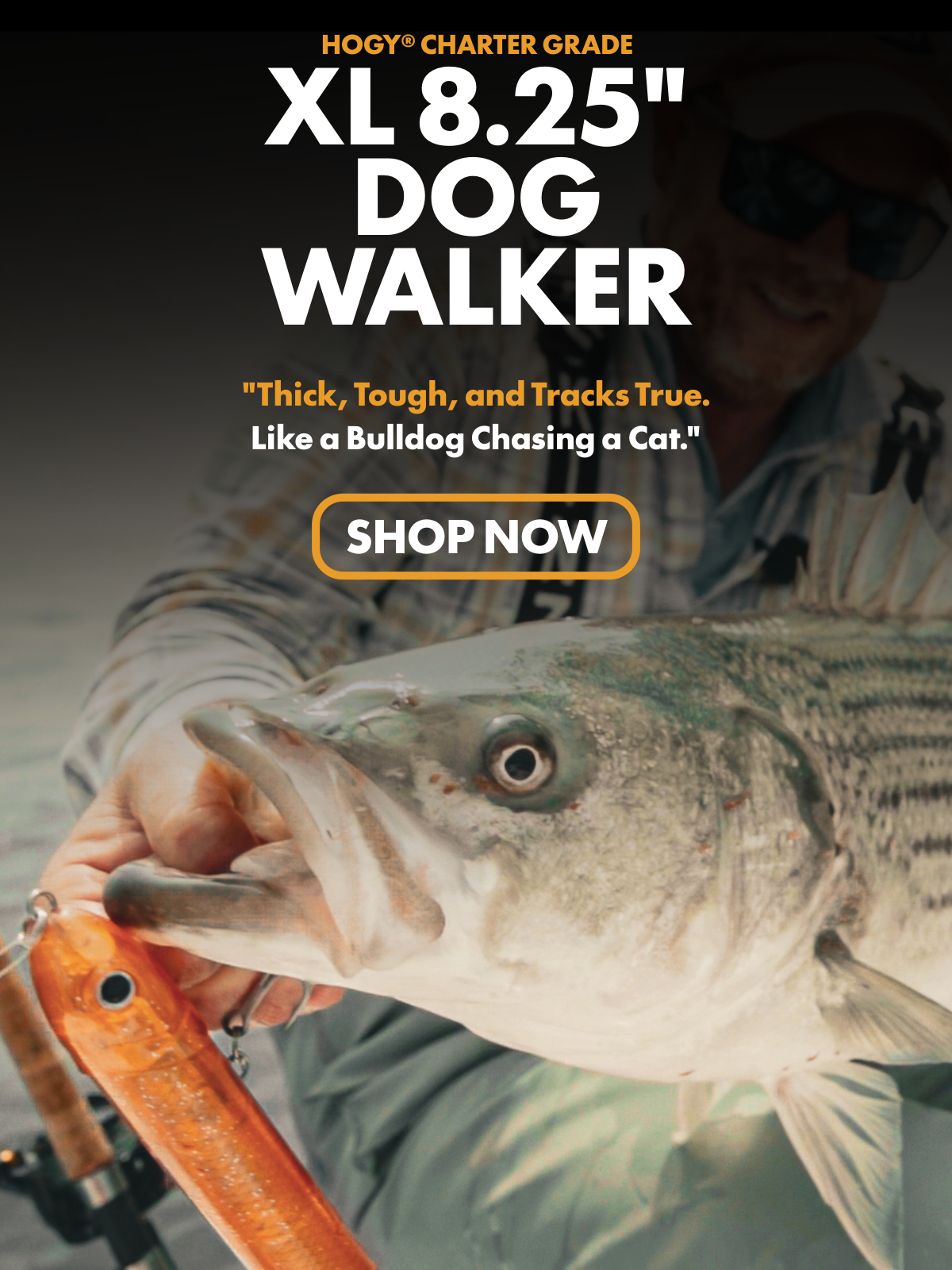
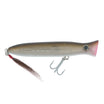
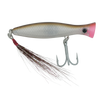
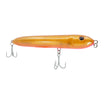
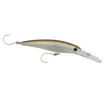
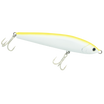
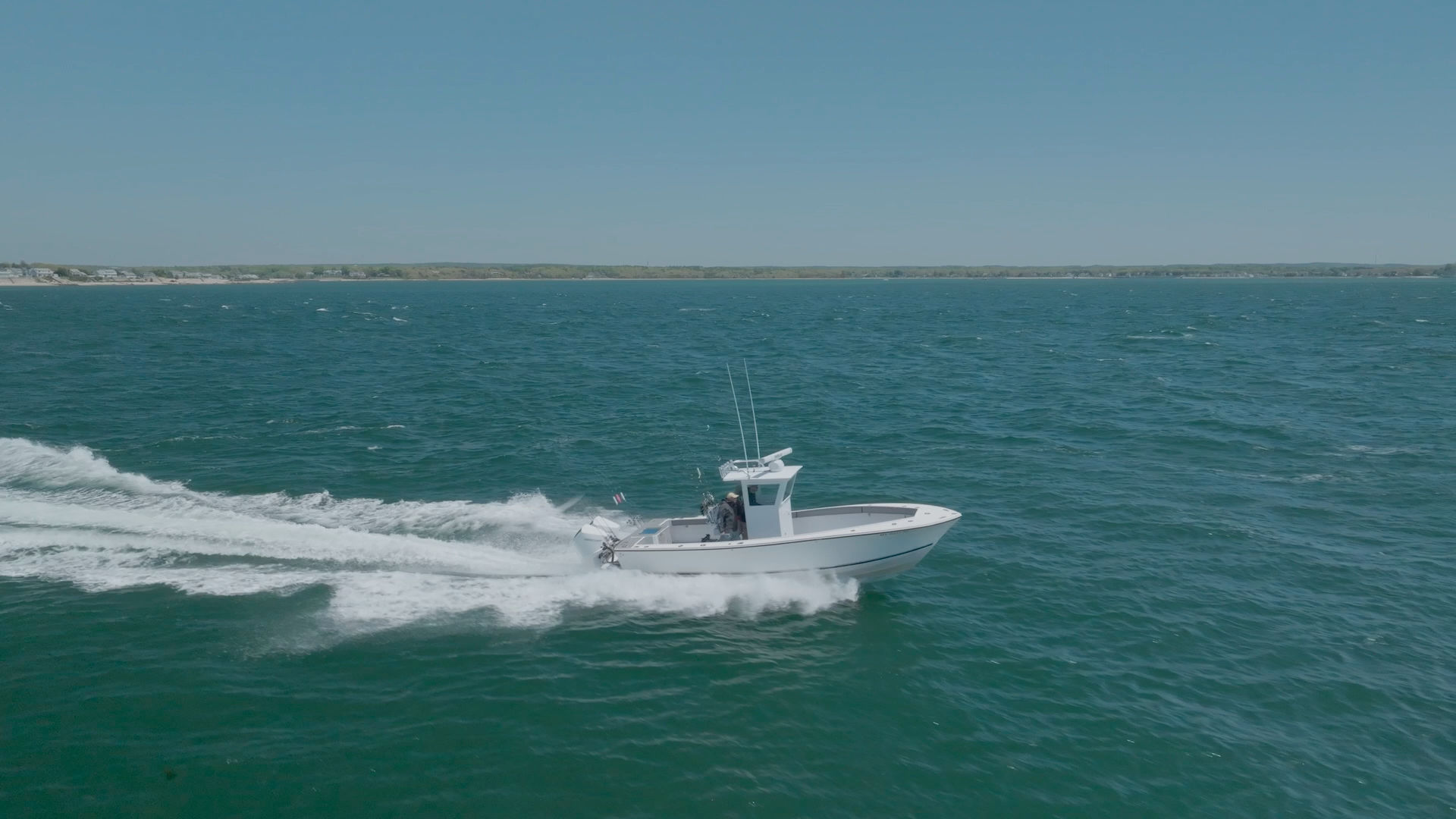
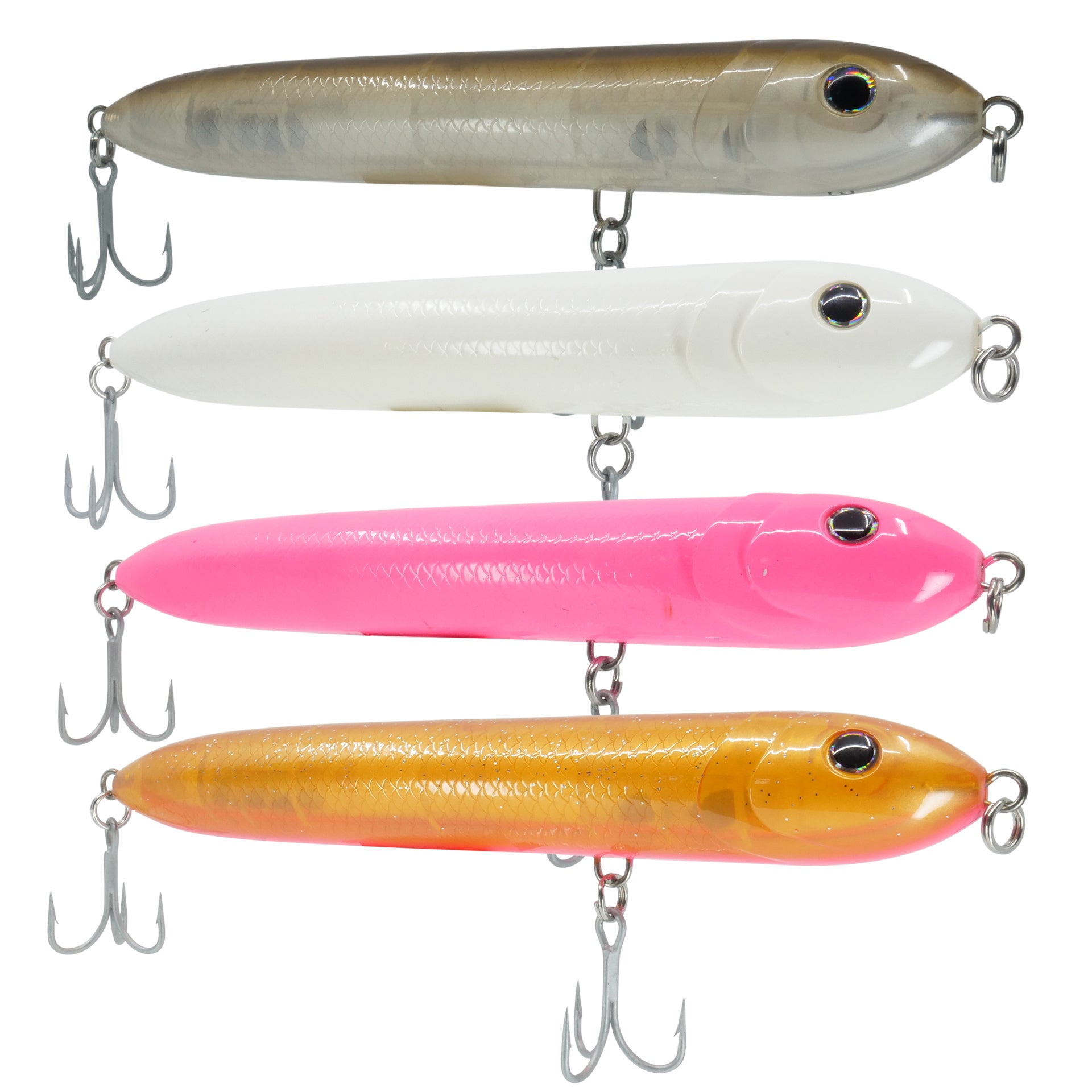
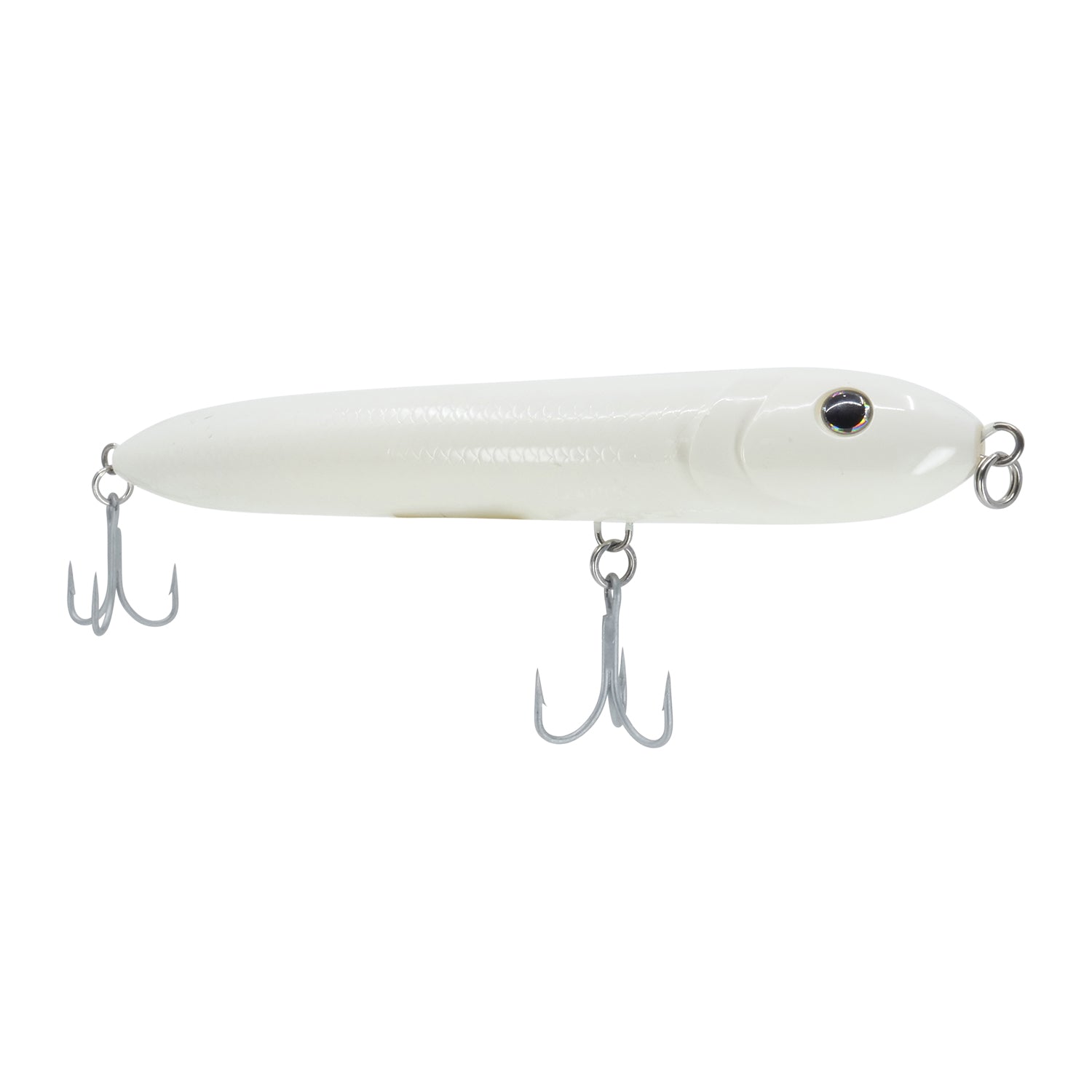
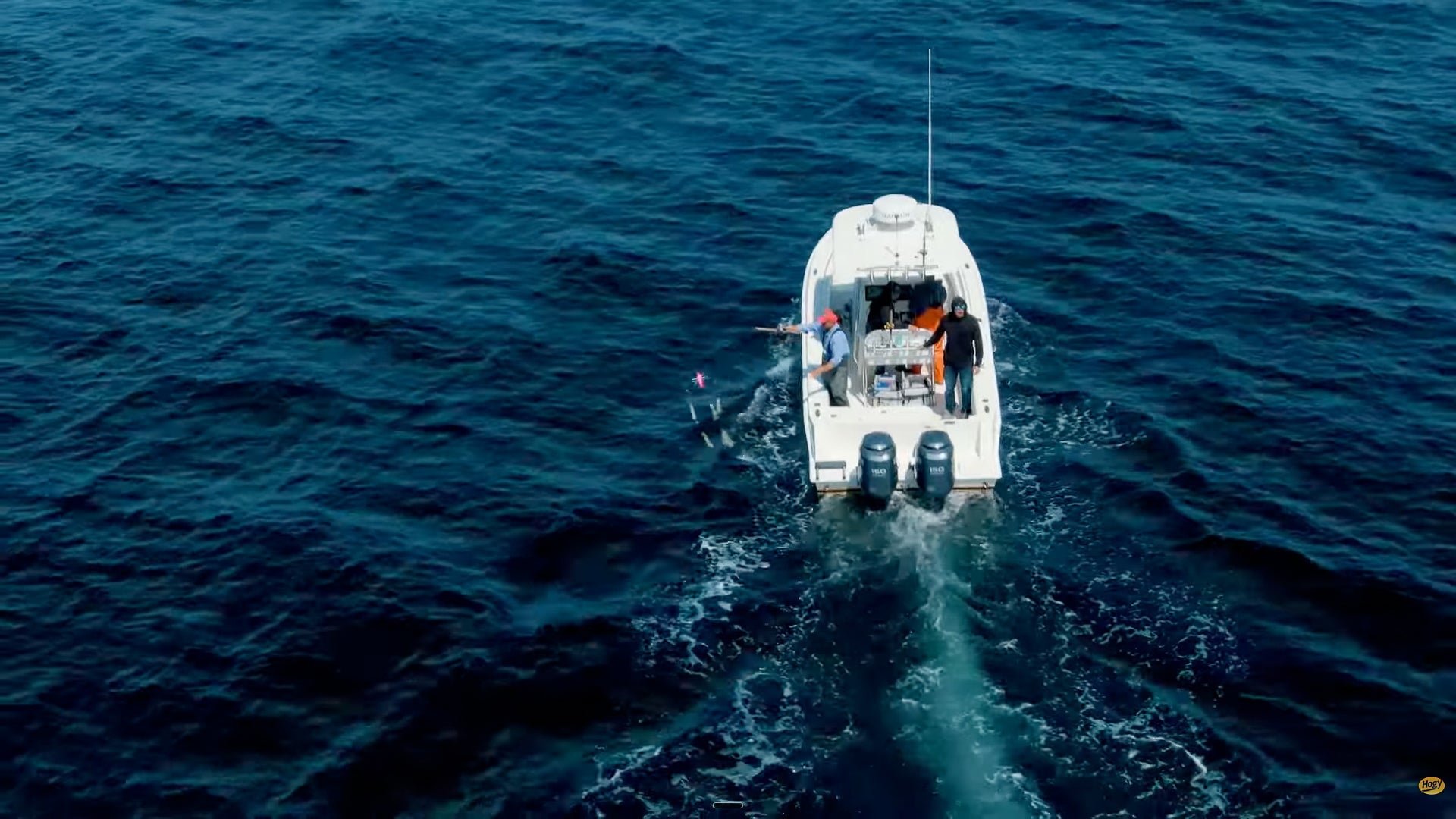
Upper Buzzards Bay, early summer. The XL Dog Walker is already rigged C&R before the first cast — rear hook off, barbs mashed.
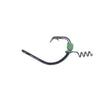
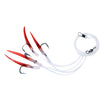
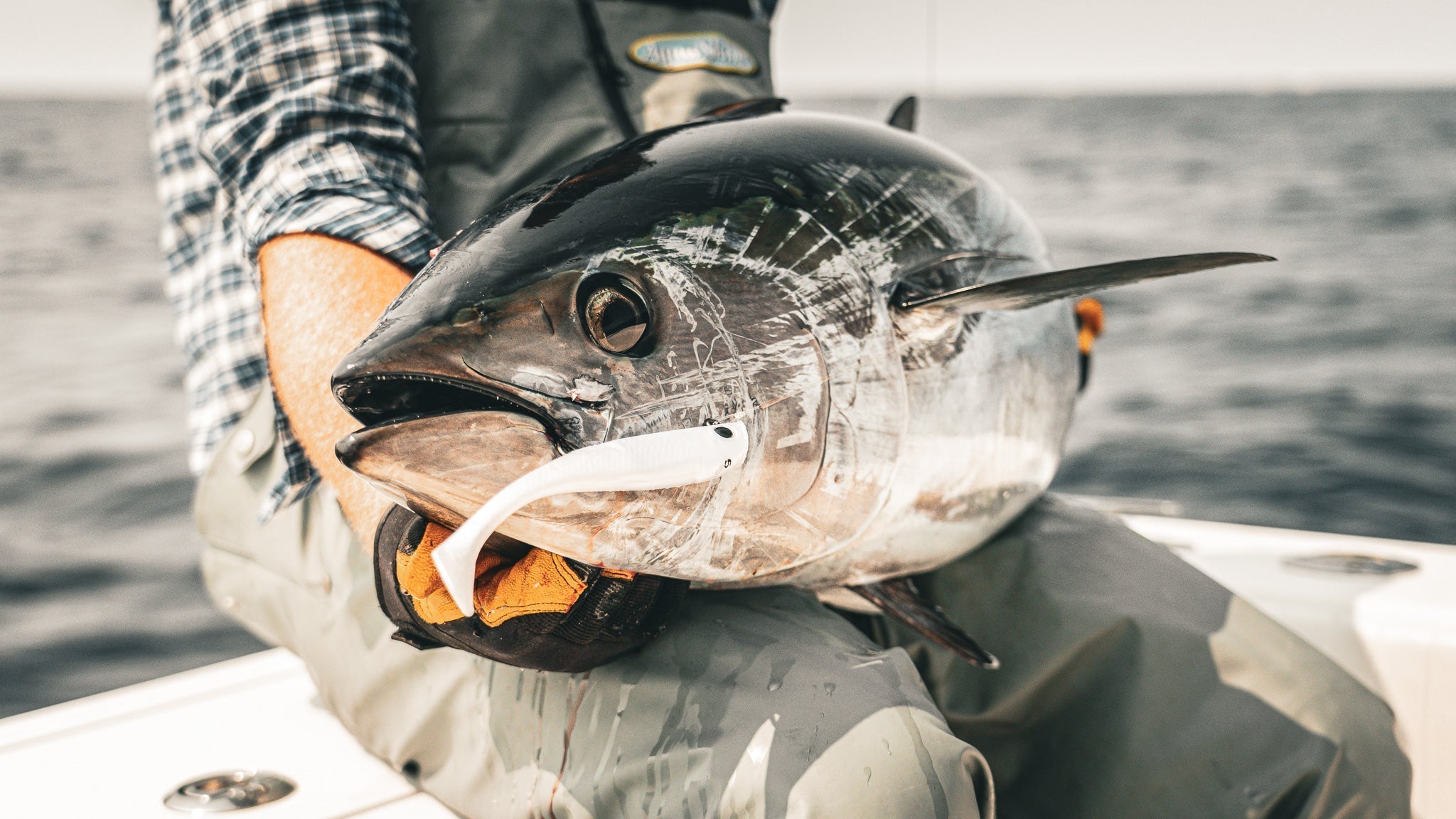
Before the first cast, take the rear treble off the plug. Striped bass hit big plugs and baitfish from the head — they commit to the front of the lure. When a fish is hooked on the front treble and fighting, the rear hook swings freely and can catch in the gill. That’s dangerous to the fish and dangerous to the angler at the boat.
The Mass DMF study found that plugs with multiple hooks inflicted more damage than single-hook rigs, regardless of whether those hooks were singles or trebles. The mechanism is exactly what Mike describes: a fish hooked on one treble can have another swing into a gill during the fight. Removing the rear hook before the first cast eliminates that risk entirely.
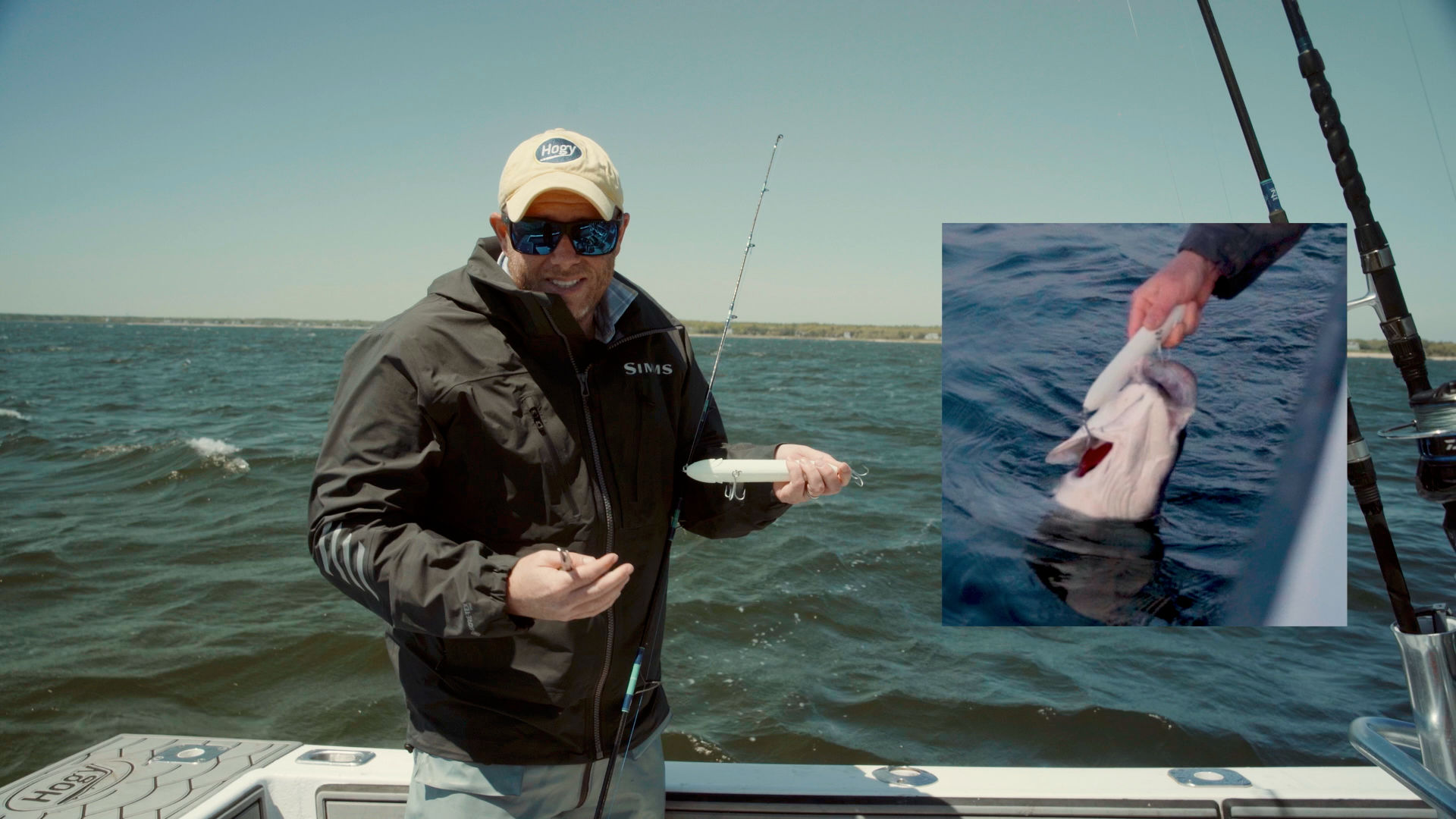
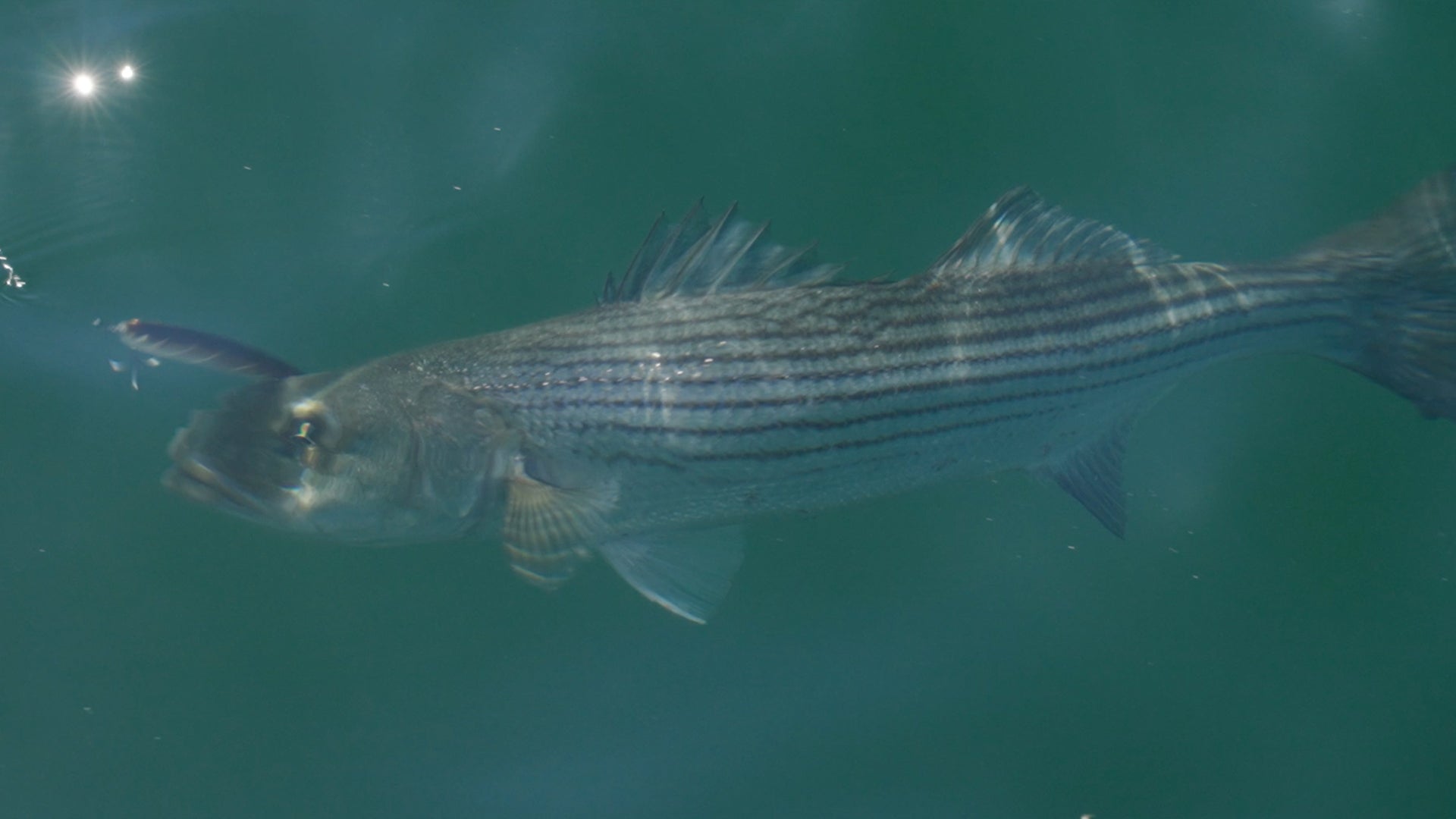
The inset shows exactly what removing the back hook prevents — a free-swinging treble catching in the gill during the fight.
- Rear hook removed before lines go in — not as an afterthought mid-trip
- Single front treble is standard Hogy plug design — no performance loss
- Eliminates gill-hook risk during the fight and at the boat
With the back hook off, use pliers to flatten the barbs on the front treble. A barbed hook holds the fish more aggressively during the fight — but it also does more tissue damage on the way out. A mashed barb releases cleanly and quickly.
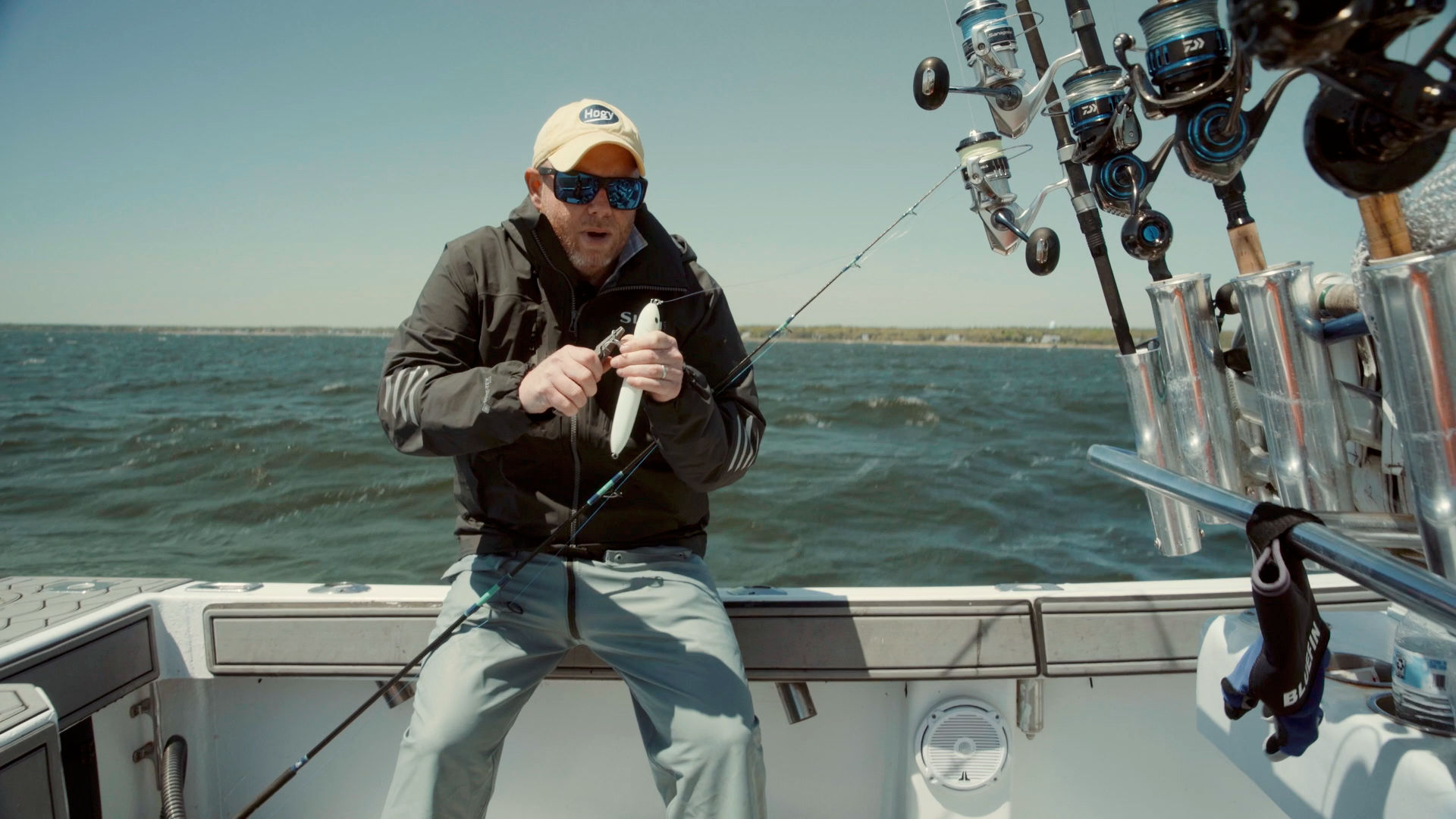
Single front treble, barbs mashed. Takes 30 seconds before the first cast — saves several minutes per fish at the boat.
Targeting big over-slot fish that can’t be kept anyway, there’s no downside. The hook still penetrates and holds through a hard fight. The release is faster, cleaner, and less traumatic for the fish.
- Mashed barb = faster, cleaner hook removal at the boat
- Less tissue damage = better survival odds post-release
- Holding power through the fight is not meaningfully reduced
Fight time is one of the three primary variables in the Mass DMF survival study. Fish fought to exhaustion on light tackle had significantly lower survival rates — and the study found that larger fish were fought longer, which is exactly why they die at higher rates. The two-minute threshold is real. A fish landed in under two minutes has a materially better chance of survival than one fought for five.
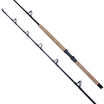
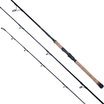
For targeting 20–30 lb class stripers on big plugs, Mike runs a 7ft Hogy Hybrid spinning rod, VS2200 reel, 40lb braid, and 40lb fluorocarbon leader. Heavy enough to turn a big fish quickly and get it to the boat in under two minutes — light enough to still be a great fishing experience.
- Rod: 7ft Hogy Hybrid spinning — heavy-duty inshore, light tackle offshore
- Reel: VS2200 — heavy duty surf casting, high-volume retrieve
- Line: 40lb braid + 40lb fluorocarbon leader
- Lure: Hogy XL Dog Walker — rear hook removed, barbs mashed
- Target: land the fish in under 2 minutes

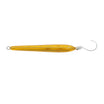
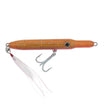
Fish the XL Dog Walker with the heavy-tackle setup described above. Before casting, follow the article’s catch-and-release preparation: remove the rear hook and mash the remaining barbs.
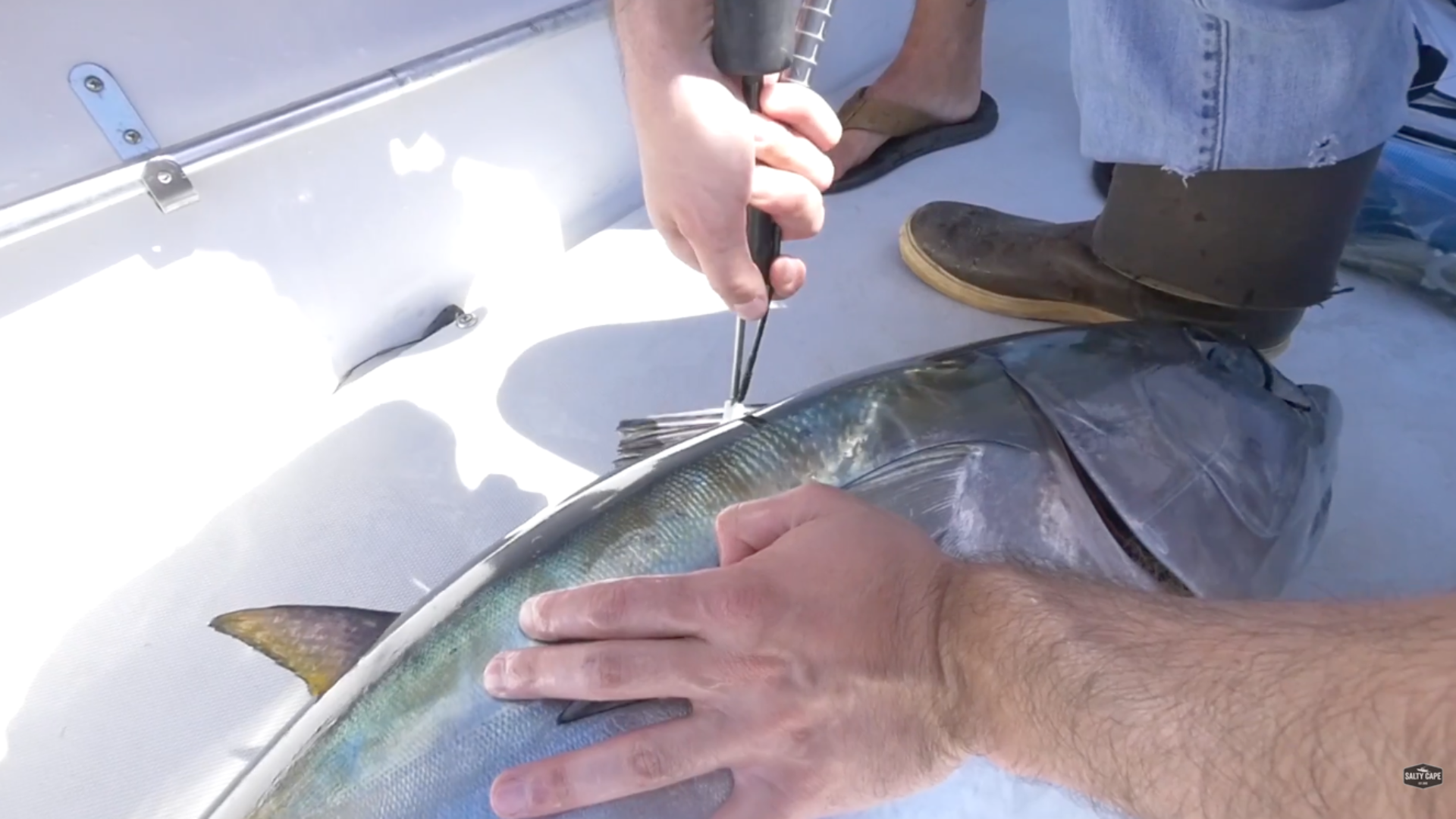
Shop Dog Walkers →At the boat, keep the fish in the water for the unhook whenever possible. With mashed barbs and no rear hook, the unhook takes seconds. If you need to measure the fish for a study log, support the belly — don’t lip-hang a big striper vertically. Their internal organs were not designed to be suspended from their jaw.
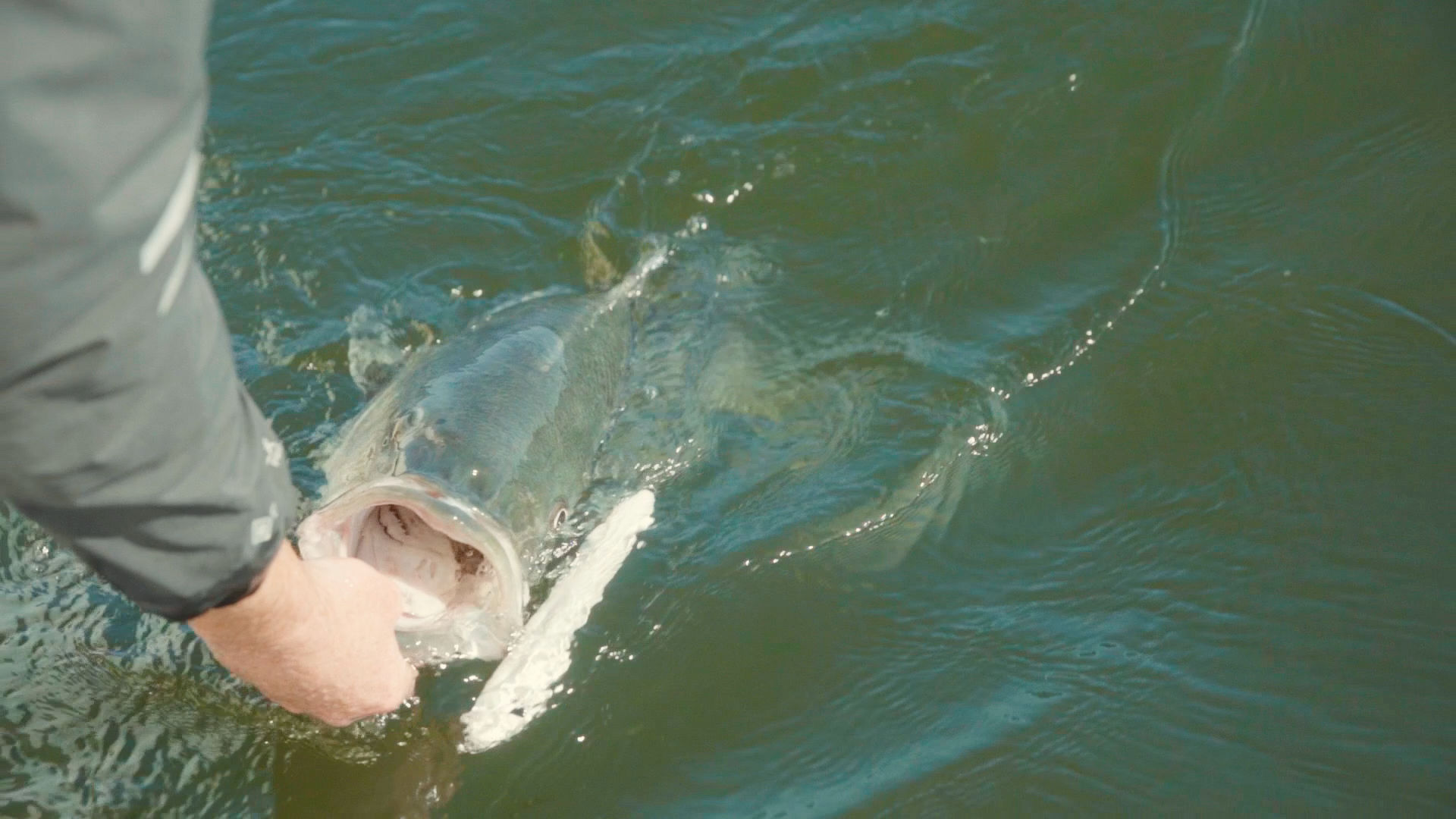
Single hook, mashed barb — unhook happens in the water in seconds. No lift, no air time, no damage.
Rob takes the belly of the fish. Mike controls the head. Measurement taken, note made, fish immediately back in the water.
- Unhook in the water when possible — mashed barbs make this fast
- If measuring, support the belly — never hang a large fish from its lip
- Keep time out of the water as short as possible — every second counts
- Log: hook placement (mouth, lip, corner), time out of water, fight time
A fish that swims away too early can roll belly-up seconds later out of sight. Don’t release a big striper until it gives you the signal that it’s ready. Hold the fish upright in the water, supporting its weight, and wait.
The signal: the fish starts clamping down and biting your thumb. That pressure — that bite reflex coming back — is the fish’s energy returning. Pectoral fins will also go from flat and limp to vertical, actively stabilizing. When both happen: open your hands.
- Hold the fish upright, supporting its weight, in the water
- Wait for the thumb-clamp reflex — that bite pressure means energy is back
- Check the pectoral fins — vertical and active means the fish is stabilizing
- Give it 2–3 more seconds after the signal before releasing
“What’s best for the striped bass is how the lures are going to eventually come out of our factory — rigged for catch and release. The data from these studies is what drives that decision.”
The Mass DMF research produced specific mortality rates by variable. These aren’t estimates — they’re acoustic telemetry data from tagged fish tracked through a receiver network along the entire Northeast migration corridor. Here’s what each of Mike’s five protocols actually changes:
Removing the back hook is the highest-leverage single action any plug angler can take. It cuts predicted mortality from 8.1% to 3% — a result the data calls a “dramatic decrease.” Mashed barbs get that hook out faster, cutting air time. Heavy gear lands the fish before the two-minute mark. Proper revival keeps the fish from swimming off too early. Together, these measures put you at the 2% end of the range — not the 87% end.
Large over-slot stripers are the most reproductively valuable fish in the population. A 40-inch female produces exponentially more eggs than a slot-size fish. The gap between 2% mortality and 87% mortality is exactly these five decisions, made before the first cast.



Leave a comment
All comments are moderated before being published.
This site is protected by hCaptcha and the hCaptcha Privacy Policy and Terms of Service apply.