
















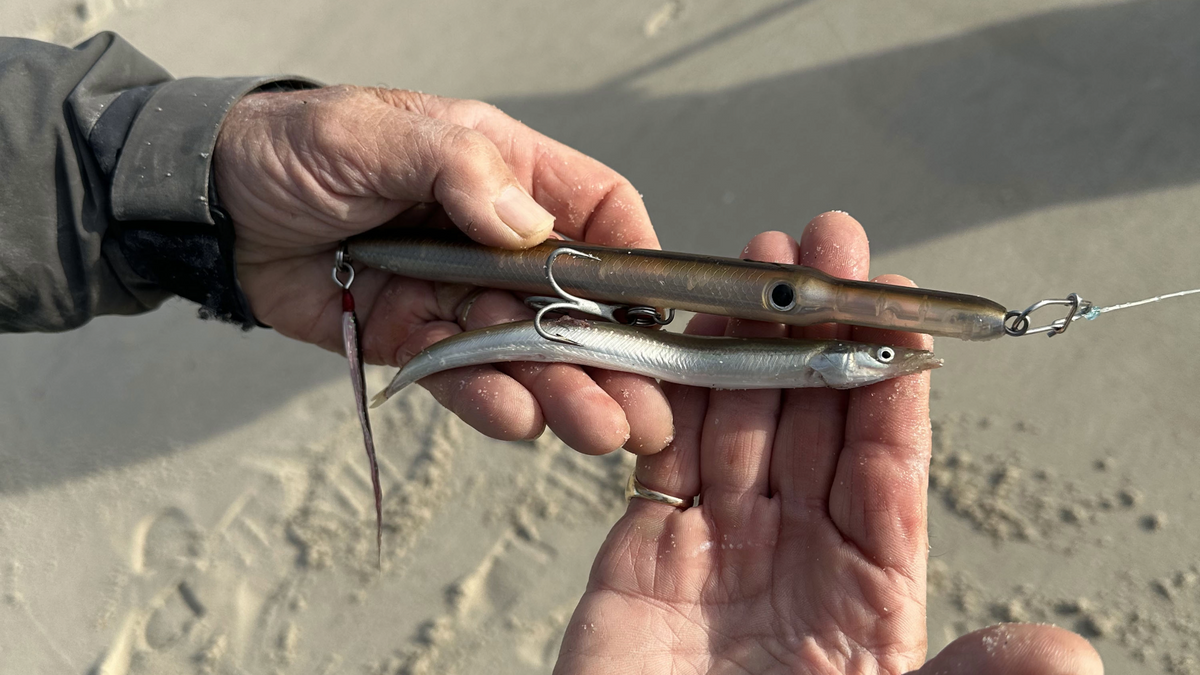
Capt. Mike's Guide to the Needle: Open Beach, Sand Eels, Long Casts Into the Wind
From the beach in the fall the fish are on the bar and the wind is in my face. The Perfect Needle is the plug that reaches them and swims like the sand eel they are eating. Here is how I fish it from the sand.
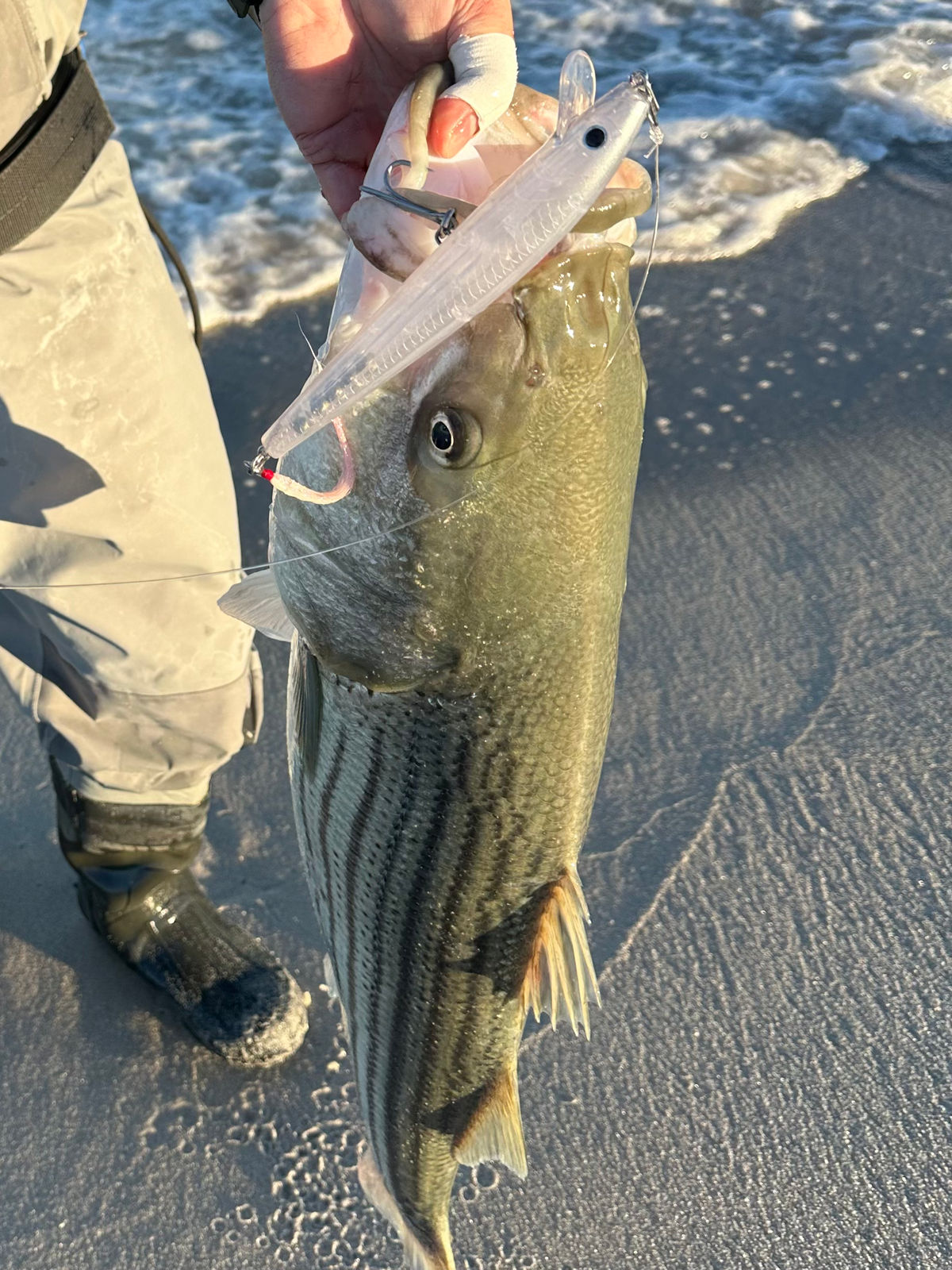
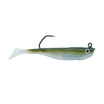
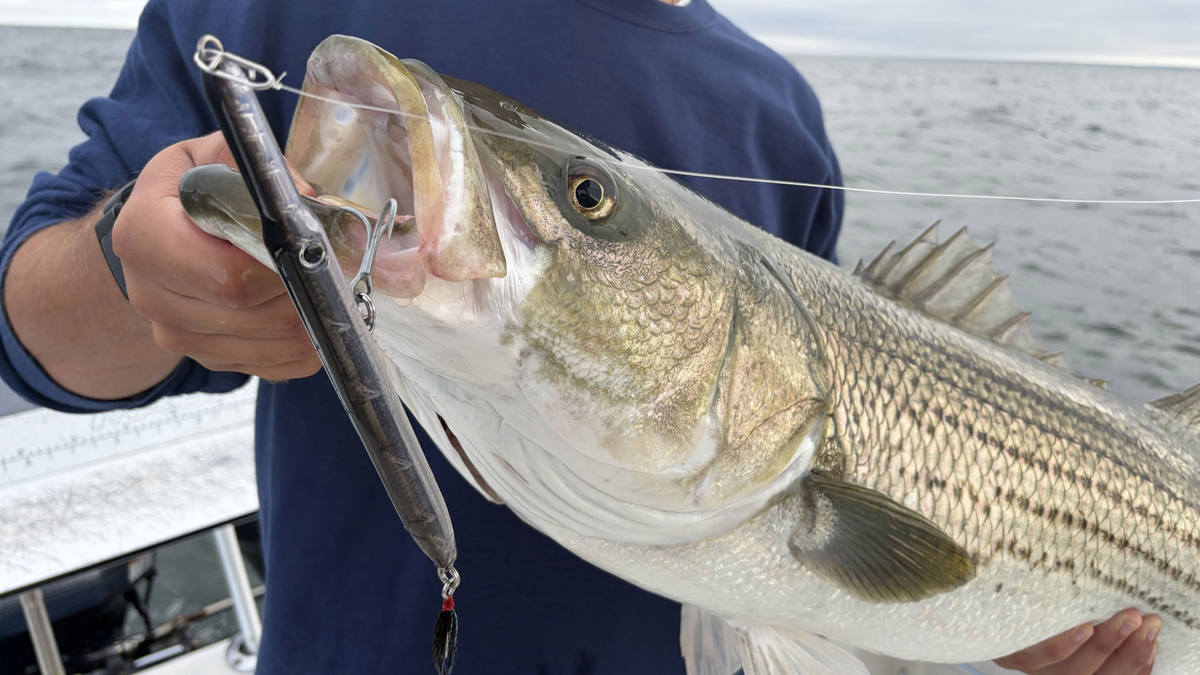
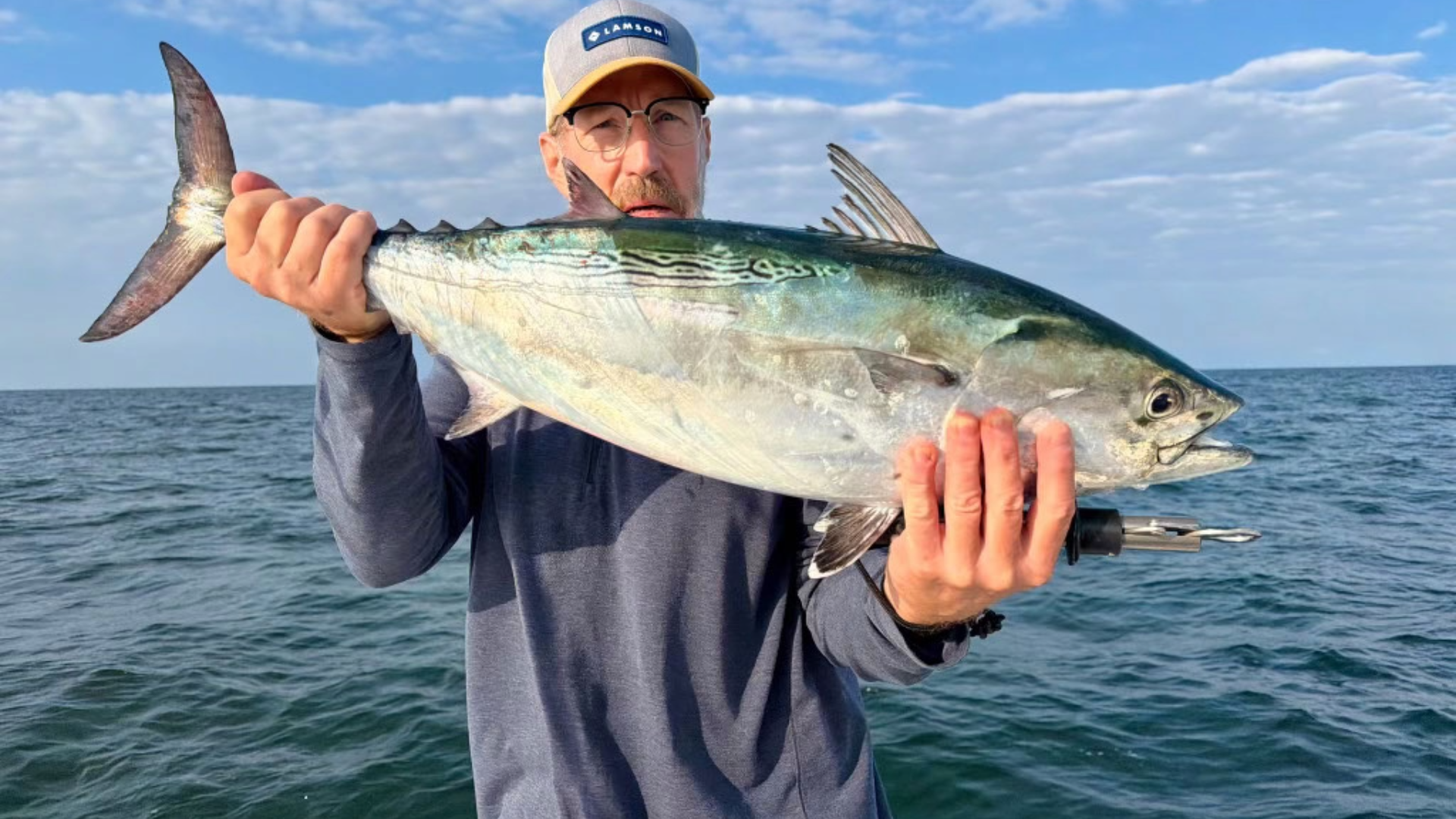
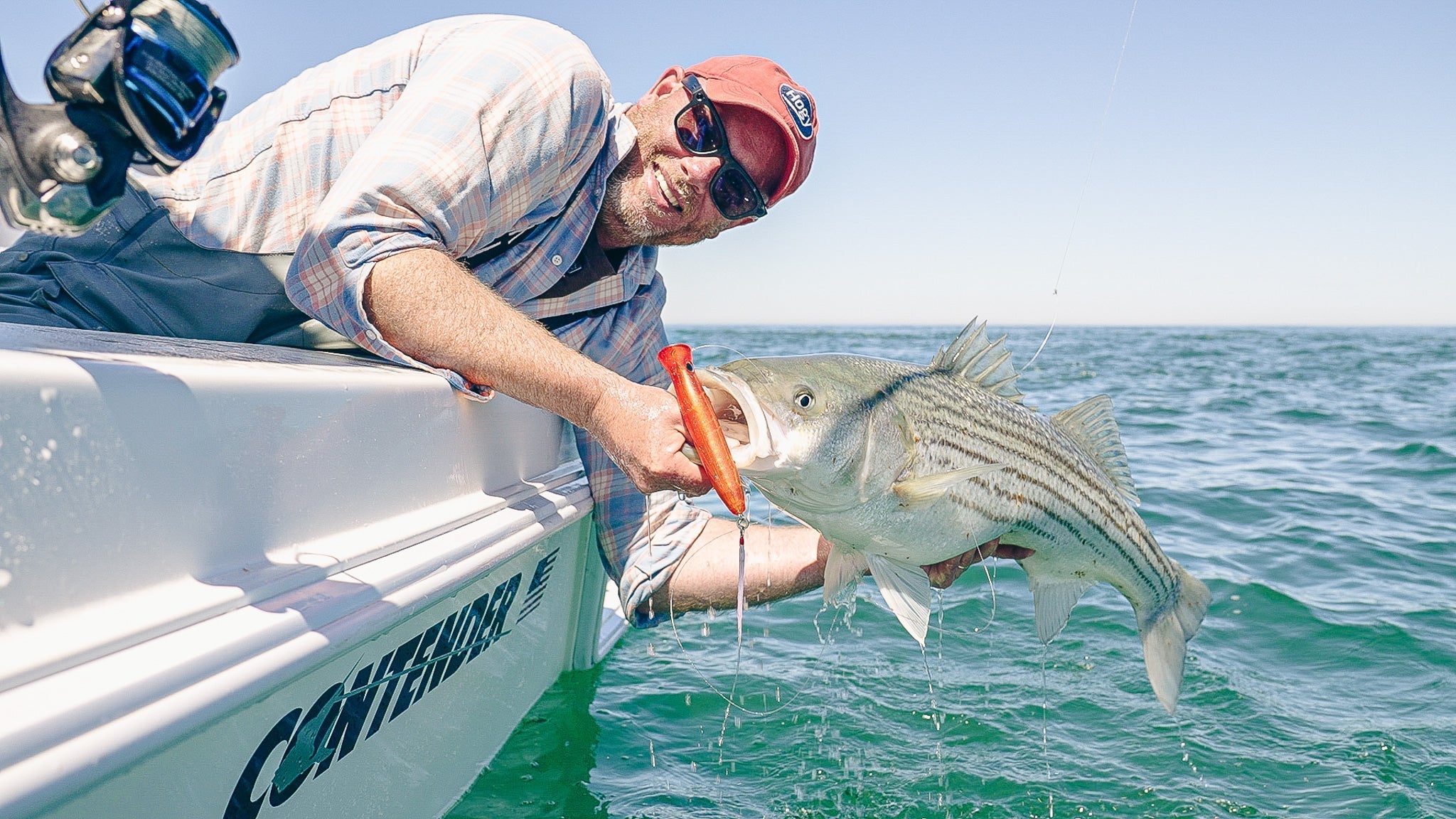
The needle where it belongs. A fall bass from the sand on the 7-inch Perfect Needle.
The call: needle or eraser?
Both plugs read as a sand eel from a bass's angle. One makes noise on top and one swims quiet and far. From the beach in a fall wind, I throw the quiet one almost all day, because the quiet one is the one that reaches the fish.

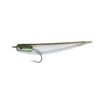
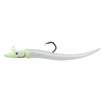
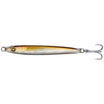
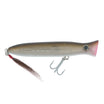
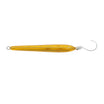
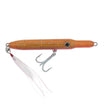
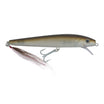
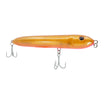
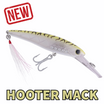
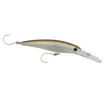
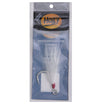
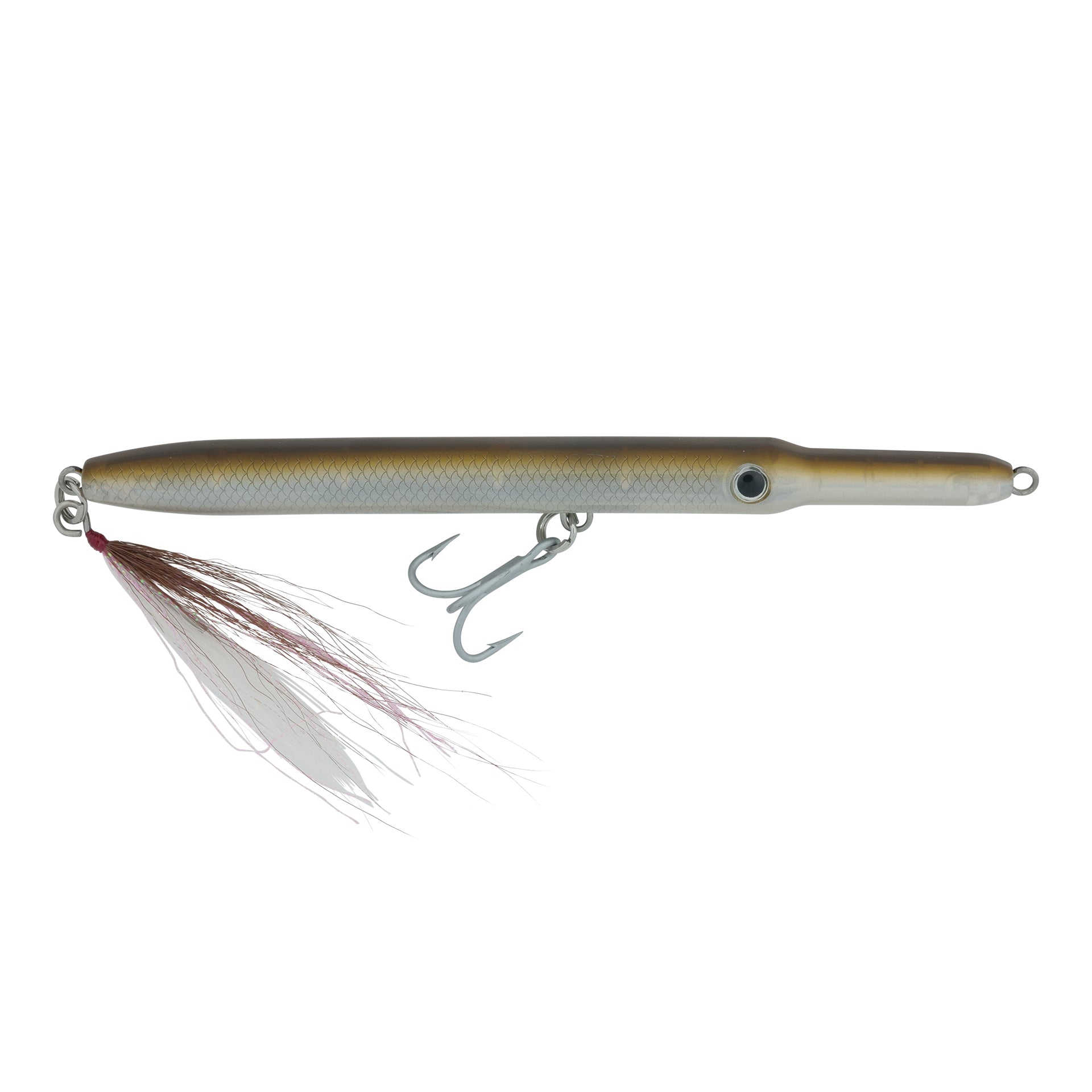
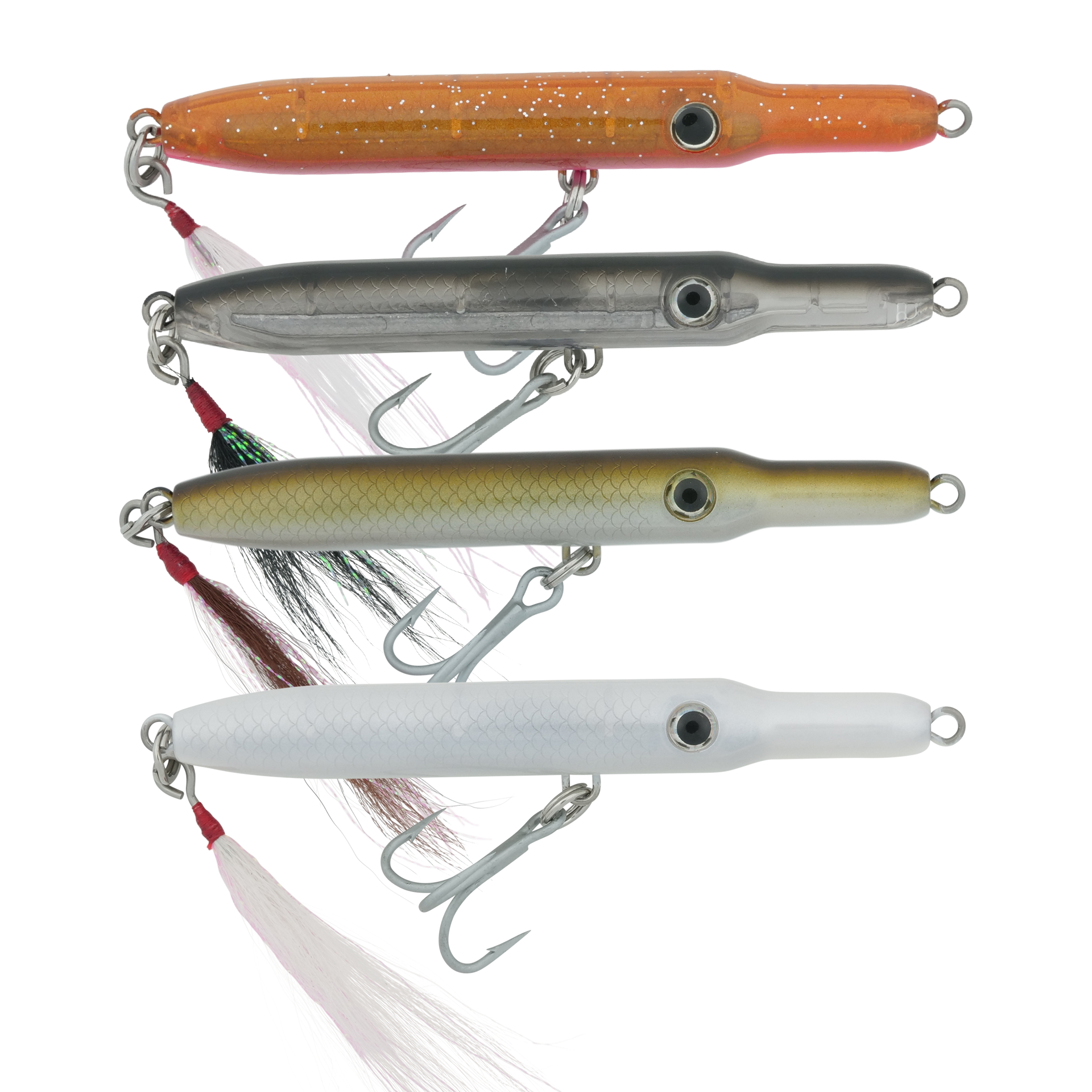
The farthest-casting plug in the box, a true sand eel profile with a little more shoulder, and it sinks. The plug for fish I cannot reach and fish that have gone down.
- Wind in my face and the school out of range
- Birds working, fish under them, nothing on top
- Followers and refusals behind the noisy plugs
- Sand eels the only bait

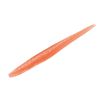
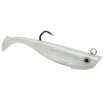
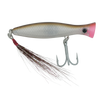
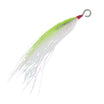
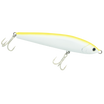
A fatter, louder version of the same long profile. When the fish are up and inside the bar, the splash gets eaten before the needle lands.
- Fish crashing on the surface, close
- Peanuts or pogies in the mix; the fish want the show
- Calm water where the walk carries
- The first cast at a fresh school
The moment the eraser gets a boil without an eat, or the school moves out of its range, the needle goes on and it stays on. From the sand the eraser is a plug for the trough, and the needle is the plug for the bar and beyond.
The case: the most underrated plug in the fall box
I will say it plainly: the Perfect Needle is the most underrated plug in the fall run, and from the beach it is the plug that separates the people who reach the bar from the people who do not. Everybody owns one. Almost nobody throws it. It sits in the box under the poppers and the swimmers because it does not do anything on the retrieve that looks exciting. It just swims. That is exactly why it catches fish that have seen every popper in New England go by.
It does three things nothing else in the box does at the same time. It casts farther than any plug its weight, because there is nothing on it to catch air; into a fall onshore at twenty knots that is the difference between the outer bar and the wash. It sits in the water like the bait: long, thin, an inch or two under, moving at the speed of a sand eel that has somewhere to be. And it is quiet, which on a school that has been run over by six boats is the presentation nobody else is making.
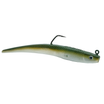
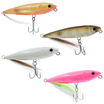
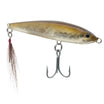
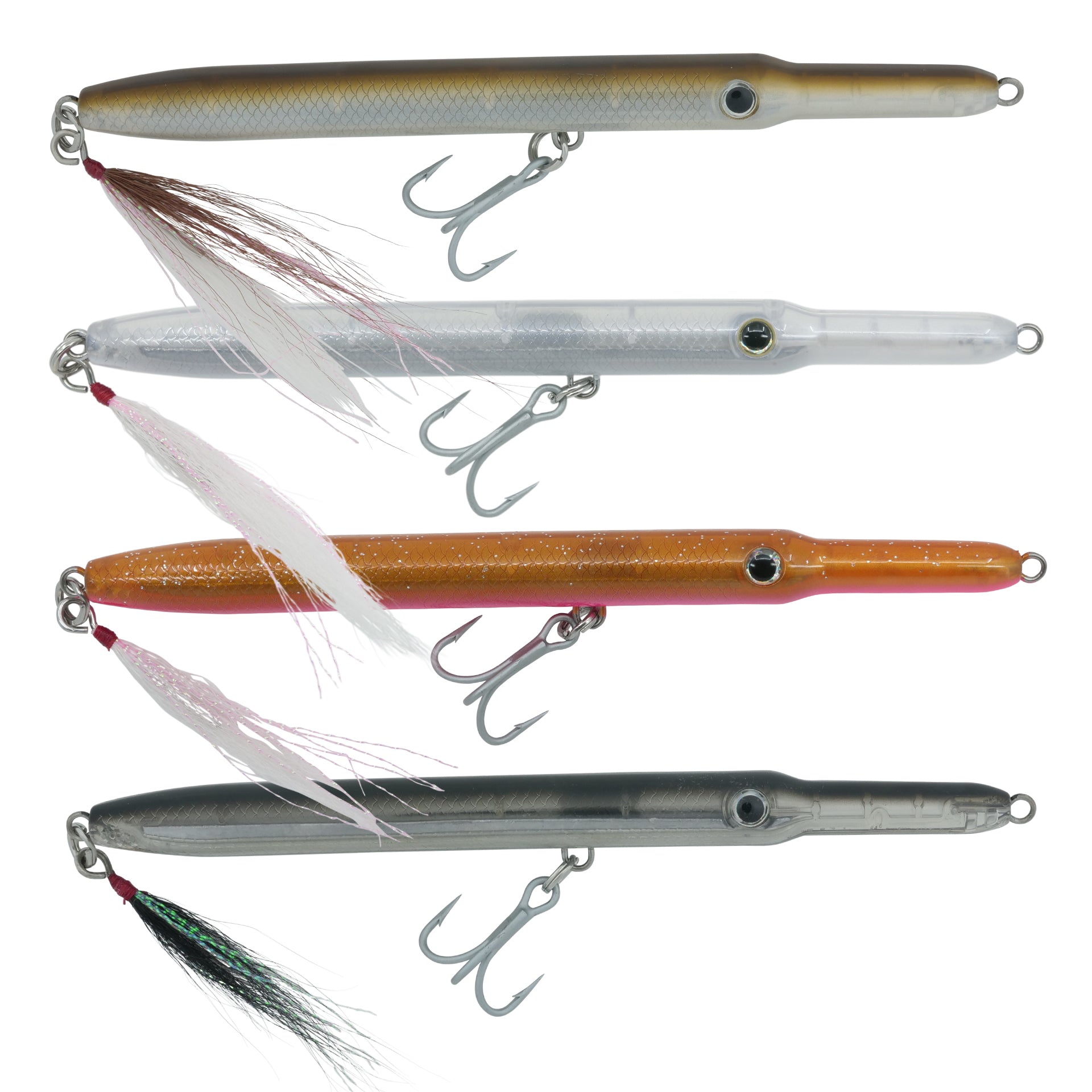
The needle is a sand eel with more presence. Same length, same taper, but wider through the body than the real thing, so a fish sees it from farther away and the profile holds up in broken water.
The bar is where the fish are
Why the fall beach is a reach problem.
From the beach in the fall the fish are on the outer bar and in the cut where the trough drains through it, and the wind that brought them is onshore. The plugs that fished all summer in the wash die at thirty yards in that wind. The needle lands on the bar.
The bait is sand eels. On the backside and the Sound beaches in October they are in the wash by the thousand, dimpling like rain, and the bass are in the trough at first light and on the bar on the drop, eating them. Peanut bunker show in the wash too, and when they do the fish crash them close. That is the eraser's moment. The rest of the time it is the needle.
- Window. Mid-September into November from the sand. The Outer Cape backside also fishes this way in June and July.
- Where. The backside and the Sound beaches.
- Bait. Sand eels in the wash by the thousand, dimpling like rain. Peanuts when the fish crash close.
- Timing. Trough at first light, bar on the drop.
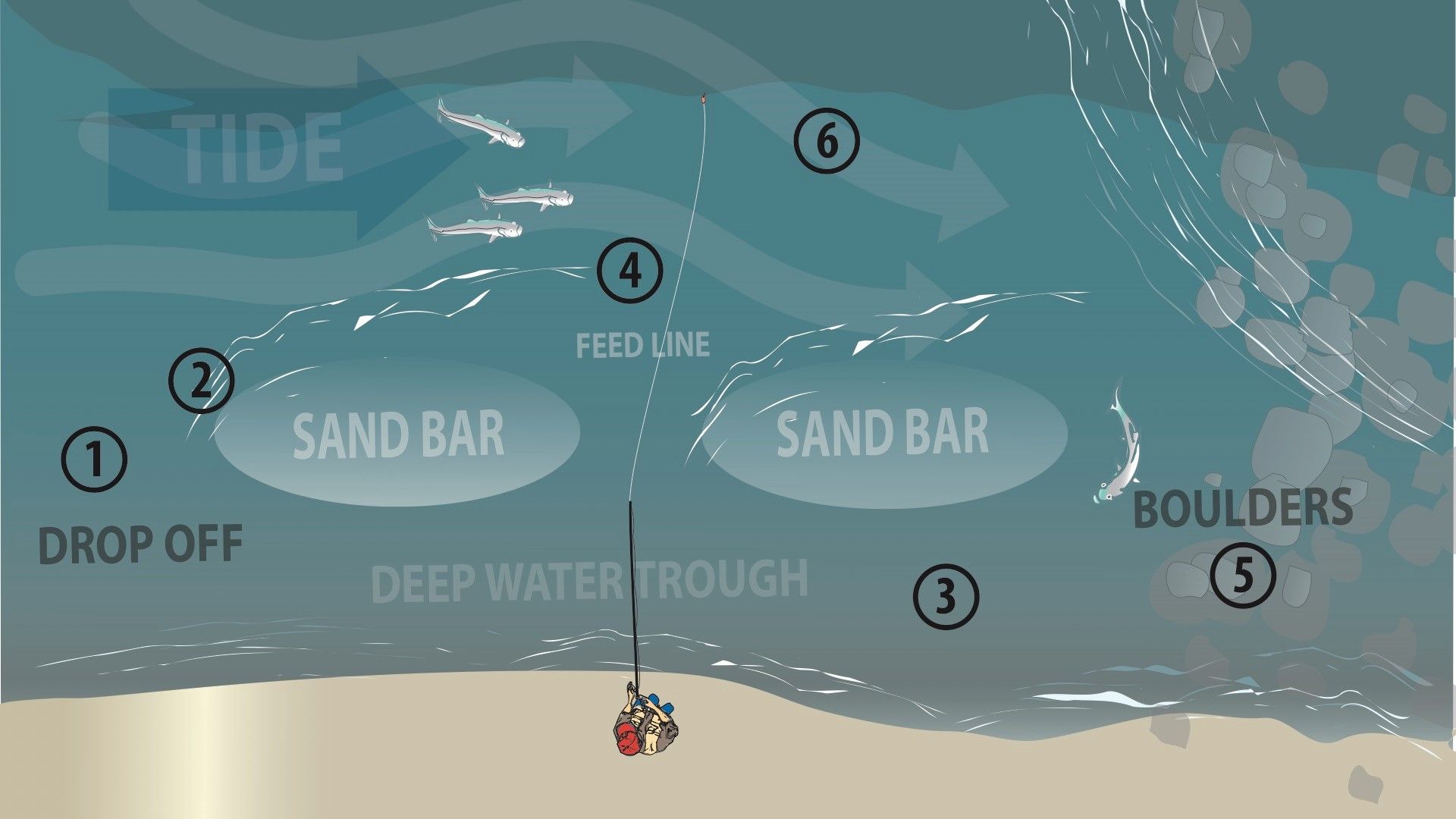
SS200 Open Beach: the trough inside, the bar, and the drop-off outside it. The needle is the plug that gets past the bar.
The bar, the wind, the light
What I read at the water's edge.
The bar and the cut. At low water I walk it and find where the trough drains through. On the rise the fish move into the trough; on the drop they sit in the cut and on the outside of the bar. The needle reaches the outside; nothing else does in the wind.
The wind. Onshore or quartering onshore puts the fish tight to the beach and the surf up. That is the fish, and that is the wind the needle was built for.
The light. First light on the rise, last light on the drop.
It flattens the surf and pushes the fish out. I go to the Race or an inside beach.
Read the beach while I walk it
Four layers. Each one narrows the answer further.
“I get ahead of it and cast to the leading edge, not the middle.”
Birds along the beach in directional flight.A school moving. I walk ahead of it and cast to the leading edge.
Fish crashing close, or sipping sand eels in the trough.Crashing peanuts close is the eraser. Sipping sand eels is the 5-inch needle.
The outer bar, the trough, and the cut where it drains.Trough on the rise, cut and outside the bar on the drop.
None from the sand.The low-water walk is my chart. I find the cut before the tide covers it.
Walk and gun
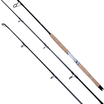
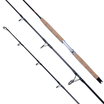
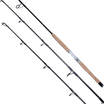
SS200 Open Beach / SHA500 Walk-and-Gun Beach.
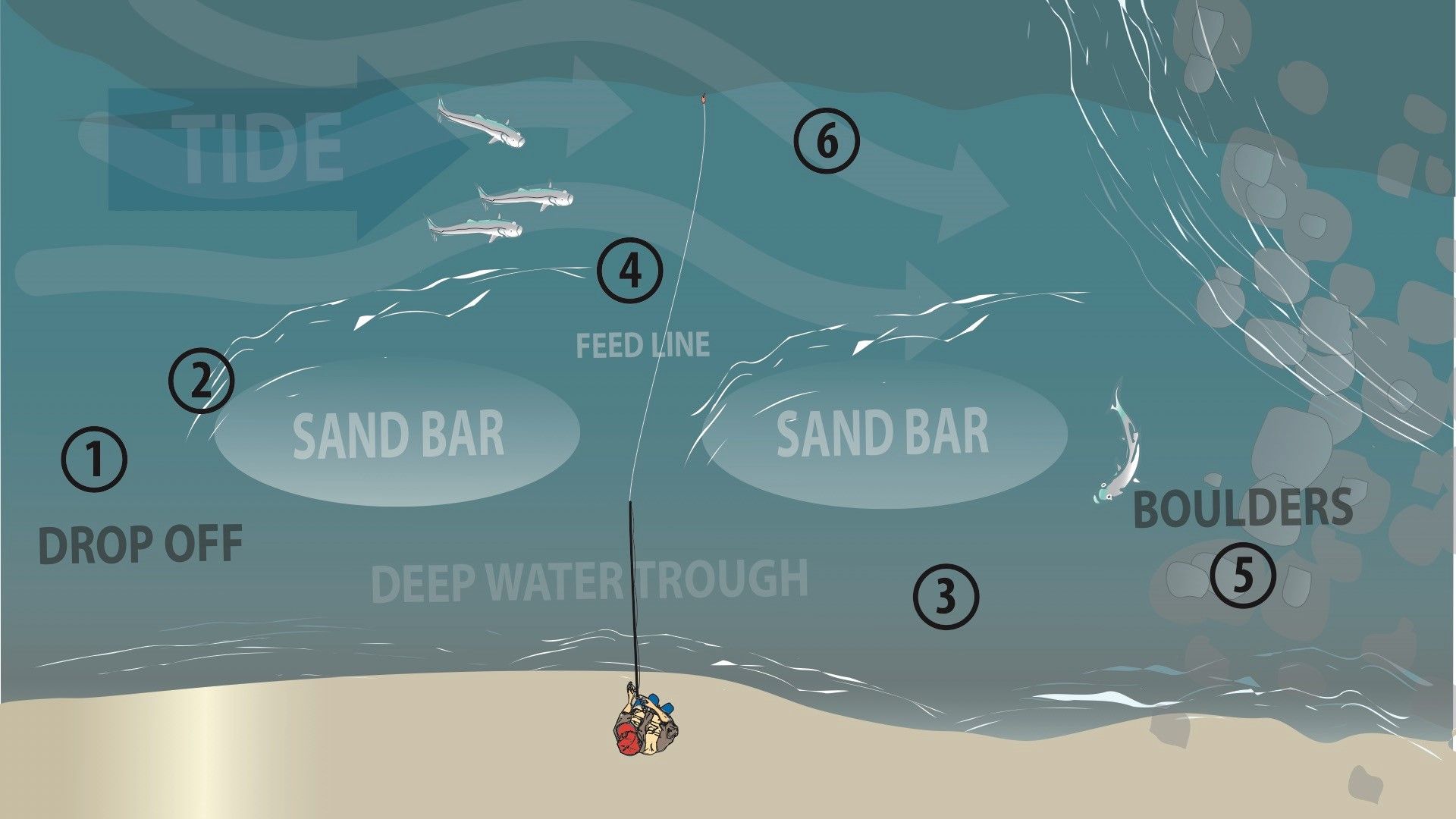
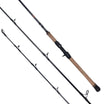
SHA500 Walk and Gun: cover the beach as fast as the fish move.
The needle most of the day
Needle for the bar, eraser for the wash. Five retrieves.
Needle or Surface Eraser?
Both are long and skinny. They do different jobs.
The eraser is a bigger, fatter profile that still reads long and skinny, and it makes noise. When the fish want noise, I throw it. When they want the bait, or when I cannot reach them, the needle wins, and in a fall wind that is most of the day.
The debate: 5-inch or 7-inch?
I fish both and I argue with myself about it every October. Here is where I have landed.

The true sand eel profile.
- When the fish are sipping, this is the one they eat
- Sinks slower; hangs in the top two feet longer on the straight swim
- Lighter, so it fishes on a 9-foot rod on a light-wind evening
- Peanut bunker in the mix: still the size, the shoulder covers it

The reach plug.
- Casts farther in a hard wind than anything I own
- Sinks faster; the one for counting down to a school that has gone deep
- The bigger fish in the migration are eating big sand eels; the profile matches
- Surf: the weight keeps it under the wash where the 5-inch tumbles
The 7 goes first because it reaches, and on a fall day reach finds fish. When I am on them and they are being picky, the 5 gets the eat. In a twenty-knot onshore the 7 is on the 11-foot rod all day and I stop arguing.
One cast, three retrieves. I start with the straight swim, go to the sawtooth when they follow, and sink it when the fish are down in the cut.
Retrieves
The needle has no built-in action. That scares people off and it is the whole point. Rod tip low, line tight, and one of these five.
Tip low, a slow steady wind, the plug an inch or two under and tracking dead straight. Slower than feels right. If I can see the plug wake, I am too fast.
Lift the tip a foot, drop it, wind up the slack on the fall. The needle darts up and glides down, over and over. This is the retrieve that turns a follower into an eat.
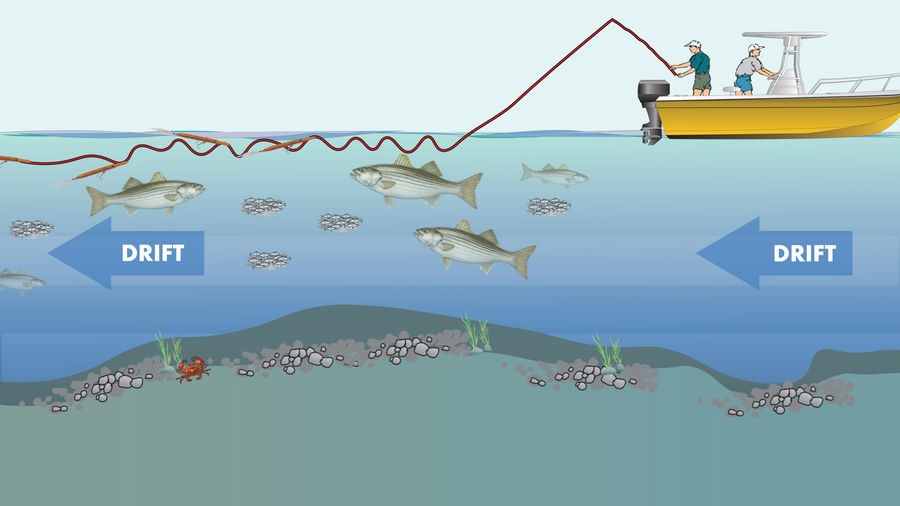
Twitch, pause, twitch: the needle darting and gliding.
I cast, count the needle down, and swim it back with one long slow lift every ten feet and a free fall after it. The 7-inch sinks a foot a second; in the cut on the drop I count to five and start there.
Two fast turns so the needle skips on the surface, then stop dead and let it sink. The eat comes on the stall.
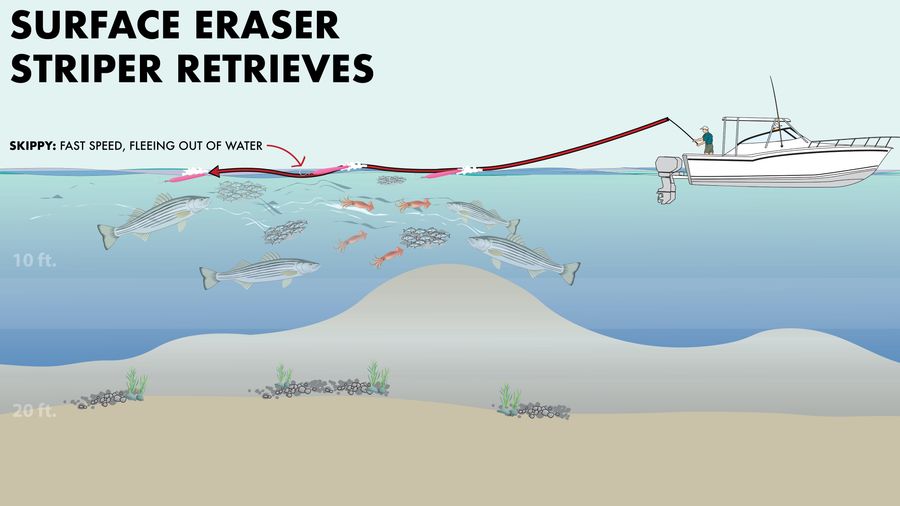
Drawn with the Surface Eraser. The skip is the same on the needle; the stall is where it differs.
Dark, the surf down, fish in the trough I can hear. The straight swim at half speed, the plug barely moving, the rod tip so low it is in the water. The needle is the night plug of the surf; it does not spook the trough.
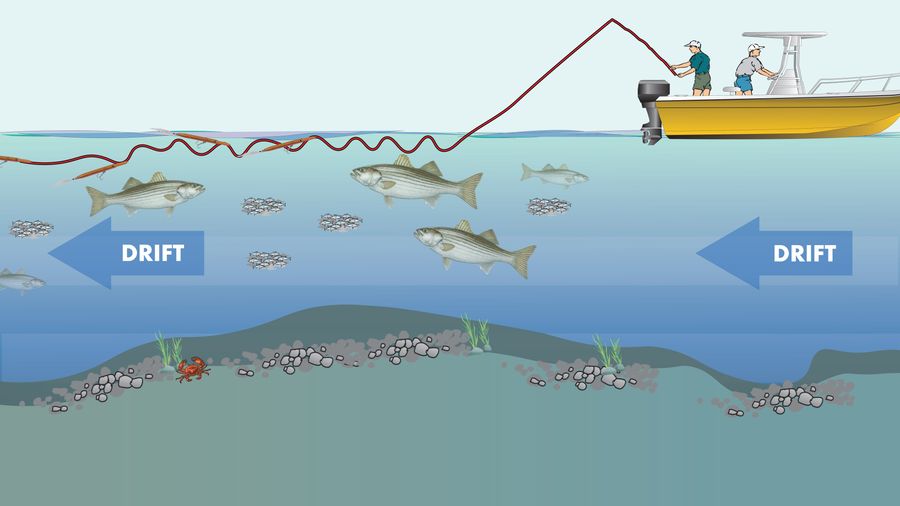
The stealth retrieve: minimal movement, no wake.
A needle bite on the straight swim is a tap, then weight. I do not swing. I keep winding until the rod loads and then lift. A swing on the tap pulls it away from a fish that is still deciding.
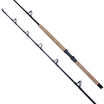
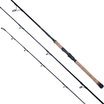
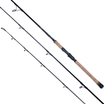
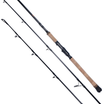
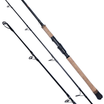
Outfit
Stay, adjust, or move
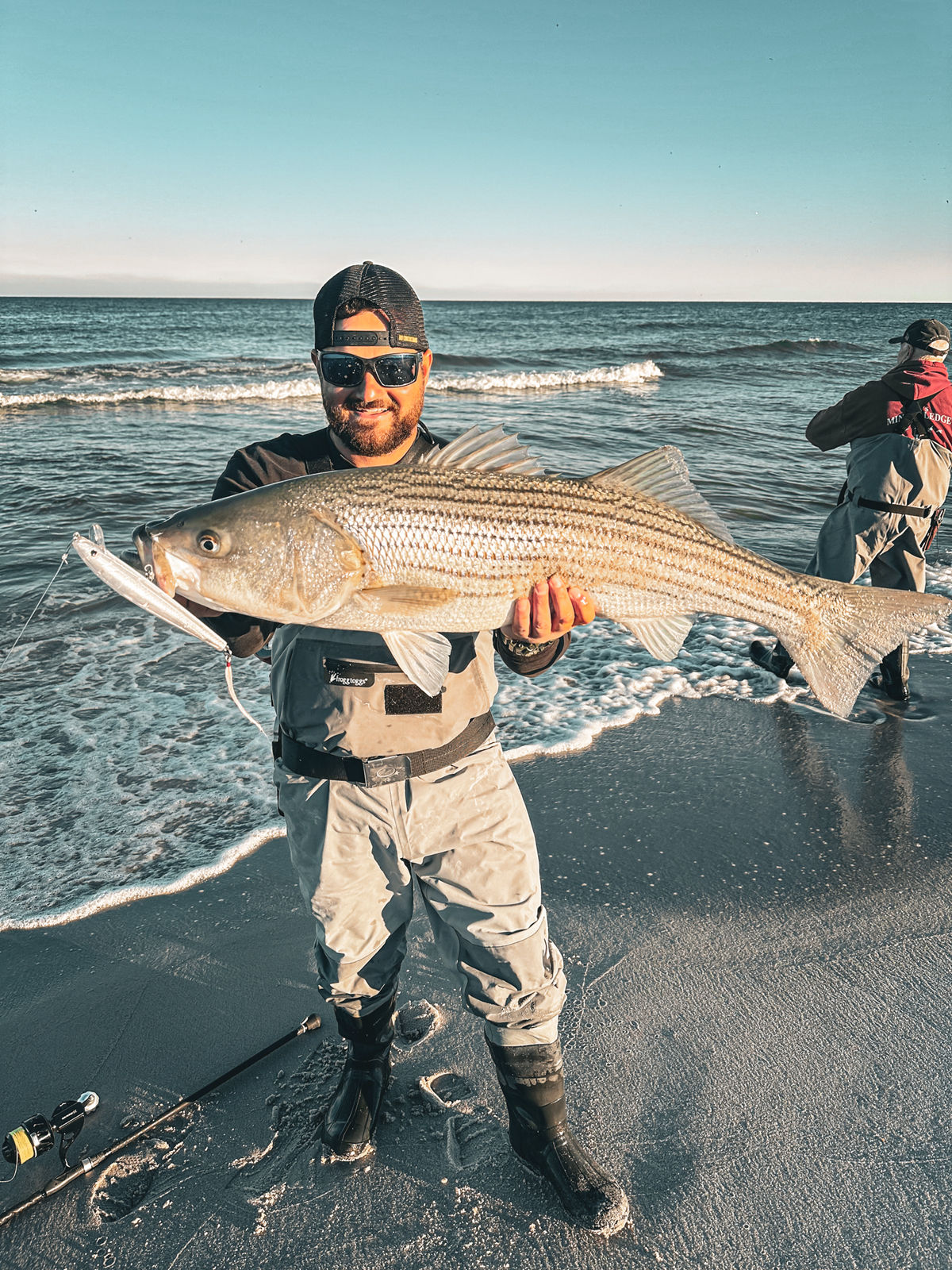
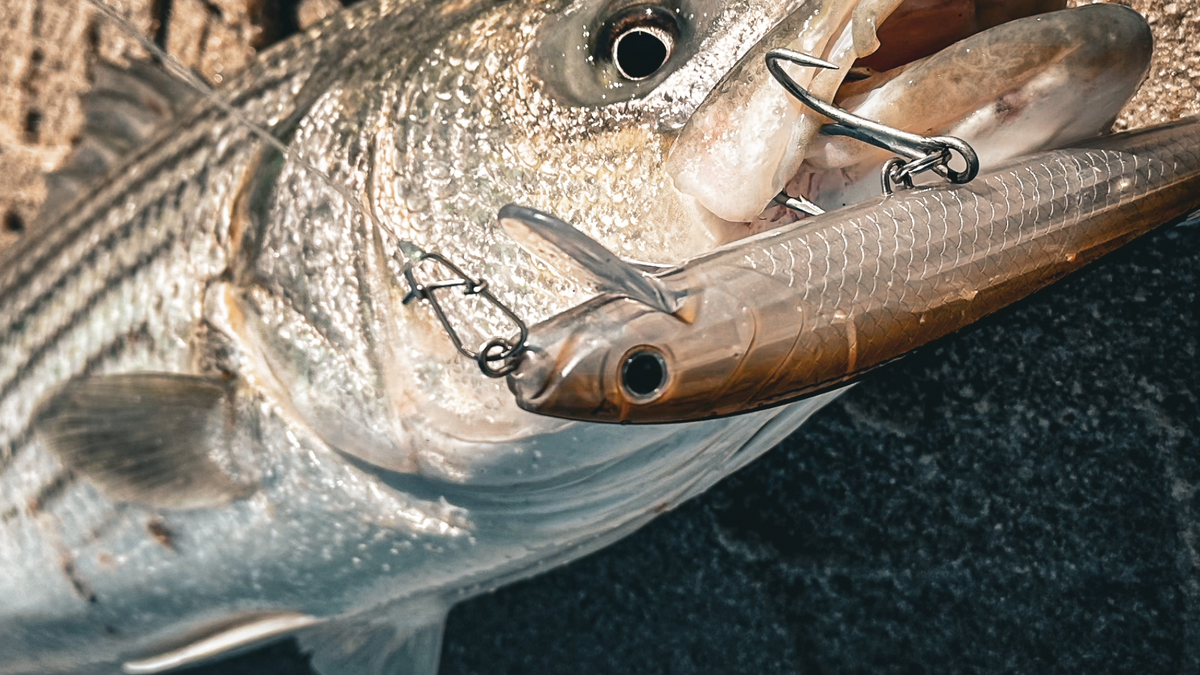
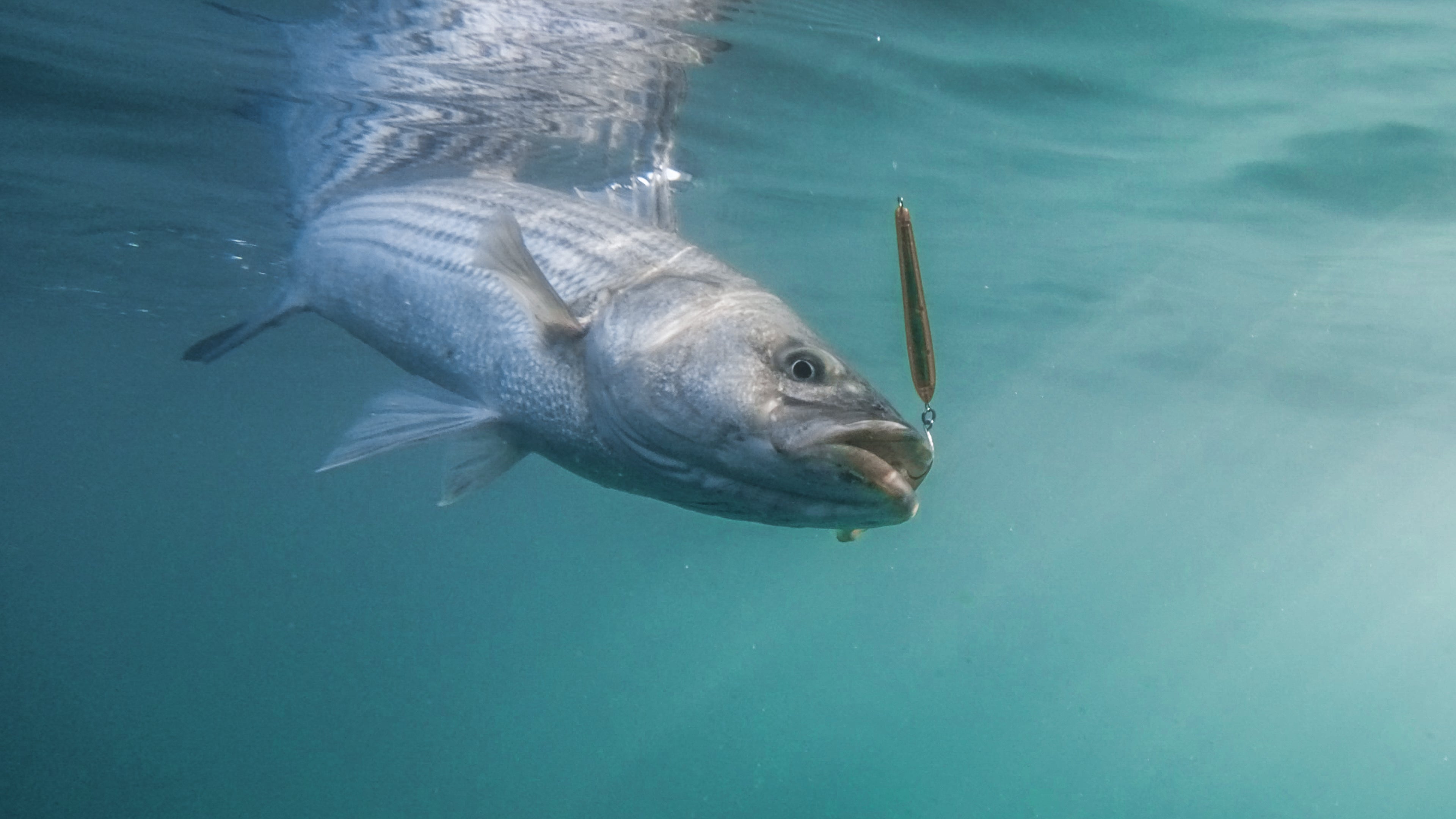
Fall bass from the sand on the olive needle.
Step 1 put me on the fall beach, with sand eels in the wash and the fish on the outer bar and in the cut. Step 2 had me walk the bar at low water and fish the onshore wind the needle was built for. Step 3 read directional birds, crash or sip, and the trough or the cut by tide stage. Step 4 kept me walking: three casts at the cut, three at the bar, fifty yards, again. Step 5 put the 7-inch on the 11-foot rod to find them and the 5-inch in the trough to feed them, with the eraser saved for fish crashing in the wash.


Leave a comment
All comments are moderated before being published.
This site is protected by hCaptcha and the hCaptcha Privacy Policy and Terms of Service apply.