[ Photo: OG Swimmer or Chug Popper bass from the rocks ]
[ Caption ]
Editor: IMG_2217 (v2 hero) is a beach shot tagged Perfect Needle in the DAM, not an OG on the rocks. Moved to the beach needle post. No OG-on-rocks shore photo is tagged in ImageKit v6.65.
I can spend a long time on one boulder. I want the little pocket behind it, the seam along its side, and the gap that lets a plug swim past without crossing the rock.
That is the appeal. One real target, and three or four ways to work it. In the fall, when bait is moving along the shoreline, I want a big plug ready when that pocket comes alive.
The challenge: one boulder, three or four lanes past it, and my feet on rock above the wash. The job is to work the close water first from secure footing, keep the plug beside the cover instead of in it, and change the angle before I leave.
The call: swimmer or popper?
Time in the zone
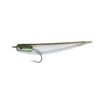
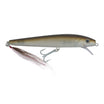
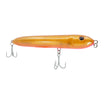
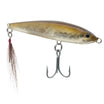
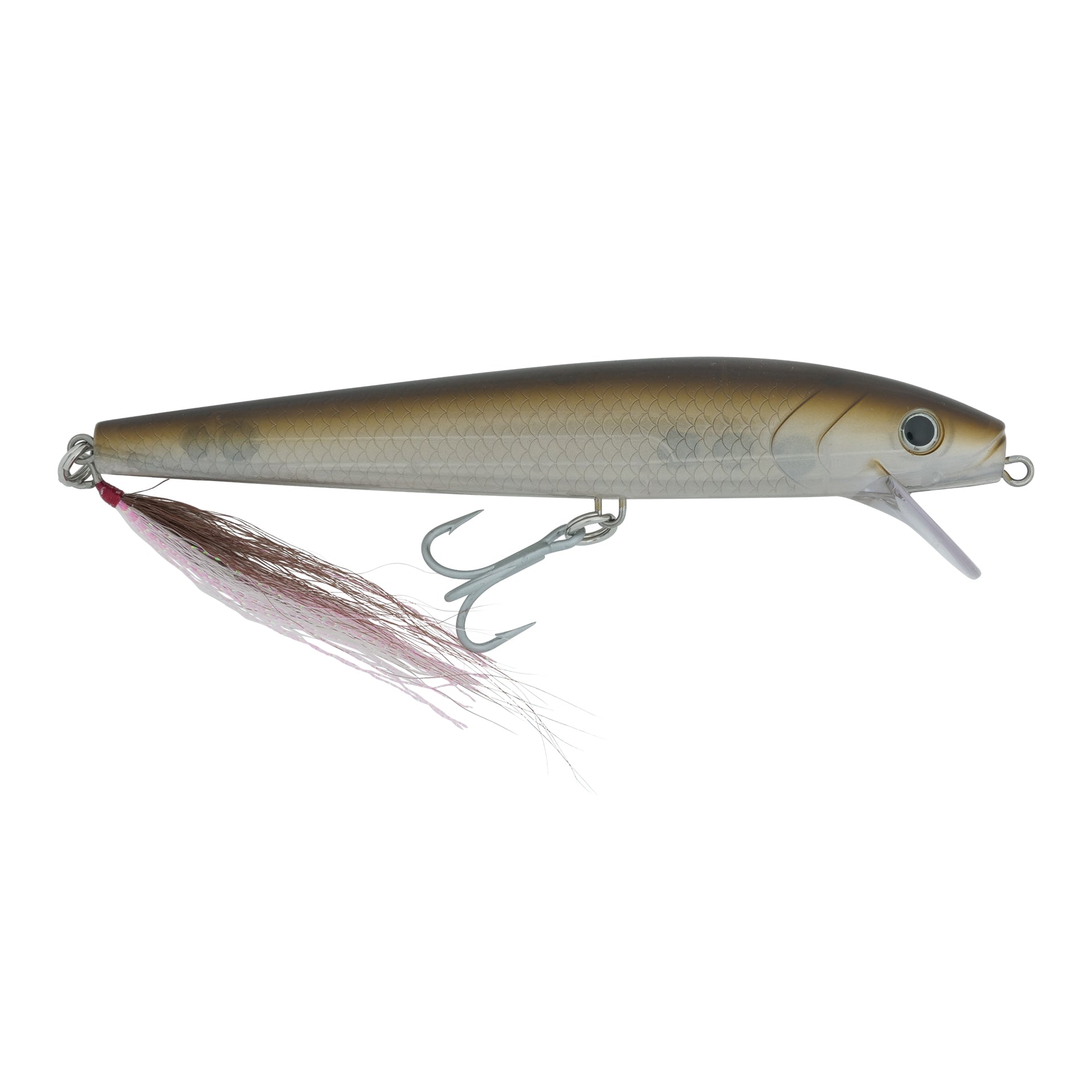
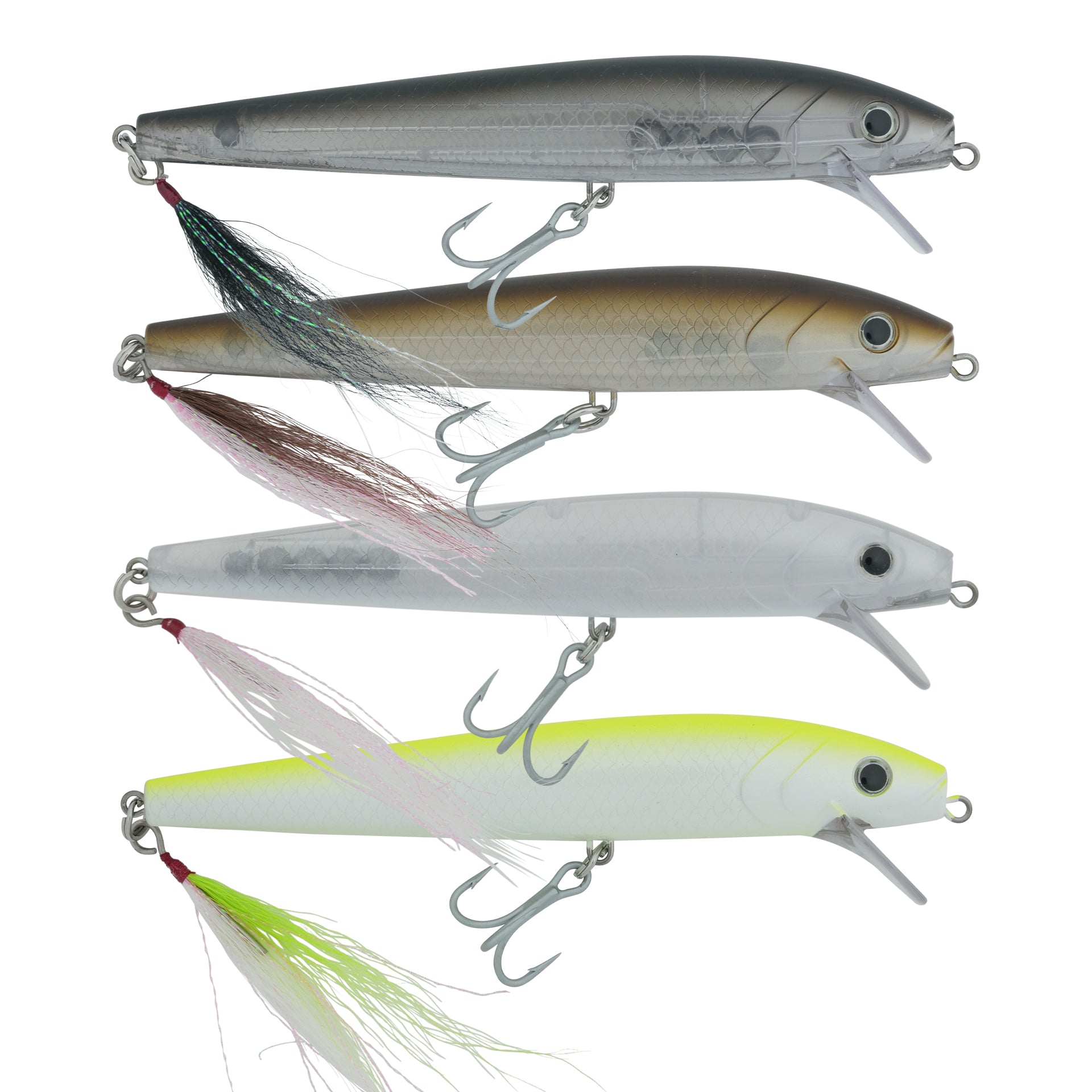
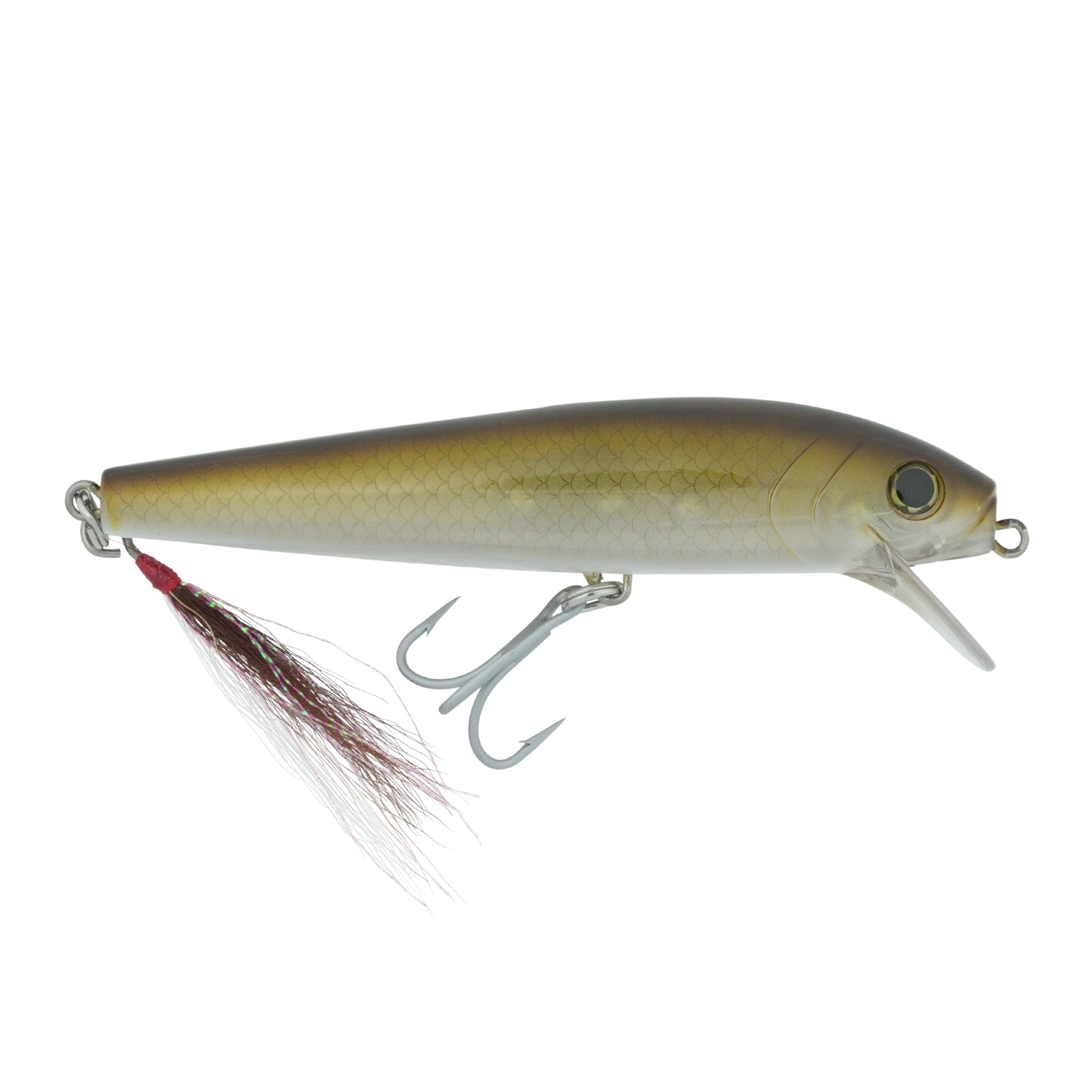
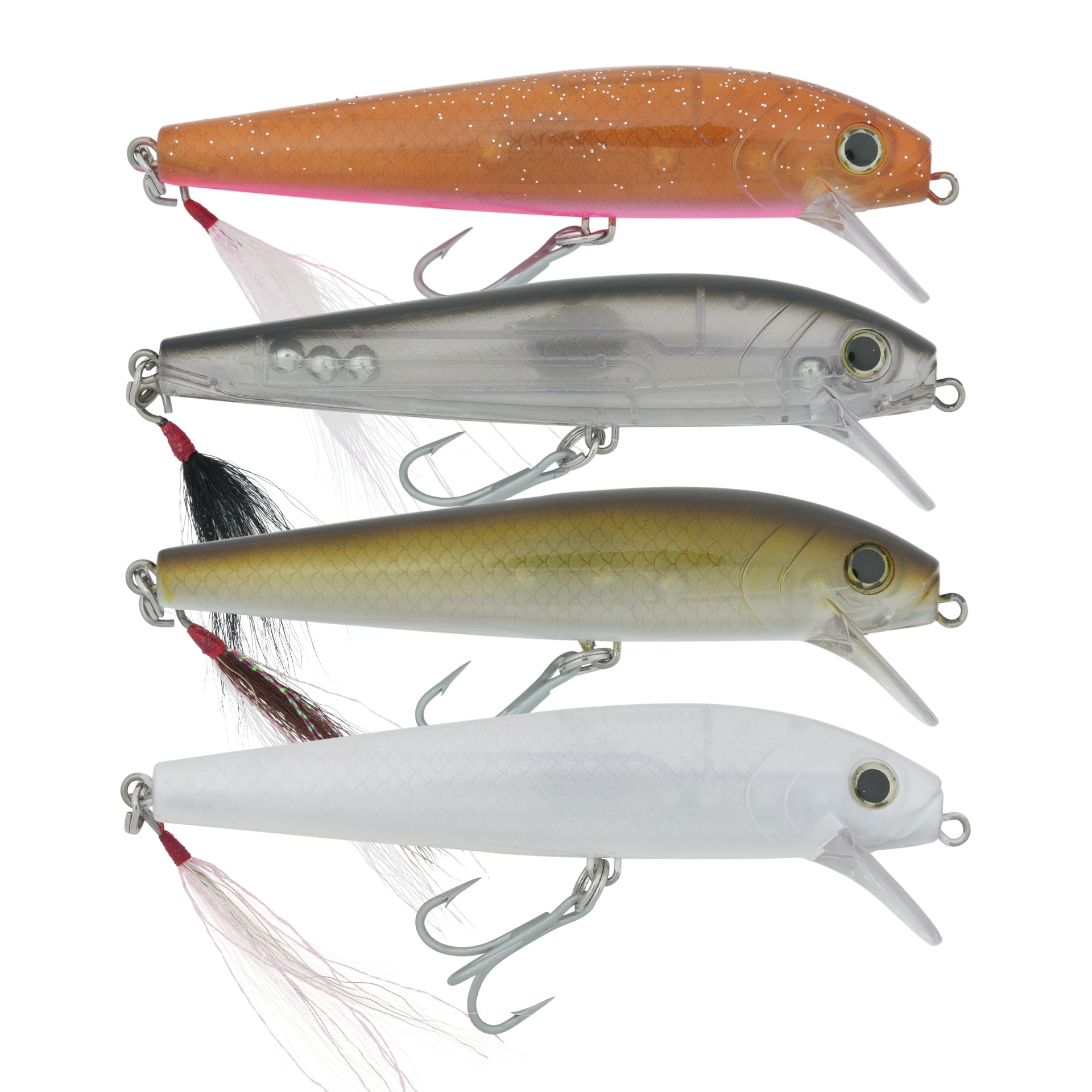
OG Swimmer
I start with the OG when I can trace a clear swimming path beside a boulder. I want a slow wobble and time in front of the fish.
My cue: a steady wobble, the plug spending time along the rock face.
Reach and presence
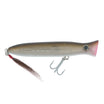
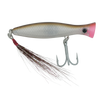
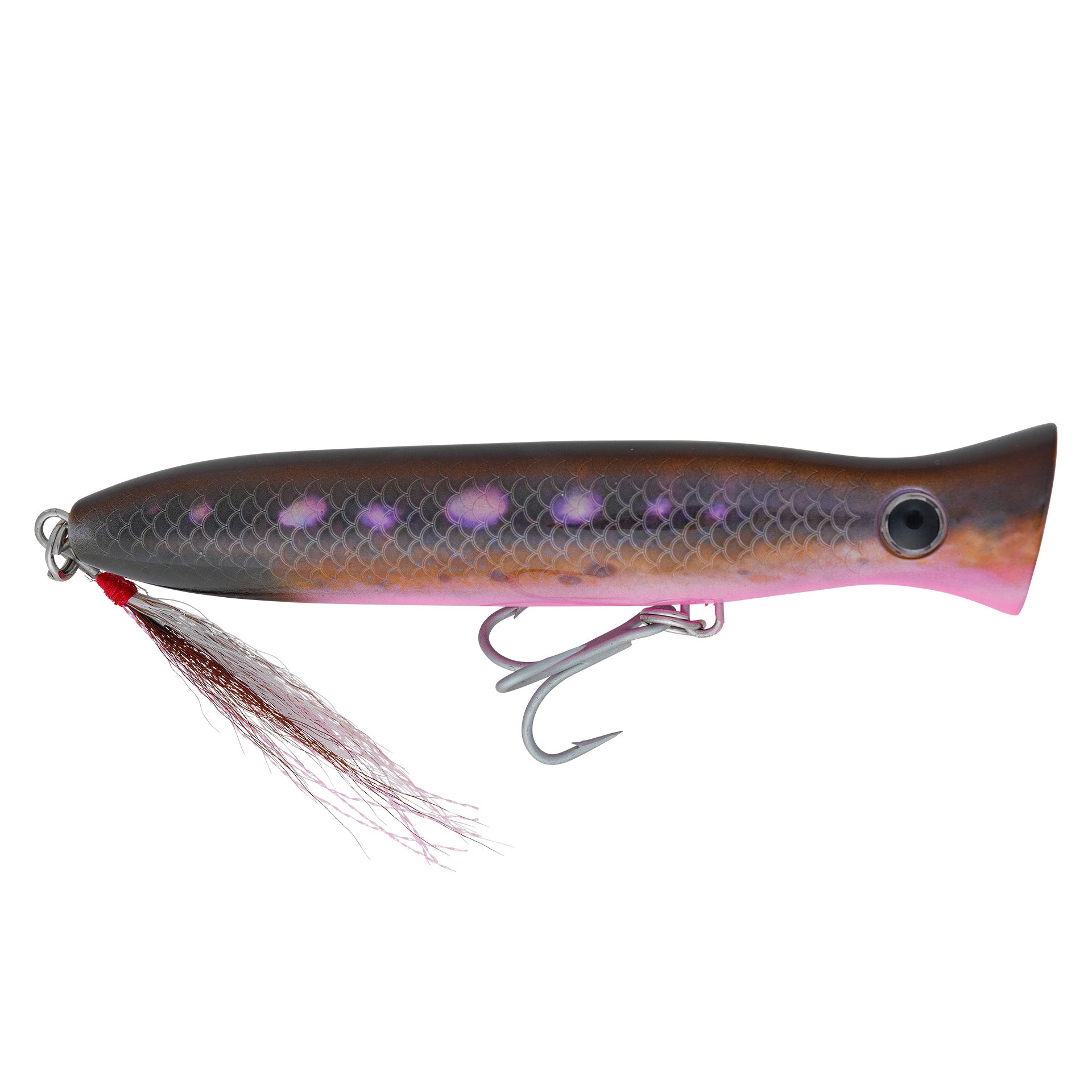
Charter Grade Chug Popper
I reach for the Chug Popper when I want to search the outside edge or add surface presence in broken water.
My cue: a clean chug, then a controlled pause right over the target.
Swimmer when I have a target. Popper when I have a stretch.
If the Chug Popper raises a fish that will not eat, I swim the OG through the same lane. A fish that shows on the popper has told me where the next cast goes.
Step 1Historical Analysis
I follow the bait to the rocks
Migrating bait meets the structure that held bass all summer.
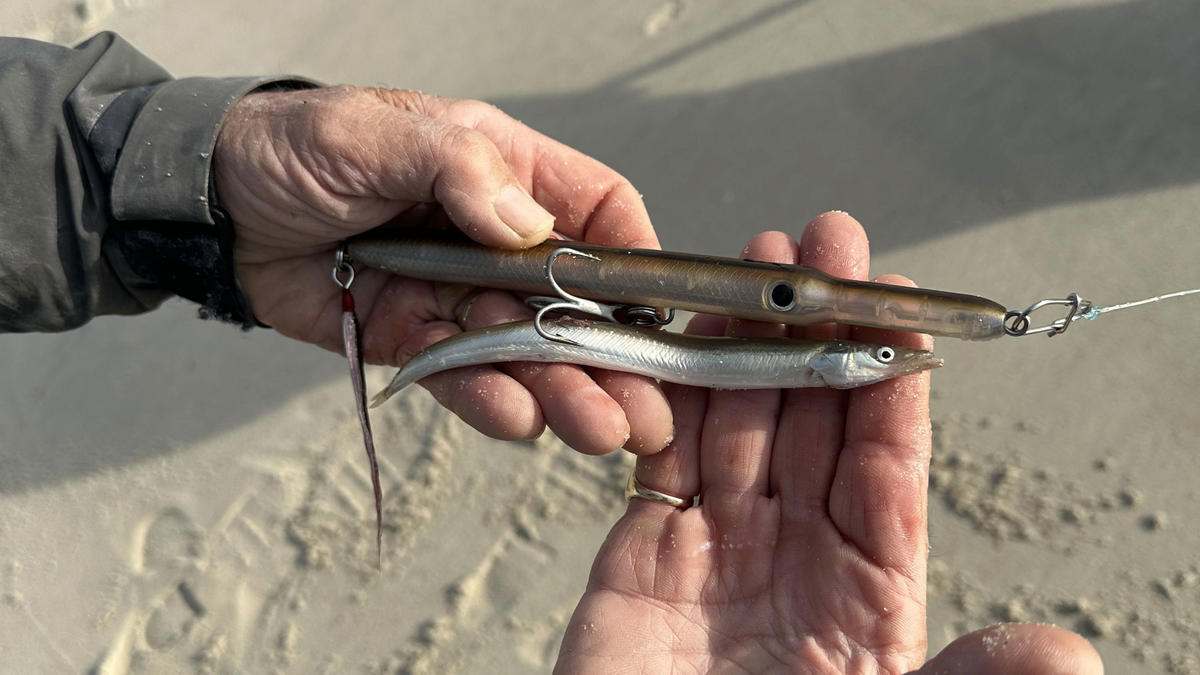
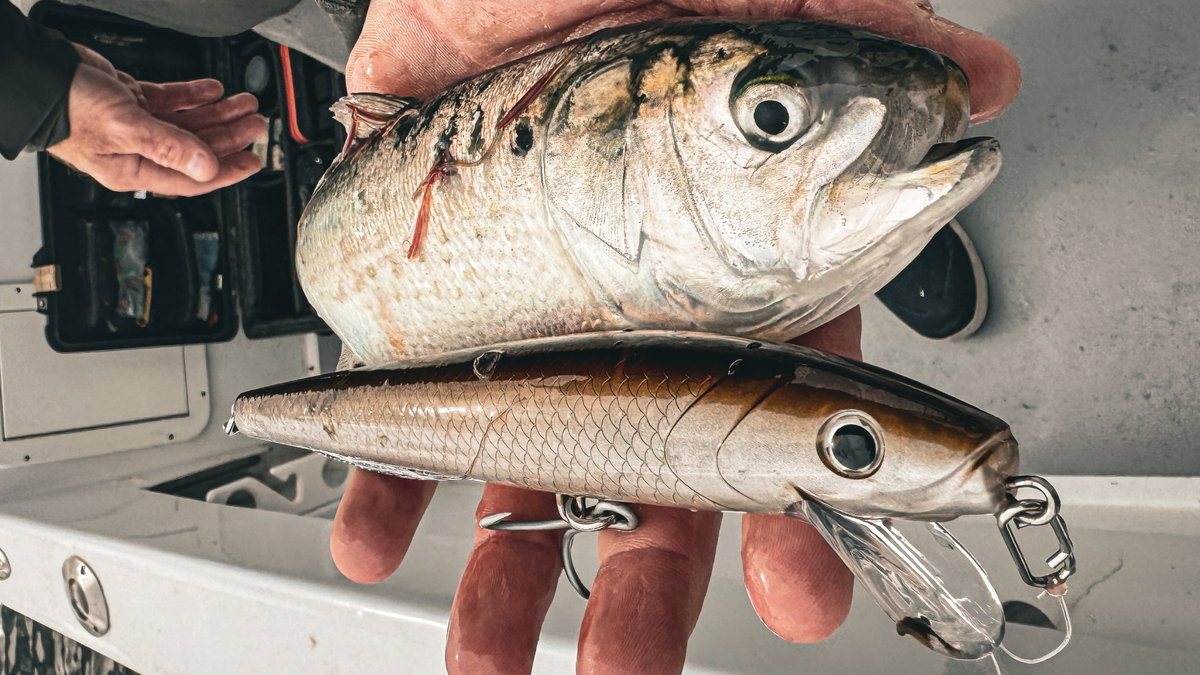
From mid-September I look for migrating bait meeting the same hard structure that held resident bass through summer. Adult pogies give me a reason to show a big profile. Peanuts and sand eels can change the read, so I watch what the fish actually chase. I let the bait on that stretch guide the presentation.
Local Knowledge: Fall Rocky Shorelines
Window. Mid-September through the fall.
Where. The same rocky shorelines that held resident bass all summer.
Bait. Adult pogies call for a big profile. Peanuts and sand eels can change the read.
▼
Step 1 output
From mid-September, fish summer bass rocks where migrating bait arrives, and let that bait set the presentation.
Step 2Environmental Factors
I look for the water around the rock
Water level, wash, and the flow around each boulder.
I like low light, enough water over the shallow structure, and bait working through the gaps. A little wash can give bass cover.
I also watch which way the water actually moves. Current wraps around a rock and leaves softer water behind it. On a wave-washed shoreline, that pocket changes as each wave pushes in and drains back.
See the path first
I want to see where the plug will travel before I send it there.
▼
Step 2 output
Low light, enough water over the rocks, a little wash, and a clear read on how water wraps each boulder.
Step 3Observational Factors: B.A.S.E.
I watch for one pocket with life
Four layers. Each one narrows the answer further.
MH
The Unlock Key
“A fish that shows has told me where the next cast goes.”
LayerWhat I Look ForWhat It Tells Me
B
Birds Birds returning to the same small patch.A place to start looking for bait.
A
Activity A swirl, a fleeing baitfish, a wake behind the plug.I remember the rock and the angle.
S
Structure The near pocket, the next gap, the outside edge.Each gets its own cast.
E
Surface clues Foam and floating weed.Where water wraps around the boulder and slows behind it. From shore this stands in for electronics.
Editor: source post used Surface Clues as the fourth layer. Shore posts need a ruling on what E means without a sounder.
SS300 Exposed Rock Pile: the lanes are beside the rocks, not over them.
▼
Step 3 output
Birds on one patch, a swirl beside a rock, and foam lines showing the soft water. That pocket gets the cast.
Step 4Structure & Approach
I work out from the water at my feet
SS300 Rock Pile / SHA200 Fan Cast Structure.
My shore position
I watch several wave sets, choose secure footing above the wash, and pick my landing spot before I cast. I do not need the outermost rock to reach a bass, and the outermost rock is where people get hurt.
1
I fish the near pocket first. A short cast lets me work the closest rock before putting line across that water. I land beyond the target with enough room to get the plug working.
2
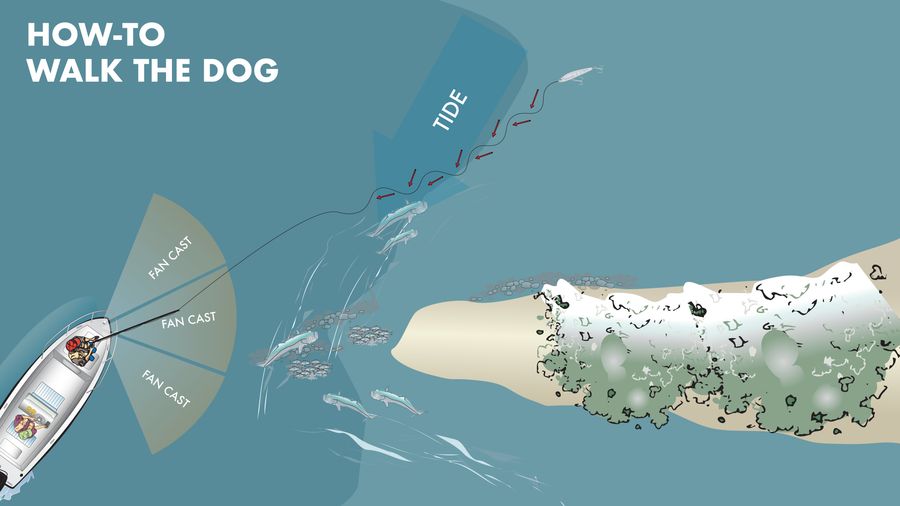
I open the fan. The next gap, then the outside edge. Where current helps, I cast slightly up-current and let it carry the plug along the rock's soft side.
3
I change the angle. After covering those lanes, I move to the next secure position. A few steps give me a completely different path past the same boulder.
SHA200 Fan Cast Structure: the same fan from secure footing.
SHA200 from shore: near pocket, gap, outside edge. The swimmer comes back along the rock face; the popper comes back across the open lane in bursts.
▼
Step 4 output
Secure footing above the wash, near pocket first, then the gap and outside edge, then a new angle.
Step 5Gear, Lure & Technique
My cast, my retrieve, my next move
OG Swimmer for the lane, Chug Popper for the stretch. Five retrieves.
Shallow floating swimmer. My plug when I can trace a clear lane beside a boulder.
Action
Slow, steady wobble. It floats, so a stop at the pocket lets it rise before I swim it again.
Speed
Slow. Once it is swimming, I give it time.
Color
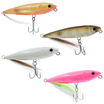
Every color is in play; there is that much bait moving through. Pale and translucent by day, dark in low light.
Size
7″. Adult pogies give me a reason to show a big profile.
Limitations
Needs a lane beside the cover. If I touch rock, I change the track on the next cast.
Rigging
Cast beyond the pocket, along the rock face when the angle allows. Feather the landing, close the bail, gather slack before the current bows the line. Rod tip low enough for contact, high enough to clear the rocks and wash in front of me.
The plug is half of it. The other half is what my hands do, and on a boulder field I keep it to five things I can repeat cast after cast.
R1602The steady crankOG Swimmer
When: every rock, first cast.
Trigger: a visible wobble held beside the boulder.
Tip low, a slow even wind, and I watch for the wobble. If I cannot see or feel the wobble I am too fast; the OG is a slow plug.
Steady, slow, rod low.
R800Crank, stop, floatOG Swimmer
When: a fish followed the crank and did not commit.
Trigger: the rise. A second look.
Three or four turns, then stop dead. The OG floats, so it rises in the pocket, nose up, hanging there for a second before I swim it again. Where the current carries the plug into the rock, I keep it moving.
Reel, reel, pause. The stop is where the eat comes.
R110Walk the dog, tip downChug Popper
When: a fish boiled on the chug and would not eat.
Trigger: same lane, less commotion, still on top.
Rod tip pointed at the water, short alternating twitches, slack taken up between them, and the plug walks side to side without chugging. Quiet for a popper.
Walk it back across the flow, rod tip down.
R1250Blast and pauseChug Popper
When: a windy day with broken water.
Trigger: the long pause. The blast calls the fish up; the pause is where it eats.
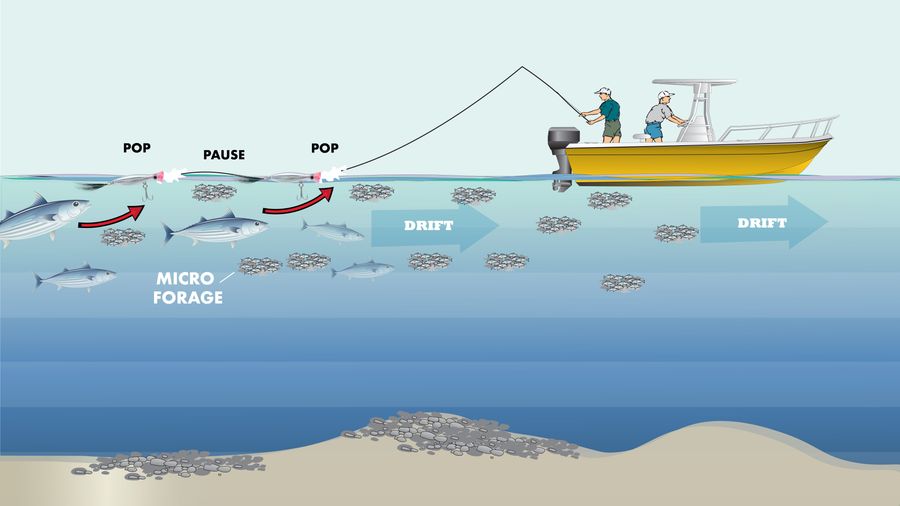
One hard stroke that throws water, then nothing. A long pause, three or four seconds, the plug sitting dead in the pocket.
R200Chug, chug, pauseChug Popper
When: searching the outside lane.
Trigger: the stall, timed for the spot beside the rock.
Two short chugs, take up the slack, pause, repeat. I time the pause for the spot beside the rock instead of letting the cadence drag the plug straight through it.
Pop, pause, pop. The pause is the eat.
FromToWhy
Boil on the popper, no eatWalk it, tip down (R110)Same lane, less commotion.
Follow behind the walkOG Swimmer, steady crank (R1602)More time in the lane, below the surface.
Follow behind the OGCrank, stop, float (R800)The rise is a second look.
Editor: source post gives no reel or line for the shore outfit. Add if you want them listed.
▼
Step 5 output
OG Swimmer on a slow crank in the lane, Chug Popper to search the outside. Go quieter with every refusal.
Putting it together
A reason for every cast
Step 1 put me on the rocks where migrating bait meets the structure that held bass all summer. Step 2 had me read the water around each rock: low light, enough water, a little wash, and how the flow wraps the boulder. Step 3 narrowed a shoreline to one pocket with life, marked by birds, a swirl, or a foam line. Step 4 kept my feet secure above the wash while I fished the near pocket, the gap, the outside edge, and then a new angle. Step 5 swam the OG through the lane and searched the outside with the Chug Popper, going quieter every time a fish refused.
Next in the Fall Series
The Needle from the Boat
Wind, migrating fish, and the most underrated plug in the fall box.
Striped BassFall RunBoulder FieldsRocky ShorelineSS300SHA200OG SwimmerChug PopperSwimming PlugsTopwaterPogiesShoreCapt. Mike HoganFall Run Playbook
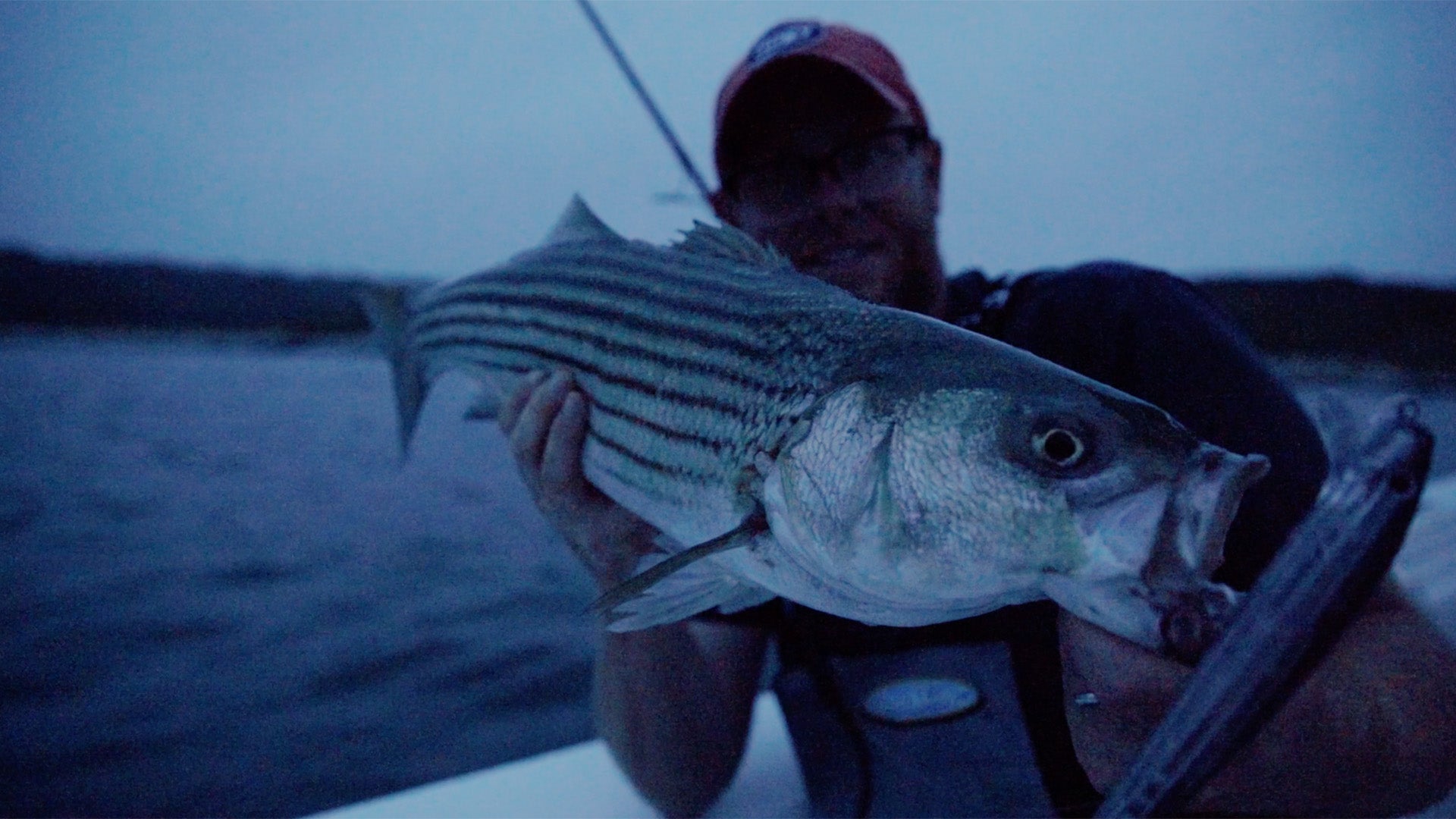
In this video, Capt. Mike takes us on an evening trip to the Elizabeth Islands targeting boulder field stripers using the OG Swimmer for fish tucked in along shallow boulders.
Capt. Mike’s Guide to Productive Early Season Albie Recons
Salty Cape · Early Season · Recon
Capt. Mike’s Guide toProductive Early Season Albie Recons
A tactical protocol for f...
Bluefin Tuna · Offshore — Outer Cape Backside · Late Fall
Cracking the Code
Capt. Mike Hogan & John Burns · Salty Cape TV powered by Hogy
Location
Outer Cape Backside (Peaked Hil...
Bluefin Tuna · Offshore — The Star · Late Summer
Cracking the Code
Capt. Mike Hogan, Willy Goldsmith & Capt. Shaun Ruge · Salty Cape TV powered by Hogy
Location
The Star (South o...
Cracking the Code: The Franken Popper at Handkerchief Shoal
Striped Bass · Handkerchief Shoal · Early Summer
Cracking the Code
Capt. Mike Hogan · Salty Cape TV powered by H...
Cracking the Code: Four Retrieves on One Cast — Surface Eraser vs. Finicky Monomoy Stripers
Striped Bass · Monomoy Rips · Mid-June
Cracking the Code
Capt. Mike Hogan &...

























Leave a comment
All comments are moderated before being published.
This site is protected by hCaptcha and the hCaptcha Privacy Policy and Terms of Service apply.