







During Albie Season
Every September, the same thing happens. The fish show up, the fleet compresses, the group chat lights up, and somebody in a center console decides that physics, courtesy, and the other eleven boats on the lane are optional. Feeds get shorter. Tempers get louder. Somebody’s day gets ruined.
Here’s the thing: almost nobody out there is actually malicious.
Albie fishing is downhill skiing at 40 mph with golf clubs in your hands. It’s fast, it’s tight, it’s emotional. Decision-making shrinks right when the stakes spike. Most of the bad behavior on the water isn’t cruelty — it’s impulse.
So let’s talk about it.

The FramingTwo Things Are Actually at Stake
Worth naming plainly, because people treat these as one thing and they aren’t. Almost every rule below is doing two jobs at once.
Not ruining someone’s morning. Social, enforceable mostly by shame, with real legal edges.
- Right of way — who owns the drift, who owns the line, who has to give
- Casting room — tangles, apologies, near-misses with a treble
- Wake — injury, damaged gear, actual liability
- Vulnerable craft — kayaks, paddleboards, skiffs, surfcasters who physically cannot move
- Fly anglers — they need room behind them and can’t fish through a boat parked in the back cast
- Tone — waving instead of yelling. Small dock, short season, people remember.
Nobody argues about this one once they see it happen. The rules are what keeps fish on the surface long enough to catch.
- Every throttle event shortens the feed cycle. Not metaphorically — measurably.
- Charging the center scatters a pod. Intercepting the edge doesn’t.
- Noise is cumulative across the fleet. Your one run is fine. The fleet’s thirtieth run is not.
- Repeated approaches push a pod down and eventually out of the zone.
- A crowded lane fished quietly stays productive for hours. The same lane fished hot lasts twenty minutes.
That’s why they’re not negotiable.
Metaphor OneYou Are Skiing. Downhill Has the Right of Way.
On a mountain, the downhill skier has right of way because they can’t see uphill traffic. Same water, same logic:
- The boat already committed to a drift owns that drift.
- The boat staged ahead of moving fish owns that line.
- Don’t cross another boat’s fall line — their drift path or their casting lane.
- If you’re coming from behind, outside, or uphill, avoiding the conflict is your job. Not theirs. Yours.
Metaphor TwoYou Are Also Golfing. Don’t Hit Into the Group Ahead.
Three rules from the fairway that translate perfectly:
The LaneThe Drift Line Is a Traffic Lane. Drive Like It.
The drift line is the closest thing this fishery has to a road.
- First boat on the drift owns it.
- Watch before you enter. Two cycles. It costs you nothing.
- Set up parallel, never intersecting.
- Never split a drift. Splitting a drift is the fastest way to lose the room and the fastest way to get yelled at, and honestly, you’d deserve it.
- Aggressive leapfrogging is just splitting a drift with extra steps.
SpacingGive More Room Than Feels Ridiculous
Albie gear eats real estate. Do the math before you park:
- Spinning gear throws 60 to 100+ yards.
- Fly anglers need 30 to 50 feet behind them — the back cast is half the cast.
- Subsurface jig retrieves keep working well past splashdown.
Give more room than feels necessary. Space is the cheapest conflict prevention available, and it’s free.
LiabilityYour Wake Is Your Problem
Not the guy who got rocked. Not the skiff that took it on the beam. Yours.
- Slow down well before you reach the fleet.
- No last-second planing turns near feeds.
- Give skiffs, kayaks, paddleboards, and inflatables an embarrassing amount of room.
- Never cut inside a visible surfcaster. They were there first and they can’t move.
TacticsRun-and-Gun: The Nuclear Option
Let’s be honest about what this is. Run-and-Gun is a last resort, not a personality.
It’s for feeds under 30 seconds, popping 200+ yards apart, when drifting and Walk-and-Gun genuinely can’t reach.
When you do use it
- One pod. Not three.
- Cut throttle early, coast the last stretch.
- Intercept the edge, not the center.
- One clean shot, exit wide.
When not to use it
Heavy fleet pressure. If boats around you are quietly drifting and catching, every run you make shortens the cycle for all of them. And if you’ve made three or four runs and the feeds are getting shorter — congratulations, you are the pressure. Stop.
Since We’re Being HonestJet Skis
PWCs are showing up in albie fleets more every year, and unmanaged, it’s genuinely dangerous.
- Don’t weave through staged boats.
- Don’t circle breaking fish at speed.
- Kill throttle earlier than you think — your acceleration is abrupt and it reads as aggression to fish and people alike.
- Carry a bigger buffer than the boats, not a smaller one.
ConflictWhen Lines Cross
They will. Adrenaline plus blind casts plus trebles equals tangles.
One angler opens the bail and goes slack. The other reels down to the knot. Untangle it calmly. And then — this is the important part — both anglers apologize, regardless of fault.
Not because blame doesn’t exist. Because keeping the fleet civilized is worth more than being right.
ProportionThe Smaller the School, the Bigger the Manners
Big blitz, plenty of room, spread out and everybody eats. Small picky pod of forty fish? Double the restraint. That’s the moment when one impatient move costs six boats their afternoon.
- Did I cross a drift somebody was already riding?
- Did I set up inside someone’s casting radius because it looked open from 200 yards away?
- Am I trolling through a casting fleet? (Fish the perimeter. Both are legitimate — not in the same water.)
- Did I charge the middle of the feed instead of the edge?
- Have I restarted my engine four times in ten minutes?
- Am I running the same pod someone else is working quietly?
- Did I come off plane late and roll a skiff mid-cast?
- Am I about to yell at somebody instead of waving?
That last one matters more than you think. Make eye contact. Use hand signals. A wave diffuses ninety percent of it before it starts.
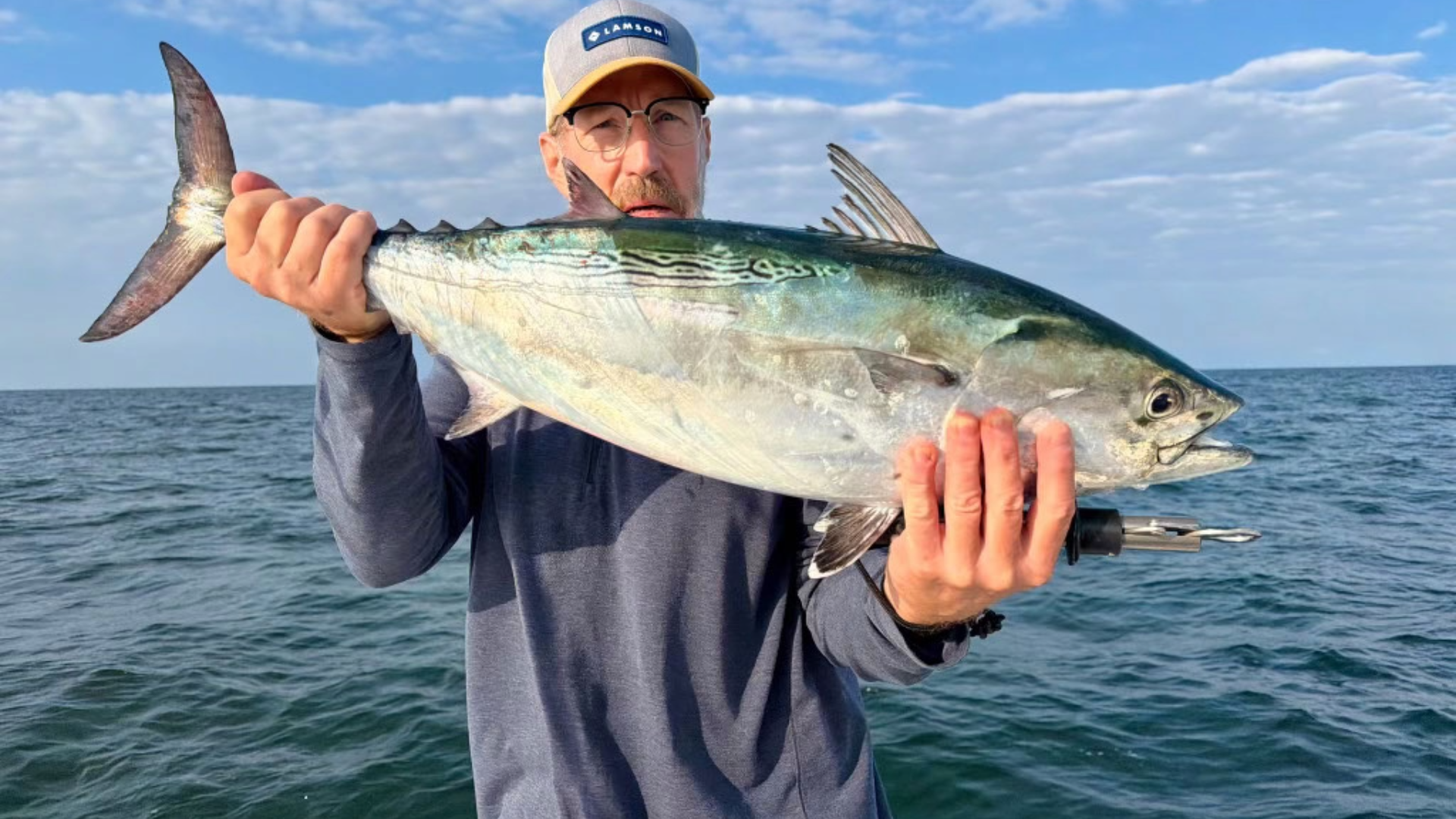
Bonito and albies save seasons. They carry charter captains, tackle shops, small boats, and half the fall economy on the Cape. The fishery is short, it’s crowded, and it’s more fragile than it looks.
Nobody’s asking you to fish timidly. Fish fast. Move smart.
Just leave the ego at the dock.

4 comments
Gabe
This should be printed and posted at every ramp from August 1st until November 15th.
John
lol you haven’t fished NY, NJ.
They jump on your pod and ruin it all. When small schools of bunker are at the rattle snake the others are rite next to you , I mean 3 ft trying for you fish . It’s not a gentleman’s game it’s iPhone competition
Craig
Best notes on fishing any boil.
Should be a must read to get a fishing license
Mark
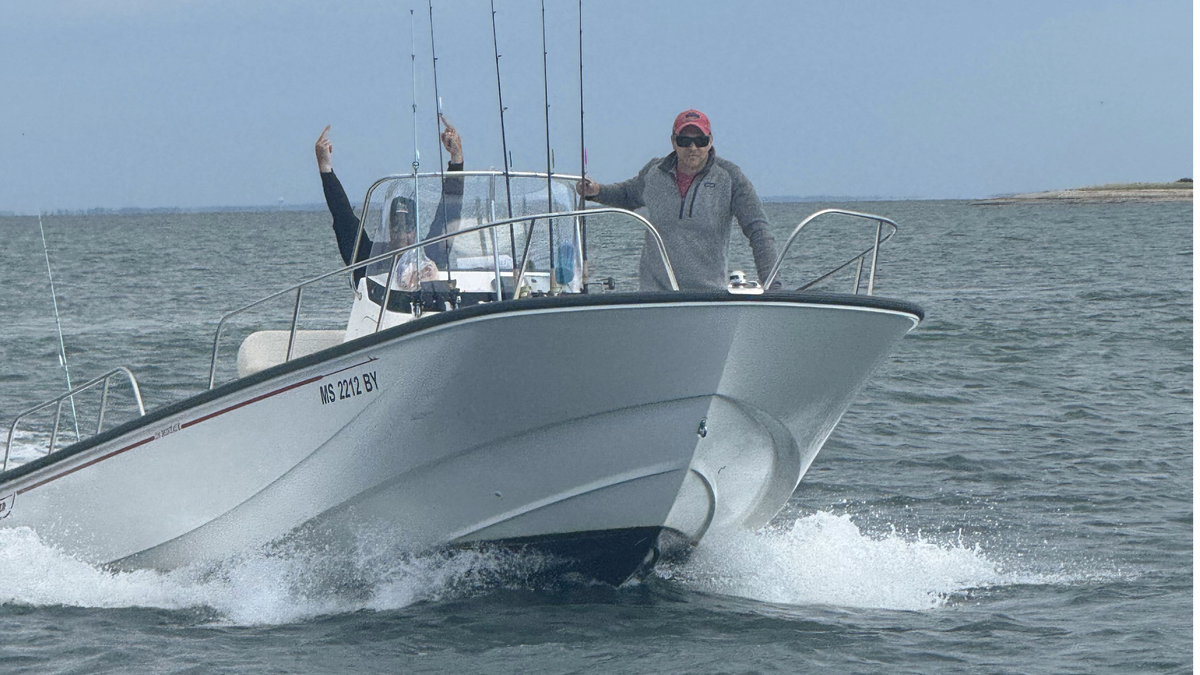
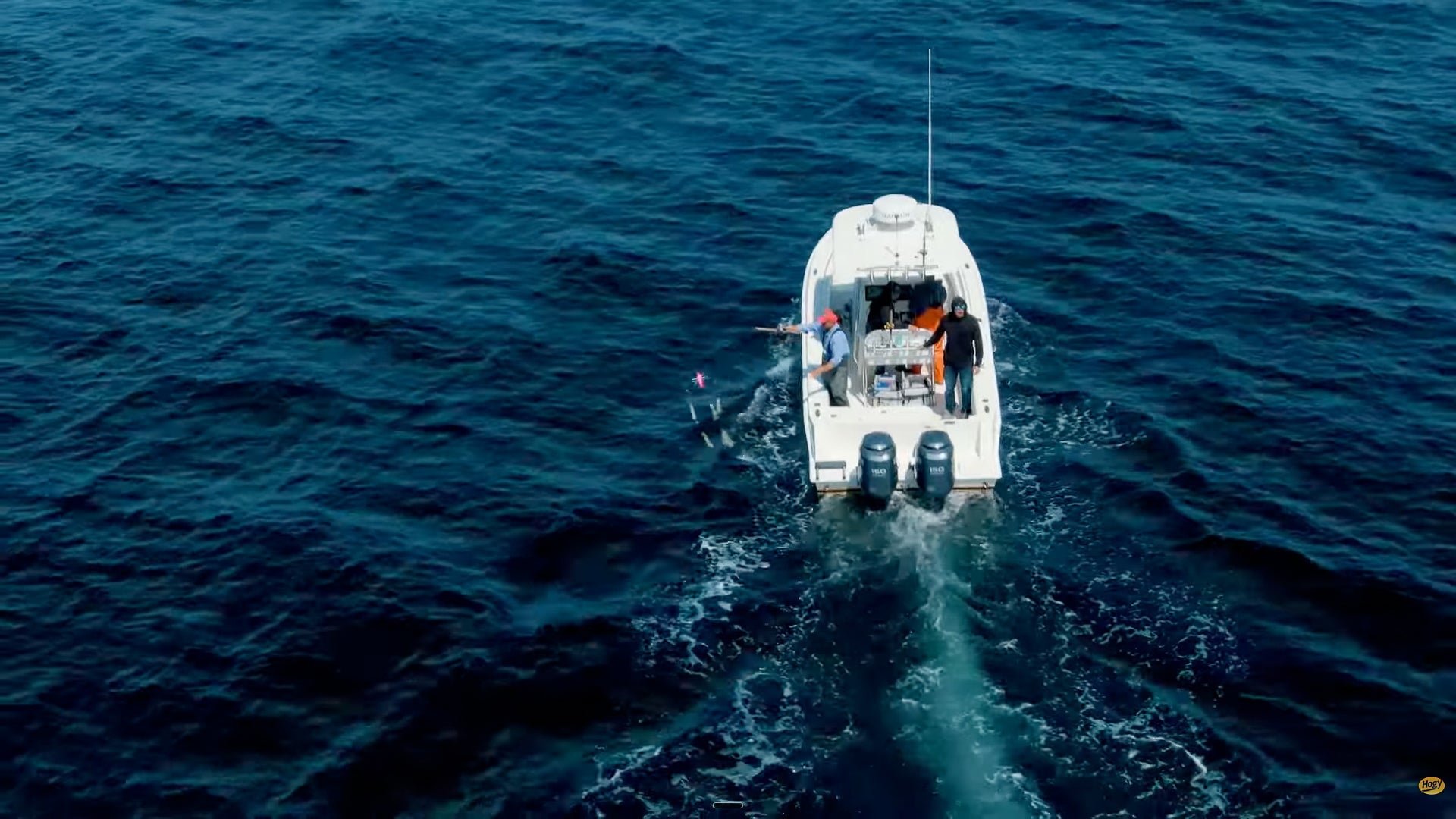
Imagine seeing those 2 guys bombing over to your spot? Tough guy in the front definitely casts right on top of you. Guy in the back – hardo!!!!
Leave a comment
All comments are moderated before being published.
This site is protected by hCaptcha and the hCaptcha Privacy Policy and Terms of Service apply.