


















Three Methods, One Jig — The Dead Stick Gets the Biggest Fish
Rock pile hopping in Buzzards Bay with the 2oz Heavy Minnow. Three jigging methods, no bait, and the most embarrassing one produces the best fish of the day.

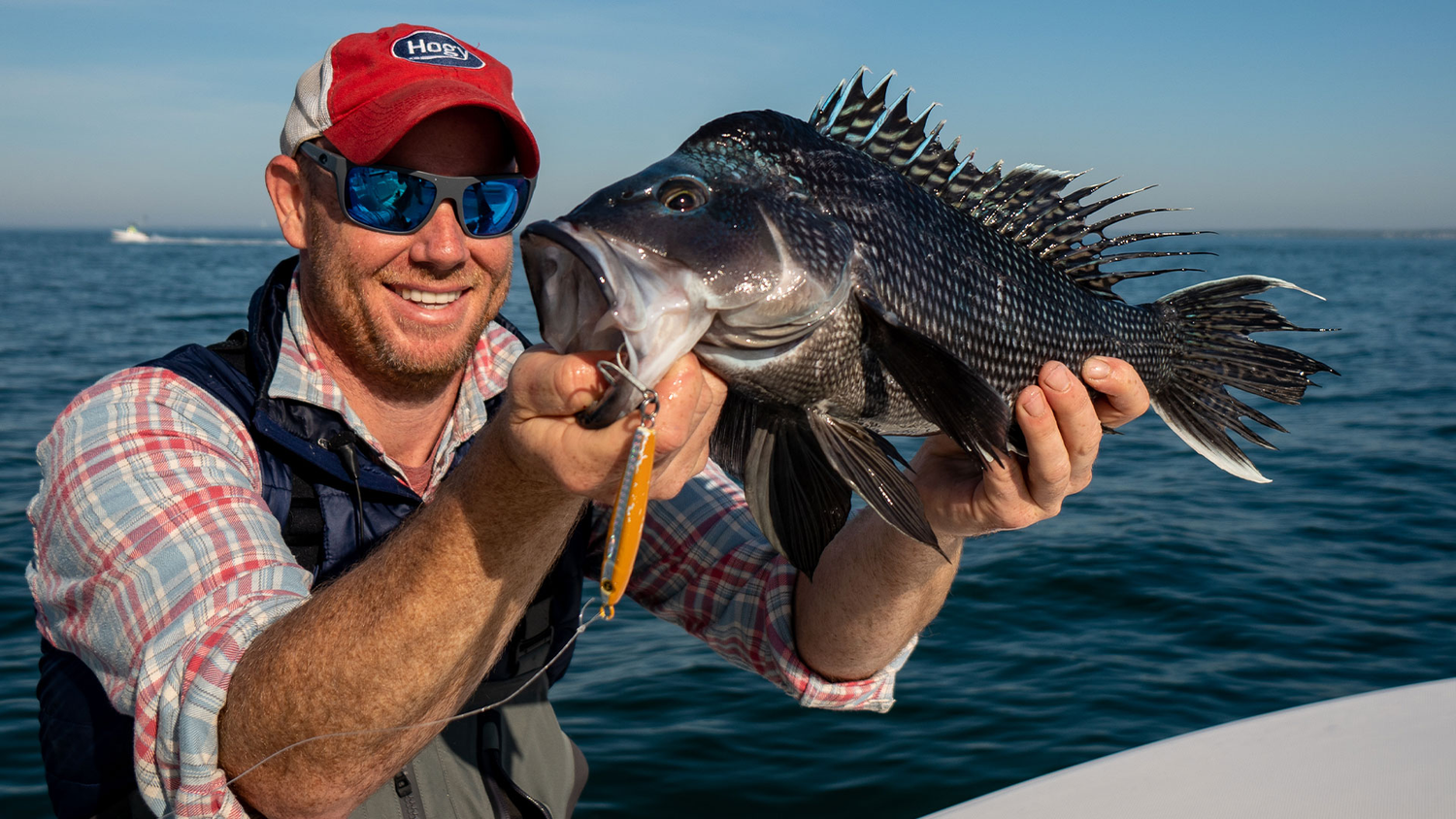
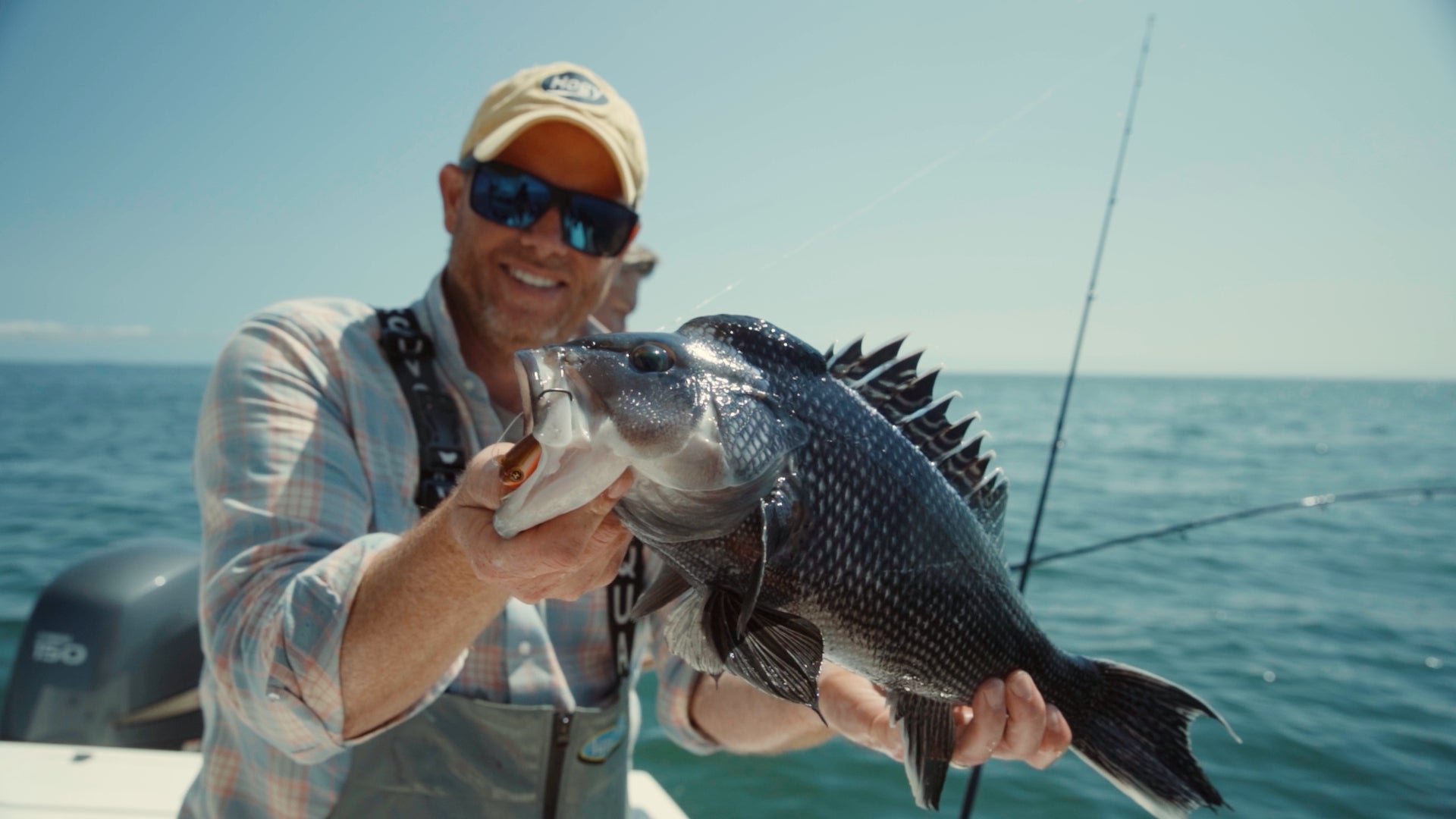
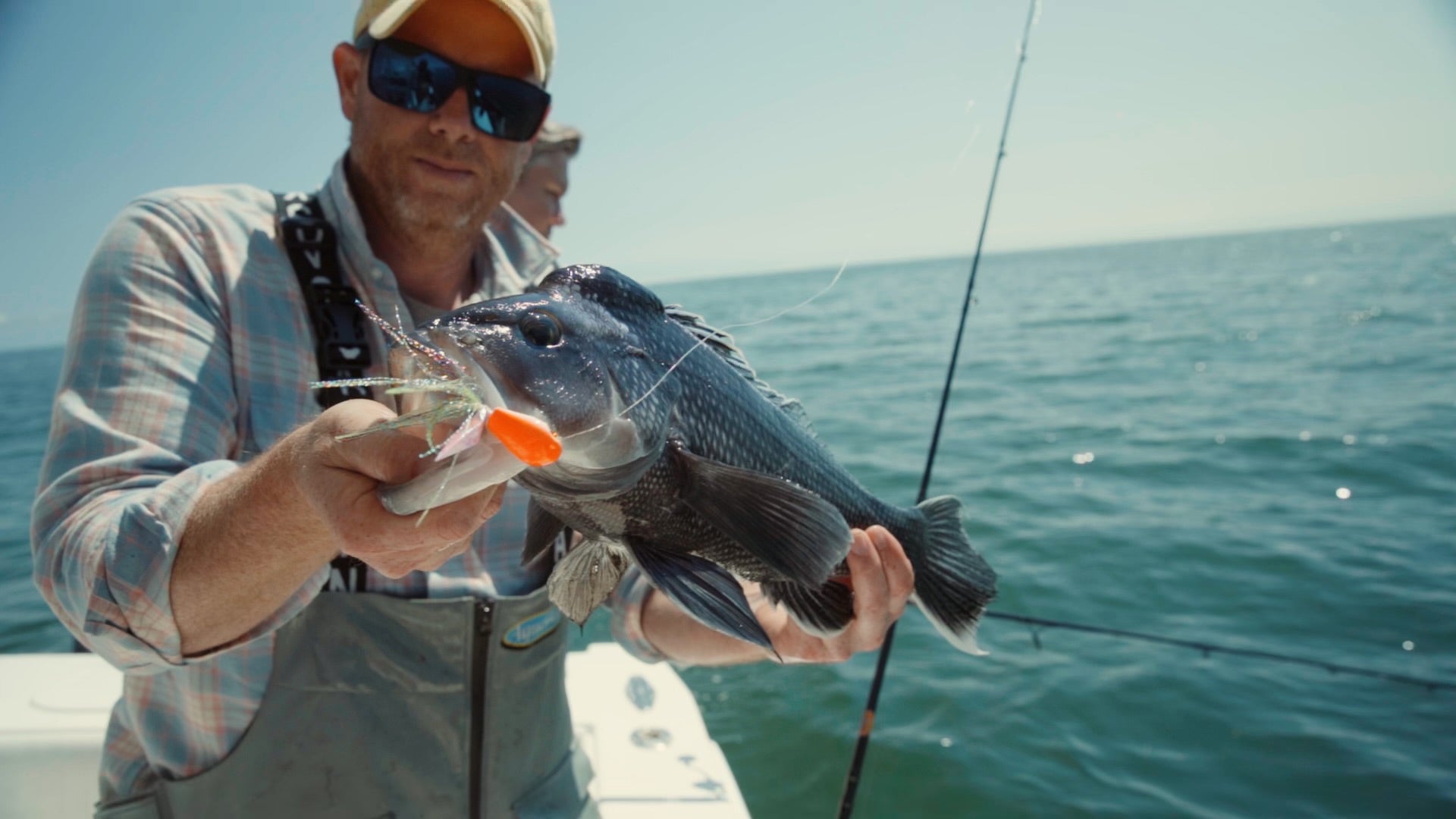
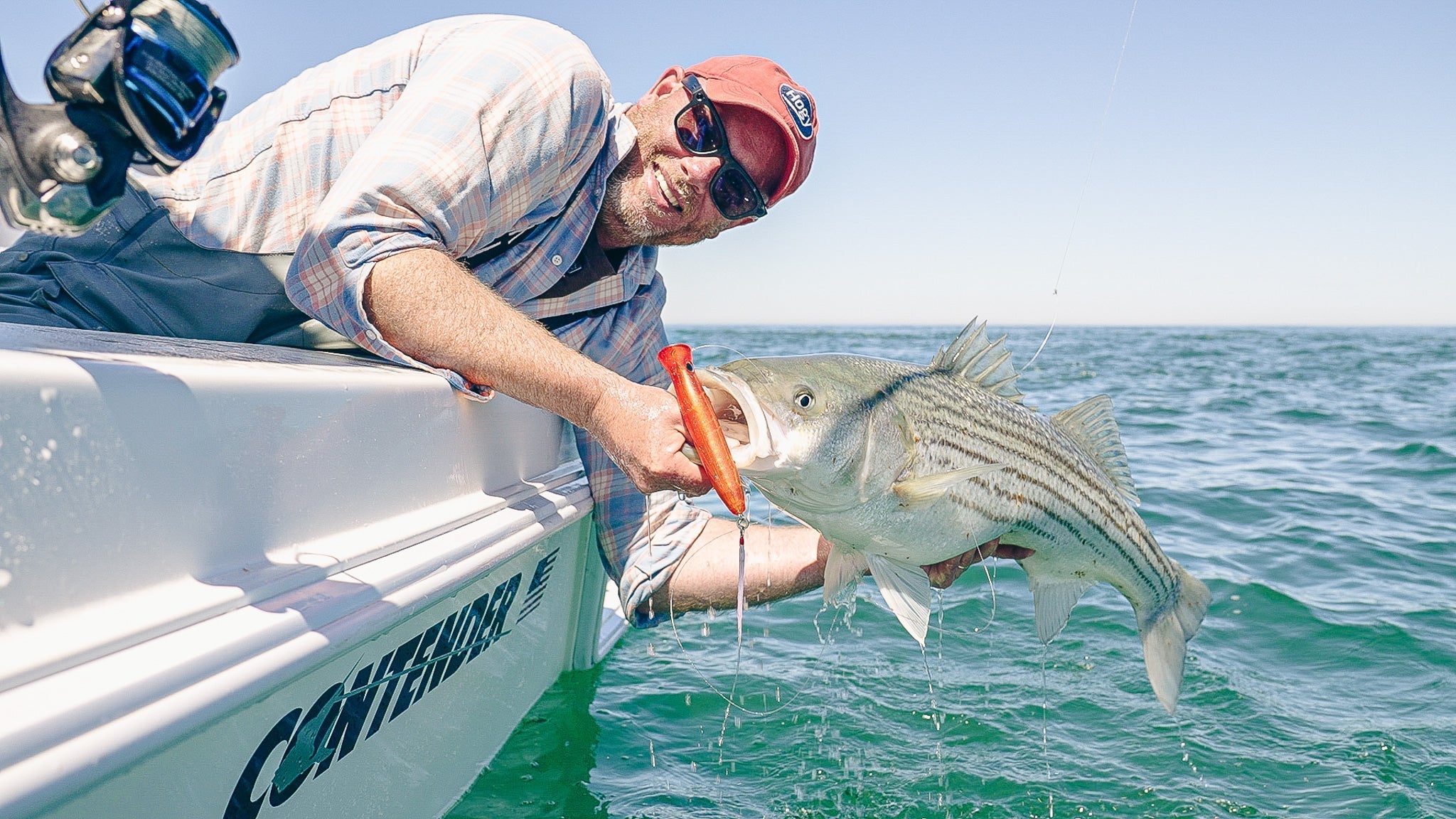
Buzzards Bay, early summer. George Fearons of Oyster Harbor Marine on the bow — rock pile hopping, no bait, limits on the Heavy Minnow before work.
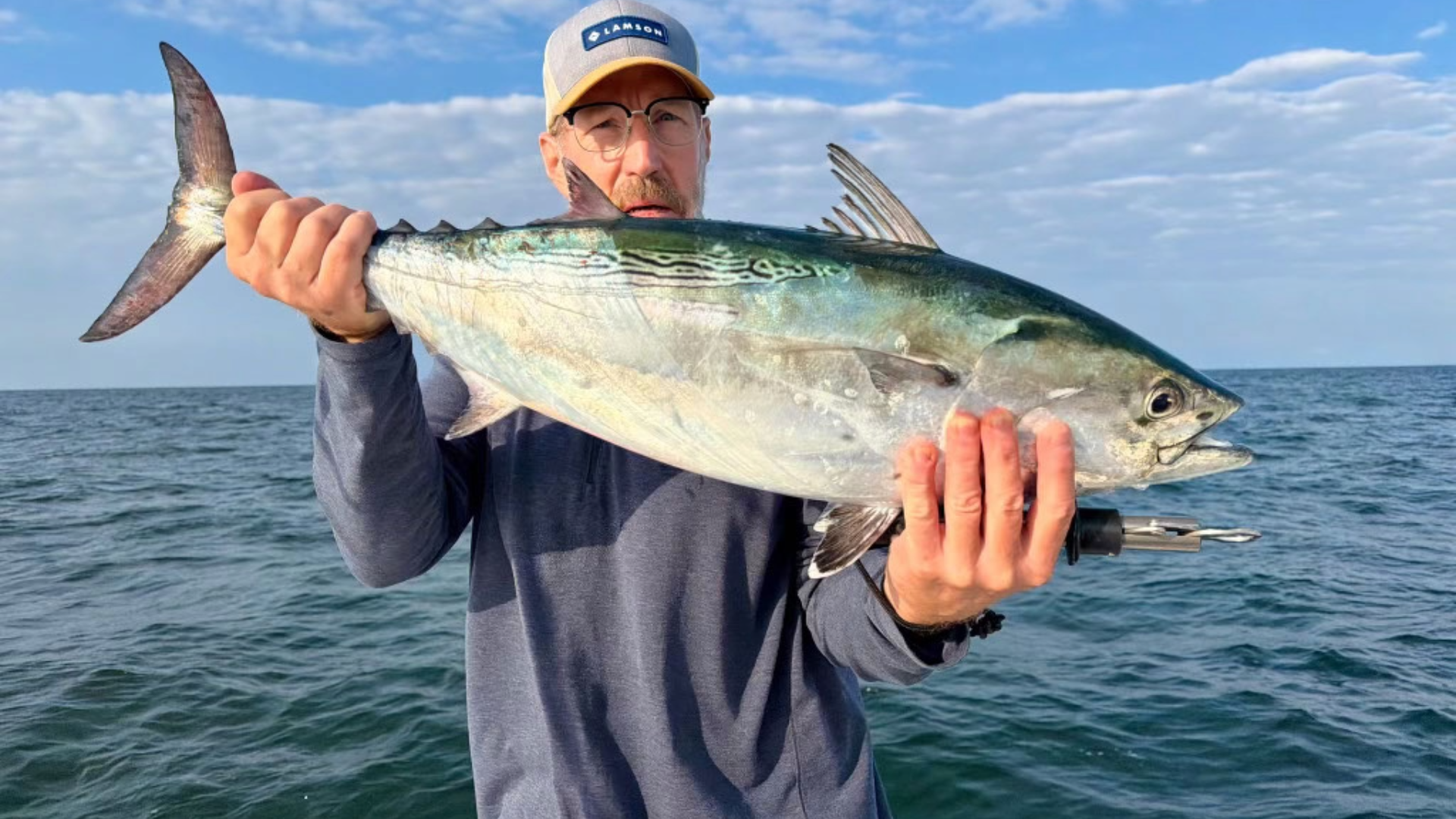
George Fearons of Oyster Harbor Marine knows Buzzards Bay rock piles the way most anglers know their home water. He launched out of Marion and headed straight for structure — rocky bottom, fleet of boats already on it, fish stacked. The plan was simple: drift the rock piles with a 2oz Hogy Heavy Minnow, no bait, three basic jigging methods. The complicated part was figuring out which method the fish wanted that day.
The short answer: the dead stick. Rod in the holder, jig on the bottom, boat motion doing the work. It’s the one method most anglers wouldn’t try on purpose — and it produced the biggest fish of the session.
What the season and the structure tell you before you leave the dock
Context that shapes every decision that follows.
Black sea bass move onto Buzzards Bay rock piles in early summer as water temperatures climb into the mid-50s and beyond. They’re structure fish — rocky bottom, ledges, mixed sand-and-gravel edges, anything that concentrates crustaceans and small baitfish. In 30–50 feet of water, they stack up and stay put. The fleet shows you where.
This is one of the most accessible inshore fisheries on the Cape. Short run from Marion, short run from most Buzzards Bay launch points. The fish are aggressive, the season is generous, and they’re excellent table fare — better than striper, by Mike’s own assessment.
- Rock piles and mixed rocky bottom in 30–50 ft are the primary structure. Find the rocks on the chartplotter and the fish are almost certainly below.
- The fleet is a reliable locator — a cluster of anchored and drifting boats over a specific piece of bottom means fish are confirmed. Work in without crowding.
- No bait required. The Heavy Minnow and similar jigs are effective completely clean. Avoids the mess of fresh squid or crabs and keeps the drift simple.
- Sea bass are aggressive. On an active bite, they’ll eat on the drop before the jig reaches the bottom. A slow or slack line on the way down is often a fish.
- Launch from Marion (Oyster Harbor Marine) for the fastest access to Bird Island and the surrounding Buzzards Bay rock piles.
What the conditions confirmed on arrival
Does the environment support what the historical read predicted?
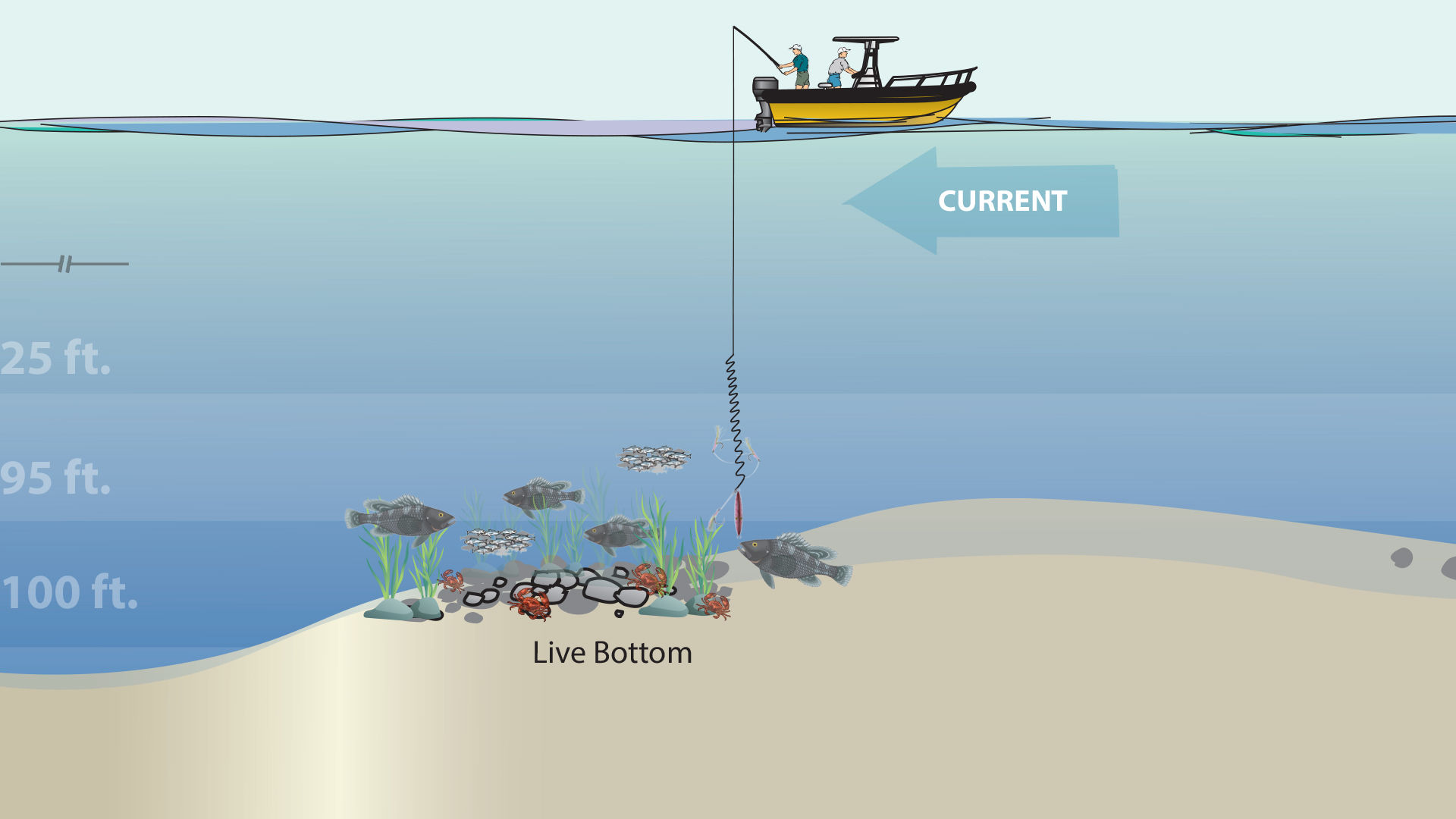
Early summer, Buzzards Bay, calm. Fleet of boats already positioned over the rock piles confirmed the fish were there. Light current — enough to carry a clean drift over the structure without blowing past it. At 40 feet with a 2oz jig, maintaining bottom contact is easy. The conditions were ideal: no wind to fight, no fast current to fight the jig, and a flat enough surface to feel the subtlest tap.
Sea bass are less current-sensitive than stripers — they hold their structure through tide changes. The bite can slow when current goes slack, but on an active early-summer bite on good bottom it rarely goes dead entirely. Fish through it.
What the first drift confirmed
Four layers. Each one narrows the answer further.
“It’s embarrassing how many times the big fish of the day comes on what I would call the dead stick method — just put it down and let the rod sit. The boat motion is enough.”
No bird activity on the surface — sea bass are bottom fish and don’t drive bait topside the way stripers or tuna do. Presence confirmed by the fleet position and by fish on the first drop. Skip the surface read entirely for sea bass. The chartplotter and the fish finder are the tools. Sonar showing returns near the bottom over hard structure = fish confirmed.
Aggressive from the first drift — bites within two minutes. Fish hitting on the traditional jig method and on the dead stick. Big fish of the session came on the dead stick with the rod in the holder and zero angler input. Confirmed: sea bass are actively feeding on the rock pile. The question is which retrieve produces the biggest fish, not whether they’re there. Try all three methods in rotation.
Rocky bottom at 40 feet — confirmed on the fish finder as hard returns with bait marks above. Fish were holding tight to the bottom edge of the rocks, not suspended. Jig needed to be in bottom contact, not mid-column. Confirmed: bottom contact is everything. A jig that drifts up off the rocks loses the strike zone. Keep the 2oz Heavy Minnow close to the deck, not arcing through open water.
Hard bottom returns on the fish finder with bait marks directly above them. Sea bass show as individual returns very close to the bottom. The sonar picture — hard bottom, bait on top — is the greenlight to drop the jig. Furry or textured bottom return on the sonar = live bottom = sea bass habitat. When you see that texture on the unit, get the jig down immediately and start working.
Rock pile hopping — drift, mark, repeat
The approach is a systematic drift over structure, not a fixed anchor.
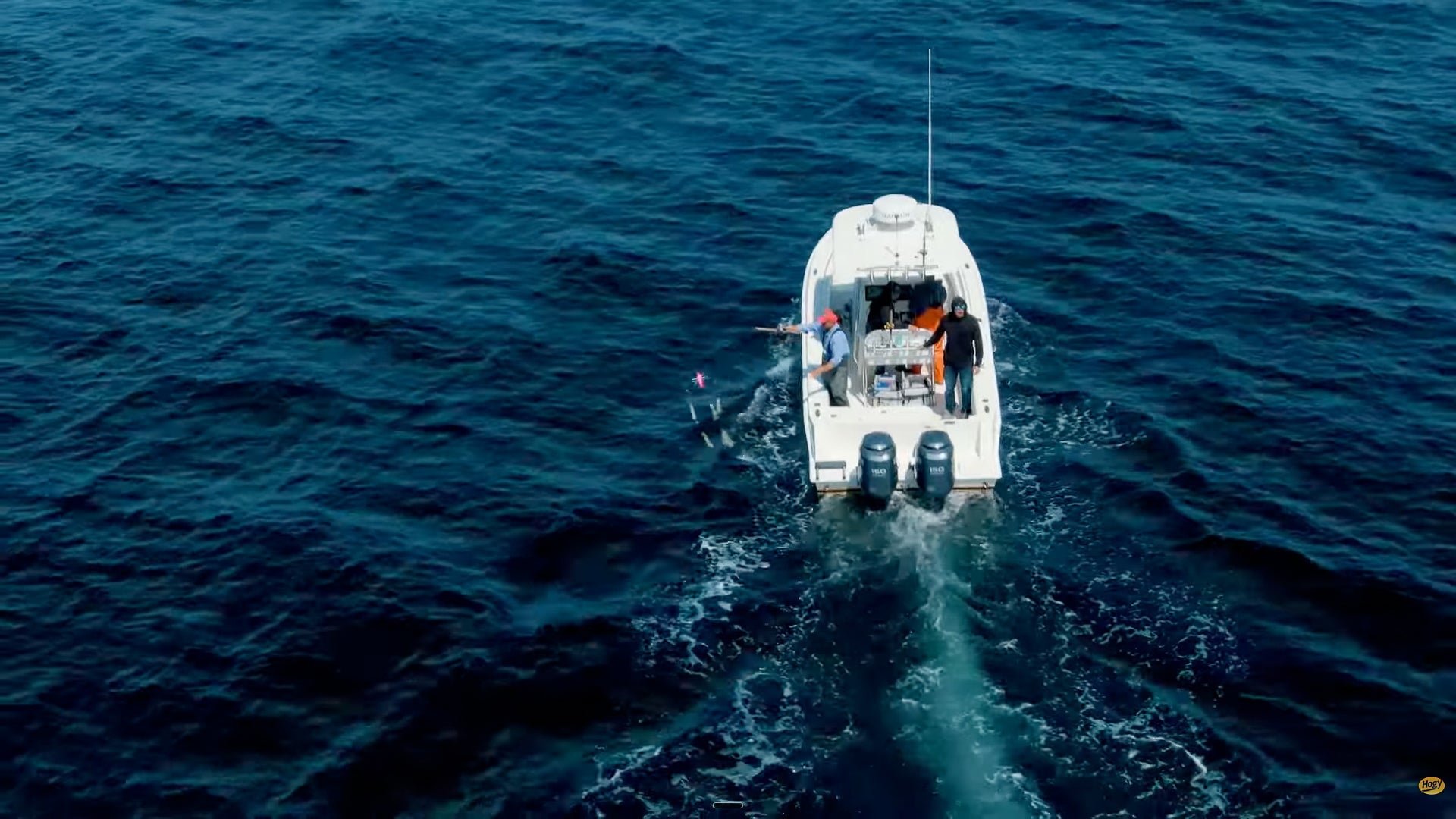
George’s approach is rock pile hopping — running the Buzzards Bay rock piles systematically, drifting each one until the bite slows, then moving to the next. Sea bass don’t spread across a large piece of open bottom; they concentrate on specific rocks. When you find the right pile, the bite is fast. When it slows, it’s time to move rather than wait.
“We found some structure out here — good rocky structure, good fleet of boats around. We’re going to drop down and try to pull up a nice sea bass.”
Approach — step by step
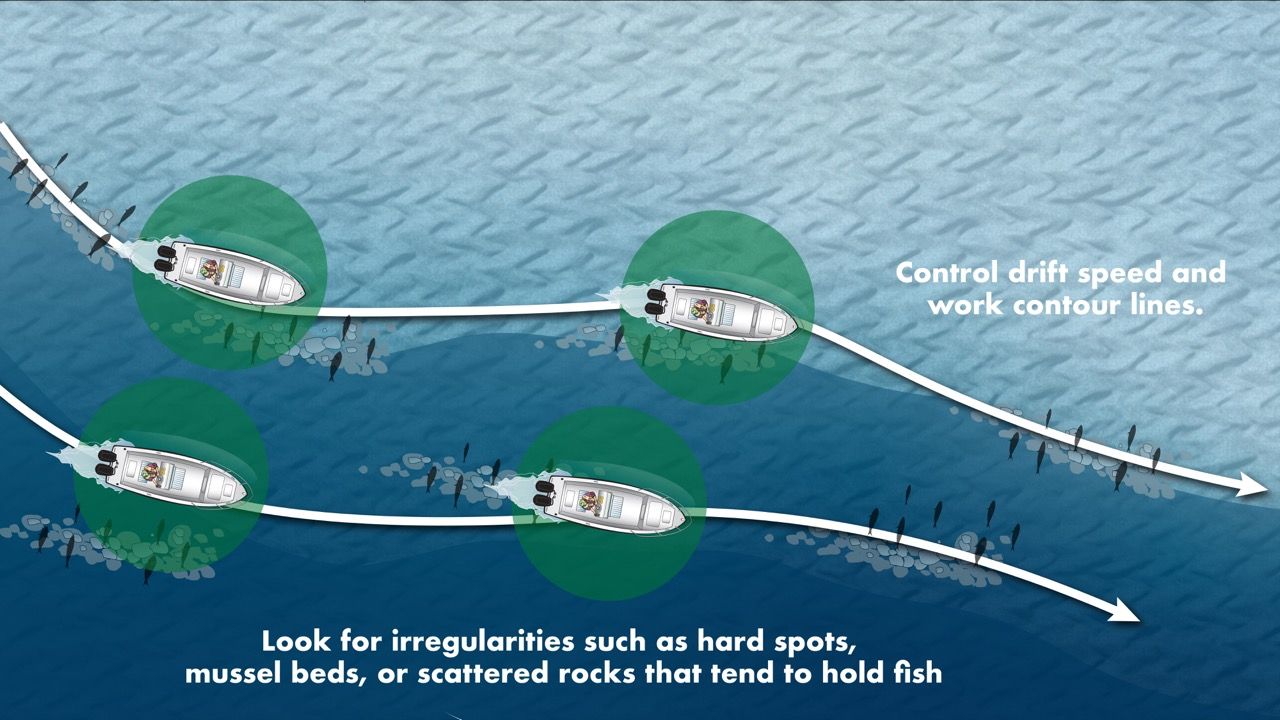
Drift approach for groundfish on rocky bottom — systematic coverage of the rock pile, drift and repeat, hop when the bite slows.
The Heavy Minnow — three methods, no bait
Thick profile, heavy for its size, and it fishes three completely different ways on the same jig.
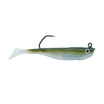
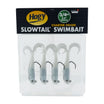
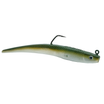
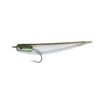
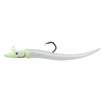
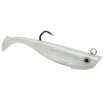
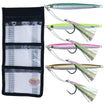
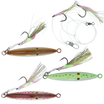
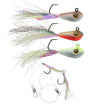
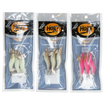
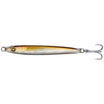
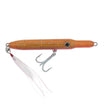
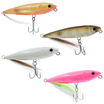
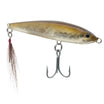
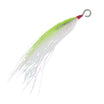
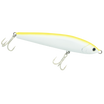
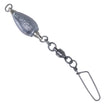
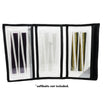
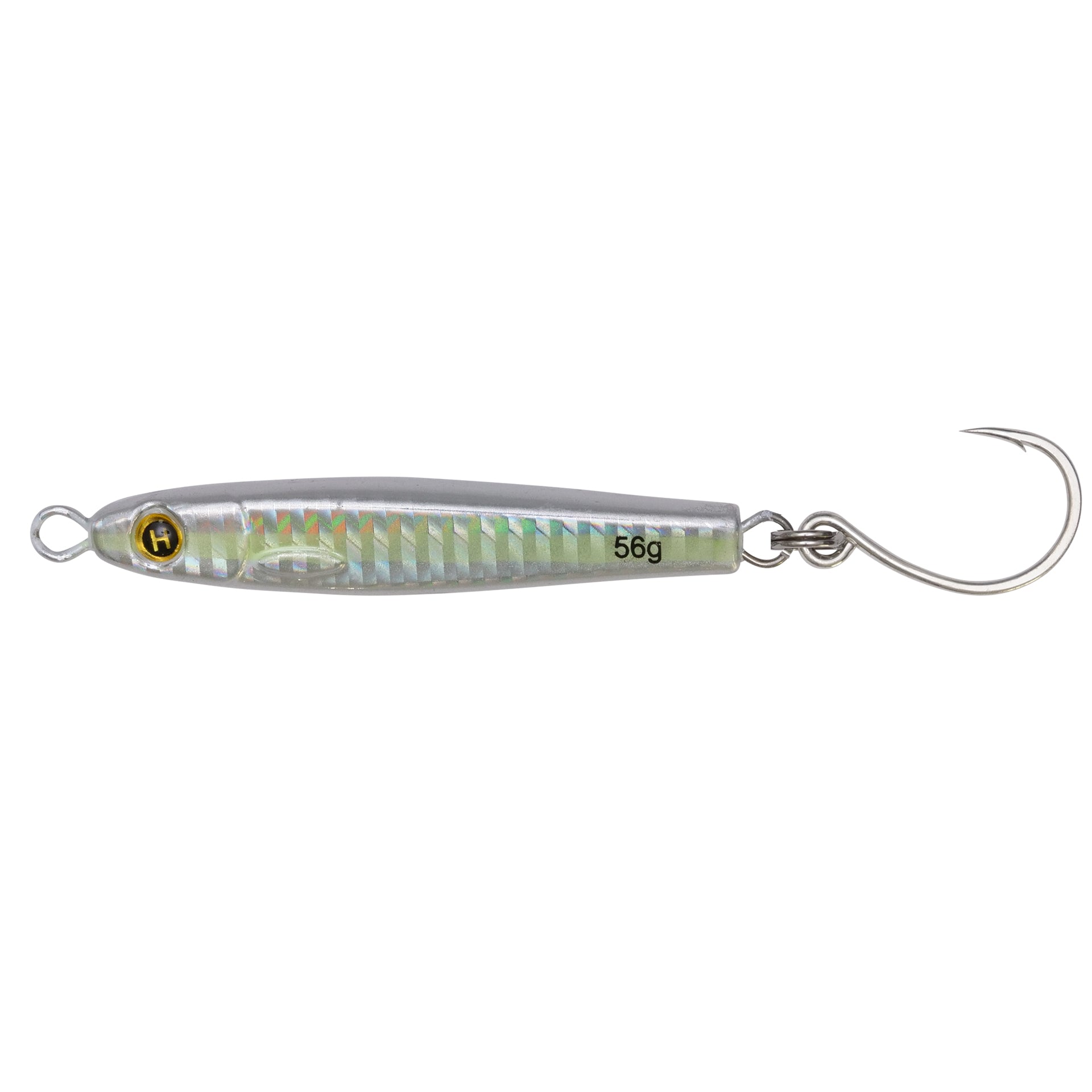
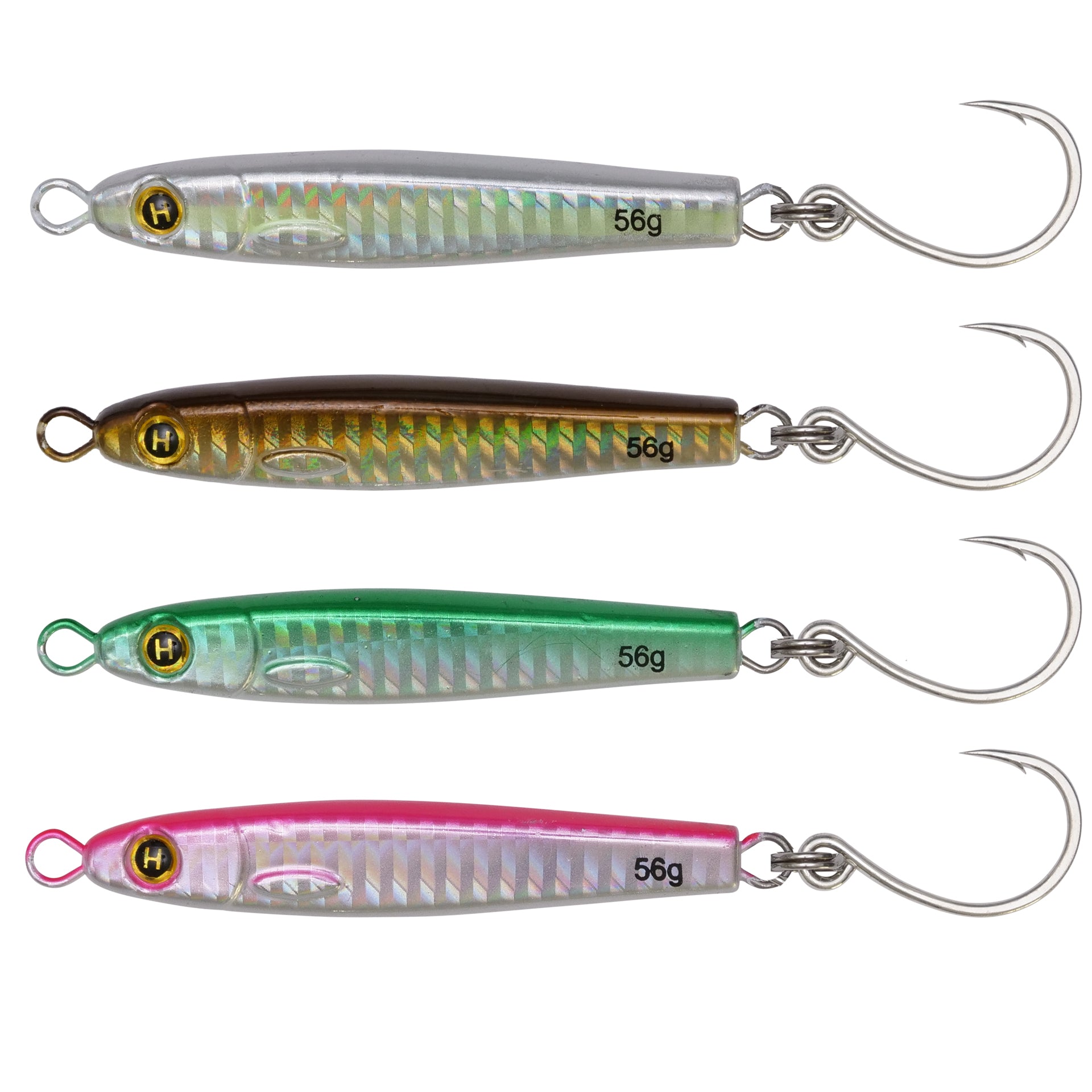
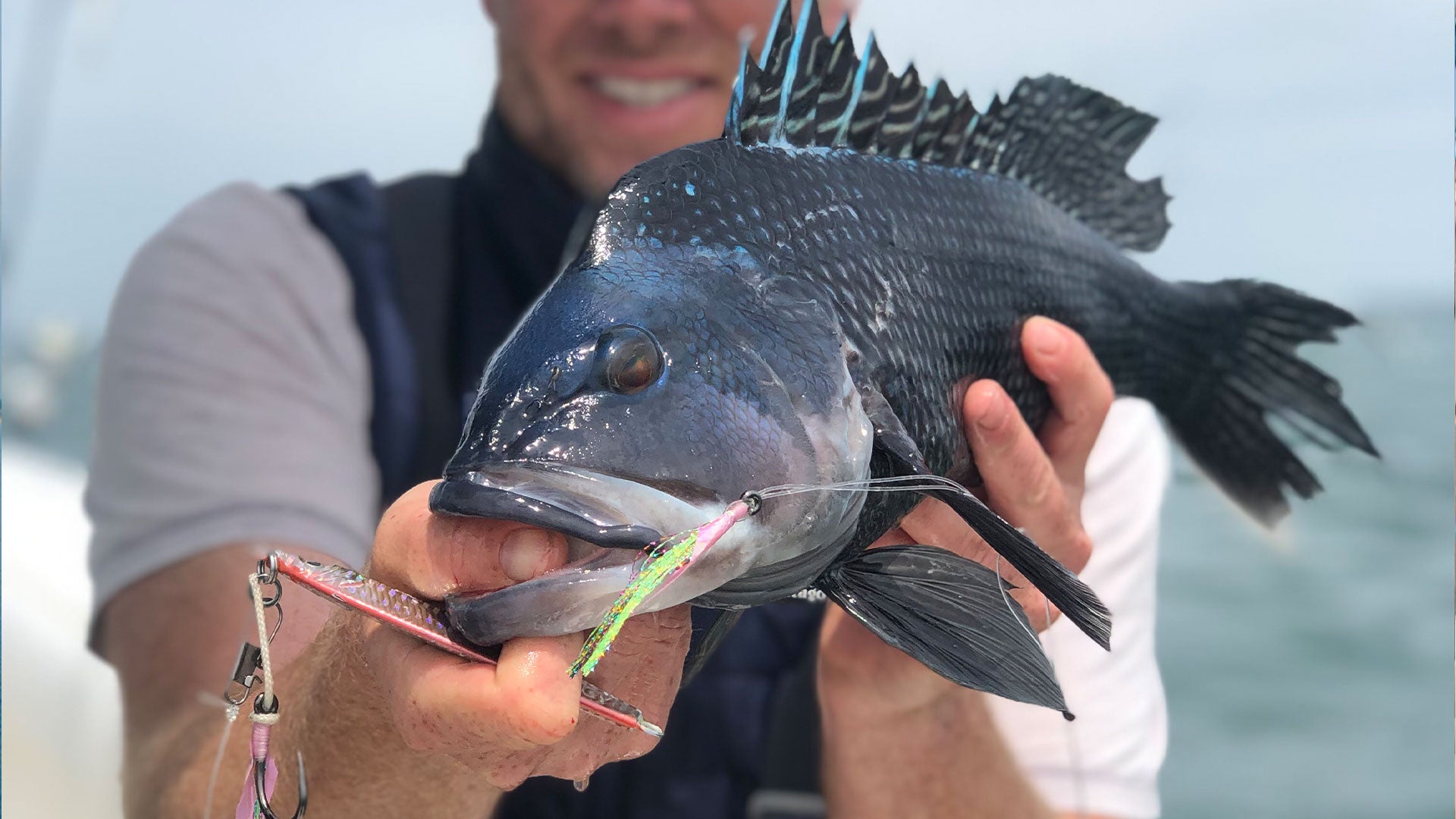
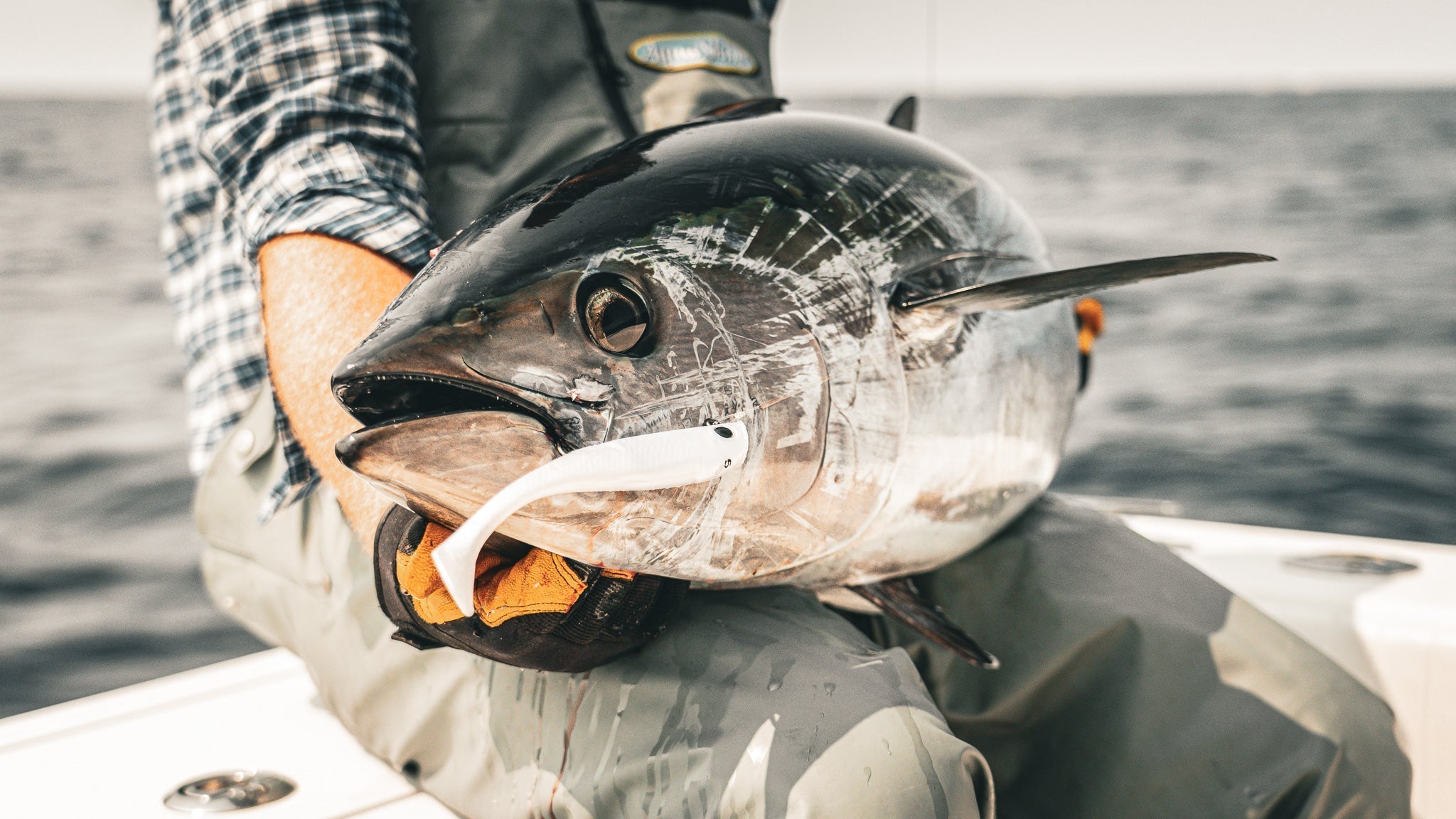
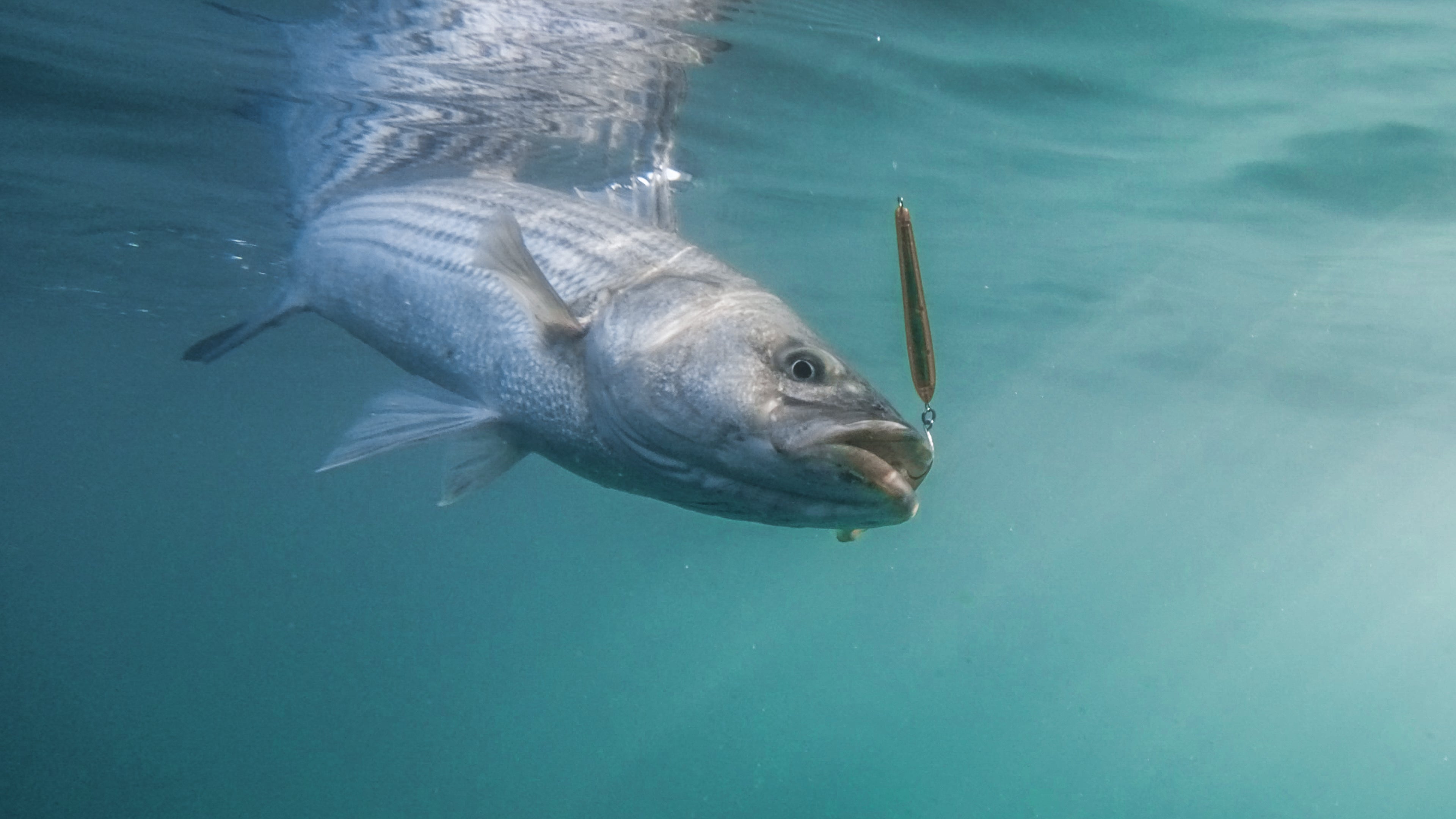
The Hogy Heavy Minnow is a casting jig with a thick body profile relative to its length — heavy for its size, which gets it to the bottom fast and keeps it in the strike zone. At 2oz in 40 feet of Buzzards Bay water, it drops clean and stays near the rocks where the fish are. No bait required. The jig body alone produces, and the three retrieve methods give you something to rotate through until you find what they want today.
1. Traditional Jig — tip up and down, lifting the lure 1–2 feet off the bottom and letting it fall. Mimics a baitfish rising and dropping off the structure.
2. Twitch Method — short rod tip movements with braid keeping direct contact. The jig dances and darts in a tight zone, staying close to the depth where fish are marked on the finder.
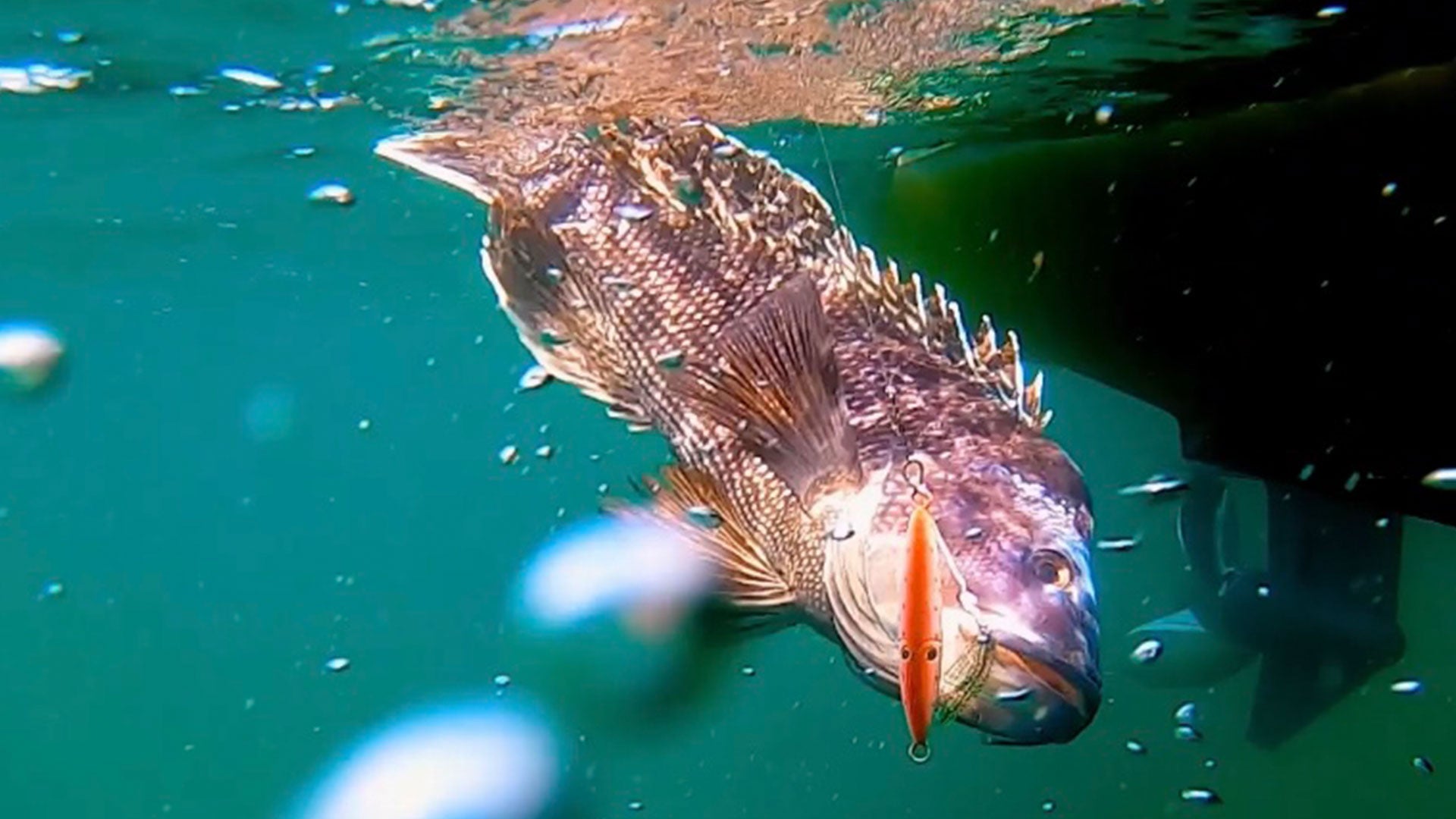
3. Dead Stick — rod in the holder, jig on the bottom, boat motion doing all the work. Produced the biggest fish of this session. The natural rocking motion of the boat is enough to give the jig action.
- Tie direct to fluorocarbon leader — no snap, no swivel. Direct connection maximizes sensitivity for the dead stick method.
- Leader: 15–20lb fluorocarbon for sea bass in clear water. 20lb if the bottom is very rugged and fraying is a risk.
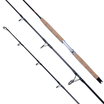
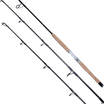
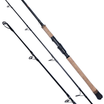
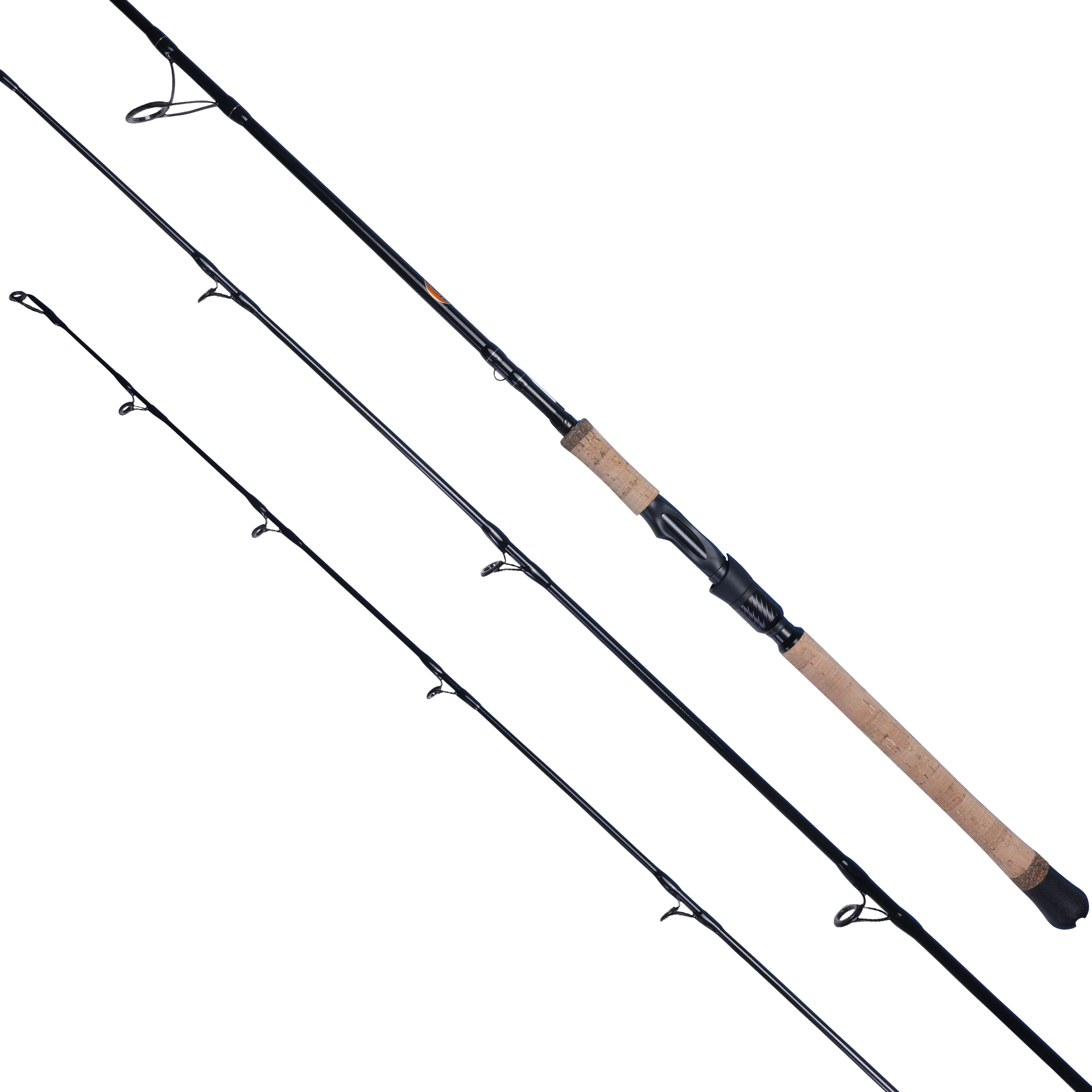
- Light-to-medium spinning outfit — 7ft rod, 2500–3000 reel, 15–20lb braid. Sea bass fight well on light gear and the parabolic action protects the light leader.
- No bait required — and the clean jig keeps the boat mess-free.
The three retrieves — step by step
R2800 Bottom Thump — lift off the bottom, let it fall back, keep contact with the deck. Three variations off this foundation: traditional jig, twitch, dead stick.
“I’d eat a sea bass any day of the week over a striper. Nice, nice positive fun fishing — good for the family, good for the kids. Can’t beat sea bass for a quick hit before work.”
The decision at a glance
Step 1 set the context: early summer Buzzards Bay rock piles, sea bass stacked on structure in 40 feet, fleet confirming location. Step 2 confirmed flat-calm conditions and easy bottom contact for the 2oz jig. Step 3 delivered the unlock: the dead stick — rod in the holder, zero input, boat motion doing the work — produced the biggest fish of the session. Step 4 built the approach: rock pile hopping, sonar as the primary locator, drift and move when the bite slows. Step 5 closed it out: Heavy Minnow 2oz, three retrieves in rotation, no bait, light spinning gear. Two minutes on the first drift, fish in the box before work. George Fearons called it — sea bass fishing doesn’t need to be complicated.

Leave a comment
All comments are moderated before being published.
This site is protected by hCaptcha and the hCaptcha Privacy Policy and Terms of Service apply.