





Many Tog DON'T Need Crabs!
An angler's guide to tactical vertical jigging for tog with Hogy Epoxy Jigs. The best-kept secret in tog fishing is already in your mesh crate.

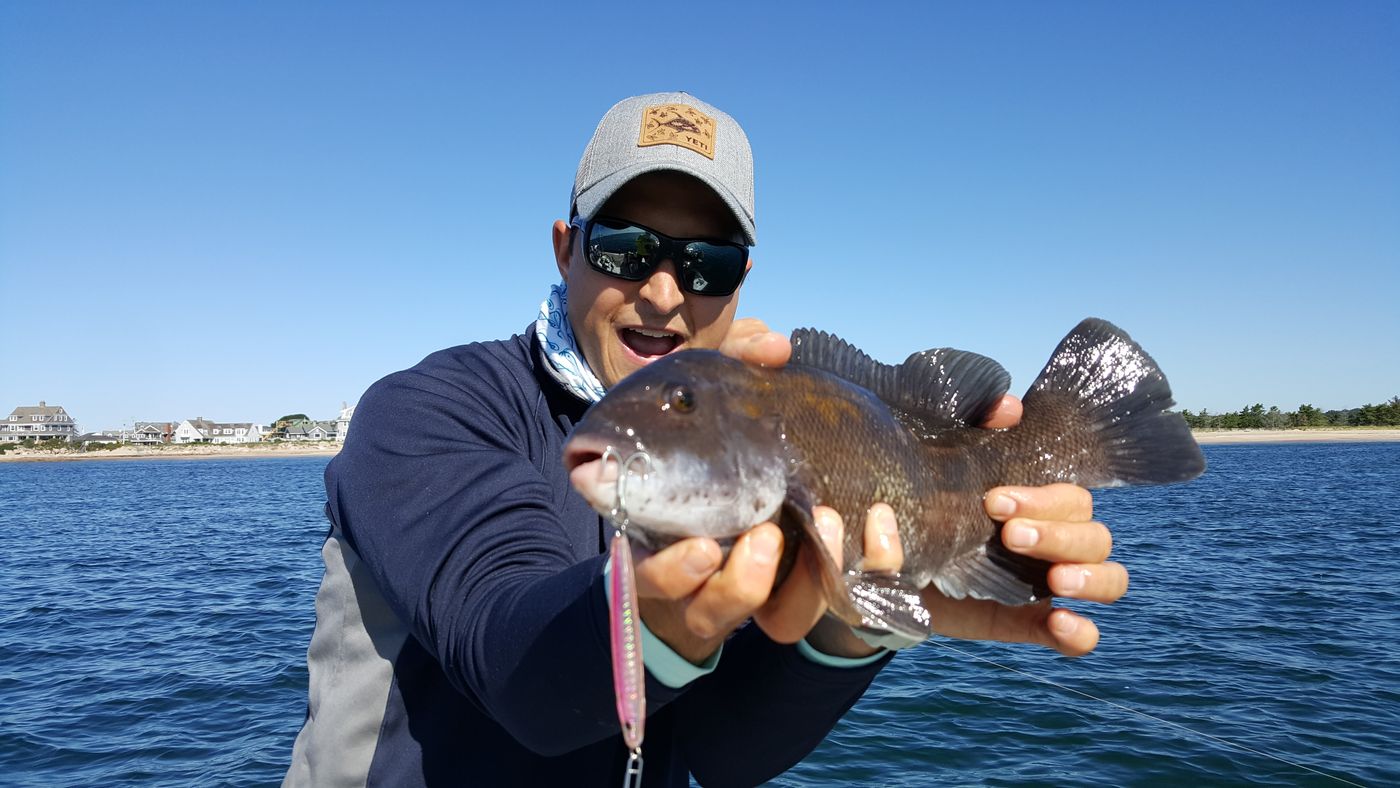
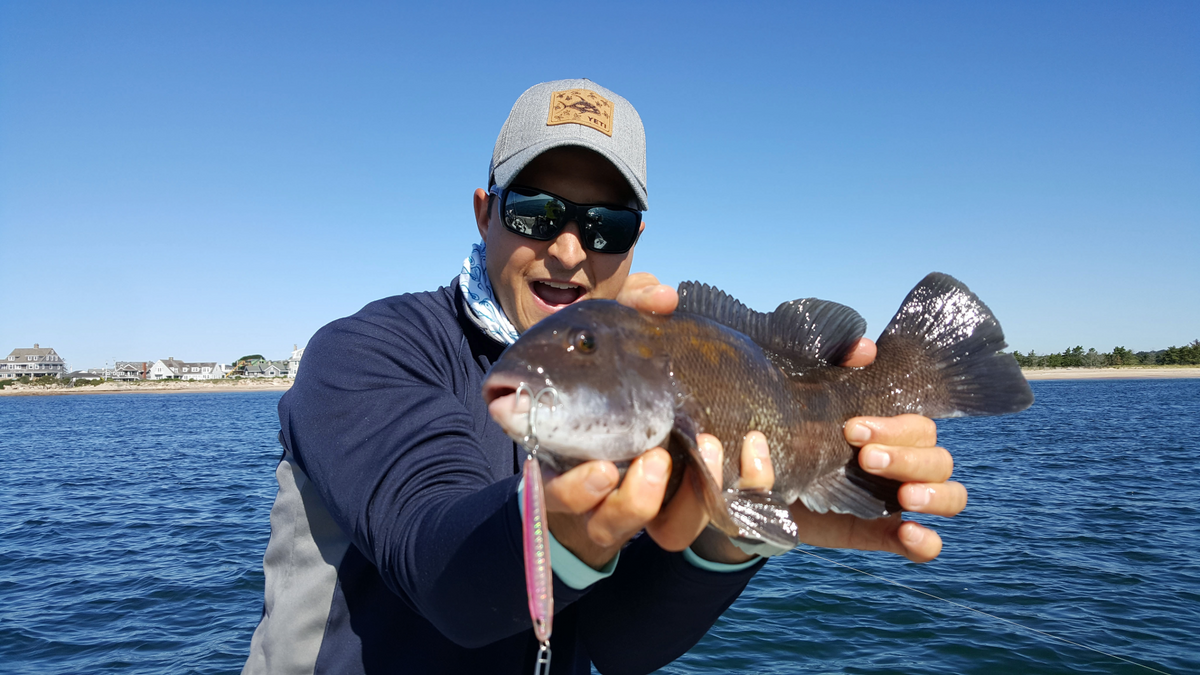
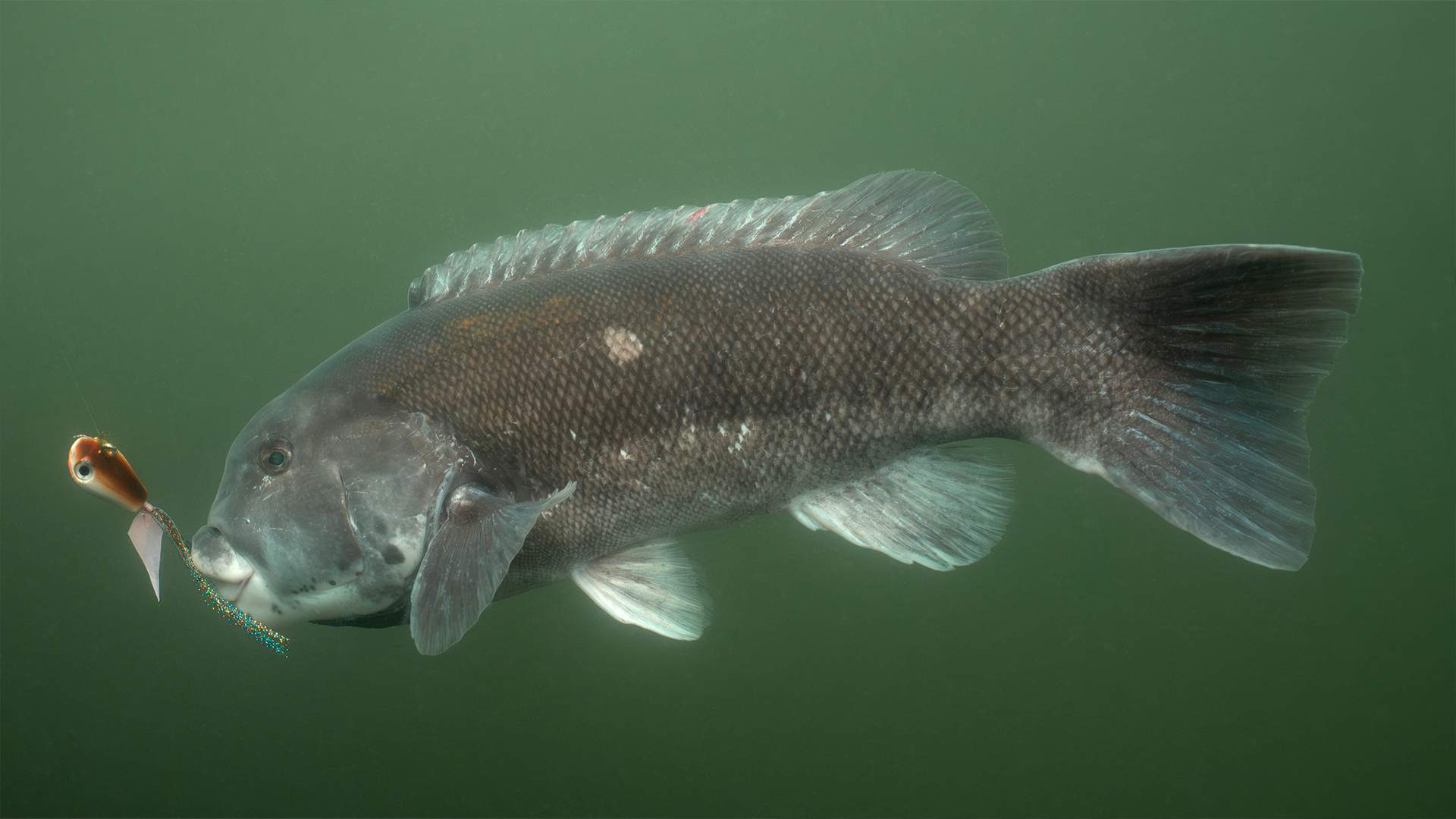
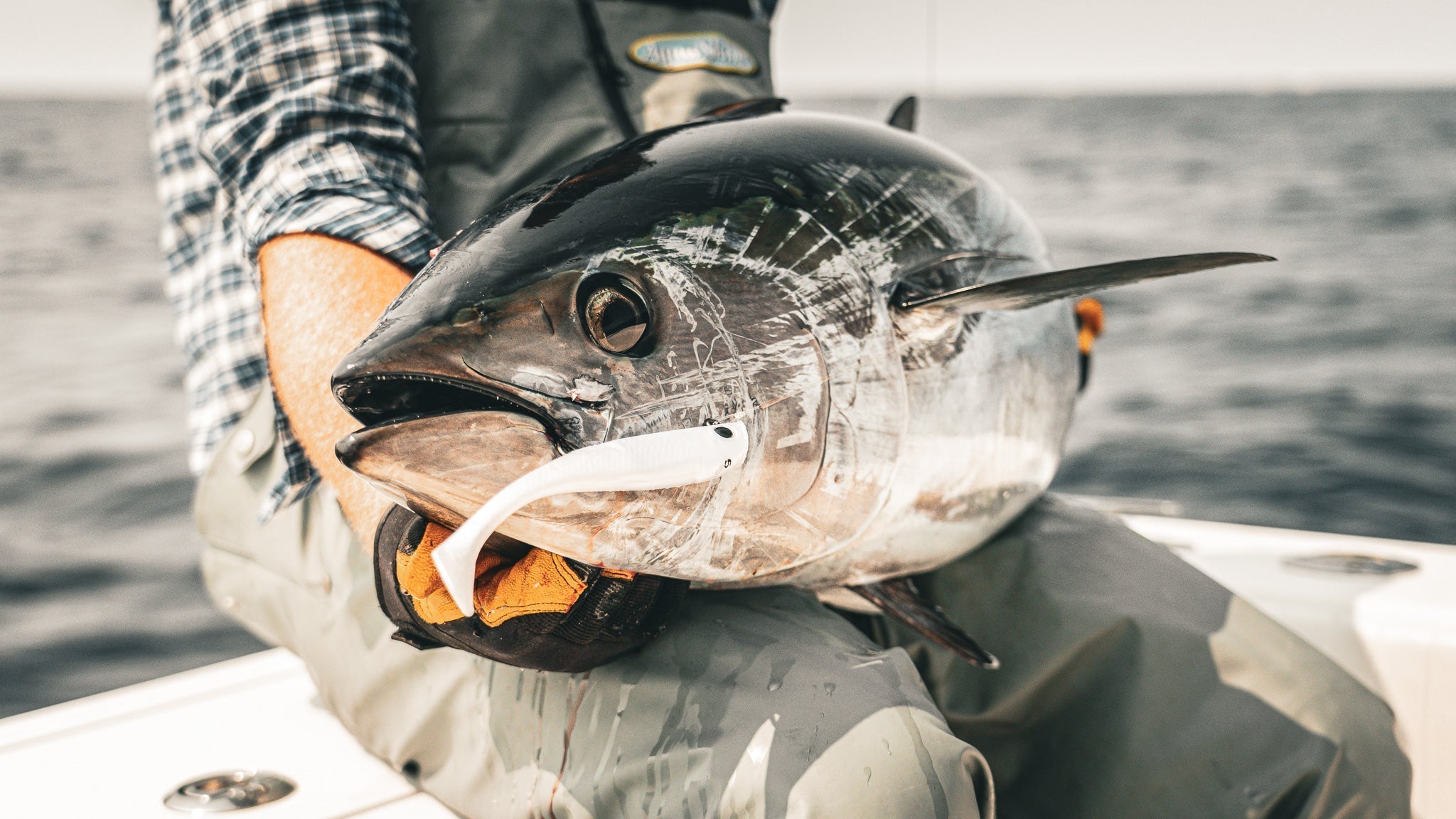
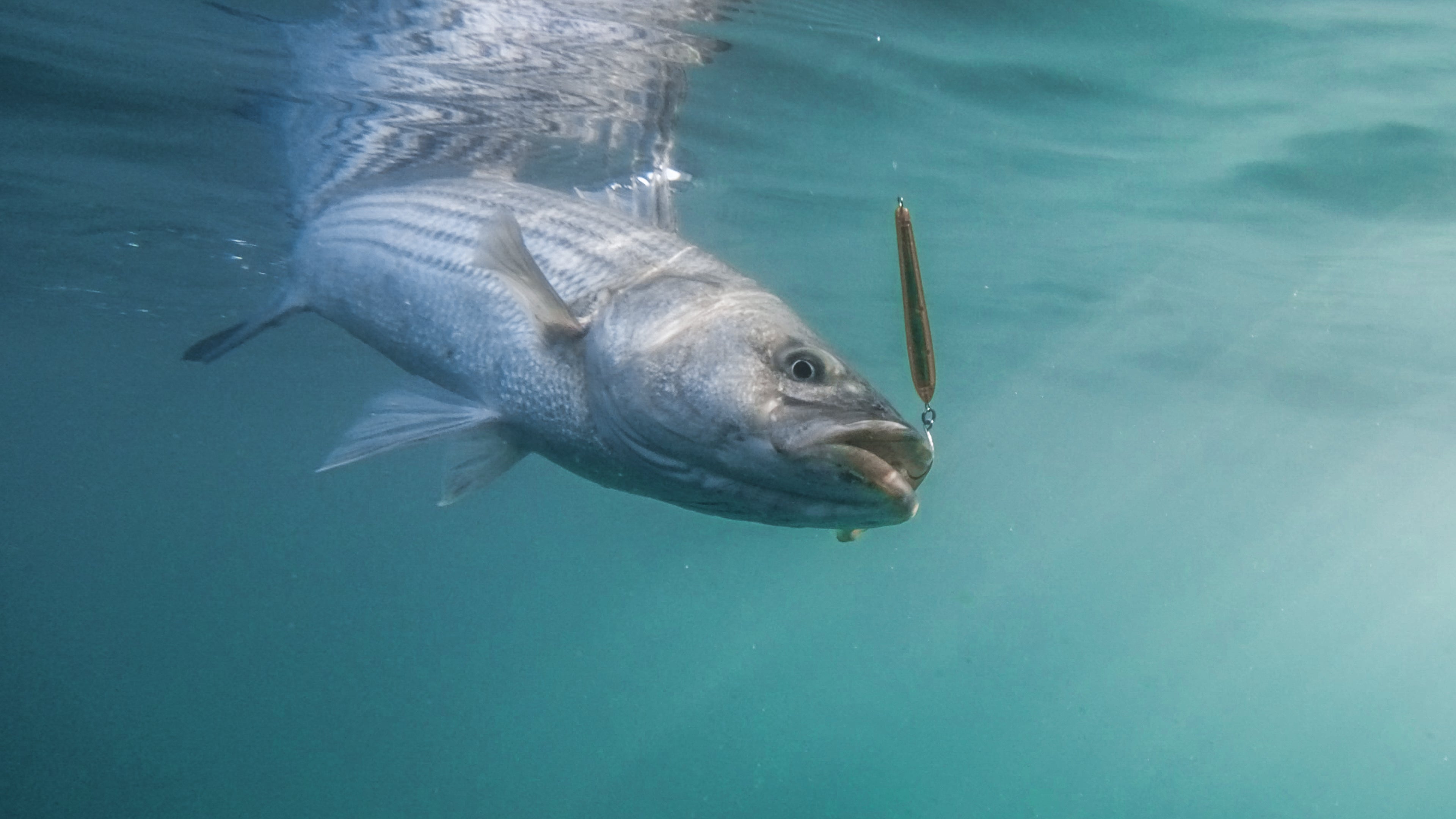
A tog on a pink Epoxy Jig. No crab, no bait bucket.
Every tog angler I know carries a bucket of green crabs. I carry a few albie jigs.
Drop a small casting jig tight to a rock edge, keep it on the bottom, and work it slow. Tog eat it. Most people never try, because tog fishing means crabs and that's the end of the conversation. That's what makes it the best-kept secret in tog fishing. No bait to buy, no bait to rig, no crab shells on the deck, and you're back down in the pocket the second a fish comes over the rail.
Why a casting jig catches tog
Tog live on the rocks and eat what's on the rocks: crabs, mussels, anything small that moves along the bottom. A compact jig bumping the bottom right in their pocket reads as food. The flash and the thump get their attention, and because it never leaves the zone, it's in front of them on every stroke.
The key is changing how you fish it. A jig that spends the fall ripping across open water for albies needs a slow, deliberate presentation around a rock pile. Same lure, different job.
The jigs
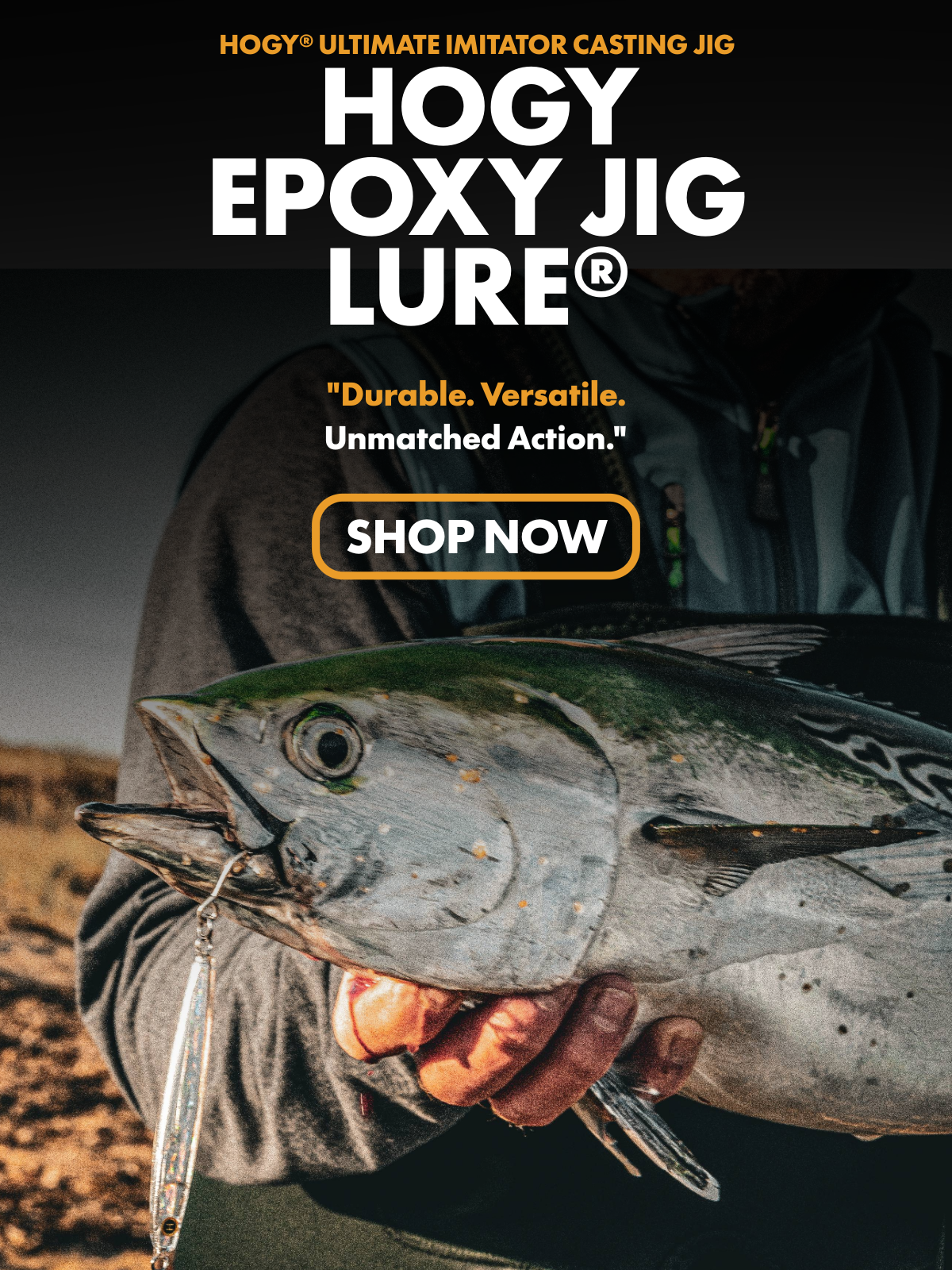
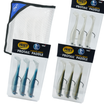
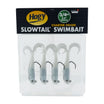
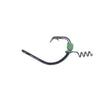
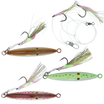
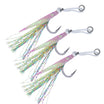
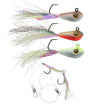
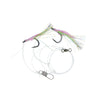
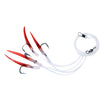
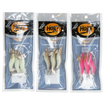
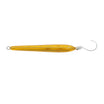
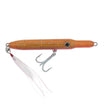
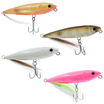
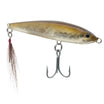
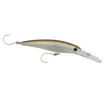
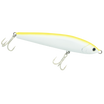
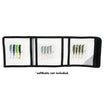
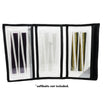
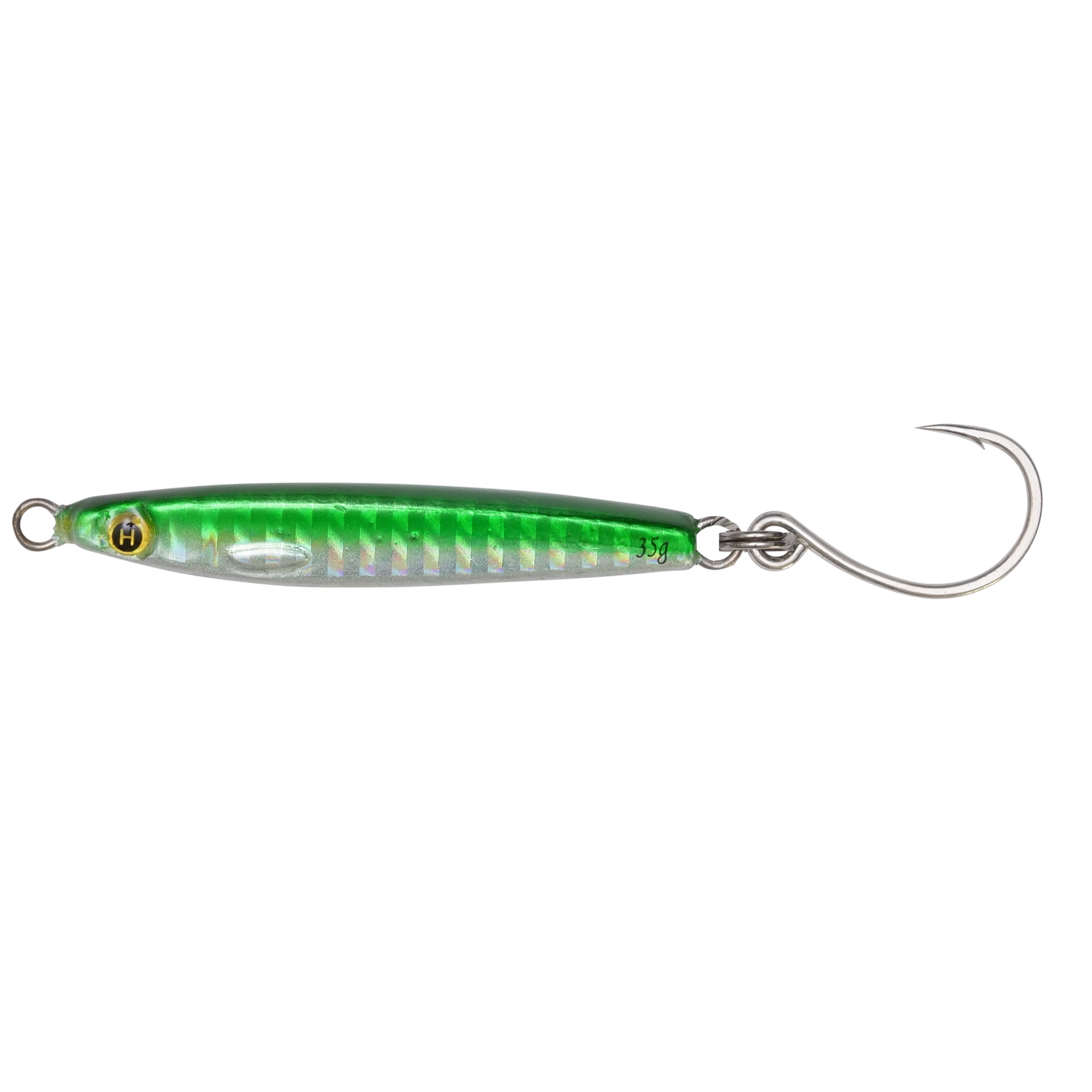
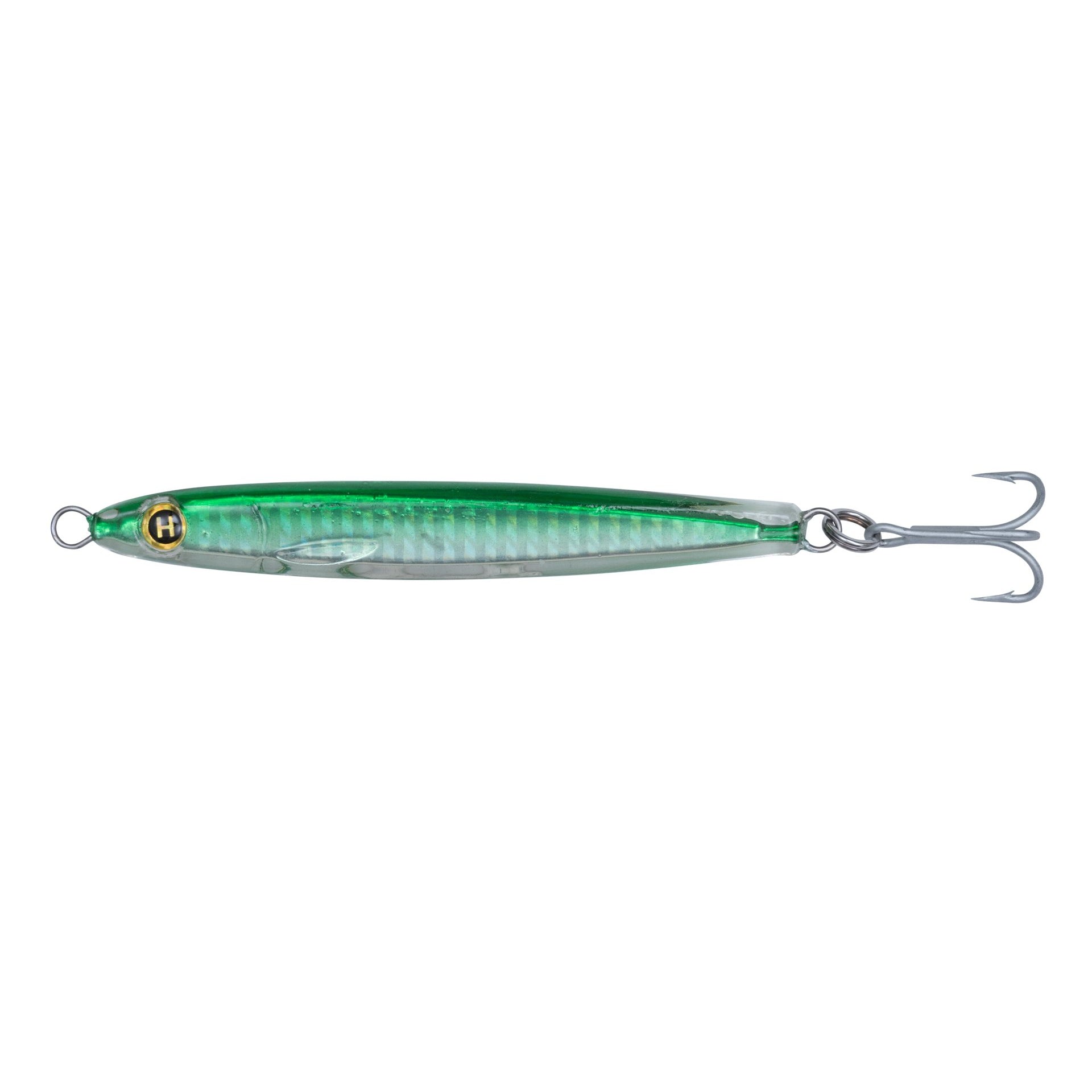
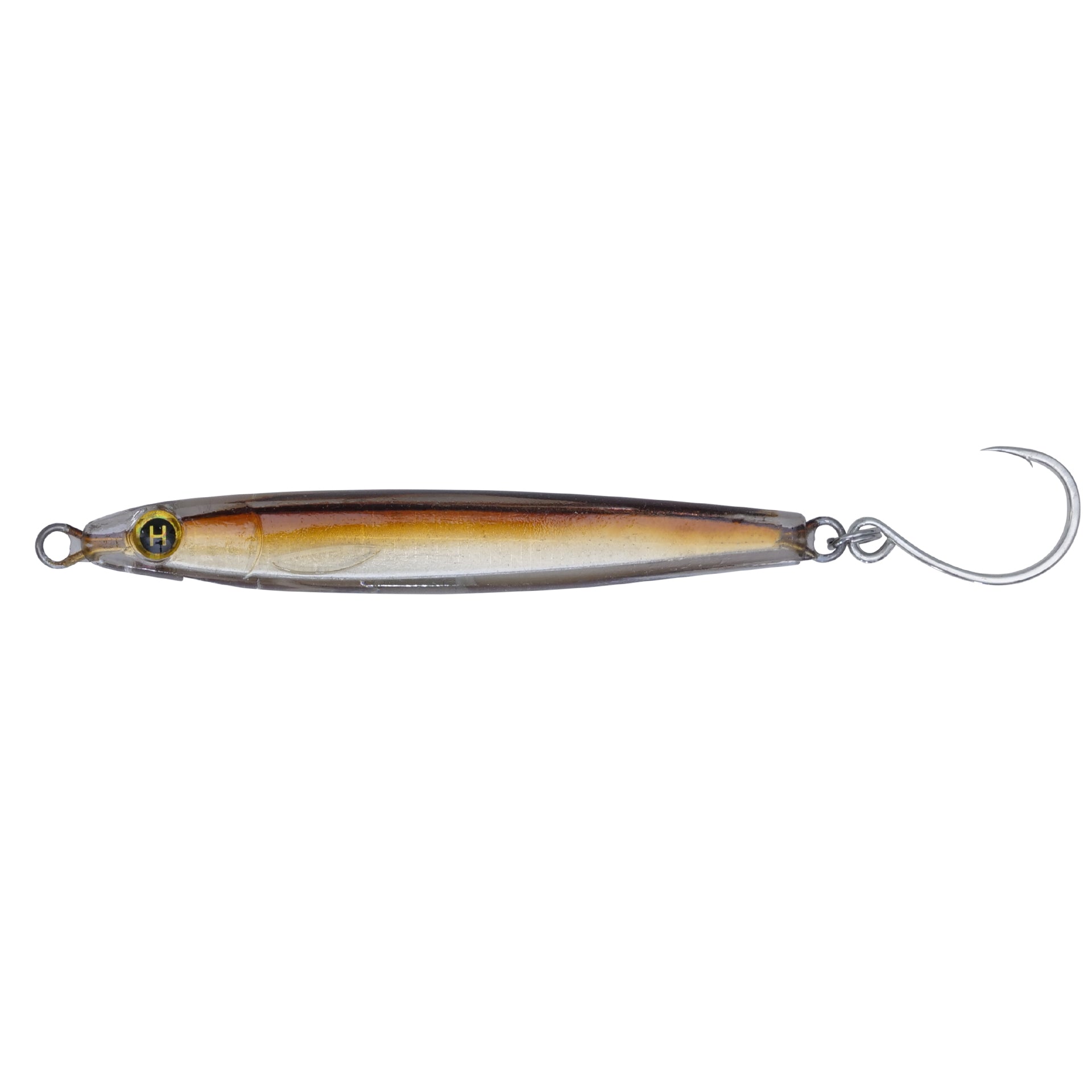
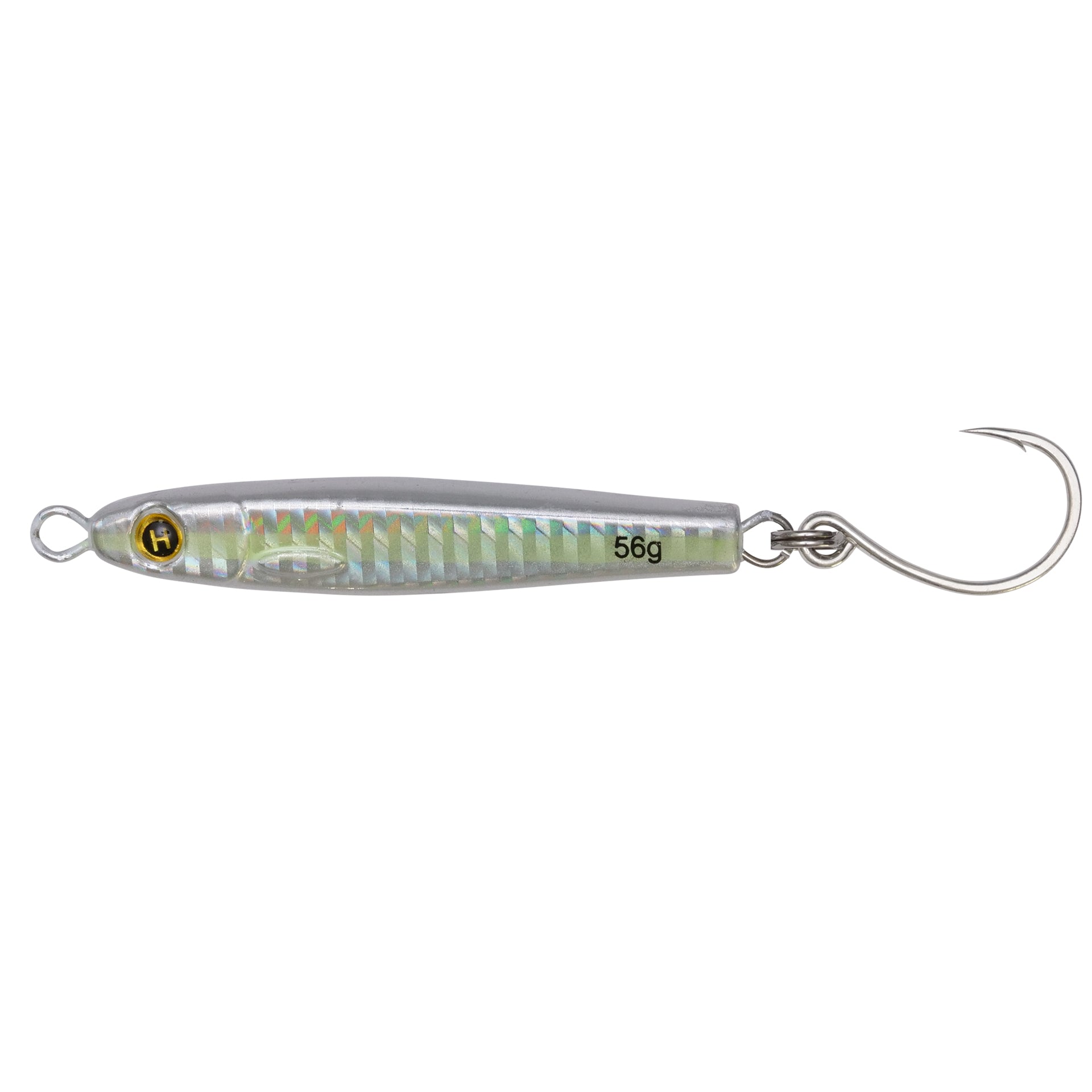
I fish the two workhorses from my albie crate. They're already rigged with an inline single hook, which snags less in the rocks and makes for fast, easy releases.
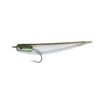
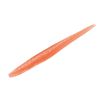
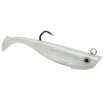
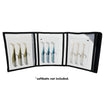
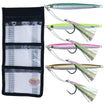
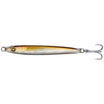
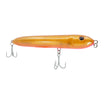
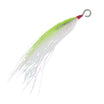
The Epoxy Jig is the finesse option. It falls with a little flutter, has a small profile, and shines in shallow water with light current.
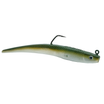
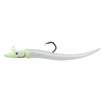
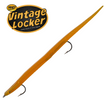
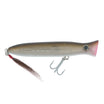
The Heavy Minnow is denser for its size. It drops fast and holds bottom when the current picks up, which makes it the one I reach for when the Epoxy Jig starts drifting off the piece.
Pick the lightest jig that holds bottom where you're fishing. If you can't feel it touch down, go heavier. If it drags across the rocks between touches, go heavier or fix your position. Compare the jigs in your hand rather than trusting the label to tell you how they'll fish.
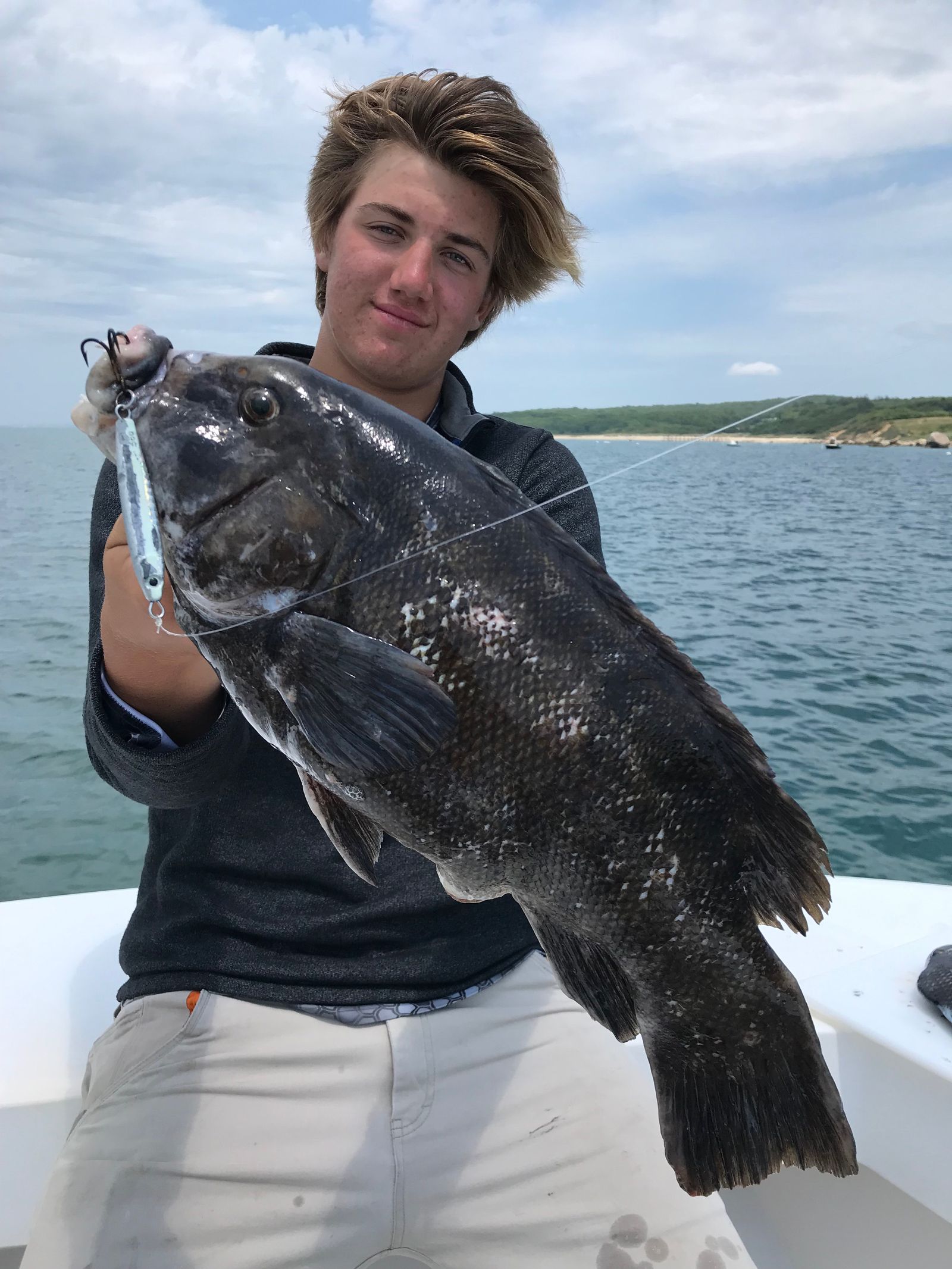
A good tog on a Heavy Minnow. The denser jig holds the pocket when the current picks up.
Set up on the piece
Find a small piece of broken bottom you can fish precisely: a rock pile, a boulder edge, or a hard-bottom patch with a clean drop beside it. In shallow water, a small change in boat position puts the jig on a very different part of that piece.
Anchor or spot-lock so the jig lands beside the structure. Allow for swing. If the line is pulling hard across the rocks, solve the position or the weight before you try to solve the bite. I cover anchoring in more detail in Some Tog NEED Crabs.
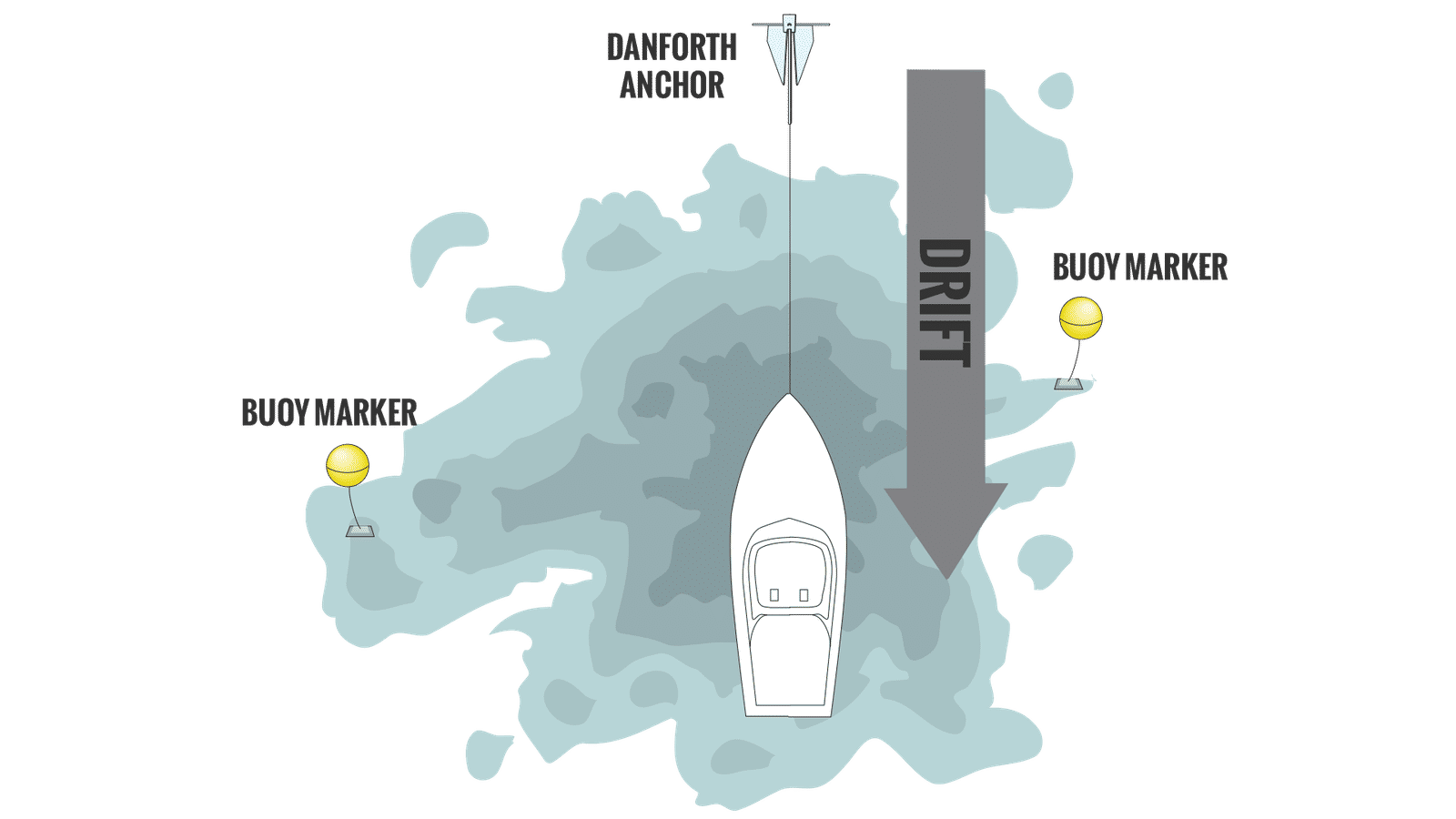
Anchored over structure: the anchor goes up-drift and the boat falls back onto the pile. Buoy the edges so you know where the rocks are.
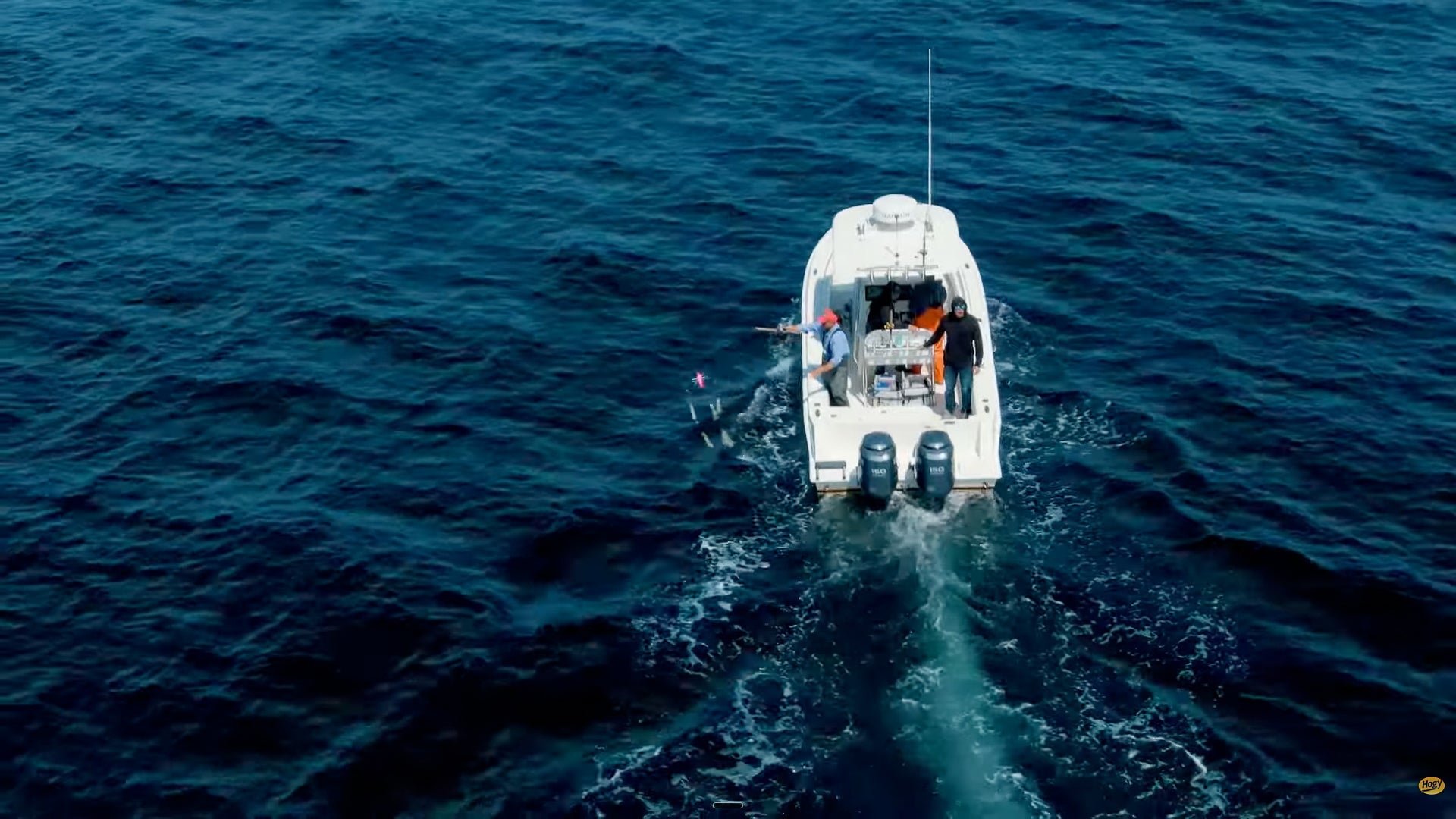
Casting jigs also suit a tactical drift, because there is no bait to tear off and the jig fishes on the move. Start up tide, cross the pile mid-drift, finish down tide, and reposition. Anchor when the fish are stacked on one piece. Drift when they are spread across the rocks.
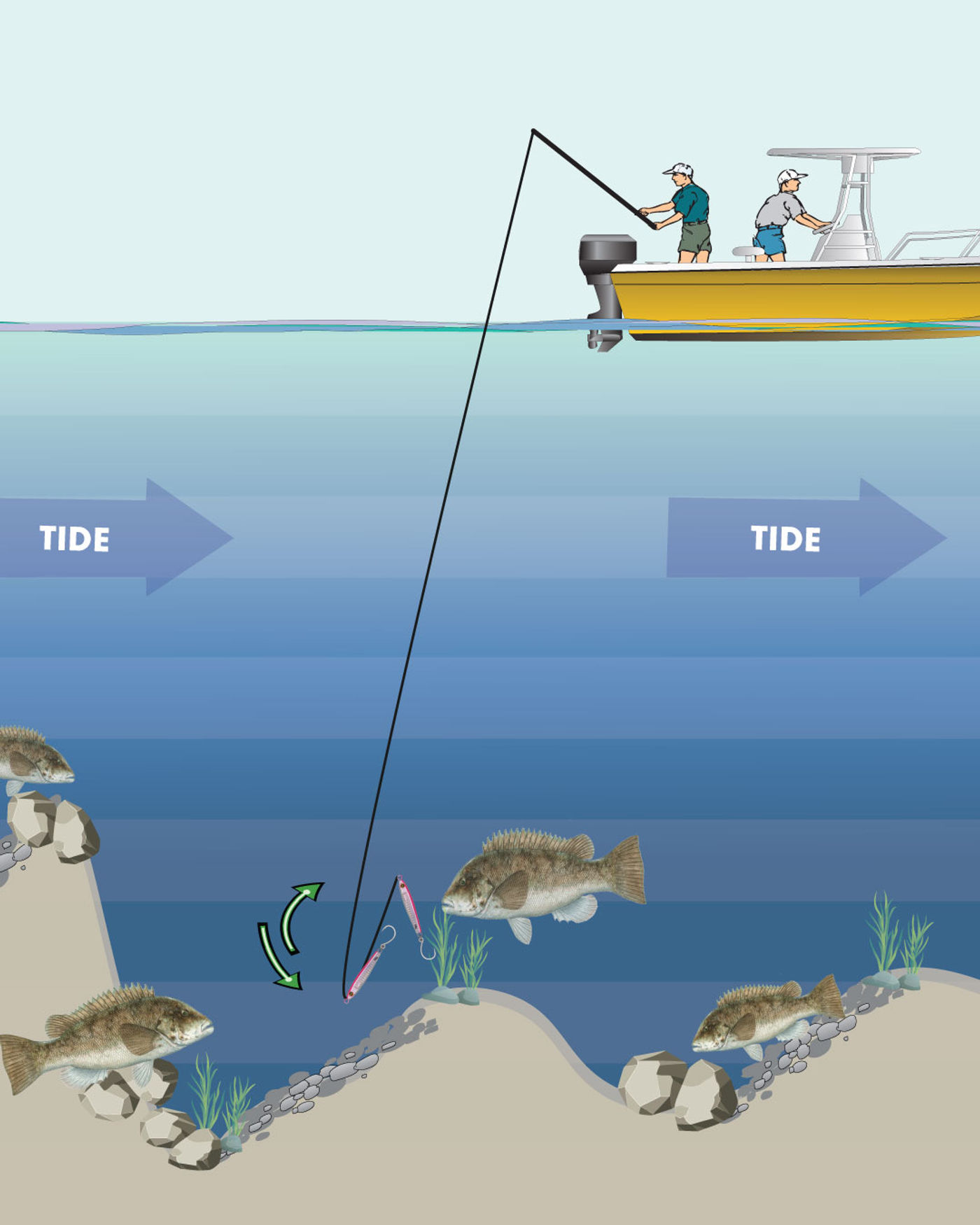
On the drift: let the tide carry the boat across the pile and keep the jig under you. Lift, drop, touch the rocks.
Four strokes, one jig
Lower the jig beside the structure and confirm bottom. From there I run four strokes, and I start with the quietest one. Leave the albie retrieve at home. Burning it does nothing here. Placement and bottom contact catch these fish.
Make a small lift, six inches to a foot, and let the jig tap back onto the bottom under control. Pause. Do it again. Keep the strokes short and the pauses long enough for a fish to find the jig. This is where I start on every piece.
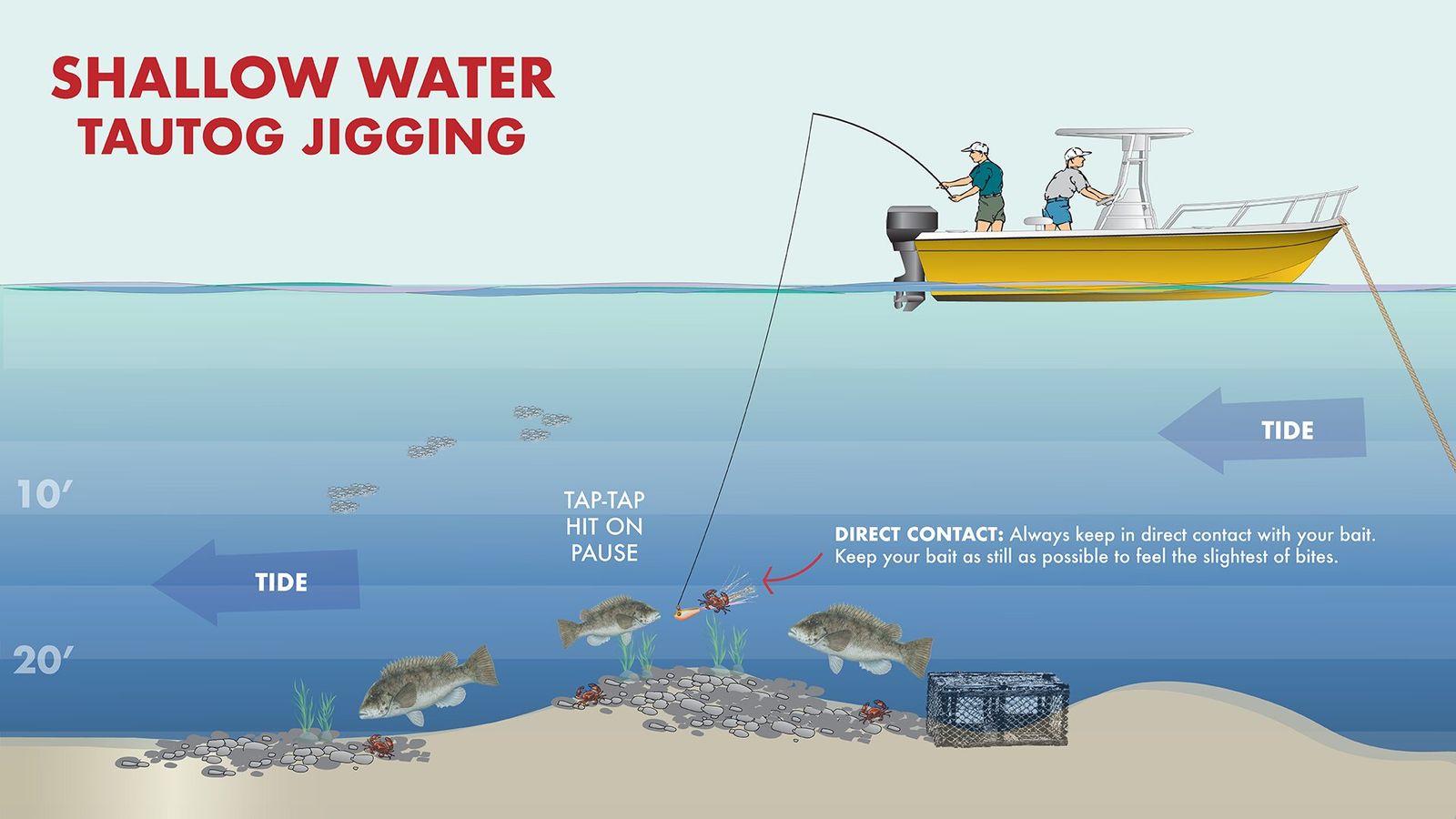
The thump on the rocks: lift, tap down, pause. Keep direct contact, because the hit usually comes on the pause.
If the thump draws nothing, lengthen the stroke. Lift the rod smoothly a foot or two, then drop the tip and let the jig fall back on a semi-slack line so it flutters down. Tog and sea bass hit it on the fall, so watch the line and be ready to sweep.
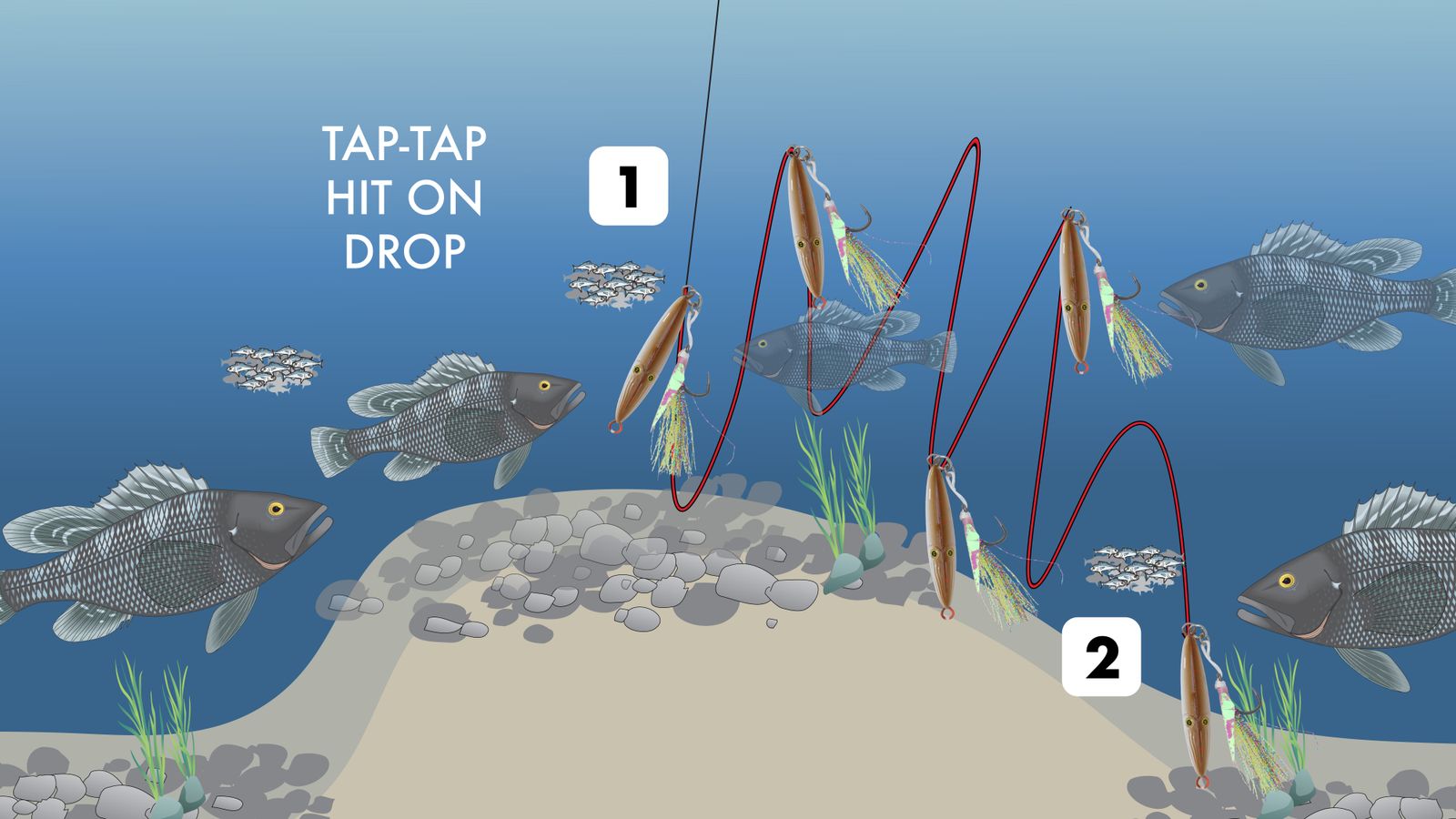
Slow-pitch style: a long, smooth lift, then a flutter on the fall. Tap-tap, and the hit comes on the drop.
When the slow strokes go quiet, add life. Two or three quick, short pops of the rod tip right off the bottom, then let the jig fall back. A small casting jig darts like something trying to get away, and it wakes up fish that ignored the slow stuff.
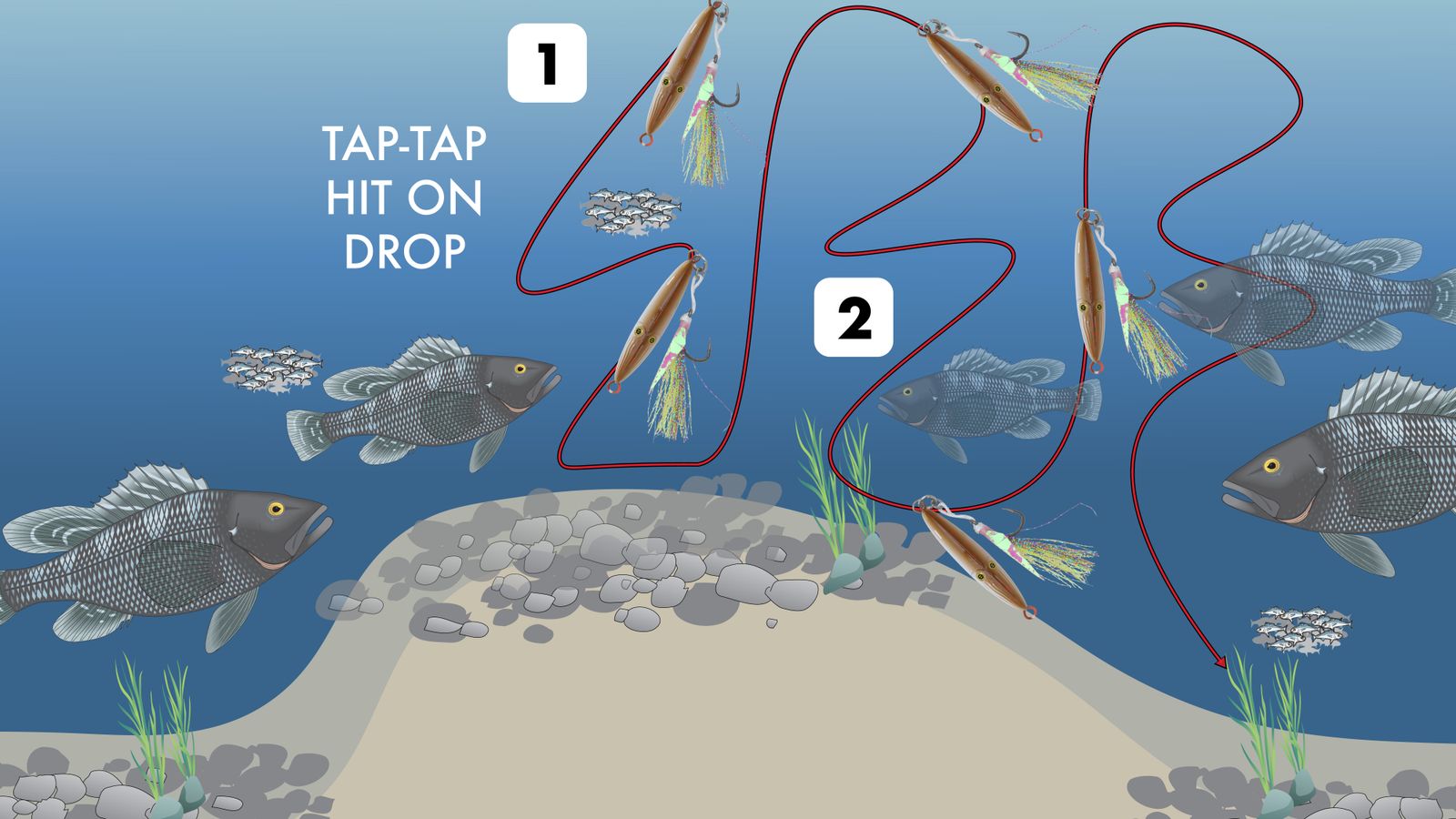
The twitchy jig: quick, short pops right off the bottom, then let it fall. Hit on the drop.
Not every tog lives on one rock pile. When they're spread along a hard edge, I drift the contour and thump the jig down the slope, touching bottom every few seconds as the depth changes. If the jig travels a long way between touches, it's left the piece you meant to fish.
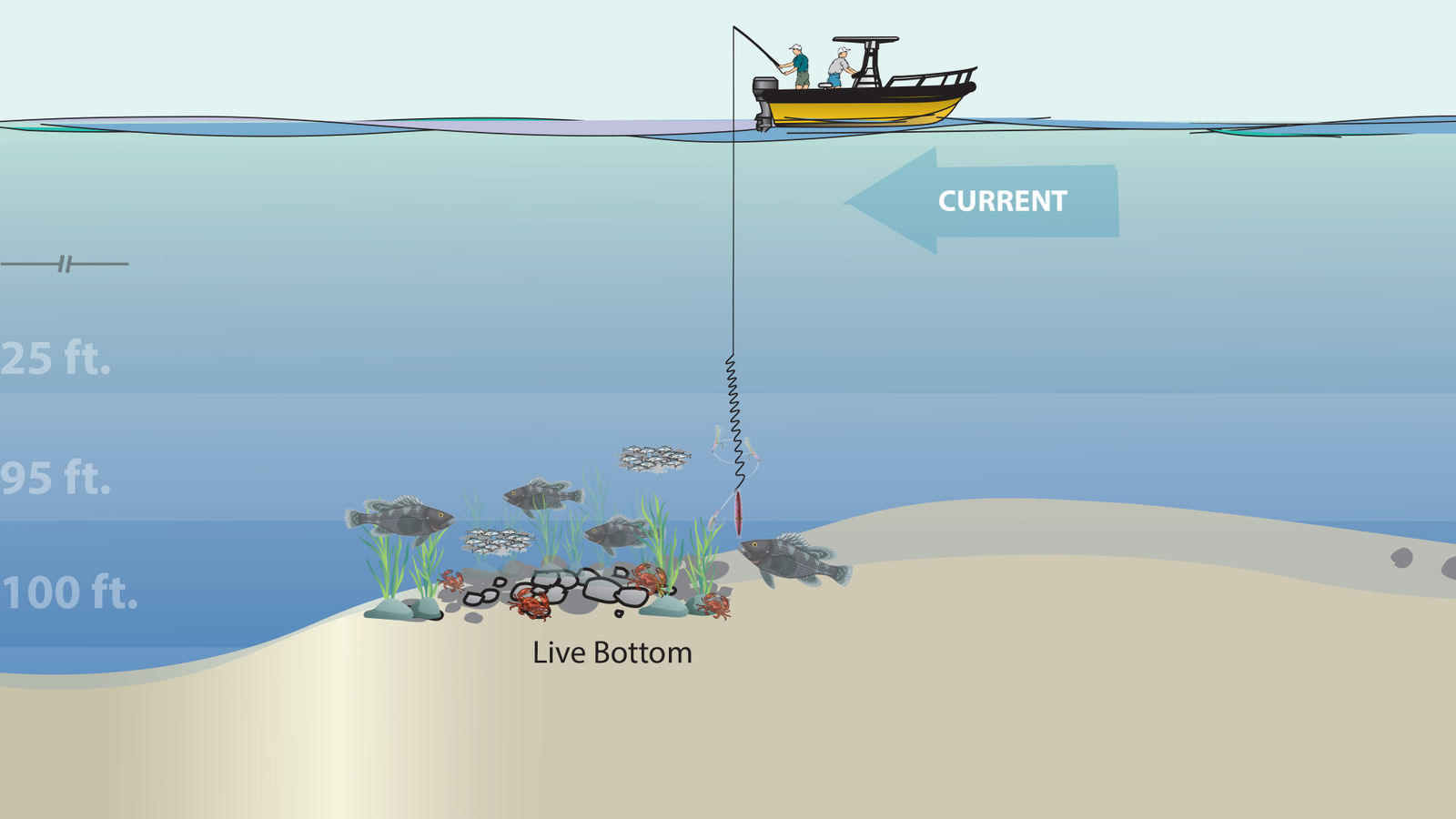
The thump on a contour: drift the edge and keep touching bottom as it drops away. The live bottom is where they sit.
The bite and the sweep
You'll feel a tap, sometimes two, and then the rod loads. Wait for that weight. Then sweep, let the rod load, and keep the pressure on so the fish comes up and away from the rocks before it can turn back into them.
Set the drag before the drop. A tog heads straight back for cover, and you need pressure the second it does.
The rod: the one you already own
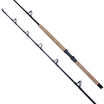
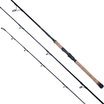
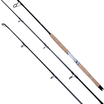
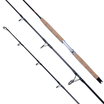
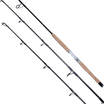
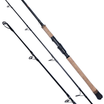
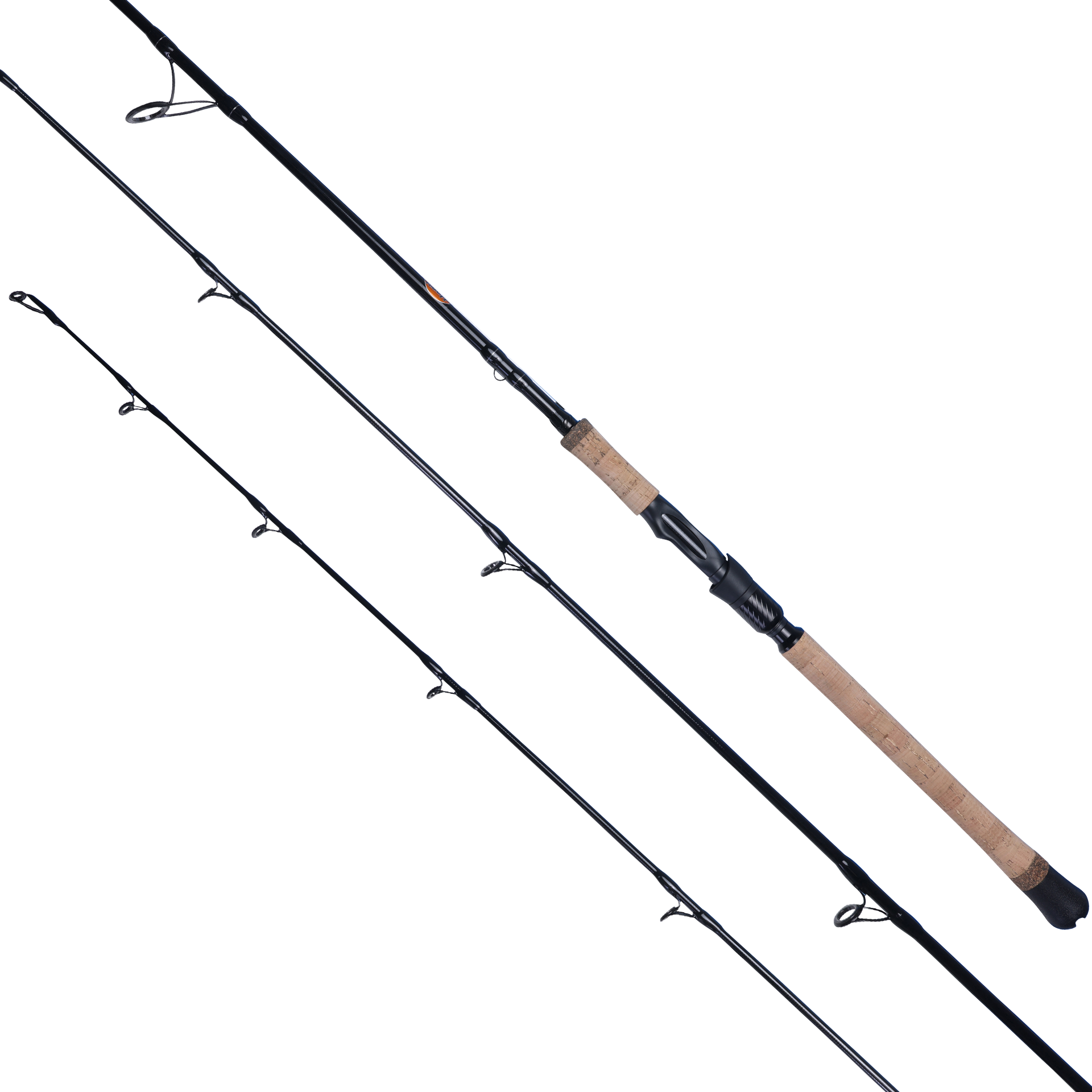
This is my albie rod, the 7' Medium (HLTI7M). It throws 3/8 to 1 oz and lobs to 2 oz, which covers every Epoxy Jig and Heavy Minnow I'd drop on shallow tog. It shows the tap, and the bend into the midsection keeps the hook in on the sweep. I swap to the 20 lb braid spool and tie on a 30 to 40 lb leader, mono on hard rock, because the rocks chew leader.
When the jig gets heavier, the fish get bigger, or the rock gets nastier, step up to the 7' Medium-Heavy (HLTI7MH). Same rods all season. The full case is in My Albie Rods Catch My Groundfish.
Expect to lose a few
Rocky bottom is hard on exposed hooks. Check the point after every snag or every few hard contacts, and swap out anything dull. Bring spares. If you keep hanging up, move slightly onto the edge or shorten the line lying on the bottom before you feed the rocks another jig.
When I go back to the crab
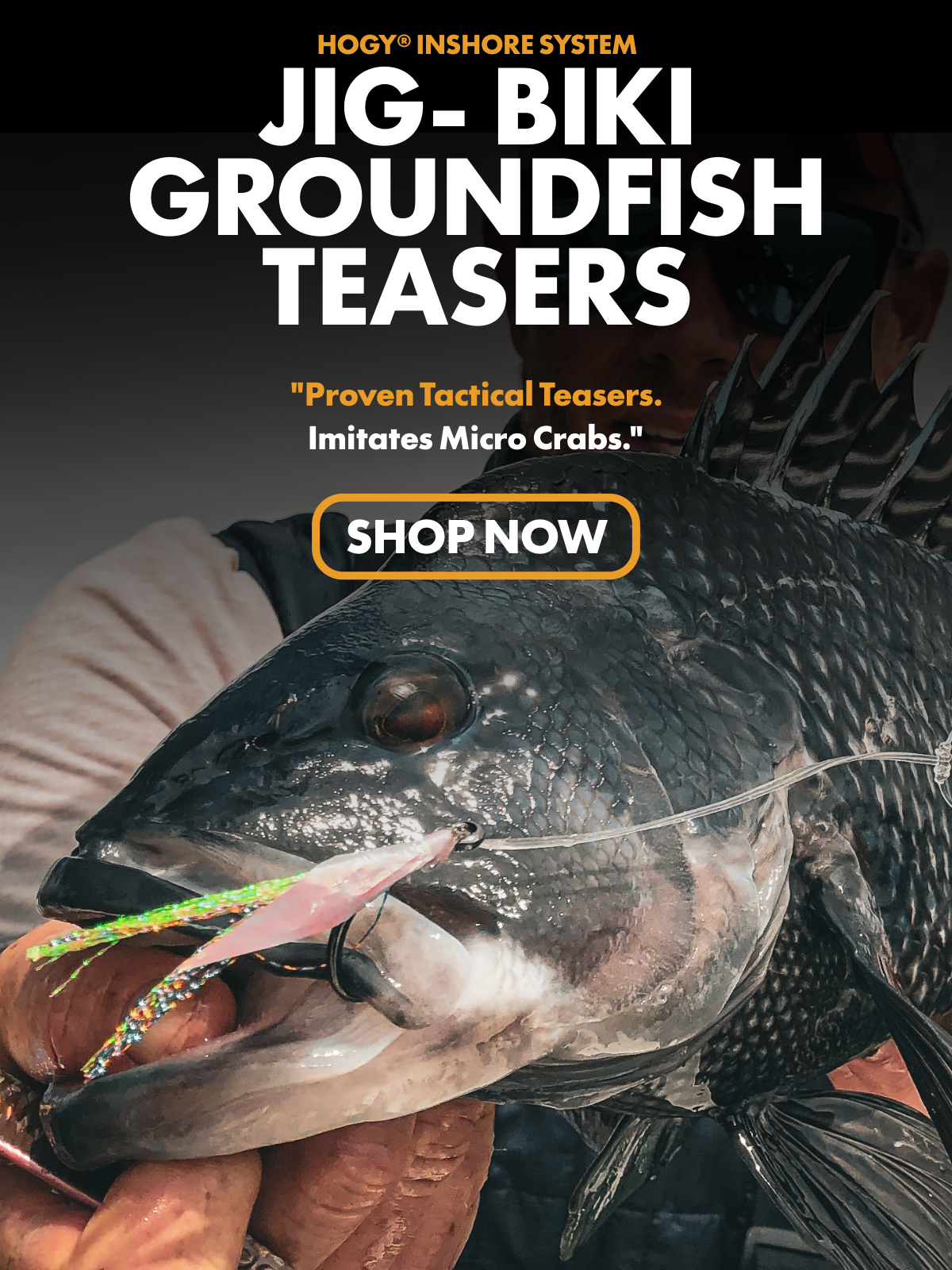
The jig isn't a reason to leave a good crab bite alone. Some days tog want something quieter and easier to eat, and a green crab on a Groundfish Biki Jig will tell you that fast. I bring both. I start with the jig because it's clean and quick, and I go to the crab when the fish ask for it.
Salty Cape TV: the crab-and-Biki version on a Buzzards Bay rock pile, with Jack Pinard and Capt. Ray Jarvis. Same water, same positioning, the other half of the program.
Leave the albie retrieve at home. Placement and bottom contact catch these fish.
I start with the jig because it's clean and quick, and I go to the crab when the fish ask for it.



Leave a comment
All comments are moderated before being published.
This site is protected by hCaptcha and the hCaptcha Privacy Policy and Terms of Service apply.