









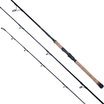
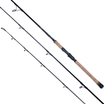
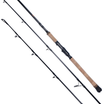
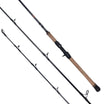
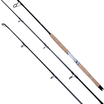
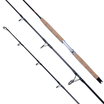
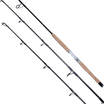
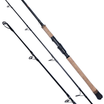
Gear Deep Dive: 7'6" Heavy Conventional (The Lifter)
Parabolic power. Trigger control. Specialty utility. A high-guide train for round reels, sweep hooksets for tog and fluke, and tube trolling with reach.

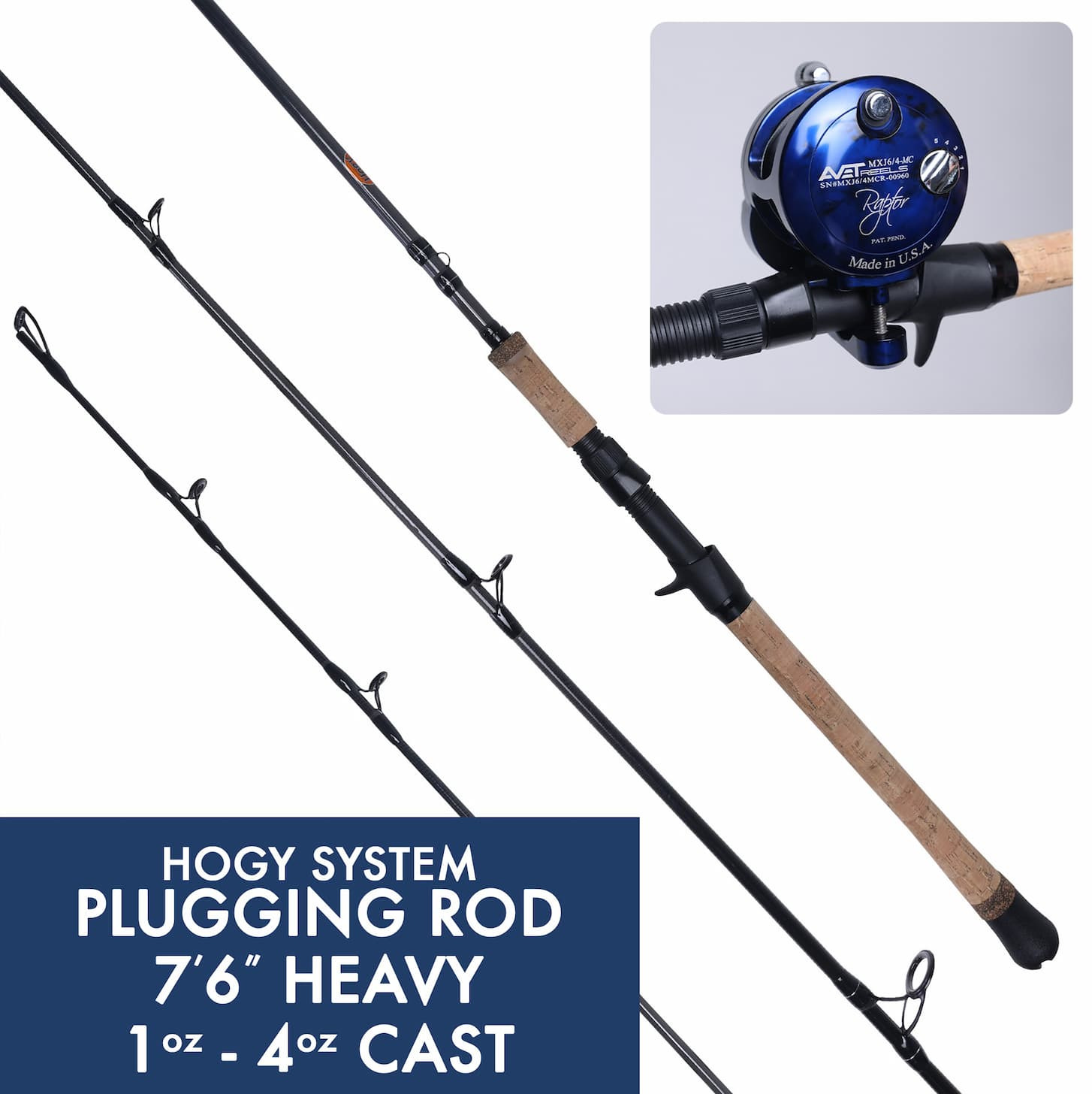
The Lifter: the conventional twin of The Plugger.
When You Would Use It
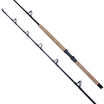
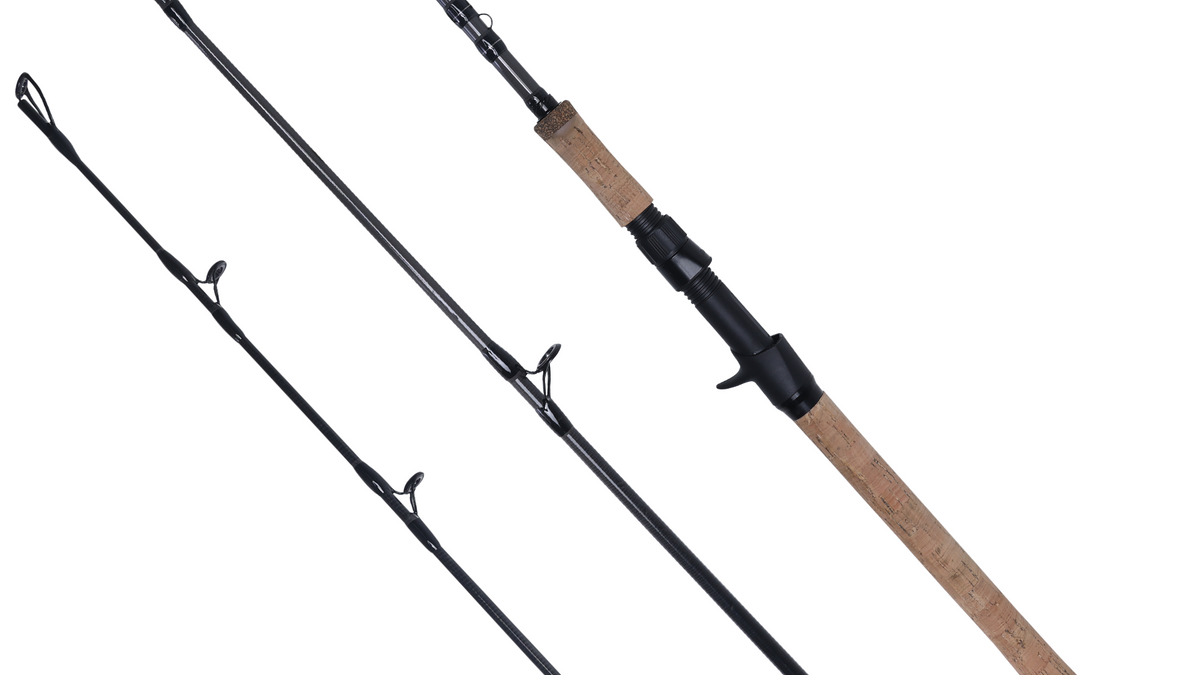
The conventional twin of The Plugger. Built on the same parabolic blank, it trades a spinning seat for a trigger grip and high-frame guides designed to line up with larger-diameter round reels.
A parabolic conventional rod tuned for modern saltwater inshore methods. Built for groundfish, trolling tubes, and lob-casting oversized plugs with full control.
This is a dedicated-use rod, not a first pick. Spinning rods cover most inshore situations. This one exists for anglers who want the control of a trigger grip, the alignment of high guides with round reels, and the cushion of a parabolic action for three specific jobs.
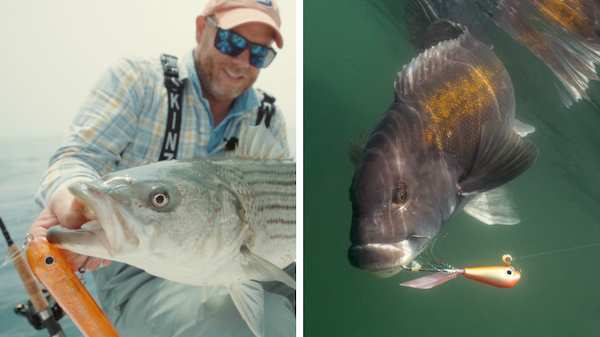
Built around a 300 to 400 class round reel.
When it is the call
Three specific jobs where a trigger grip and a round reel beat a spinning setup. Three reads point here:
- Sweep-set groundfish. Tog, fluke and sea bass, where a long low sweep sets the hook and the parabolic bend keeps it pinned.
- Tube and worm in structure. Thumb control on the drop-back, and cushion that stops hooks tearing out on a surge.
- Heavy plugs on a round reel. Lob-casting 3 to 4oz where you want line pickup and torque rather than a spinning seat.
When it is not
General inshore casting. A spinning rod wins under about 1.5oz and it is not close. This is an addition, not a replacement.
The Action: Moderate
This rod is moderate. A parabolic lift through the midsection, on the same blank as the Plugger. That one spec is why it sweep-sets a tog off the bottom, keeps a tube hook in a surging striper, and lobs a 4oz plug off a round reel.
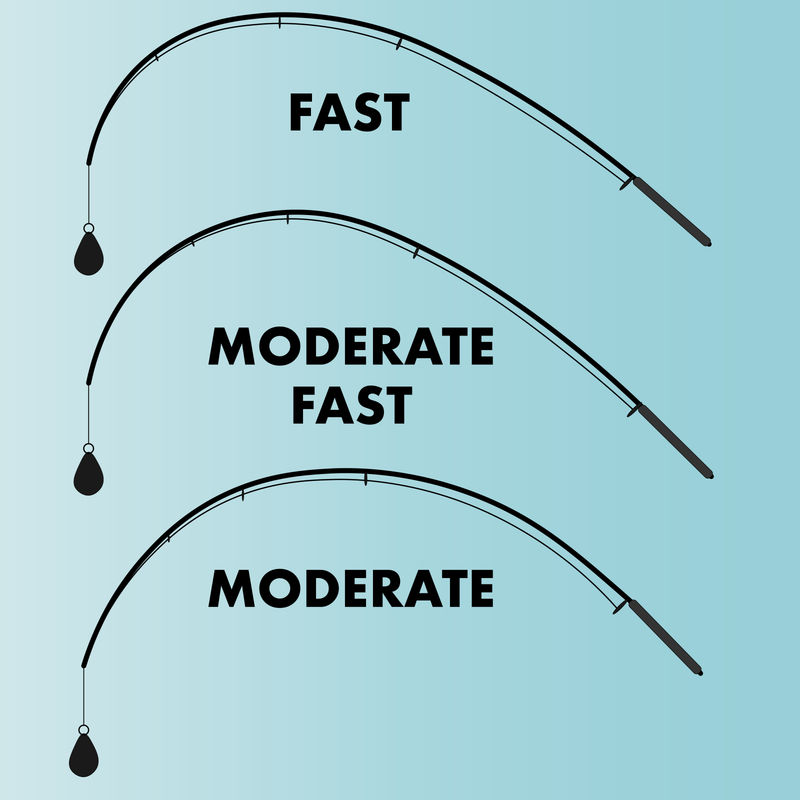
Fast, moderate-fast and moderate. The Lifter is the bottom one: one long sweep through the midsection.
Why moderate for an inshore conventional
Each of the three jobs this rod does comes down to the bend.
- The sweep set: A long low sweep sets the hook, and the parabolic bend keeps pressure constant while a tog bulldogs for bottom.
- The troll: The moderate action absorbs the surges that tear a hook out of a striper on a stiffer blank.
- Smooth lob, not a snap: Moderate parabolic load slings heavy plugs with a smooth lob rather than a jarring snap. Thumb on the spool does the rest.
Fast versus moderate
A fast conventional feels strong in the shop. On a rockpile or behind a tube it fishes like a broomstick.
| The moment | Fast | Moderate (this rod) |
|---|---|---|
| Where it bends | Top third only, stiff below | Through the midsection in one long sweep |
| A tog on the sweep set | The hook goes in, then every head shake hits it | The bend keeps it pinned while it bulldogs |
| A tube on a surging striper | The hook tears out on the surge | The blank absorbs the surge and the hook stays |
| A 4oz plug off a round reel | A jarring snap, and a backlash | A smooth lob with a thumb on the spool |
| A full day of sweeps and fights | Your arms do the work | The blank does the work |
Fast is not in this system at all. For a rod that lives on sweeps, surges and lobs, moderate is the action that does all three.
The upgrade: the high-guide train
This is the engineering decision that defines the rod, and it runs against what most conventional blanks do.
Unlike musky-style conventional rods with low-profile guides that sit tight to the blank, The Lifter uses a high-guide train. The reason is line clearance. A large round spool sits proud of the blank and feeds line at an angle that low guides simply cannot accommodate cleanly.
- Clean braid flow: Braid runs freely off a large round spool instead of being forced down onto the blank at the first guide.
- No frame rub: Low guides on a big reel put braid in contact with the frame. Over a season that costs you line, and at the wrong moment it costs you a fish.
- Better casting geometry: Line leaving a round spool on a lob cast wants room. High guides give it, which is most of why this rod lob-casts a 4oz plug as smoothly as it does.
It is a small detail with a large consequence, and it is why this rod pairs properly with an LX6 or a Torque 12 rather than tolerating one.

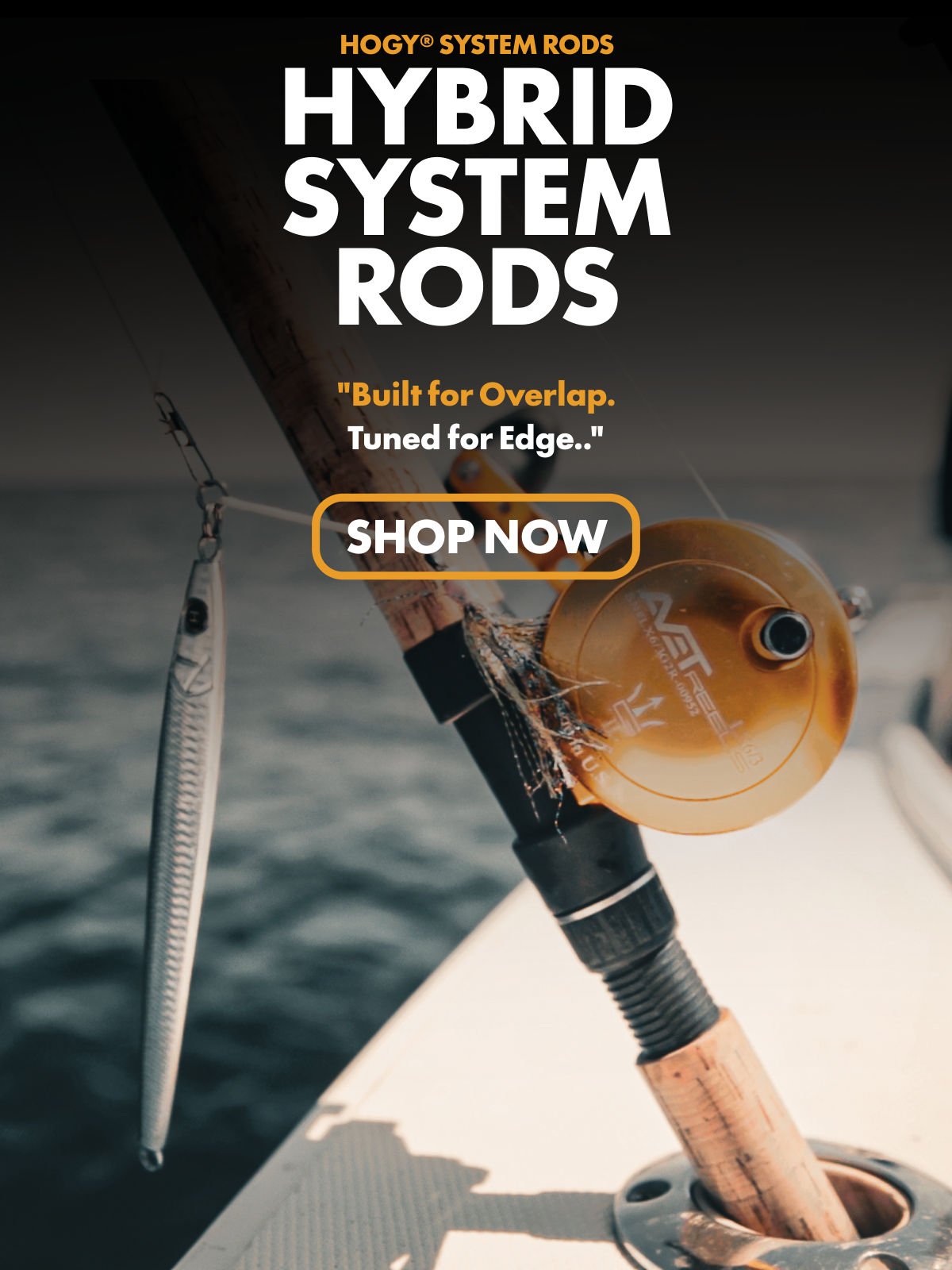
Rigged with an Avet. The high frames line the guide train up with a round spool.

The first guide off the reel stands tall, so braid leaves a big spool without touching the frame.
How the action shapes the retrieve
- Even tracking under current: The deep bend keeps tubes and paddletails tracking evenly when the tide is pushing against them.
- Cushion on the lift: Blank cushion prevents tearing hooks on vertical jigging, which is the single most common way a tog or fluke comes off.
Action for fighting fish
- Load spread across the blank: The parabolic curve spreads the fight rather than concentrating it, keeping steady pressure on groundfish and stripers alike.
- Backbone where it counts: Heavy power turns fish away from rocks while the forgiving action protects leaders.
The Outfit in Detail
A rod on its own is half an answer. This is the whole one.

7'6" Heavy, trigger grip, high-guide train.
| Spec | Value |
|---|---|
| Action | Moderate (parabolic lift) |
| Power | Heavy |
| Length | 7'6" |
| Reel class | 300-400 class round conventional (Avet LX6, Torque 12) |
| Reel type | Conventional |
| Main line | 30-80lb braid |
| Leader | 30-60lb fluorocarbon; 50-60lb, about 12ft, for tubes; 40-60lb mono on rock for tog |
| Lure range | 1.5-5oz jigs; plugs to 4oz; trolling tubes and deep swimmers |
| Methods | Trolling (primary); Jigging (long-sweep) |
| MPN | HLTI76MH-C |
Methods
| Method | Weight window | What it covers |
|---|---|---|
| Casting | 1.5oz – 4oz lob | Heavy plugs on a trigger grip with thumb control on the spool |
| Jigging | 1.5oz – 5oz | Slow-pitch and sweep-set groundfish work in mid depths |
| Trolling | Tubes and deep swimmers | Depth control and drop-back precision that spinning gear cannot match |
Reel
- 300–400 class round conventional: Avet LX6, Torque 12 and similar. The high-guide train exists specifically to work with these spool diameters.
- Why not a low-profile reel: You can fish one, but you give up the line pickup and the torque that make this rod worth choosing over its spinning twin.
Line, leader and knots
- Main line: 30 to 80lb braid, scaled to the job. Lighter for jigging, heavier for trolling in structure and lob-casting around rock.
- Leader: 40 to 60lb mono on rock for tog, fluorocarbon in clear water. 40 to 60lb fluorocarbon for plugs. 50 to 60lb, about 12 feet, for trolled tubes.
- Connection, casting: Loop knot to the lure, same as its spinning twin.
- Connection, trolling: Swivel about four feet above the tube. Tubes rotate constantly and that rotation is both the action and the problem.
- Thumb on the spool: The terminal end matters less here than technique. Direct spool control on the drop back is what this rod is for.
Build and endurance
- Reinforced guide frames: Built to withstand the torque a heavy conventional reel puts through the guide train.
- Shorter butt: Keeps the rod manageable on tight decks and in trolling holders. The short-butt law again, and it matters more here because a trigger grip changes where your hands sit.
- Reduced fatigue: The parabolic blank does the work during repeated sweeps and long fights, which is what a full day of togging actually asks of a rod.

The trigger grip. Thumb on the spool, finger on the trigger.
Through the Season, Species by Species
This rod is not trying to be versatile. It is trying to be the best available answer to three specific problems. Here is what it does in each fishery, micro season by micro season.
The 7'6" Lifter is the round-reel add-on for stripers and groundfish: tube and worm in rocky structure, big wood on the Elizabeths, and the long sweep set on tog and fluke. The calendar answer: every micro season this rod is in my hand, fishery by fishery. Three jobs, four micro seasons.
Bass and blues
For bass it has two jobs: tube and worm in rocky structure, and lob-casting 3 to 4oz plugs on a round reel. This is my rod for plugging big wood and heavy swimmers along rocky shorelines like the Elizabeth Islands.
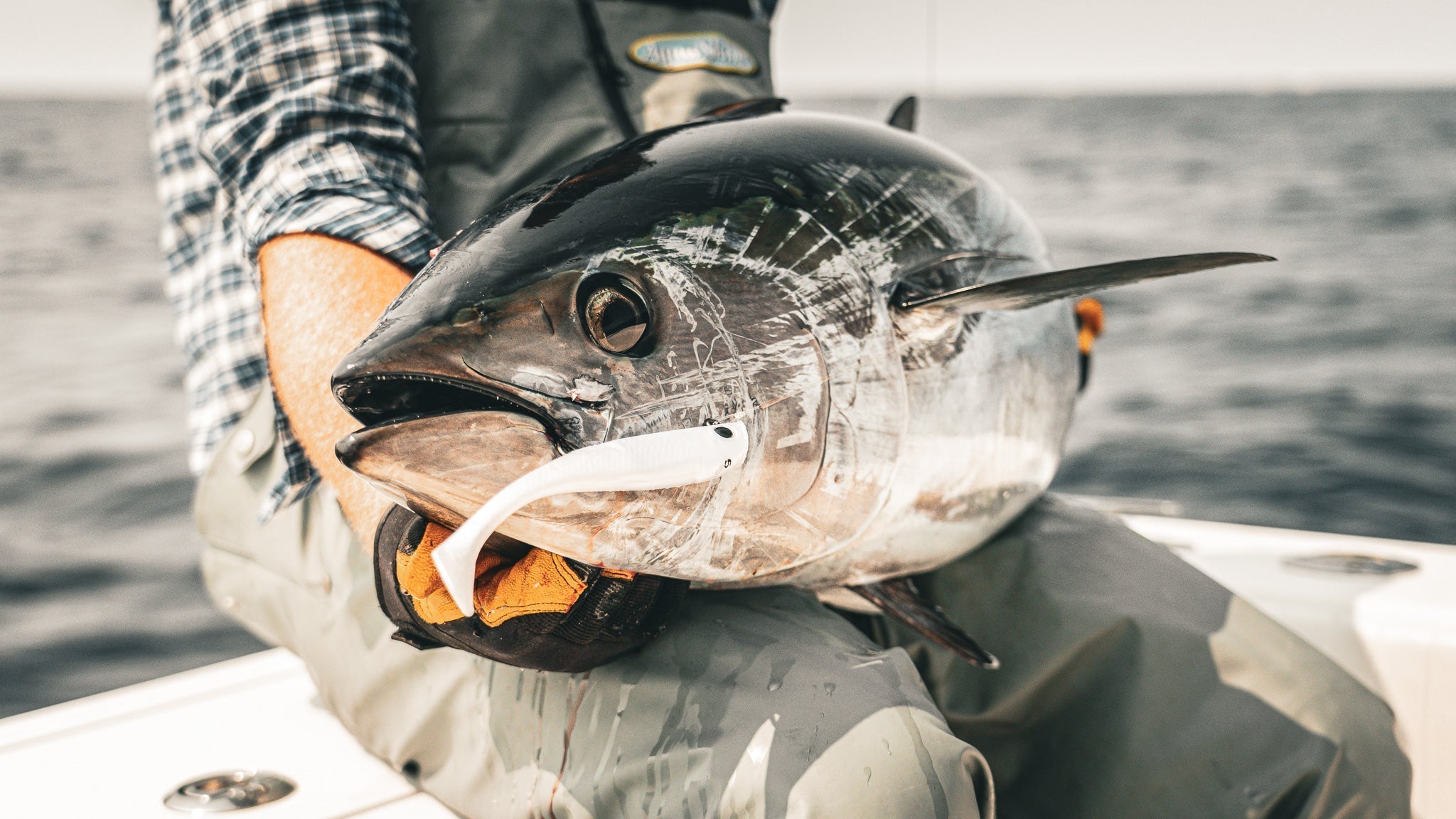
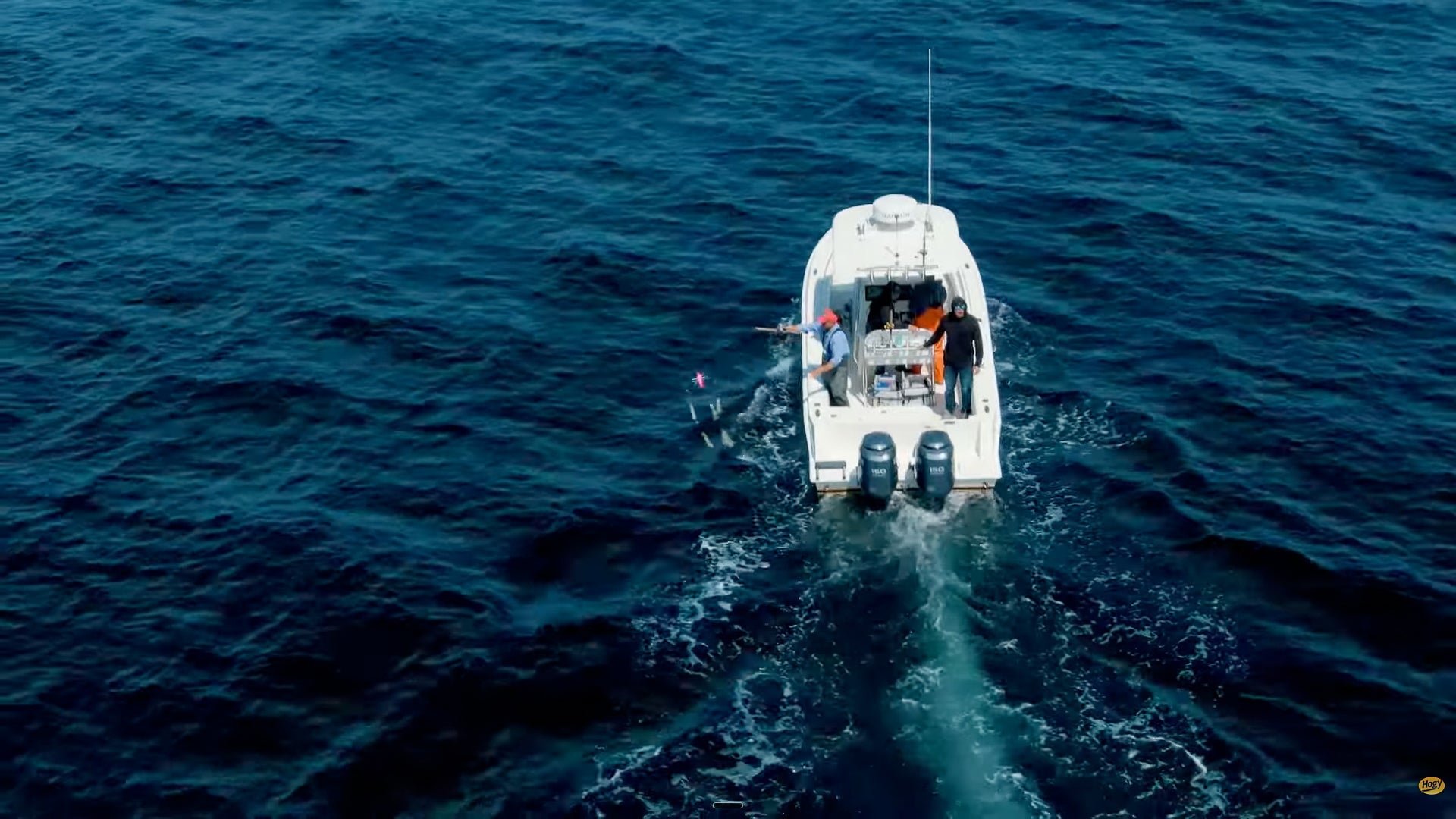
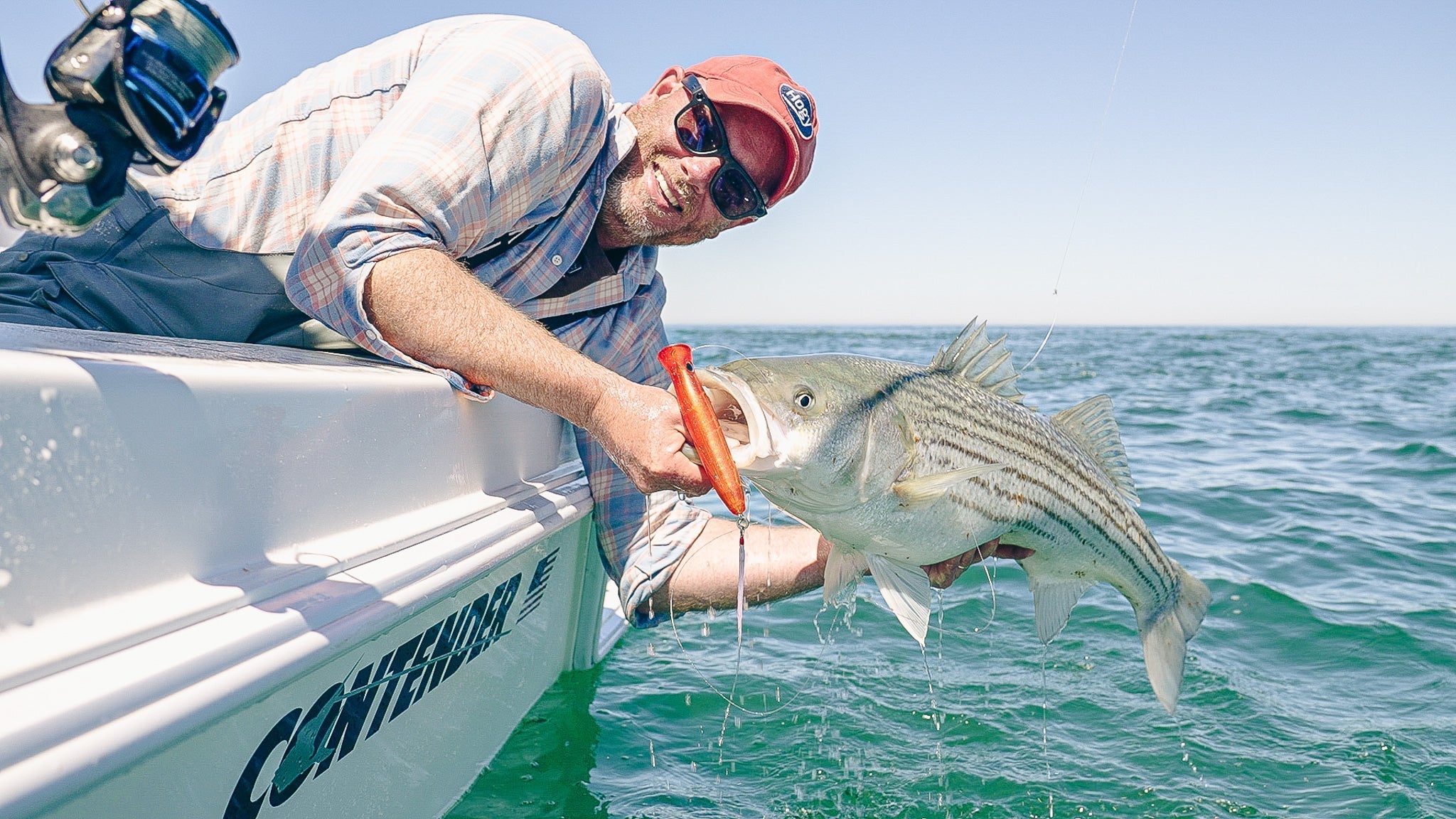
- Trolling: I use this rod for tube and worm trolling in rips with braid. The moderate action absorbs surges and keeps fish hooked without tearing out.
- Heavy plugs: For lobbing 3 to 4oz plugs on a round reel, this rod loads smoothly and gives me the old-school control I like when fishing big gear.

The tube in the jaw at the boat. Drop-back, thumb, and a soft bend.
| Micro season | Window | What I tie on | The read |
|---|---|---|---|
| 742 Summer Rips Bass and Blues | Jun 1–Sep 15 | XL Dog Walker 8.25", Charter Grade Slider and Popper to 4oz, Pro Tail Paddle 2–3oz | Big wood and heavy swimmers along the rocky shorelines of the Elizabeths. Lob it, thumb it, walk it. |
| 721 Summer Mode: Daytime Trolling | Jul 1–Sep 30 | Perfect Tube 16–19" and a worm, deep swim plugs | Tube and worm in rocky structure, where the reach and the cushion keep hooks in. Along open boulder lines, Lefty. |
| Lure | Why it works here |
|---|---|
| Perfect Tubes 16–19" | The core mission. Moderate action absorbs surges in rocky structure so hooks stay in. |
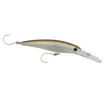
| Deep Swim Plugs | Sustained load in a holder without tip whip, and the depth stays consistent through a turn. |
| OG Swimmer trolled | Shallow contour work at 2 to 3 knots on the same outfit. |
| Lure | Why it works here |
|---|---|
| Dog Walkers XL 8.25" | Lob-cast smoothly and walked with trigger control. Big wood on a round reel is what this rod was built for. |
| Pro Tail Paddles 2–3oz | Heavy swimbaits driven deep in rips and channels, tracking clean under current. |
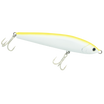
| Charter Grade Sliders and Poppers to 4oz | The deep load throws them without a jarring snap, and the cushion protects the leader on the eat. |
Groundfish and tog
The long slow sweep set with a trigger grip and a parabolic blank is what keeps a bulldogging tog pinned. Nothing else in the system matches it there. When tog and fluke are the whole trip, this is the rod that rides along.
- Tog: Ideal setup for togging. The parabolic lift and trigger grip make it effortless to set the hook with a sweep, then keep fish pinned as they bulldog for bottom.
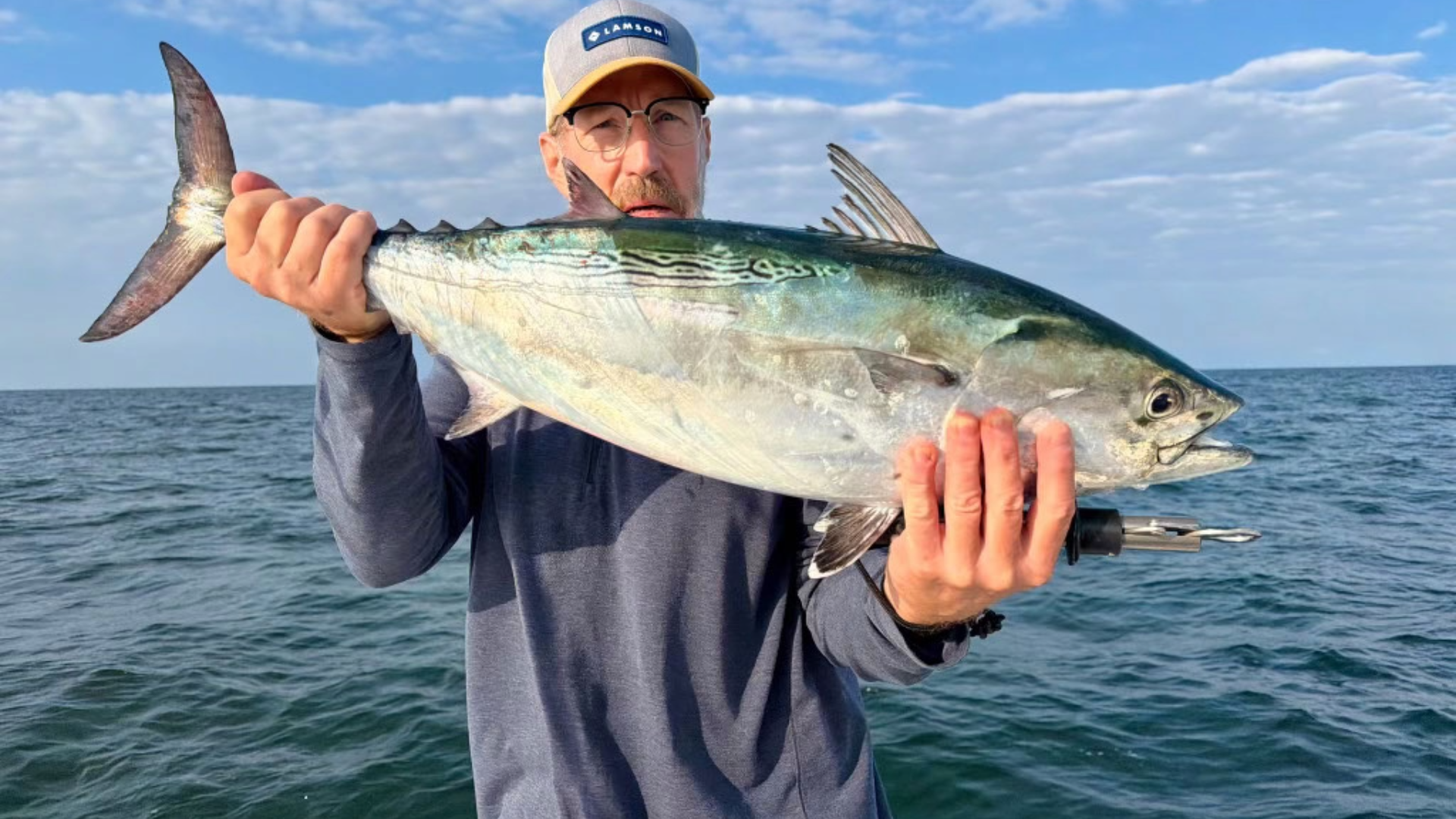
- Fluke and sea bass: Drift jigging with a teaser above, where the tip shows the take and the blank absorbs it. Long drifts are where it beats the 7' MH.

A tog on the Biki Jig and teaser. Low slow sweep, and let the parabolic pin it.

Fluke on a Squinnow. Long drifts, and the tip shows the take.
| Micro season | Window | What I tie on | The read |
|---|---|---|---|
| 717 Inshore Fluke | Jun 1–Sep 30 | Sand Eel Jig 3–5oz, Squinnow with a teaser above | Long drifts over clean sand in moving water. The tip shows the take. |
| 735 Fall Tog | Oct 1–Nov 15 | Biki Jig 2.0oz, green crab | Big fish on the deeper piles as the water cools. Low slow sweep, and let the parabolic pin it. |
| Lure | Why it works here |
|---|---|
| Squinnow Jigs 1.5–5oz | The parabolic lift is made for slow-pitch. Keeps contact without ripping the jig through the zone, and cushions the take. |
| Groundfish Biki Jigs | The sweep hookset is what this rod does best, and it is exactly what a Biki jig and crab asks for on tog. |
| Jig-Biki Teaser Rig | Keeps a dropper rig vertical and animated, with the cranking power to bring up two fish at once. |
| Sand Eel Jigs 3–5oz | Deeper work in current where conventional cranking leverage starts to matter. |
Inshore Conventional Outfits: The Full Picture
Conventional inshore is three specific jobs rather than a general program. These are the outfits that do them, and the split is reach versus compactness.
| Outfit | Reel | Line and leader | When it is the right call |
|---|---|---|---|
|
7'6" Conventional Lifter Reach and lob casting |
300–400 round conv. | 30–80lb braid 30–60lb fluoro |
Sweep-set groundfish, heavy plugs on a round reel, and tube trolling with reach. The high-guide train exists for exactly these reels |
|
5'6" Hybrid Conventional Compact and stowable |
Avet LX6 two-speed | 60lb braid 50–60lb, run long |
Trolling spreads, tube rigs, deep jigging. It casts about 20% shorter than a 7-footer, and it travels and crosses to offshore, which the Lifter does not |
|
7' MH Workhorse The spinning alternative |
4000–5000 spinning | 30lb braid 25–30lb fluoro |
When you do not actually need conventional. Most inshore days |
FAQ
How is this different from The Plugger?
Same blank, different everything else. The Plugger is a spinning rod with a spinning seat. The Lifter has a trigger grip, a high-frame guide train built around round reels, and the same parabolic bend. The reach and the cushion are identical; the control philosophy is not.
Do I need it if I already own The Plugger?
Only if you want to fish conventional. If you troll tubes, sweep-set on tog and fluke, or simply prefer a round reel for heavy plugs, this is the better tool for those three jobs. If none of those describe your fishing, The Plugger covers you.
Is one conventional enough for the whole system?
If you only want one, take the 5'6" Hybrid Conventional. It travels better, it covers offshore as well as inshore, and it is the trolling workhorse. This rod is the answer when you want reach and lob-casting on a conventional, which the 5'6" cannot give you.
Why a long conventional rod at all?
Because the two things conventional does best, sustained load and cranking leverage, do not have to mean a short blank. Length buys reach and line clearance the same way it does on a spinning rod. This rod is the answer to wanting both at once.


Leave a comment
All comments are moderated before being published.
This site is protected by hCaptcha and the hCaptcha Privacy Policy and Terms of Service apply.